


Finger foods and BLW: moving on to pieces safely
Moving from purées to finger foods often worries parents. Yet it is an important step for learning to chew and discover tastes, and it is best not to delay it too long. Here is when to offer lumpier textures, what baby-led weaning (BLW) is, how to tell gagging from choking, and the safety rules to follow.
The essentials at a glance
- Around 6-8 months: mashed food; around 8 months: very soft pieces; around 10 months: pieces to bite.
- Pieces should be offered by around 8-10 months at the latest.
- Always sitting upright, strapped in, and watched by you throughout the meal.
- Gagging is noisy and normal; choking is silent and requires action.
- No small, hard, round foods before 5 years old; grapes and cherry tomatoes cut into quarters.
Important: these general guidelines follow the official recommendations (WHO, Morocco’s Ministry of Health, Santé publique France). They do not replace the advice of your paediatrician or doctor, who knows your child: ask them for advice, especially if your baby was born prematurely or has an illness or allergy.
When should you move on to finger foods?
| Age | Texture |
|---|---|
| Start of weaning | Smooth vegetable and fruit purées |
| 6 to 8 months | Minced or roughly mashed with a fork (lumpy purée) |
| Around 8 months | Very soft pieces that can be squashed between the tongue and the palate |
| Around 10 months | Pieces to bite and chew with the teeth |
| From 1 year | All textures, staying careful with hard, round foods |
Introduce only one new texture per meal. European guidelines advise offering pieces by around 8-10 months at the latest. Ages and foods are detailed in our month-by-month weaning guide.
What is baby-led weaning (BLW)?
Baby-led weaning (BLW) means offering finger foods from the outset, which your baby picks up with their fingers, rather than spoon-fed purées. According to Santé publique France, it is possible from around 6 months, as soon as the child can sit up well, grasp a piece of food and bring it to their mouth; it is a discovery guided by an adult. Many families combine both: spoon-fed purées and a few suitable finger foods.
Gagging or choking: how to tell them apart
- Gagging is noisy: your baby coughs, spits and retches. It is a normal reflex while learning, which helps push back a piece that is too big. Stay calm and let them get on with it.
- Choking is silent: your baby can no longer cough, cry or breathe normally. You must act straight away.
If your baby is choking (they can no longer cough, cry or breathe): shout for someone to call 150 and act straight away. If they are coughing hard, let them cough and stay close. Under 1 year: lay them face down along your forearm or thigh, with the head lower than the body, supporting the head and jaw. Give up to 5 firm back blows between the shoulder blades with the heel of your hand, checking after each blow. If the object has not come out, turn them onto their back, head lower, and give up to 5 chest compressions with two fingers in the middle of the chest, just below the nipple line. Alternate until help arrives. Never try to find the object blindly with your fingers. Over 1 year, the compressions are given on the tummy, between the belly button and the ribs. Take an infant first aid course: nothing replaces a skill you have practised.
Safety rules
- Your baby eats sitting upright, strapped into the high chair, never lying down or walking around.
- An adult stays beside them and watches them for the whole meal.
- No small, hard, round foods before 5 years old: peanuts, whole nuts, hard sweets; also avoid hard, raw pieces such as raw carrot or apple.
- Cut soft, round or oval foods into quarters, such as grapes (seedless) and cherry tomatoes.
- Pieces should squash easily between your thumb and index finger.
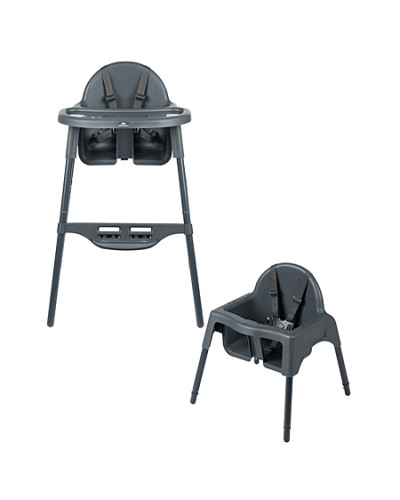
Bébé Confort
Meely 2-in-1 high chair Graphite Bébé Confort
From 6 months to 3 years, 5-point harness, adjustable tray.
Order now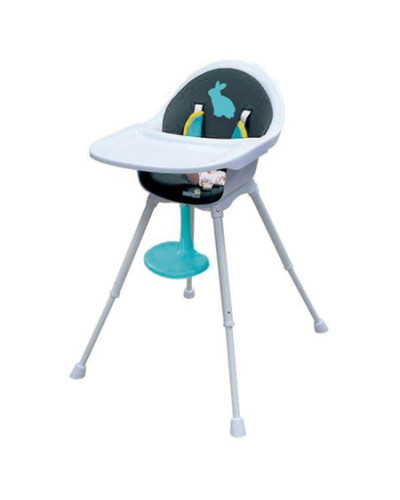
Babysun
Babysun 3-in-1 convertible high chair
From 6 months to 6 years: high chair, booster seat, then little chair.
Order now
First finger foods
- Very tender cooked vegetable sticks: carrot, courgette, sweet potato, pumpkin.
- Very ripe, soft fruit: banana, pear, avocado, peeled peach.
- Small, well-cooked pasta, semolina or rice balls.
- Well-cooked omelette, cut into strips.
- Well-cooked fish, flaked, with every bone removed.
Finger-length sticks are easier for your baby to grasp. Suitable recipes are in our article recipes from 8 to 12 months.
Helpful equipment
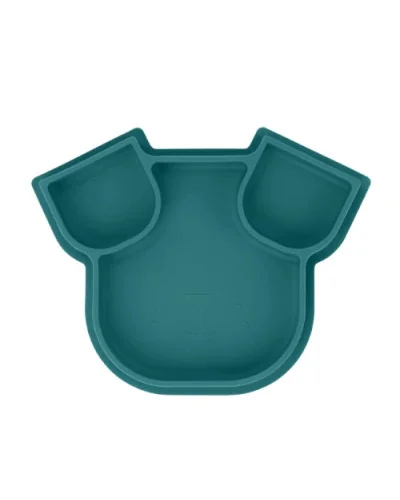
A fresh food feeder lets your baby taste ripe fruit while limiting the risk of a large piece, always under your supervision; a non-slip plate, suitable cutlery and a pocket bib make the first independent meals easier.
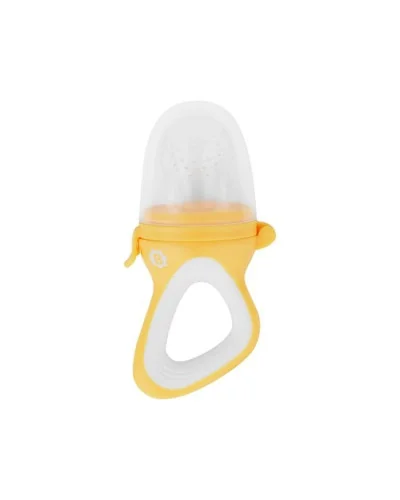
Badabulle
Silicone fresh food feeder Badabulle
To taste ripe fruit while limiting the risk of a large piece.
Order now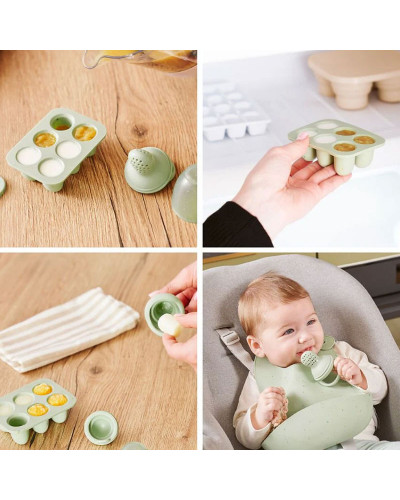
Babymoov
Isy Plate divided baby plate dog silicone Babymoov
Food-grade silicone, non-slip base, separate compartments.
Order now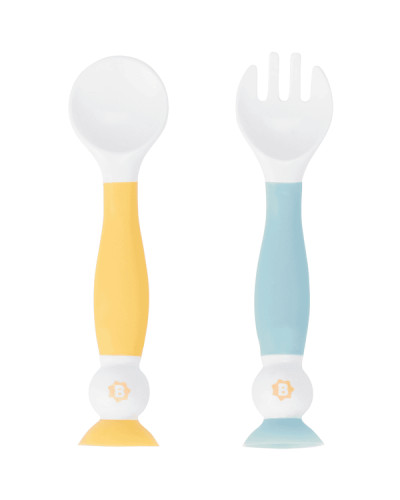
Badabulle
Flexible learning cutlery Badabulle
For self-feeding, when baby wants to hold the spoon.
Order now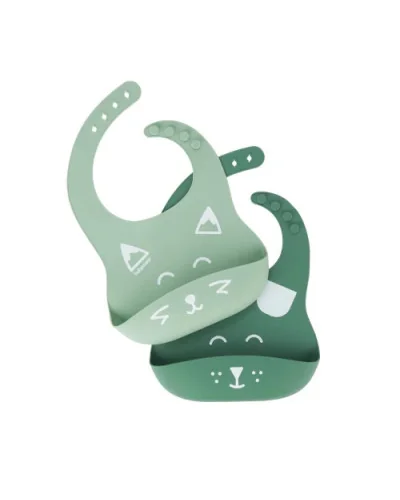
Frequently asked questions
At what age can babies have finger foods?
Around 8 months, very soft pieces that squash between the tongue and the palate; around 10 months, pieces to bite. European guidelines advise offering pieces by around 8-10 months at the latest.
Is baby-led weaning dangerous?
According to Santé publique France, it is possible from around 6 months, if your baby sits up well and can bring food to their mouth, with an adult alongside and suitable foods.
How can you tell if your baby is choking?
Gagging is noisy and normal. Choking is silent: your baby can no longer cough or breathe. Get someone to call 150 and start back blows immediately; if you are alone and the object does not come out, call 150 while keeping your baby with you and continue the first aid.
Which foods should babies avoid?
Small, hard, round foods before 5 years old (peanuts, whole nuts, hard sweets), and soft, round foods that have not been cut, such as grapes or cherry tomatoes.
Where can I buy a fresh food feeder or a high chair in Morocco?
At the La Maison du Bébé showroom in Maârif, Casablanca, or online with delivery across Morocco, free from 300 DH.
Advice and demos at our Casablanca showroom
Come and see the baby food makers, tableware and high chairs at our Maârif showroom, 93 rue Brahim Nakhai, Casablanca, Monday to Saturday, 9:30 am to 8 pm, or message us on WhatsApp at 06 61 14 46 02: we’ll advise you and prepare your order. Delivery across Morocco, free from 300 DH.
Ask for advice on WhatsApp See the showroom
Everything in our “Feeding” section
- Weaning: the month-by-month guide
- Homemade baby fruit purée: 10 recipes with no added sugar
- Vegetable purées for babies: first recipes
- Baby recipes from 8 to 12 months: homemade dishes
- Allergens: introducing them during weaning
- Weaning essentials: what you need for first meals
Our feeding departments
- Feeding
- Baby food makers and blenders
- Baby food storage
- Baby tableware
- High chairs
- Bibs
- Mealtime accessories
Official sources
Pages consulted on 08/10/2026:
- Santé publique France: “Pas à pas, votre enfant mange comme un grand” (in French)
- Manger Bouger: from 6-8 months, your baby explores new textures (in French)
- ESPGHAN: position paper on complementary feeding (2017)
- NHS: gagging and choking
- NHS: what to do if a child is choking
- NHS: your baby's first solid foods
- WHO: infant and young child feeding (fact sheet)
- Ministry of Health and Social Protection: National Multisectoral Nutrition Strategy 2024-2030

Comments
No comment at this time!
Leave your comment