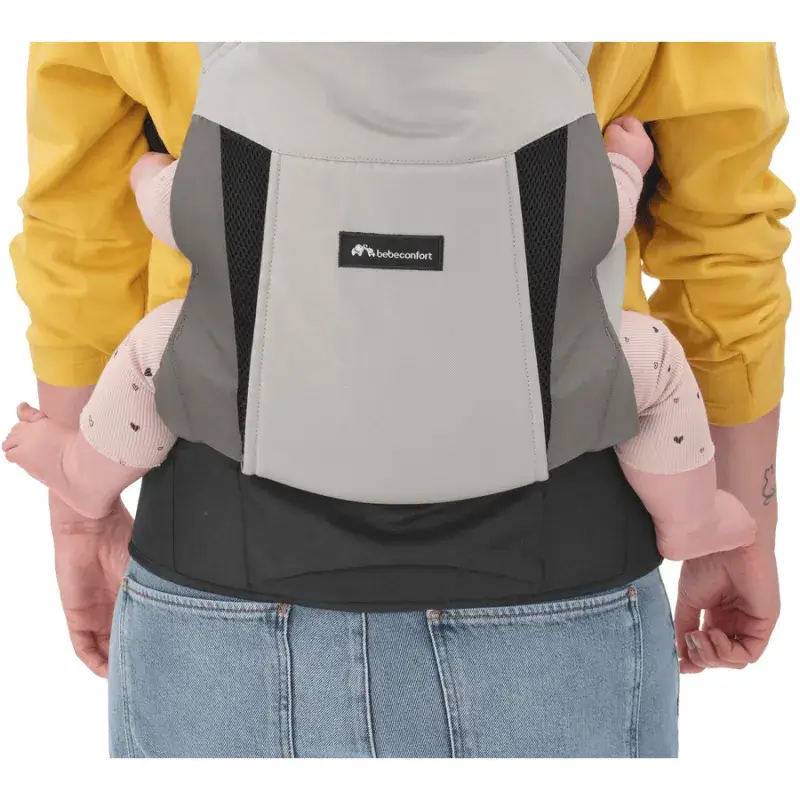
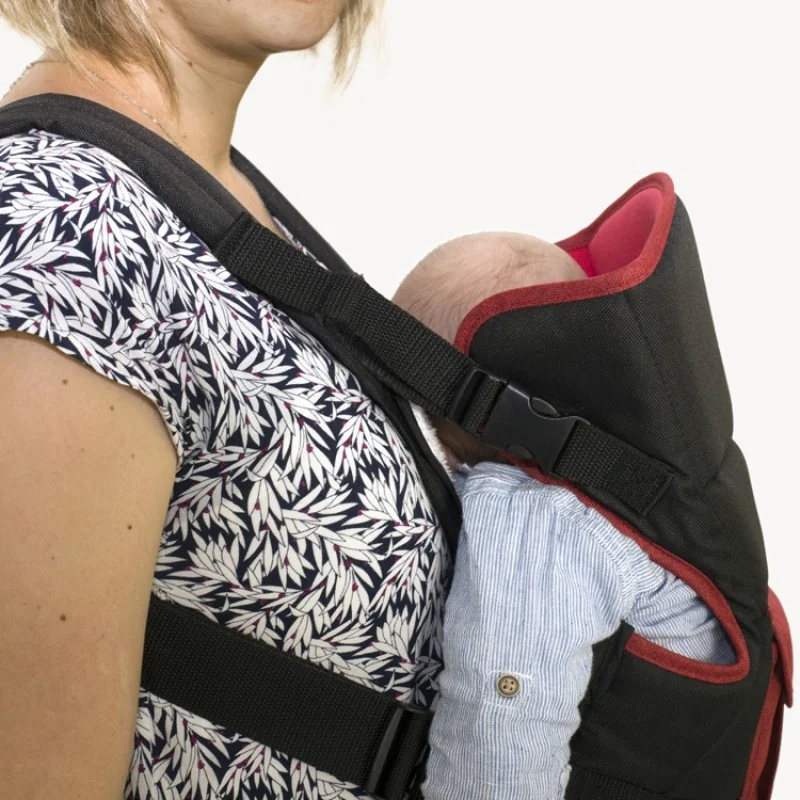
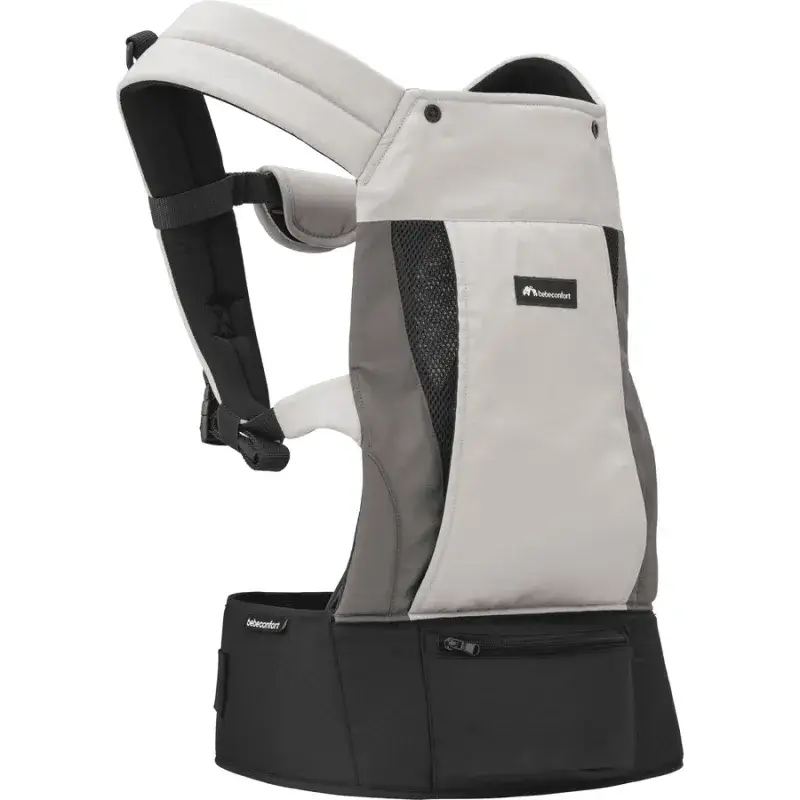
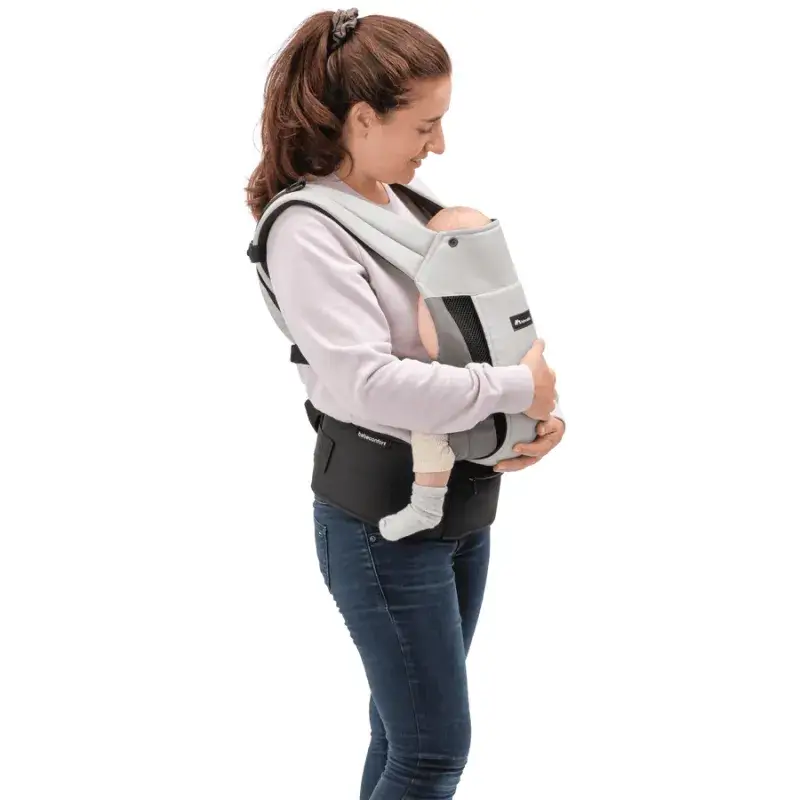
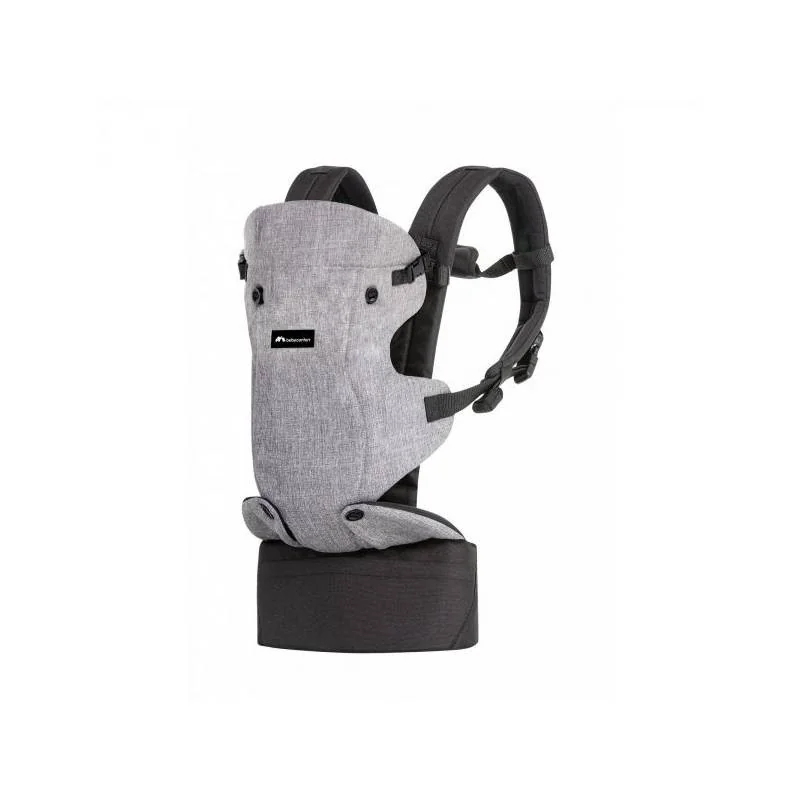
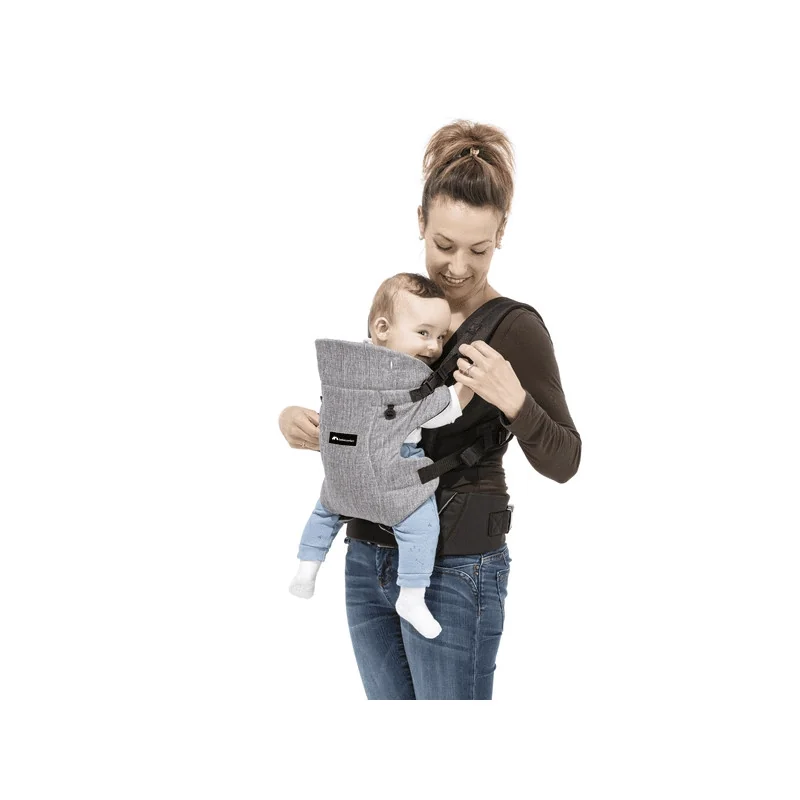
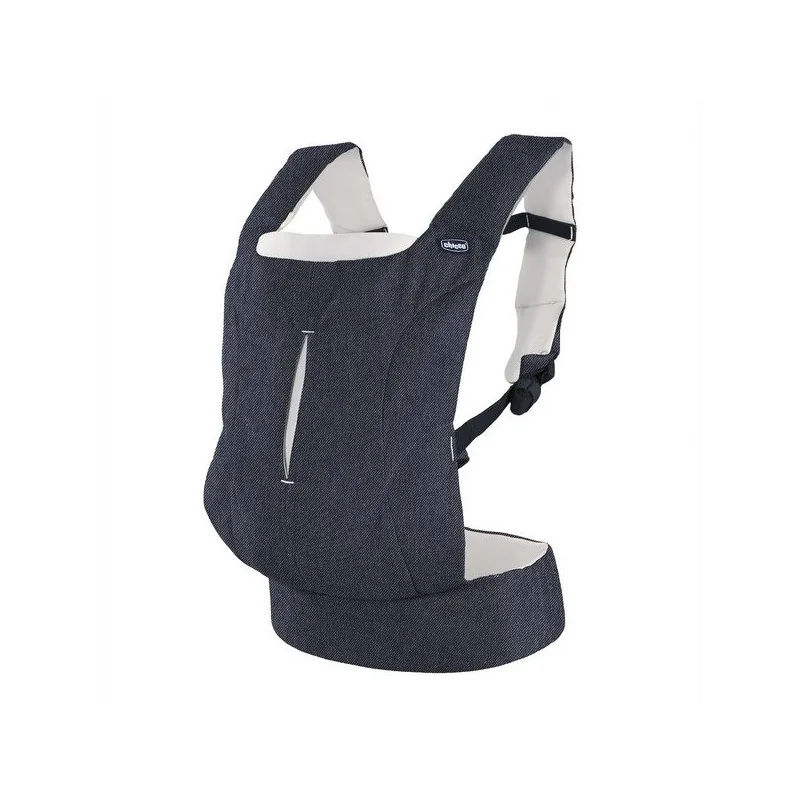
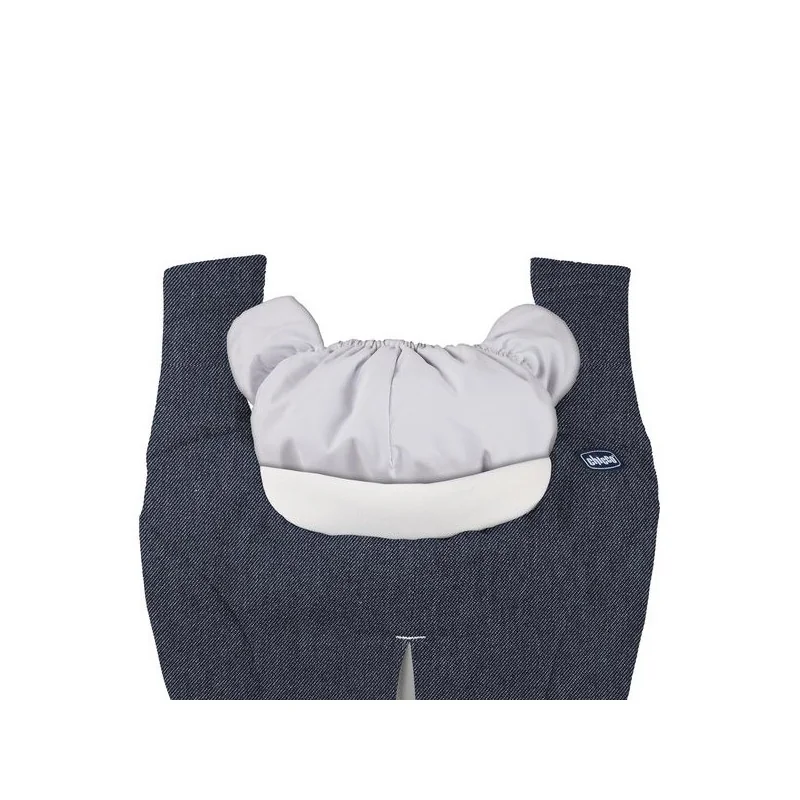
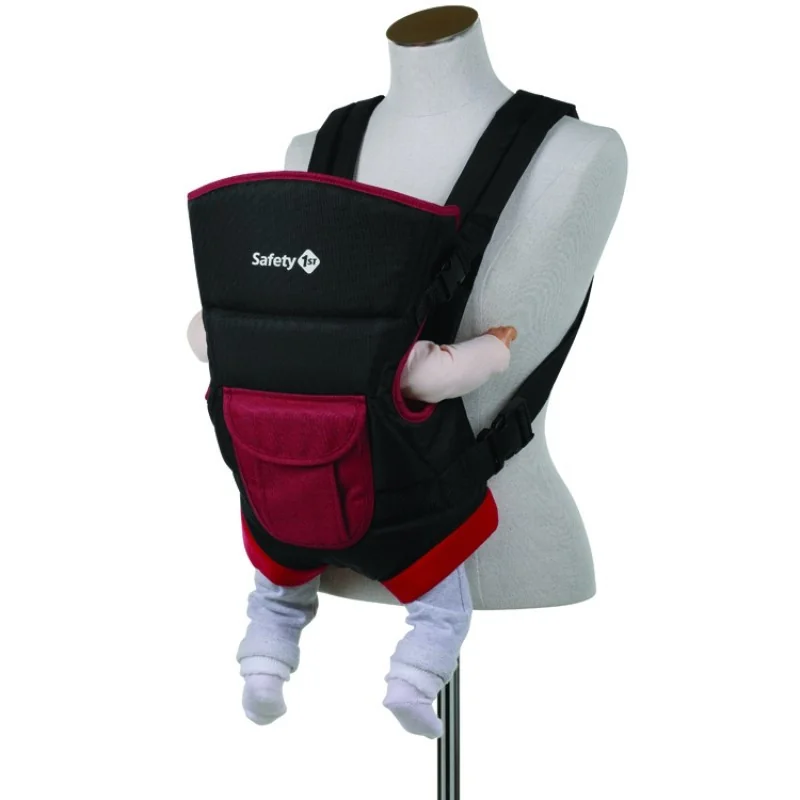
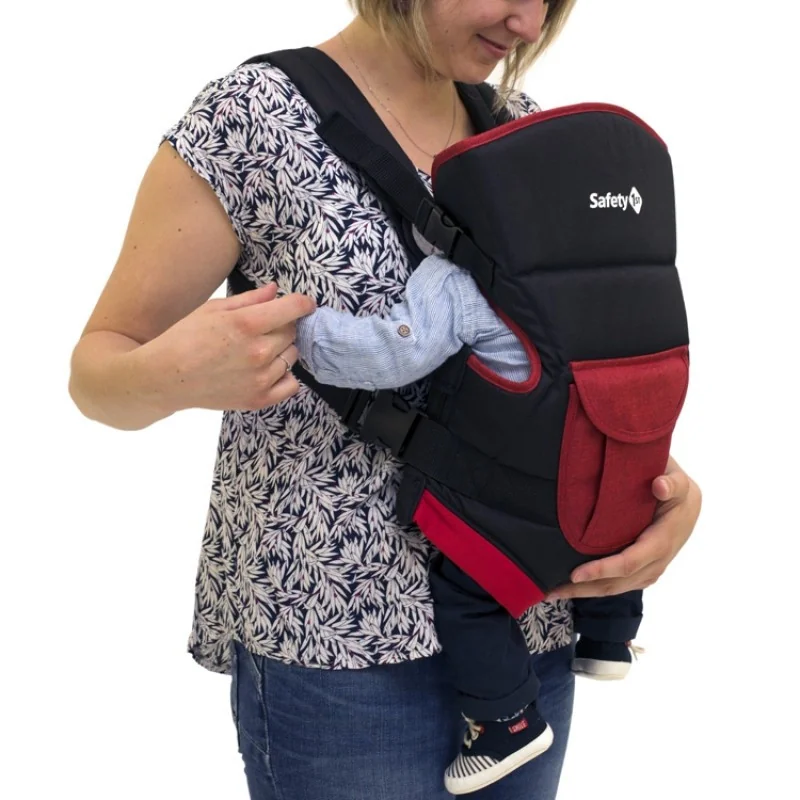
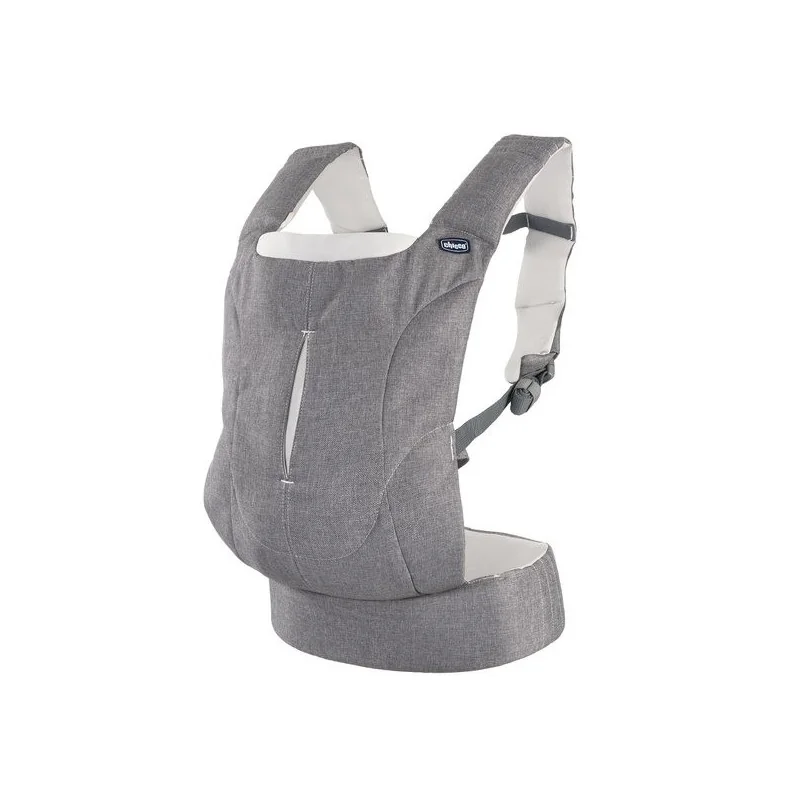
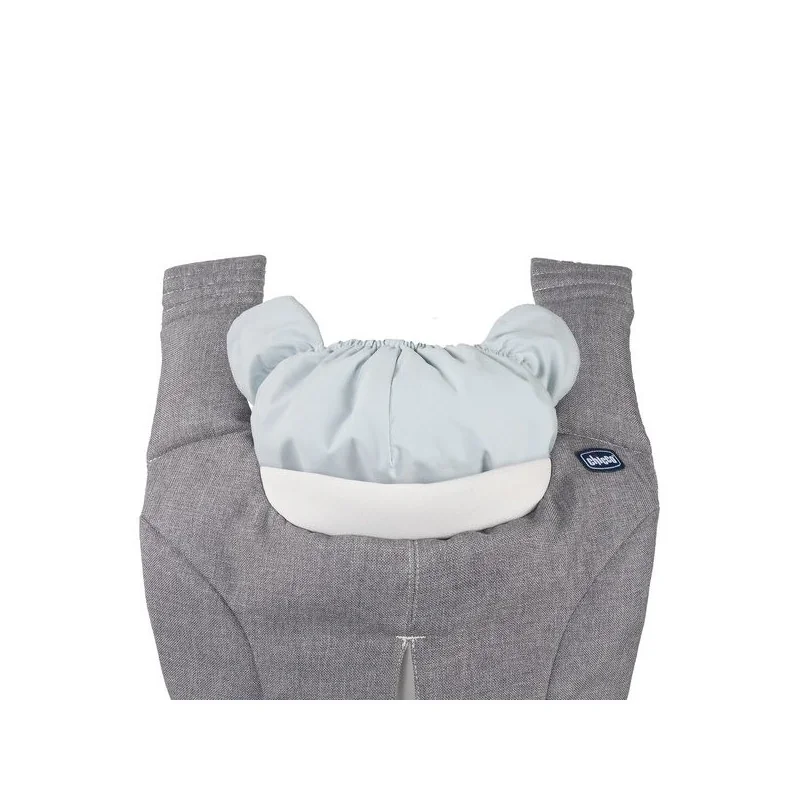
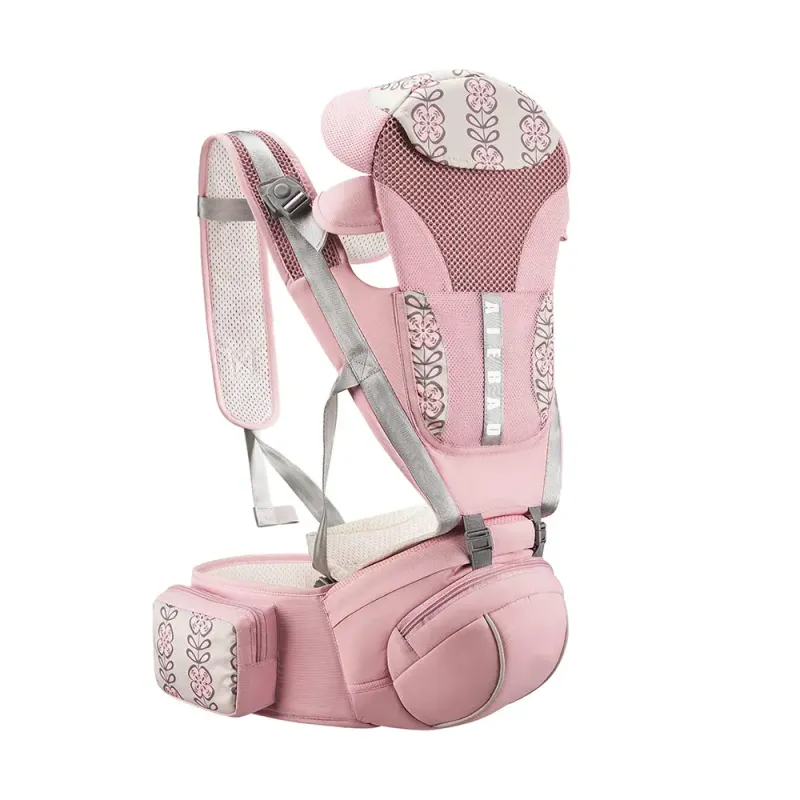
A baby carrier, whether a structured buckle model or a baby wrap, lets you keep baby close while keeping your hands free. Whatever the model, safety relies on the same habits: baby carried high and snug, face always visible, chin off the chest so that their airways stay clear, and hips in the “M” position. The age and weight to follow are those stated by the manufacturer.
- Face always visible: nose and mouth never covered by fabric, your clothes or your body.
- Chin off the chest, with at least a finger’s width under the chin.
- Baby carried high, close enough to kiss the top of their head, held snugly against you, back supported.
- “M” position: thighs spread and supported, knees slightly higher than the bottom.
- Age and weight: those in the instructions. Premature or unwell baby: ask your doctor first.
- Under 1 year: no more than one hour at a time strapped in (WHO). If baby falls asleep, lay them down in their cot.
- Baby carrier or baby wrap: what are the differences?
- How to carry a baby safely: the TICKS rule
- Ergonomic position: getting baby into the “M” position
- From what age and for how long can you carry baby?
- How to choose a baby carrier?
- 2026 comparison of baby carriers in stock
- Baby carrier or stroller for outings with baby?
- FAQs
Baby carrier or baby wrap: what are the differences?
There are two main families, plus variations such as the sling, a ring wrap. The safety rules are the same for all of them.
| Criterion | Structured baby carrier | Baby wrap |
|---|---|---|
| How it works | Back panel, shoulder straps and buckled waist belt | A long piece of fabric tied around the wearer and baby |
| Putting it on | Quick, with easy-to-spot adjustments | Requires learning how to tie it |
| Fit | According to the adjustments provided by the manufacturer | Adapts to each wearer and to baby's size |
| Positions | Front, sometimes back or facing out, as per the instructions | Several ways to tie it, as per the instructions |
Which standard should you check?
European standard NF EN 13209-2 covers soft frameless baby carriers with leg openings, for a child weighing up to 15 kg. It therefore applies to soft structured baby carriers. A wrap, which has no leg openings, does not fit this definition: rely instead on the instructions and limits given by its manufacturer.
Discover all our baby carriers and baby wraps.
Our pick: Baby carriers
How to carry a baby safely: the TICKS rule
The most common babywearing accidents are caused by blocked airways: chin dropped onto the chest, or nose and mouth covered by the parent's skin or clothing (The Lullaby Trust, a UK charity). In the United Kingdom and Ireland, good practice is summed up by the TICKS rule:
- Tight: baby held snugly against you.
- In view at all times: you can always see baby's face; it is not touching the fabric, your body or your clothes.
- Close enough to kiss: you can kiss the top of baby's head.
- Keep chin off the chest: keep at least a finger's width under baby's chin.
- Supported back: back in a natural position, chest and tummy against you.
Other good habits
- Check baby's breathing and temperature regularly (Health Canada).
- Don't carry baby while running, cycling, cooking or handling hot drinks.
- Check the condition of the baby carrier often: seams, straps, fabric wear and, for a sling, fabric that must not slip through the rings.
Babies who need extra care
Babies under 4 months, premature babies, babies with a low birth weight and babies who are unwell have less head control and are more at risk. For a premature baby or a baby with a health condition, ask your doctor's advice before carrying them.
Ergonomic position: getting baby into the “M” position
The so-called ergonomic position respects baby's natural posture. The International Hip Dysplasia Institute (IHDI) describes the “M” position, which it recommends for baby's hips:
- thighs spread around your torso;
- hips bent, knees slightly higher than the bottom;
- thighs supported by the seat of the baby carrier or the fabric of the wrap;
- back in a natural position, chest and tummy against you (Health Canada).
Look at baby from the front: their legs should form an M. If not, readjust the settings following the instructions.
Forward-facing carrying: from what age?
The IHDI recommends carrying your baby facing you for the first six months, when the hips are developing rapidly, and considers that this can remain beneficial up to one year. If your baby carrier offers a forward-facing position, follow the age and conditions given in its instructions.
From what age, and for how long, can you carry your baby?
No health authority sets a minimum age for babywearing: the manufacturer's age and weight limits apply. Some baby carriers are designed for use from birth, sometimes with an infant insert, others for later: read the instructions before you buy.
- Duration: the WHO recommends that a baby under one year old should not be restrained for more than one hour at a time, whether carried by an adult, in a stroller or in a high chair (WHO guidelines, April 2019). The Irish health service (HSE) gives the same guideline for baby carriers.
- Sleep: if your baby falls asleep, take them out of the carrier as soon as possible (HSE) and lay them down in a cot, a crib or Moses basket (Health Canada), on their back and on a flat surface.
How to choose a baby carrier
Before you buy, go through these criteria:
- The type: a structured baby carrier for quick fitting, or a baby wrap if you are ready to learn the tying techniques.
- The limits: minimum and maximum age and weight clearly stated and, for a soft structured carrier, a reference to the NF EN 13209-2 standard.
- The seat: wide enough to support the thighs in the “M” position, and adjustable to your baby's size.
- The carrying positions: front, back or forward-facing, with the age specified for each one in the instructions.
- Your comfort: easy-to-adjust shoulder straps and waist belt, to hold your baby snugly against you.
We offer baby carriers from brands such as Chicco, Bébé Confort, Safety 1st, Badabulle and Babymoov, with delivery across Morocco. At our Casablanca showroom (Maârif), our advisers will help you choose the right model for your baby.
2026 comparison: baby carriers in stock at our showroom
The three ergonomic or adjustable baby carriers in stock at La Maison du Bébé can be used from birth up to 15 kg. They differ in the number of carrying positions and in how a newborn is positioned. Data taken from the manufacturers' product sheets (October 2026).
| Model | Child's weight (manufacturer) | Carrying positions | Key points |
|---|---|---|---|
| GO4 adjustable carrier, Bébé Confort | From 3.5 to 15 kg | 4: facing parent, facing out, on the hip, on the back (back from 6 kg) | Hip carrying is handy for breastfeeding |
| Myamaki, Chicco | From birth to 15 kg | Several positions, adjustable baby carrier | Wide, adjustable seat for the M position, C-shaped back support |
| Physionest, Bébé Confort | From birth to 15 kg (about 3 years) | 3: front, back, facing out | M position, reinforced lumbar support, padded shoulder straps |
Which one should you choose?
- You want to vary the positions up to 3 years: the GO4 and its 4 modes, including hip carrying.
- Wearer comfort first, for long outings: the Physionest, with its lumbar support and padded shoulder straps.
- The first weeks come first: compare the seat and head support of the Myamaki and the Physionest, both designed for use from birth.
- Heat in Casablanca and elsewhere in Morocco: a baby carried against you quickly gets hot. Dress them in lighter clothes, protect their head from the sun and take breaks in the shade.
The best test is still trying it on: at our Maârif showroom in Casablanca, try the baby carrier and its adjustments before you choose. Always follow the manufacturer's instructions when positioning your baby. Delivery across Morocco: see all baby carriers.
Baby carrier or stroller for going out with your baby?
The two complement each other: the baby carrier for short outings, stairs or places where a stroller is hard to manoeuvre; the stroller for long walks, with the option of laying your baby flat to sleep.
To find yours, read our guide to choosing a stroller, discover our strollers and our whole out and about department.
Our selection: Out and about
Frequently asked questions
From what age can you use a baby carrier?
No health authority sets a minimum age: follow the age and weight stated by the manufacturer. Before 4 months, pay particular attention to the position of the head. For a premature or unwell baby, ask your doctor first.
Baby carrier or baby wrap?
A structured buckle carrier goes on quickly and is easy to adjust. A baby wrap adapts to each wearer but you need to learn the knots. The safety rules are the same: baby high, snug, face visible and chin off the chest.
How do you position baby correctly (ergonomic position)?
Place baby facing you, chest and tummy against you, high enough to kiss the top of their head. Their thighs should be spread and supported, knees slightly higher than the bottom: this is the “M” position described by the International Hip Dysplasia Institute. Keep at least a finger’s width under their chin.
How long can you carry your baby?
For a baby under one year old, the WHO recommends not being restrained for more than one hour at a time, baby carrier included. For the rest of their awake time, alternate with floor play. If your baby falls asleep, lay them down in their cot as soon as possible.
Forward-facing carrying: from what age?
The International Hip Dysplasia Institute recommends carrying your baby facing you for the first six months, and considers that this can remain beneficial up to one year. Only carry your baby facing out if your baby carrier allows it, at the age given in its instructions.
What are the safety rules for babywearing?
Remember the TICKS rule: baby held tight against you, face always visible, close enough to kiss, chin off the chest and back supported. No babywearing while running, cycling, cooking or holding a hot drink.
Can a baby sleep in a baby carrier?
A baby carrier is not a place to sleep. If your baby falls asleep, take them out as soon as possible (HSE) and lay them down in a cot, a crib or a Moses basket (Health Canada), on their back and on a flat surface.
Our other buying guides
Going out: Choosing a stroller · Choosing your baby's car seat · Choosing a changing bag · Tricycle, balance bike or kids' bike
Sleep: Choosing a baby cot and mattress · Crib or bedside crib · Travel cot and playpen · Baby sleeping bags: size and TOG · Choosing a baby monitor
Feeding and breastfeeding: Choosing a breast pump · Choosing the right nursing pillow · Choosing baby bottles and teats · Choosing a bottle warmer · Sterilising baby bottles · Choosing a high chair · Kids' lunch boxes
Bath, care and comfort: Baby baths and bath-time safety · Nasal aspirators and nose cleaning · Choosing the right pacifier · Bouncer, baby swing or baby rocker: which one to choose
Play and gifts: Educational games and Montessori toys by age · Newborn gift ideas
Need advice? Come and see us in Casablanca
Our advisers welcome you at our Casablanca showroom, 93 rue Brahim Nakhai, Maârif, Monday to Saturday, 9:30 am to 8 pm (closed on Sundays).
Phone: +212 5 22 23 35 34 · WhatsApp: 06 61 14 46 02
Delivery across Morocco (by our own team in Casablanca, by Amana elsewhere), free from 300 DH spent. Pickup available at the showroom. 7-day returns.