








Development
Month by month, then year by year: your child's milestones up to age 6.
17 articles

Development
- DevelopmentYour 1-Month-Old Baby: Reflexes, Eyesight and the Rhythm of the First Weeks
At 1 month, a baby moves mostly by reflex: startling at noise, gripping your finger, turning the head to look for the breast. They see clearly at 20-30 cm and prefer faces. They sleep 14 to 17 hours a day in short stretches and take only milk, on demand. A fever of 38 °C or more means seeing a doctor without delay.
6 min read - DevelopmentYour 2-Month-Old Baby: First Real Smiles, Cooing and a Lifted Head
Around 2 months, most babies smile when you talk to them, coo and lift their head on their tummy. Crying peaks around 6 weeks and usually eases by 3 or 4 months. Milk alone is enough, on demand. If baby does not smile at people or react to loud sounds, talk to the doctor.
6 min read - DevelopmentYour 3-Month-Old Baby: Discovering Hands, Laughing and Finding a Rhythm
At 3 months, baby watches their hands, brings them to the mouth and grips the rattle you slip into them. They hold the head better, push up on the forearms, and many begin to chuckle. Days are organised around three naps, but baby still wakes at night to feed. Milk is still all they need.
5 min read - DevelopmentYour 4-Month-Old Baby: Grabbing, Rolling Over and Changing Nights
At 4 months, most babies hold their head up, grip a toy slipped into their hand, swing an arm towards what attracts them and put everything in their mouth. Some already roll from tummy to back, others will wait until 6 months. Nights can get unsettled. Once baby rolls, never leave them alone on a raised surface.
5 min read - DevelopmentYour 5-Month-Old Baby: Everything Goes in the Mouth, and They Eye Your Plate
At 5 months, baby puts everything in the mouth: it is their way of exploring, not necessarily a tooth or hunger. They are learning to roll and stare at your meals, but interest is not enough: to eat, baby must sit with the head steady, grab food and swallow it. Keep anything small enough to choke on out of reach.
5 min read - DevelopmentYour Baby at 6 Months: Sitting With Support, First Spoonfuls and First Teeth
At 6 months, most babies sit while propping themselves on their hands; some manage alone, others not until 9 months, and that is normal. The WHO starts complementary foods at this age, while breastfeeding continues. First teeth often arrive now. Make the house safe before your baby starts moving around.
6 min read - DevelopmentYour Baby at 7 Months: Sitting Alone, Clever Hands and First Syllables
At 7 months, many babies sit for a few moments without support, pass a toy from one hand to the other and string syllables together. Others will get there later: the WHO places sitting between 3.8 and 9.2 months. Play on the floor every day, keep going with solids and talk to the paediatrician if a milestone is missing or worries you.
6 min read - DevelopmentYour Baby at 8 Months: Crawling, Clinging to You, and All of It Normal
Around 8 months, many babies start to crawl and cry as soon as a parent moves away. This separation anxiety is a normal stage that lasts from a few weeks to a few months. Announce your departures, leave without lingering, play peekaboo and make the floor safe. Some babies never crawl on all fours, and that is normal too.
6 min read - DevelopmentYour Baby at 9 Months: Crawling, First Pulling Up and Hide-and-Seek
At 9 months, most babies sit alone, get around in their own way and look for a toy you have just hidden: this is object permanence. Many pull themselves up on furniture, a milestone the WHO places between 4.8 and 11.4 months. American paediatricians recommend a developmental screening at this age.
6 min read - DevelopmentYour Baby at 10 Months: Pointing, Copying You and Cruising Along Furniture
At 10 months, many babies move around standing and holding on to furniture, point at what interests them and copy your gestures, such as waving goodbye. The CDC only expects most children to walk with support at 12 months. Answer every pointed finger, fix furniture to the wall and forget the baby walker.
5 min read - DevelopmentYour Baby at 11 Months: First Steps, First Words and Feeding Himself
At 11 months, some babies take their first steps alone, while others will wait until 15 or 17 months: the WHO places independent walking between 8.2 and 17.6 months. First words often come around 12 months, and many babies want to feed themselves. Keep him barefoot at home, offer finger foods and make stairs and kitchen safe.
5 min read - DevelopmentYour Baby at 12 Months: First Birthday and a Look Back at Year One
At 12 months, most babies pull up to stand, walk holding on to furniture, wave goodbye and look for a hidden object. Some already walk alone, others will wait until 17 or 18 months, and that is normal. This first year ends with a visit to the paediatrician, best prepared with your own observations.
6 min read - DevelopmentYour 18-Month-Old: Language, Movement and Big Emotions
At 18 months, most children walk on their own, understand short sentences and say anywhere from a few words to about twenty. Their wish to do things alone outpaces their language, so feelings overflow. Play, talk and read with your child every day, without screens. No words, no pointing, no walking, or lost skills: see a doctor.
7 min read - DevelopmentYour 2-Year-Old: Independence, Language and the Famous “No”
At 2, most children run, eat with a spoon and put two words together. Their wish to decide for themselves explains the endless “no”: offer simple choices and few rules. Free play, daily outings and 11 to 14 hours of sleep help. No two-word phrases, or lost skills: see a doctor.
7 min read - DevelopmentYour 3-Year-Old: Language, Emotions and First Steps Towards School
At 3, most children speak in sentences, ask questions, are understood most of the time, dress partly on their own and begin to play together. To prepare for school, focus on everyday independence and play, not early reading. Speech hard to understand outside the family, or lost skills: see a doctor.
7 min read - DevelopmentWhen Do Babies Walk? First Steps, Without a Baby Walker
Most children walk alone between 12 and 15 months, but the WHO observed first steps anywhere from 8 to 18 months in healthy children. What helps: floor time, stable furniture, a push toy and bare feet. Baby walkers are not recommended. Not walking alone at 18 months: see a doctor.
6 min read - DevelopmentBaby Language Development: From First Words to Sentences, Ages 0 to 3
A baby’s language is built from birth: cooing in the first months, babbling and gestures before age 1, first words around 12 months, two-word sentences around 2 years, conversations at 3. Talk, read and sing to your child, in your own language. No words at 18 months, no sentences at 2, or lost skills: see a doctor.
6 min read
From the shop
Development
 −48 %LudiMagic bath book, from 6 months – Ludi52 DH
instead of 100 DHView product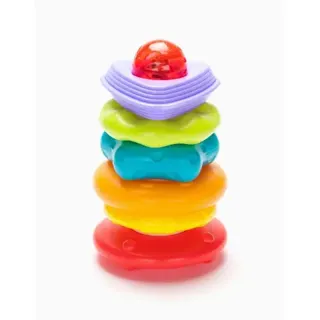 −48 %EurekakidsStacking rings, 5 pieces – Eurekakids78 DH
instead of 150 DHView product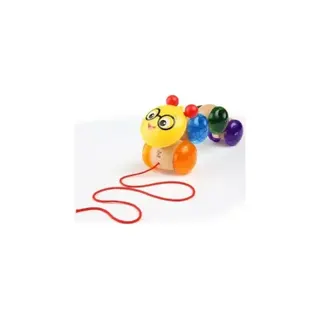 −48 %HapeInch Along Cal wooden pull-along caterpillar – Hape127 DH
instead of 245 DHView product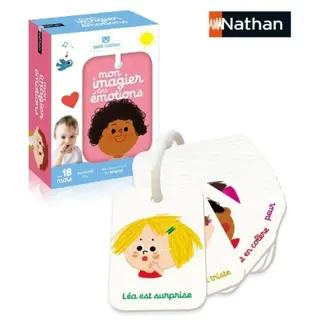 −48 %NathanTake-anywhere emotions picture book – Nathan75 DH
instead of 145 DHView product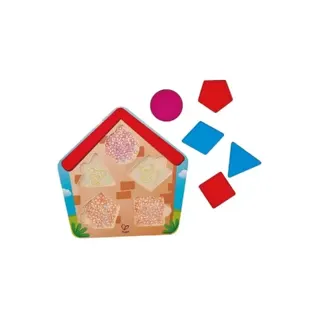 −48 %HapeWho’s in the House wooden peg puzzle – Hape65 DH
instead of 125 DHView product −60 %BadabulleBath book and puppet – Badabulle36 DH
instead of 90 DHView product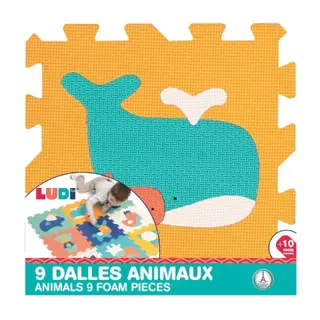 −42 %LudiAnimal tiles play mat, from birth – Ludi143 DH
instead of 245 DHView product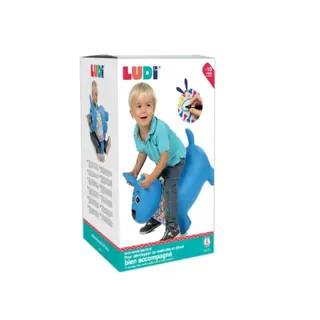 −48 %LudiMy Bouncing Dog inflatable toy, from 10 months – Ludi190 DH
instead of 365 DHView product −9 %BadabulleSoft spoons, set of 5, from 4 months – Badabulle77 DH
instead of 85 DHView product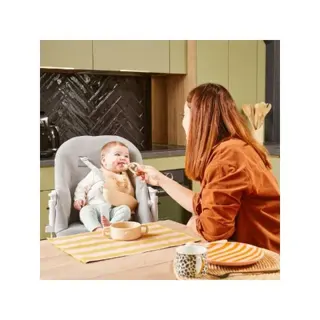 −34 %Babymoov2-in-1 silicone teething spoon, beige – Babymoov59 DH
instead of 90 DHView product
Products sold by La Maison du Bébé, publisher of this magazine. Prices as of 12 October 2026; please check the product page.