









Article contents
Key points
- According to the CDC, most 1-year-olds walk while holding on to furniture.
- The WHO places unaided walking between 8.2 and 17.6 months in healthy children.
- After age 1, cow’s milk can become the main drink, according to the NHS.
- Latex balloons, inflated or burst: a choking risk on party day.
- One year old does not mean a forward-facing car seat.
A candle on the cake, aunts filming, grandpa clapping: your 12-month-old is celebrating a first birthday without quite understanding why everyone is singing. A year ago they could barely hold their head up. Today they pull themselves up against the table to reach a slice, wave goodbye to the guests and ask for “more”.
It is a good moment to look at how far they have come and to take stock with the paediatrician. The WHO and CDC milestones help measure that journey, as long as you read them properly; they also guide the table, the bed and the party day.
A year of progress in six motor milestones
The WHO followed 816 healthy children in Ghana, India, Norway, Oman and the United States, from 4 to 24 months. For six major motor milestones, it defined “windows” of achievement, from the earliest to the latest of normal children (1st to 99th percentile):
| Milestone | Window observed by the WHO |
|---|---|
| Sitting without support | 3.8 to 9.2 months |
| Standing with support | 4.8 to 11.4 months |
| Crawling on hands and knees | 5.2 to 13.5 months |
| Walking with assistance | 5.9 to 13.7 months |
| Standing alone | 6.9 to 16.9 months |
| Walking alone | 8.2 to 17.6 months |
Two lessons. At age 1, a healthy child can be almost anywhere within these windows. And 4.3% of the children in the study never crawled: skipping a stage is not a problem in itself.

What most babies do at 12 months
The American CDC lists the skills that at least three quarters of children of a given age have reached. So a quarter of children may not have reached them yet: a missing milestone is a reason to talk about it, not proof of a difficulty. Around age 1:
| Area | What most babies do |
|---|---|
| Movement | Pulls up to stand, walks holding on to furniture, drinks from an open cup that you hold, picks up small pieces between thumb and finger |
| Language | Waves goodbye, calls a parent “mama”, “dada” or a pet name, understands “no” |
| Thinking | Puts an object in a container, looks for a toy they saw you hide |
| Relationships | Joins in with you in action rhymes |
To revisit the previous month, reread our milestones for a baby at 11 months.
Is your baby walking yet? Sources do not all say the same thing
UNICEF describes a one-year-old who pulls up to stand and walks without holding on to furniture, some taking a few steps unaided. The CDC, for its part, only expects walking along furniture. And the WHO saw perfectly healthy children let go of the furniture at 8 months, and others at almost 18 months.
These figures do not contradict each other: UNICEF describes a typical child, the CDC sets a threshold for vigilance, and the WHO measures normal variation. If your baby is not walking yet, let them practise with your hands, stable furniture or a push toy, and without a baby walker, which the CDC advises avoiding. Our feature on the age of first steps covers this stage in detail.
Their words, their gestures, their understanding
At age 1, UNICEF describes a child who copies simple gestures, says first words such as “mama” and “dada”, responds to simple requests and tries to repeat what you say. They cry when you leave, may be shy with strangers and hand you a book when they want a story.
Encourage the “hellos” and “goodbyes”, praise every attempt at a word and get them to point at the pictures in a book, advises UNICEF. What comes next, with the vocabulary explosion, is covered in our article on the 18-month-old.
The first-birthday check-up with the paediatrician
Prepare for it like a review: what they do, what they do not do yet, what surprises you. The CDC encourages parents to share their observations with the doctor and to ask for a developmental screening if in doubt, since its milestone lists do not replace validated tools. Bring the health record booklet, and check the vaccinations due in our vaccination schedule for Morocco.
Milk, honey, juice: what changes at the table at age 1
UNICEF describes a child who tastes a wider and wider range of foods, chews properly, starts to feed themselves and learns to drink from an open cup. If you are breastfeeding, you can continue if your child wishes.
On drinks, the UK’s NHS advises against cow’s milk as the main drink before age 1: it is now possible. The CDC suggests water, breast milk or plain milk, considers juice optional, limited to about 120 ml of pure juice a day, and advises against fizzy drinks, sugary drinks and flavoured milks. Honey becomes allowed, but not whole nuts, which the NHS rules out before age 5. Meals from here on are detailed in our guide to meals for ages 1 to 3.
Sleep: 11 to 14 hours
According to Naître et grandir, a one-year-old sleeps about 11 to 14 hours per 24 hours, naps included. Most still take two naps, morning and afternoon, until 18 months, each lasting from 30 minutes to 2 hours.
A birthday party without danger
Quebec public health warns against latex balloons: inflated, deflated or in pieces after bursting, they can choke a young child. Prefer paper decorations out of reach, pick up confetti and small wrappers, and put every gift through the empty toilet roll test recommended by the Canadian Paediatric Society.
For the trip to grandma’s, the car seat stays rear-facing: French road safety authorities recommend keeping it that way for as long as possible, and the R129 standard extends the period when it is compulsory. The right settings are explained in our car seat installation guide, and party planning in our ideas for a simple first birthday.
From the shop
Gift ideas for a first birthday
Toys recommended from 12 months for stacking, pulling, fitting and riding, at a range of prices. Check the age and the absence of small parts before giving.
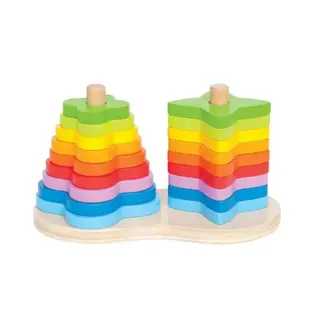 −48 %HapeRainbow stacking game, 12 months-3 years – Hape101 DH
instead of 195 DHView product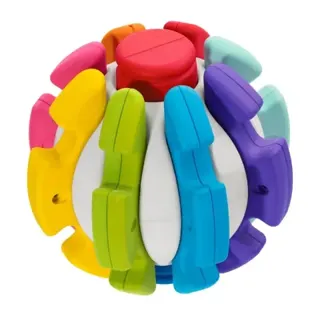 −48 %Chicco2-in-1 Build-a-Ball activity toy, from 1 year – Chicco135 DH
instead of 260 DHView product −48 %HapeInch Along Cal wooden pull-along caterpillar – Hape127 DH
instead of 245 DHView product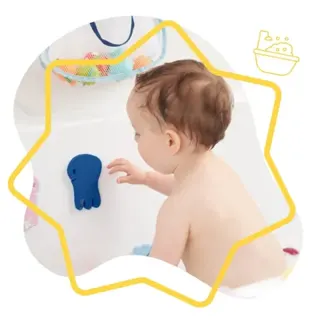 −61 %BadabulleBath puzzle, from 12 months – Badabulle78 DH
instead of 200 DHView product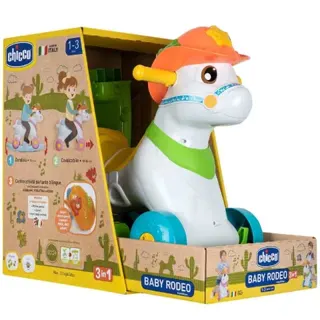 −35 %ChiccoBaby Rodeo & Friends ride-on, boy – Chicco582 DH
instead of 895 DHView product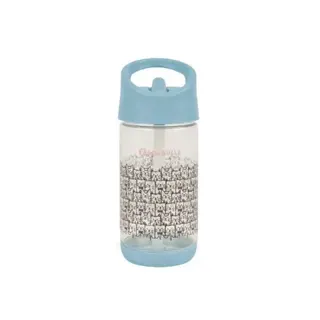 −35 %BadabulleWater bottle with straw, from 12 months – Badabulle94 DH
instead of 145 DHView product- The whole aisle · Early learning25 products online, delivered anywhere in Morocco.Open the aisle
Products sold by La Maison du Bébé, publisher of this magazine. Prices as of 12 October 2026; please check the product page.
Frequently asked questions
Is a baby who is not walking at 1 year delayed?
No, not if they are making progress. In the children followed by the WHO, unaided walking appeared between 8.2 and 17.6 months, and the CDC only expects walking while holding on to furniture at age 1. Talk to the paediatrician if your baby does not pull up to stand, does not move around in any way or loses skills they had gained.
Can I give cow’s milk at 12 months?
Yes. The UK’s NHS says cow’s milk can become the main drink after age 1. At this age the CDC suggests water, breast milk or plain milk, and advises against flavoured milks and sugary drinks. If you are breastfeeding, UNICEF advises continuing for as long as your child wishes.
Should my one-year-old be talking already?
They often say one or two words, sometimes none. At age 1 the CDC expects a word for a parent (“mama”, “dada” or a nickname) and a wave goodbye. UNICEF describes first words such as “mama” and “dada”, and recommends seeing the paediatrician if no simple word has appeared by this age. Understanding matters just as much.
What gift should I give for a first birthday?
A simple toy that follows what they are learning: stacking rings or cups, a ball, a pull-along toy, board books, a stable ride-on of the right size. Check the age on the packaging and do the empty toilet roll test: anything that fits inside could choke them. Latex balloons are best avoided.
Can babies have honey after age 1?
Yes. The NHS rules it out until the first birthday because of infant botulism, then allows it. It is still a sugar: the same body advises avoiding sugars and sweeteners, honey and syrups included, until age 4. So limit the honey pastries at the party.
Sources
- Milestones by 1 YearCenters for Disease Control and Prevention (CDC), programme Learn the Signs. Act Early. · États-Unis
- WHO Motor Development Study: Windows of achievement for six gross motor development milestonesGroupe d'étude de l'OMS sur la référence de croissance multicentrique (Acta Paediatrica, 2006) · International
- Les grandes étapes du développement de votre enfant à 1 anUNICEF Parentalité · International
- Your baby's first solid foodsNHS · Royaume-Uni
- Le sommeil de bébéNaître et grandir · Canada (Québec)
- Foods to avoid giving babies and young childrenNHS · Royaume-Uni
- Prévenir les étouffementsMieux vivre avec notre enfant de la grossesse à deux ans, INSPQ · Canada (Québec)
- Le siège auto : rouler en sécurité avec un enfant à bord (dépliant)Sécurité routière, ministère de l'Intérieur · France