








Article contents
Key points
- Three family meals and one or two snacks: no grazing in between.
- Small portions; they can ask for more. Never make them finish their plate.
- Between 2 and 5 years, wariness of new foods is a normal stage.
- No more than 750 ml of milk a day: beyond that, they are less hungry for everything else.
- Screens off and toys put away during meals.
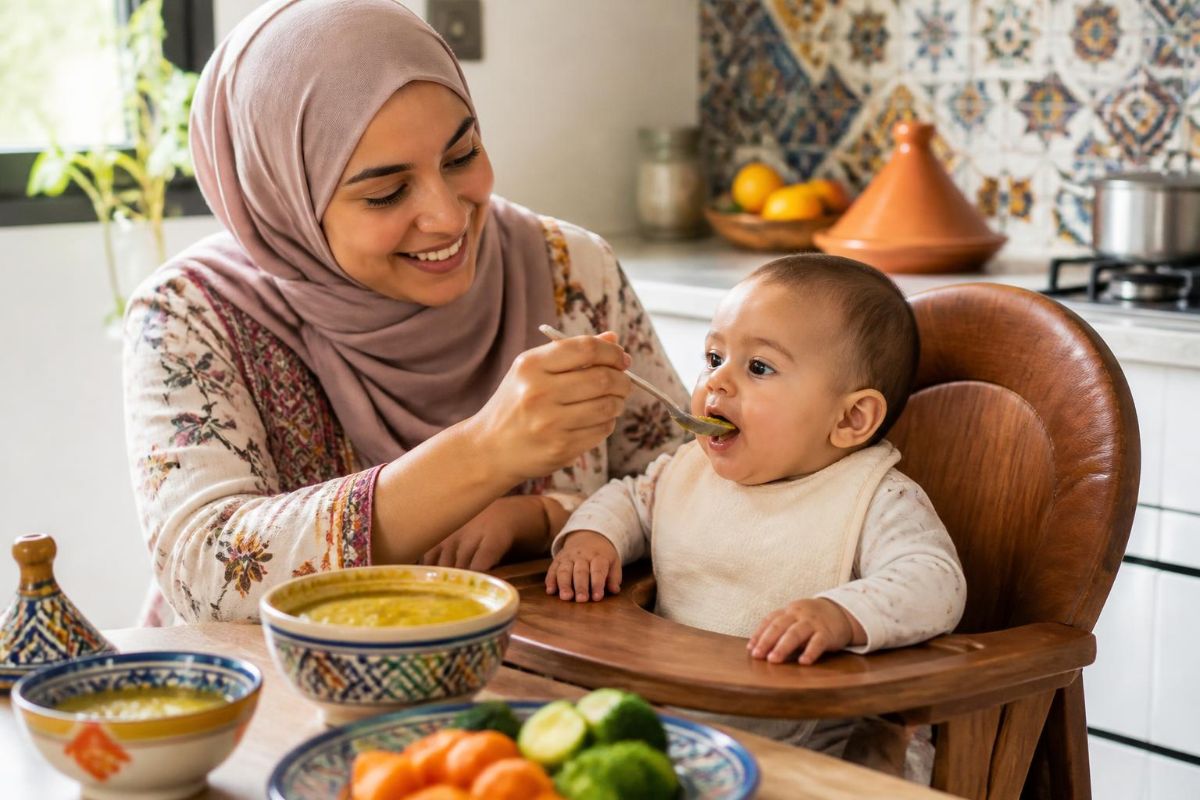
They pushed away the tagine, spat out the courgette, asked for bread, then for their bottle of milk. At 18 months they devoured everything; at 2 years they sort. Grandma worries, suggests spoon-feeding them in front of a cartoon, and you wonder whether your toddler who isn't eating is really eating enough.
In the vast majority of cases, yes. Between 1 and 3 years, appetite changes and wariness of new foods sets in. Here are the guidelines to know what is normal, organise their meals and defuse battles at the table.
Why they eat less after age 1
Because they are growing more slowly. Around age 1, the pace of growth slows and appetite can drop or vary from day to day, explains the Quebec guide Mieux vivre avec notre enfant, published by the INSPQ. Your child is also more interested in exploring and playing than in eating. As long as they are in good form, cheerful and developing normally, there is no reason to worry.
The UK's NHS sums it up in one sentence: an active child who is gaining weight and seems well is eating enough. The final judge is their weight and height curve, followed at every paediatrician visit, not what is on a plate.
What meal routine between 1 and 3 years?
From age 1, a child has their three meals with the family and probably needs one or two snacks (INSPQ). The World Health Organization (WHO) provides, up to age 2, for 3 to 4 meals a day and 1 to 2 snacks as needed. The NHS sets a clear limit: two healthy snacks a day are enough.
This framework matters more than it seems. A child who grazes all day, biscuits in the buggy or pieces of bread on the go, arrives at the table without hunger. The NHS also advises not waiting until they are starving or overtired to get them to eat. To put together balanced snacks, take inspiration from our snack ideas for the week.
What amounts and portions?
Small ones. The INSPQ recommends serving small portions so as not to discourage them, even if it means giving seconds, and adapting the amount to their tastes and appetite. At each meal, offer foods from at least three of the four groups: vegetables and fruit, starchy foods, protein, milk and dairy products.
| Guide | Between 1 and 3 years |
|---|---|
| Milk and dairy | At least 350 ml of milk a day or 2 portions of dairy foods (NHS); about 500 ml of milk around age 1, without exceeding 750 ml (INSPQ) |
| Meat, fish, egg | About 20 g a day from 1 to 2 years, 30 g from 2 to 3 years, at a single meal (SFP) |
| Fish | Twice a week, including an oily fish such as sardine (SFP) |
| Starchy foods | At every meal: bread, semolina, rice, pasta, potato or pulses (SFP) |
| Fruit and vegetables | At every meal (NHS) |
| Drink | Water or plain milk, with no sugar (NHS) |
Whole milk is still advised: whole dairy foods are recommended up to age 2, and skimmed milk is not suitable as a main drink before age 5 (NHS). No salt is added to their share: most foods already contain enough (NHS).
Food neophobia: when they refuse everything new
Between 2 and 5 years, many children become cautious about foods they don't know. It is a normal stage of learning, called food neophobia, the NHS Somerset paediatric therapy service reminds us. The little one who swallowed everything at 15 months may suddenly refuse the tomato or couscous they used to like.
The answer is repeated exposure, without pressure. Sometimes a food has to be offered at least ten times before it is accepted, according to the French Society of Paediatrics (SFP). A child tames a food in stages: they look at it, smell it, touch it with their fingers or fork, lick it, then taste it. Every stage counts, even if they don't swallow it.
- Serve the new food next to one they like, in a small amount.
- Eat it yourself, with enjoyment: eating as a family exposes them to a wide variety of foods.
- Involve them in preparing it: washing vegetables, mixing the dough, setting the table.
- Change the presentation: the NHS gives the example of raw grated carrot, sometimes better accepted than cooked.
What helps at the table, and what makes it worse
Some very natural reactions keep the refusal going. The SFP advises against rewarding or punishing a child according to what they eat, and against making up for a refused meal with a dessert or a snack. The NHS adds not to use food as a reward, and to praise your child when they eat, even a little.
What helps:
- regular times and a meal taken seated, at the table, with you;
- a child sitting at the right height, on a booster seat or in their chair, with cutlery suited to their hand to eat on their own;
- patience with slow little eaters (NHS).
What makes it worse: the forced spoon, blackmail with dessert and threats.
Screens at the table: why to switch them off
The cartoon that makes them open their mouth "without realising" is a false solution. The INSPQ recommends avoiding distractions during meals, such as electronic devices and toys.
More broadly, the WHO recommends no sedentary screen time at age 1, and no more than one hour a day at age 2, adding that less is better. Our full guidelines are in our article on screens and young children.
Moroccan meal ideas for toddlers
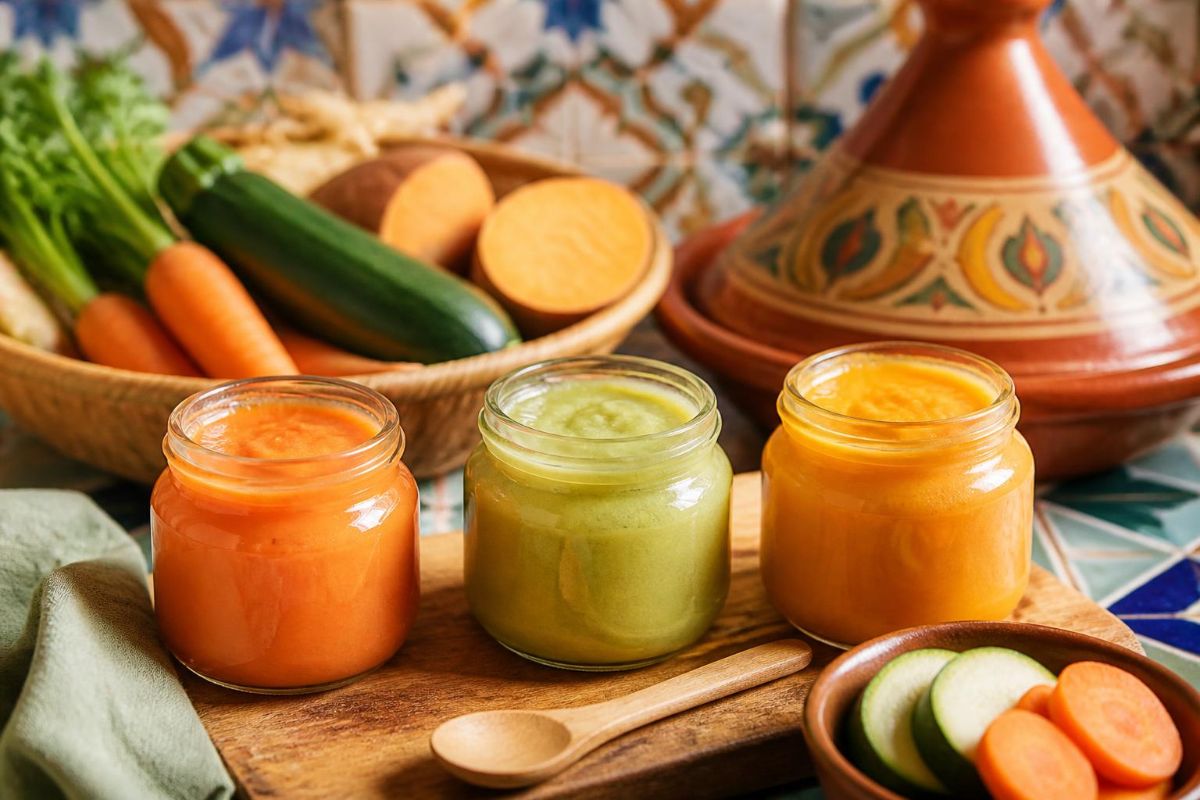
Moroccan family cooking suits the meals of 1 to 3 year olds very well, as long as you take their share before the salt and stock cube, and cut foods into suitable pieces.
- Breakfast: raïb (Moroccan fermented milk) or plain yoghurt with mashed fruit, bread and scrambled egg, or plain baghrir (semolina pancakes), with no honey or added sugar.
- Lunch: vegetable and chicken tagine, vegetable couscous with mashed chickpeas, or fish with chermoula and potatoes.
- Snack: a seasonal fruit and a dairy food, or a slice of bread with cheese.
- Dinner: lightly salted harira taken out before seasoning, bissara (split-pea soup), loubia (white bean stew) or a vegetable omelette.
Sugar is limited and kept to mealtimes, without offering any before bed; dried fruit, such as dates, is given with meals rather than for grazing (NHS), cut into small pieces. Tea, even weak, and fizzy drinks are not suitable for young children (NHS). On drinks, our article on water for children takes stock. And to follow their progress at this age, see our portrait of the 2-year-old.
From the shop
To eat at the table with the grown-ups
A booster seat to reach the family table, cutlery for small hands, a plate that doesn't slip and an open cup: everything to help them eat on their own.
 −48 %BadabulleBooster Seat chair booster – Badabulle286 DH
instead of 550 DHView product −9 %BadabulleFlexible learning cutlery – Badabulle50 DH
instead of 55 DHView product −22 %BabymoovIsy Plate silicone divided baby plate, fox – Babymoov164 DH
instead of 210 DHView product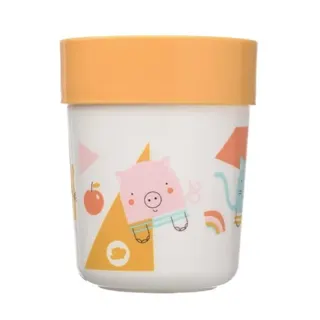 Maxi Cosi - Bébé ConfortDomino cup with non-slip base – Maxi-Cosi60 DHView product
 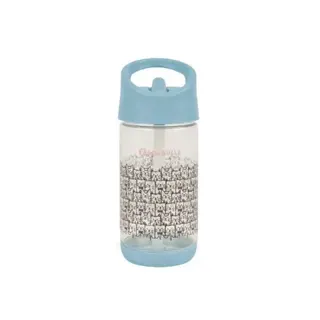 −35 %BadabulleWater bottle with straw, from 12 months – Badabulle94 DH
instead of 145 DHView product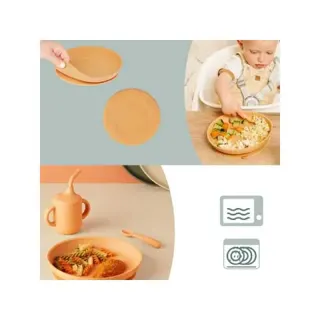 −9 %BabymoovLittle Arty toddler mealtime set – Babymoov309 DH
instead of 340 DHView product- The whole aisle · Baby plates and bowls8 products online, delivered anywhere in Morocco.Open the aisle
Products sold by La Maison du Bébé, publisher of this magazine. Prices as of 12 October 2026; please check the product page.
Frequently asked questions
My 2-year-old only wants milk: what can I do?
Limit the milk to leave room for appetite. The Quebec guide Mieux vivre advises about 500 ml of milk a day around age 1, without exceeding 750 ml, because more reduces appetite for other foods. Offer it in a glass or cup: the NHS advises against bottles after age 1. Dairy foods count too: a yoghurt or a piece of cheese replaces part of the milk.
Can I hide vegetables in their favourite dishes?
It is better not to hide a new food in a dish they like, advises the NHS Somerset paediatric therapy service. Instead, present the vegetable alongside, in a small amount, and let them look at it, touch it, smell it, then taste it when ready. Eat some yourself in front of them: example counts.
How long does food neophobia last?
It mostly appears between 2 and 5 years, a period when many children become cautious about new foods, according to the NHS Somerset paediatric therapy service. Some stay wary after 5. If, despite months of patience, your child still refuses whole groups of food, for example all vegetables or all meats, talk to your doctor.
Can fruit juice replace a piece of fruit?
No. The NHS reminds us that the best drink for a young child is water or plain milk, with no sugar. Juice is not necessary; if you give it, dilute it well and only with a meal, to protect their teeth. Fizzy drinks are best avoided, as is tea, even weak, which the NHS considers unsuitable for young children. Whole fruit, cut into suitable pieces, remains the best choice.
Sources
- À partir de 1 an – Votre bébé partage le menu familialMieux vivre avec notre enfant, Institut national de santé publique du Québec (INSPQ) · Canada (Quebec)
- Fussy eatersNHS · United Kingdom
- What to feed young childrenNHS · United Kingdom
- Drinks and cups for babies and young childrenNHS · United Kingdom
- Trying new foodsChildren and Young People's Therapy Service, Somerset NHS Foundation Trust · United Kingdom
- Les nouvelles recommandations du PNNS sur la diversification alimentaireComité de nutrition de la Société française de pédiatrie, Perfectionnement en Pédiatrie (2022), document diffusé par l'AFPA · France
- Alimentation du nourrisson et du jeune enfantWorld Health Organization (WHO) · International
- To grow up healthy, children need to sit less and play moreWorld Health Organization (WHO) · International