








Article contents
Key points
- Before 6 months, the WHO advises against giving water to a breastfed baby unless medically necessary.
- In hot weather, increase the milk: more feeds, or extra bottles.
- From 6 months, a few sips of water with meals, from an open cup.
- Tap water for an infant: cold, brought to a rolling boil, never reboiled.
- Bottled water: low in sodium and sulphate, kept in the fridge and finished within 24 hours.
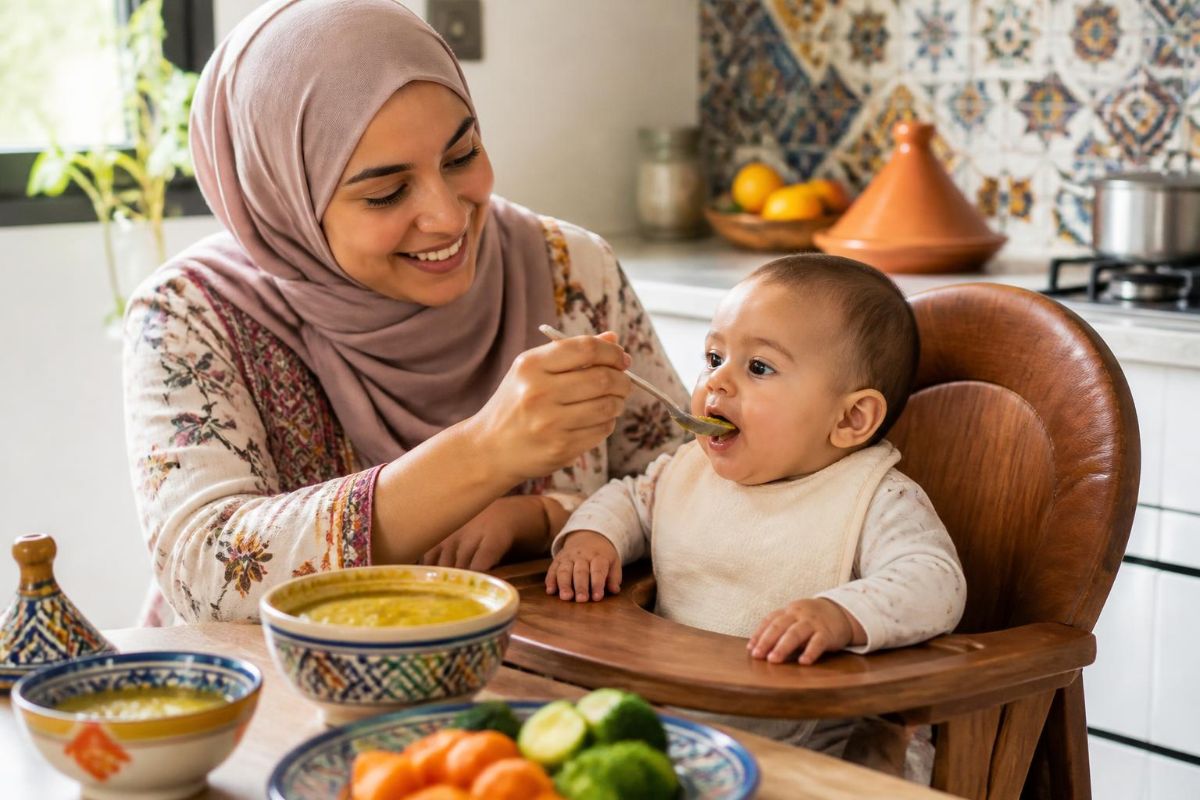
It is 38 °C, the chergui (the hot, dry desert wind) has been blowing for two days, and your 3-month-old has flushed cheeks. His grandmother offers him a little bottle of water, convinced he is thirsty. Should you let her? And which water for a baby in Morocco: tap water, boiled or not, or bottled?
The answers depend mostly on his age and on how he is fed. They also differ a little from one country to another, because health authorities reason from their own water supply. Here is what they say, and how to apply it at home.
Does a baby need water before 6 months?
As a rule, no. The World Health Organization (WHO) recommends exclusive breastfeeding for six months, with no other foods or drinks, water included, unless medically necessary. Breast milk covers his fluid needs.
Other authorities agree, with a nuance for formula-fed babies:
- The American Academy of Pediatrics (AAP) says a breastfed baby should not be given water, especially in the first six months. In very hot weather, you increase the milk: more feeds, or a little expressed breast milk. For a formula-fed baby, offer extra bottles, made up as usual.
- The UK’s NHS confirms that an exclusively breastfed baby does not need water before weaning starts, but accepts that formula-fed babies under 6 months may be given a few sips of cooled boiled water in hot weather, in addition to their milk.
- Belgium’s ONE points out that a breastfed or formula-fed baby generally does not need extra water.
Never change the strength of the milk to “hydrate” him: the amount of powder stays as the label says. For summer, our tips on keeping your baby safe in a heatwave complete this guidance.
After 6 months: a few sips with meals
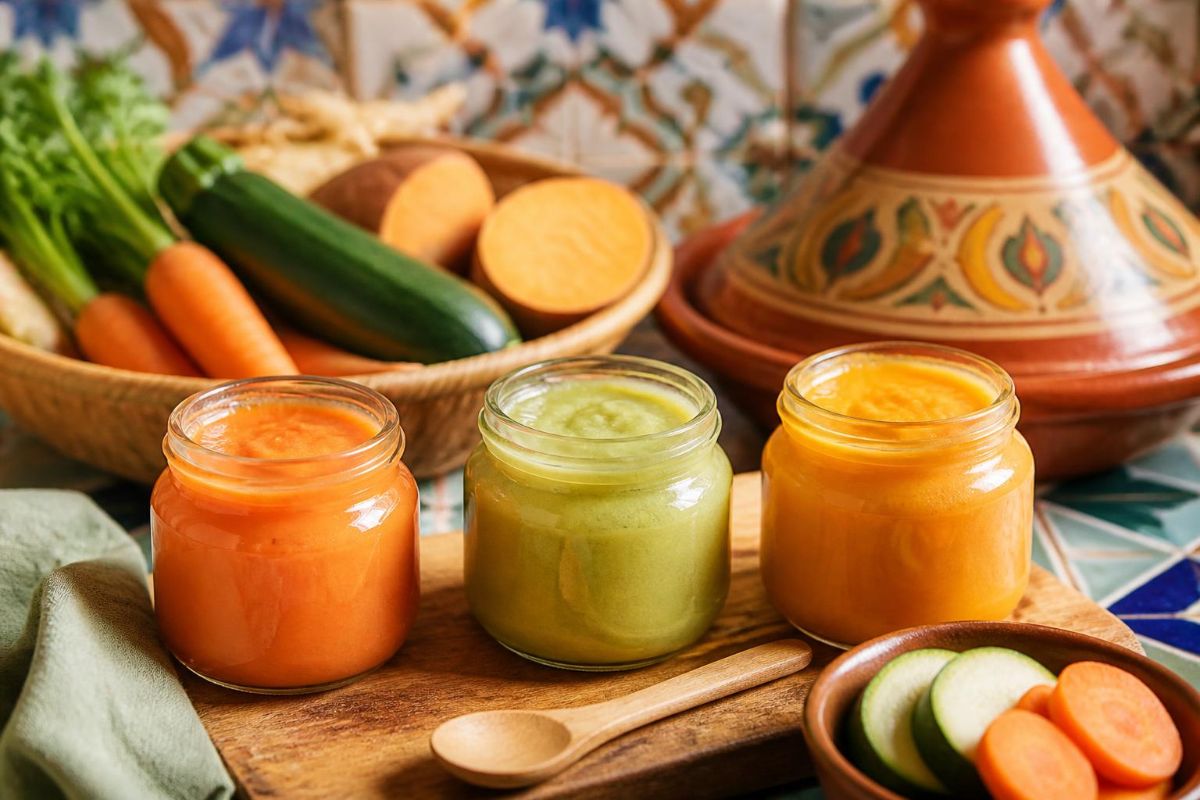
Once weaning starts, water enters his life. The NHS advises offering a few sips at mealtimes from 6 months, in an open cup or a cup without a valve, which are better for his teeth. The US CDC gives an order of magnitude: 120 to 240 ml of water a day between 6 and 12 months. Milk remains his main drink until age 1 (NHS). How to start solids is covered in our guide to starting solids.
As he grows, water becomes his everyday drink, alongside milk. The AAP advises keeping water always within reach and offering it often, before he even asks: young children are poor at recognising the first signs of dehydration. The NHS also recommends moving away from the bottle after age 1, in favour of a cup.
Tap or bottled: what the health authorities say
Recommendations vary by country, because each one reasons from its own water supply:
- In the UK, boiled tap water is the rule for milk bottles, and the water a baby of 6 months or more drinks no longer needs boiling (NHS). Bottled water is discouraged for bottles there: it is not sterile and may contain too much sodium or sulphate.
- In Quebec, cold tap water is boiled for bottles up to 4 months; after that, it can be used without boiling (INSPQ).
- In Belgium, ONE accepts tap water for bottles from 4 months, and bottled water if its label says it is suitable for preparing infant food.
And in Morocco? Distributors state that the water meets Moroccan drinking-water standards: in 2021, Lydec told Hespress it checks Greater Casablanca’s water every day at 184 points on the network, and an ONEE official described the country’s drinking water as “high quality”. But quality at the tap also depends on the pipes of each building, and hot tap water may contain more lead (INSPQ). Hence a principle of caution, valid throughout the country: for an infant, boil the tap water, or choose a suitable bottled water.
Boiling water: the right method
- Use cold water from the tap, never hot (INSPQ), after letting it run for a few moments (ONE).
- Bring it to a rolling boil for 1 minute (INSPQ).
- Use fresh water every time: the NHS advises against water that has already been boiled once, and against softened water. Filter jugs, for their part, are unnecessary and can encourage germs if poorly maintained (ONE).
- Let it cool in a clean, covered container if it is for drinking. For a formula bottle, the water must on the contrary still be at least 70 °C when mixed: the full method is in our article on preparing a bottle.
Choosing a bottled water
Not all bottled waters are equal for an infant. Keep three guidelines in mind:
- The wording “suitable for preparing infant food”, when it appears on the label, is a good starting point (ONE).
- A low-mineral water: compare labels and pick the one with the least sodium (Na) and sulphate (SO4), the two minerals the NHS flags as possibly being in excess.
- A well-kept bottle: bottled water is not sterile. Once opened, it keeps in the fridge and should be finished within 24 hours (ONE). Avoid bottles stored in full sun, on a terrace or in a car.
From the shop
For his first sips of water
An open cup to learn to drink, a straw cup for a bit more independence, and an insulated bottle to take cool water or cooled boiled water out for a walk.
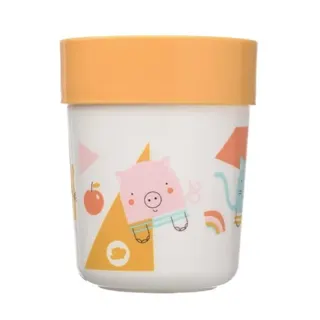 Maxi Cosi - Bébé ConfortDomino cup with non-slip base – Maxi-Cosi60 DHView product
 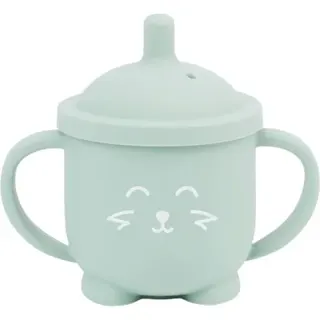 −9 %BabymoovIsy silicone straw cup, fox – Babymoov191 DH
instead of 210 DHView product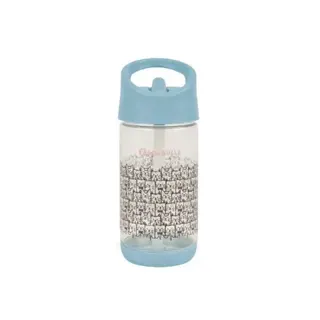 −35 %BadabulleWater bottle with straw, from 12 months – Badabulle94 DH
instead of 145 DHView product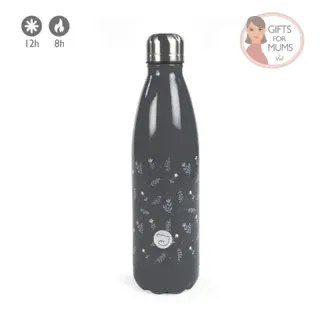 −42 %Pasito a PasitoFleur insulated bottle, Gifts for Mums, 500 ml – Pasito a Pasito222 DH
instead of 380 DHView product- The whole aisle · Baby cups8 products online, delivered anywhere in Morocco.Open the aisle
Products sold by La Maison du Bébé, publisher of this magazine. Prices as of 12 October 2026; please check the product page.
Is your baby thirsty? Signs to watch for
Little ones cannot tell you they are thirsty, and they do not recognise dehydration themselves, the AAP reminds us. In very hot weather, watch for:
- intense thirst, making him suckle or drink greedily;
- clearly fewer wet nappies, or no urine for several hours;
- nausea or vomiting;
- great tiredness, a baby who looks close to fainting.
If these signs persist despite a cool place, call your doctor without delay, advises the AAP. Do not point a fan at a baby in a very hot room: the blown air can increase the risk of dehydration. In case of diarrhoea or vomiting, seek advice quickly: our article on gastro and dehydration explains when and how to use an oral rehydration solution.
Juice, tea, fizzy drinks: what stays out of his cup
- Tea, even weak, even mint tea: the NHS considers it unsuitable for babies and young children, and added sugar harms teeth.
- Fruit juice: unnecessary before age 1; if you do give some, the NHS advises diluting it at one part juice to ten parts water, and only at mealtimes.
- Fizzy drinks, squashes and flavoured drinks: too sugary, and acidic for teeth (NHS). “Diet” versions are not recommended either.
- Rice drinks: not before age 5, because of their possible arsenic content (NHS).
Beyond age 1, water and milk remain the two basic drinks, as our article on meals for 1 to 3-year-olds explains. To choose them in store, the baby cups and glasses section brings together open cups and training cups.
Frequently asked questions
Can I give water to a newborn with hiccups or colic?
Before 6 months, it is not recommended. The WHO advises giving infants nothing but milk, water included, unless there is a medical reason. To soothe your baby, offer a feed or a cuddle instead. And never sugary water: the NHS considers sugary drinks unsuitable for young babies. If your baby cries a lot, has frequent hiccups or seems to be in pain, talk to the paediatrician.
Do I need to boil bottled water?
To make up a formula bottle, yes: bottled water is not sterile, as the NHS and Belgium’s ONE point out, and neither is formula powder. The method is detailed in our article on preparing a bottle. For the water a baby of 6 months or more drinks from a cup, a freshly opened bottle, kept in the fridge and finished within 24 hours, is fine.
How much water should an 8-month-old drink?
Not much, because milk still covers most of his needs. The US CDC gives a guide of 120 to 240 ml of water a day between 6 and 12 months, on top of milk. Offer it in a cup at mealtimes, and more often when it is hot. There is no amount to force: a baby who wets his nappies well and stays lively is drinking enough.
Is tap water safe to drink in Casablanca?
Officially, yes. Lydec says the water supplied in Greater Casablanca meets Moroccan drinking-water standards, with daily sampling at 184 points on the network, according to Hespress in 2021. But quality at the tap also depends on a building’s own pipes. For an infant, boil it, as the Quebec health authorities recommend, for example, before 4 months.
Sources
- Infant and young child feedingWorld Health Organization (WHO) · International
- Drinks and cups for babies and young childrenNHS · United Kingdom
- How to make up baby formulaNHS · United Kingdom
- Extreme Heat: Tips to Keep Kids Safe When Temperatures SoarHealthyChildren.org, American Academy of Pediatrics (AAP) · United States
- Foods and Drinks to EncourageCenters for Disease Control and Prevention (CDC) · United States
- Manipulation des préparations commerciales pour nourrissonsMieux vivre avec notre enfant, Institut national de santé publique du Québec (INSPQ) · Canada (Québec)
- Choisir et préparer le biberonOffice de la Naissance et de l'Enfance (ONE) · Belgium
- Prix et qualité de l'eau de Lydec : Pas aussi claire que de l'eau de rocheHespress FR · Morocco