








Article contents
Key points
- Water first, powder second, with the manufacturer’s scoop, always levelled.
- The WHO recommends water at 70 °C or above: formula powder is not sterile.
- Never the microwave: it heats unevenly and can burn your baby’s mouth.
- A started bottle is thrown away; in summer, keep to the shortest time limit.
- For outings: hot water in a flask, and powder measured out separately.
Water, a tin of formula, a scoop: nothing seems simpler. But between tired nights, the contradictory advice of relatives and summer heat, small mistakes creep in fast. Preparing a bottle takes a few precise steps, always the same, that protect your baby from infection and from a badly measured feed.
Here is the method recommended by the World Health Organization (WHO), the points on which countries differ, and practical solutions for nights, outings and heatwaves. This advice applies whichever infant formula you use: always follow the instructions on the tin.
Why so many precautions for a bottle?
Because powdered formula is not sterile. Even in a sealed tin, it can contain bacteria, the UK’s NHS reminds us. Once the milk is made up, they multiply very fast at room temperature, and faster still when it is hot.
Newborns, premature babies, babies of low weight or with a fragile immune system are the most vulnerable. Hence three principles: clean, sterilised equipment (see our guide to sterilising baby bottles), safe water, and a bottle made up at the last moment.
Which water should you use for a bottle?
Safe water, low in minerals, which you boil for a young baby. Recommendations do differ from one country to another:
- In the United Kingdom, the NHS advises fresh tap water, boiled, never previously boiled or softened, and advises against bottled water, which is not sterile and may be too high in sodium or sulphates.
- In Quebec, cold tap water must be brought to a rolling boil for 1 minute up to 4 months. Hot tap water is ruled out, because it can contain more lead and bacteria.
- In Belgium, ONE accepts bottled water bearing the words “suitable for preparing infant food”, kept in the fridge and used within 24 hours of opening.
In Morocco, water quality varies by city, neighbourhood and the state of the plumbing. Our article on baby water in Morocco helps you choose between tap and bottled water, and read a label.
The steps, following the WHO method
- Boil at least a litre of fresh water.
- Let it cool in the kettle, but for no more than 30 minutes: it must stay at 70 °C or above.
- Clean the work surface and wash your hands.
- Pour the water in first into the sterilised bottle, up to the right mark, checking the level at eye height.
- Add the powder with the scoop supplied in the tin, filled without packing it down and levelled with the back of a clean knife or the leveller provided.
- Close and shake until completely dissolved.
- Cool the bottle under cold running tap water, turning it.
- Test a few drops on the inside of your wrist: the milk should feel lukewarm or cool, never hot.
Measuring: no more, no less
Follow your formula’s instructions exactly. Scoops are not universal: depending on the brand, one scoop corresponds, for example, to 30 ml or 60 ml of water, the INSPQ points out. So never use the scoop from another tin.
Adding “a little extra scoop” so your baby sleeps better is a false good idea: milk that is too concentrated can constipate and dehydrate them. Milk that is too dilute, on the other hand, does not feed them enough. If your baby still seems hungry, it is the amount of milk you adjust, not the concentration: our article on how much milk by age gives the guidelines.
At what temperature should you give the bottle?
Lukewarm or at room temperature: both are fine, what matters is that the milk is never hot. To warm a bottle, stand it for a few minutes in a container of hot (not boiling) water, or use a bottle warmer, then shake and test on your wrist.
The microwave is out: it heats unevenly and creates scalding spots in the middle of the milk, while the bottle feels lukewarm to the touch. To compare the bain-marie with appliances, see our bottle warmer buying guide.
Night bottle: how to get organised
The NHS and the WHO recommend making up each bottle at the moment your baby needs it. At night, that takes a bit of organisation:
- A flask of boiled water, kept for this use and preheated with boiling water, keeps the water above 70 °C for a few hours. According to measurements cited by the British charity NCT, a full 500 ml flask stays above 70 °C for three hours, but a small volume cools much faster.
- Powder already measured, in a clean, dry dispenser, beside a sterilised, closed bottle.
In Quebec, another option is accepted for a healthy full-term baby: make the bottles with boiled water cooled down, put them straight at the back of the fridge, never in the door, and use them within 24 hours. What you must never do, however, is leave a lukewarm bottle all night in a bottle warmer or on the bedside table.
Outings, travel and heatwaves
For an outing, take separately a flask of hot water, the powder measured out in a formula dispenser and a sterilised empty bottle: you mix at the last moment. If you have no choice but to make the bottle in advance, the NCT advises cooling it quickly, carrying it in an insulated bag with an ice pack, and using it within 4 hours.
In summer, and even more in a chergui (hot desert wind) spell, never leave a bottle in a car in the sun or in a hot bag. Remember too to offer your baby drinks more often: our guidelines for protecting your baby from the heat help with that.
From the shop
Preparing, measuring and carrying bottles
A formula dispenser and an insulated bag make outings easier; the bottle warmer is a comfort, not a necessity. Choose according to your routine: home, car or walks.
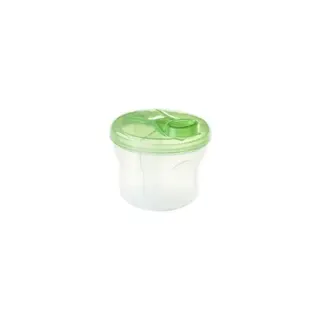 −48 %Saro3-compartment milk powder dispenser, green – Saro62 DH
instead of 120 DHView product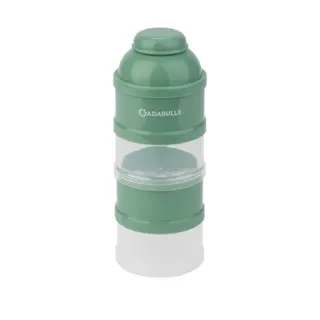 −9 %BadabulleMilk powder dispenser box – Badabulle73 DH
instead of 80 DHView product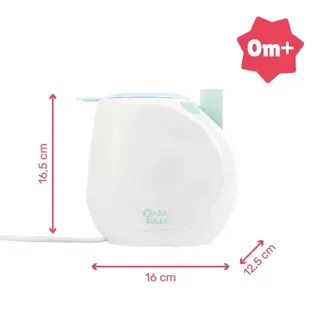 −9 %BadabulleEasy+ home bottle warmer – Badabulle382 DH
instead of 420 DHView product −9 %BadabulleEasy+ home and car bottle warmer, Pastel – Badabulle501 DH
instead of 550 DHView product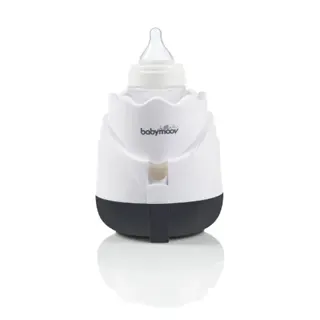 −9 %BabymoovTulipe bottle warmer, Cream – Babymoov546 DH
instead of 600 DHView product −40 %Pasito a PasitoNormandie bottle holder, 250 ml, grey – Pasito a Pasito312 DH
instead of 520 DHView product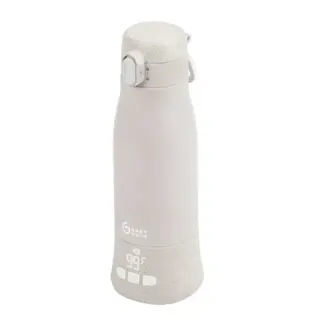 −9 %BabymoovMoov & Feed portable bottle warmer, 330 ml – Babymoov1 083 DH
instead of 1 190 DHView product- The whole aisle · Bottle warmers7 products online, delivered anywhere in Morocco.Open the aisle
Products sold by La Maison du Bébé, publisher of this magazine. Prices as of 12 October 2026; please check the product page.
How long can you keep a made-up bottle?
As short a time as possible. Time limits vary between countries, which mostly shows that there is no leeway:
| Situation | Maximum time |
|---|---|
| Bottle your baby has started | 30 minutes (ONE, Belgium) to 1 hour (AAP, Naître et grandir) |
| Made-up bottle, not started, at room temperature | 2 hours (INSPQ, NHS) |
| Bottle made with cooled water, kept at the back of the fridge | 24 hours (INSPQ, AAP) |
| Bottle already warmed once | Throw away |
In Morocco, in summer, always keep to the shortest time limit.
Frequently asked questions
Can you warm up a started bottle a second time?
No. A bottle your baby has started drinking, or that has already been warmed, is not kept or rewarmed: saliva and heat encourage germs to multiply. Naître et grandir and Belgium’s ONE both ask you to throw it away. If your baby often drinks less than planned, prepare smaller amounts rather than keeping leftovers.
Do you have to warm the milk?
No. Milk at room temperature is perfectly fine, as long as it was prepared correctly. Some babies prefer lukewarm milk, close to body temperature; most accept cold milk by 10 to 12 months, according to Naître et grandir. What matters is that the milk is never hot: always check a few drops on the inside of your wrist.
Are bottle-making machines safe?
They can be, on one condition the NHS stresses: the water must reach at least 70 °C when it is mixed with the powder. Check it with a food thermometer. If it does not, go back to making bottles by hand. Naître et grandir advises that, before 4 months, you use water that has been boiled for at least a minute with these machines.
Is expressed breast milk prepared the same way?
No, there is nothing to mix or boil. You warm it in a bain-marie, in a container of hot but not boiling water, stirring gently, then test the temperature on your wrist. The microwave is not recommended: it heats unevenly and destroys some of the antibodies. Storage times are different from those for infant formula.
My baby only drank half the bottle: what do I do with the rest?
Throw it away, without keeping it for the next feed, even in the fridge. It is normal for a baby not to finish every time: appetite varies from one feed to the next, and you should never force them. If it becomes the rule, prepare slightly smaller bottles, and talk to the paediatrician if you doubt their weight gain.
Sources
- Safe preparation, storage and handling of powdered infant formula: guidelinesOrganisation mondiale de la Santé (OMS) · International
- How to make up baby formulaNHS · United Kingdom
- Step-by-step guide to making up a formula feedNCT (National Childbirth Trust) · United Kingdom
- Manipulation des préparations commerciales pour nourrissonsMieux vivre avec notre enfant, INSPQ · Canada (Quebec)
- Le biberonNaître et grandir (Fondation Lucie et André Chagnon) · Canada (Quebec)
- Choisir et préparer le biberonOffice de la Naissance et de l'Enfance (ONE) · Belgium
- How to Sterilize and Warm Baby Bottles SafelyHealthyChildren.org, American Academy of Pediatrics (AAP) · United States