








Article contents
Key points
- Not before 6 months, and only if your baby sits unsupported and brings food to their mouth.
- Foods soft enough to squash against the palate, and long enough to stick out of their fist.
- Gagging is noisy and protects them; choking is silent and means you must act.
- Never hard, small and round or sticky foods: whole nuts, whole grapes, raw carrot.
- Offer iron-rich foods every day: it is the weak point of BLW.
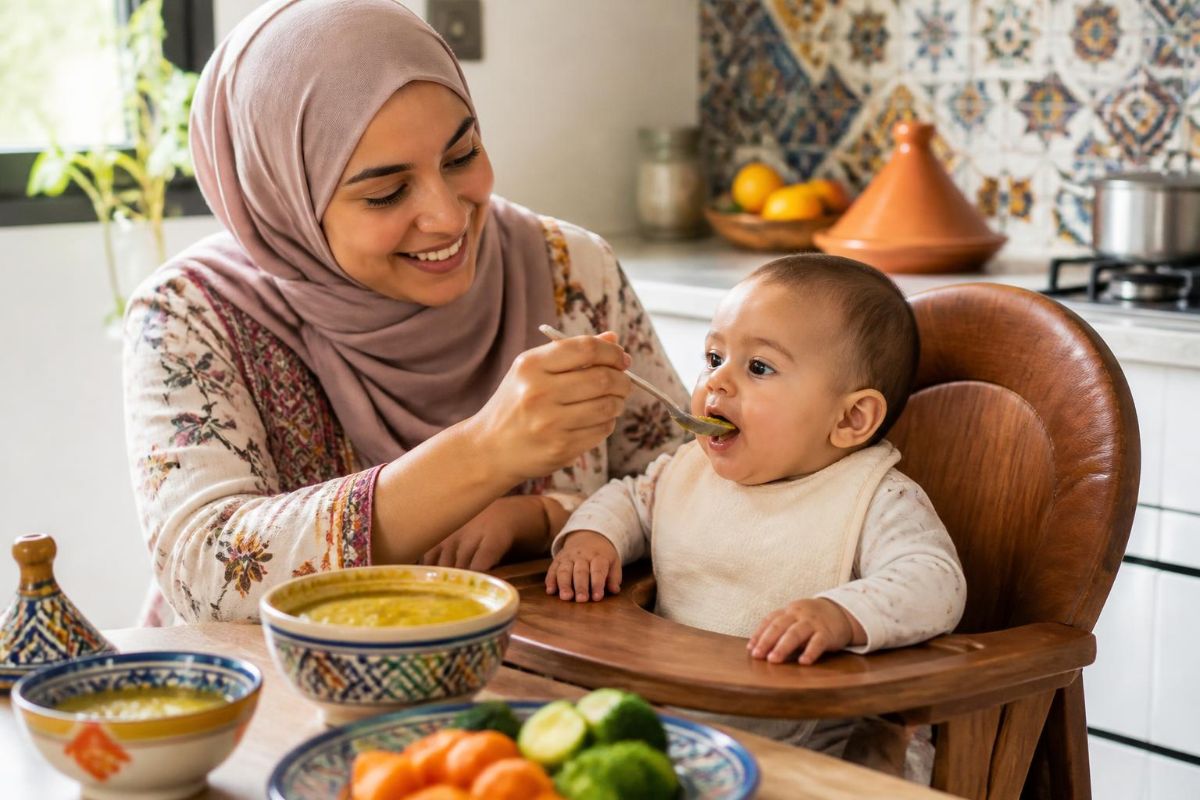
A courgette stick in one hand, a piece of chicken in the other, sauce up to the eyebrows: your 7-month-old is having dinner with you, and feeding themselves. Baby-led weaning (BLW; in French, DME, diversification menée par l'enfant) has its devoted fans. It also worries a lot of people, starting with grandparents, who watch the pieces arrive with dread.
Done well, BLW can suit most babies. It does, however, require respecting precise conditions, knowing the risky foods and being able to tell gagging from real choking. Here is how it works.
What exactly is baby-led weaning?
It is a way of starting solids where parents let their baby feed themselves pieces of food, with no purée and no spoon held out by an adult. They grab, bring to their mouth, chew, sometimes spit out, and decide the amount alone. The Quebec guide Mieux vivre avec notre enfant, published by the Institut national de santé publique du Québec (INSPQ), specifies that the order in which foods are introduced stays the same as with purées: iron-rich foods first, then a wide variety.
For the general guidelines on getting started (age, allergens, foods to avoid), read our guide on the start of solids first. Here we concentrate on what is specific to pieces.
From what age? The conditions for starting
Not before 6 months, and not only because they are 6 months. The INSPQ sets four conditions:
- Be at least 6 months old, corrected age for a baby born prematurely.
- Be in good health, with normal development for their age.
- Sit without support in their high chair for the whole meal, 15 to 20 minutes.
- Be able to grasp an object, bring it to their mouth and let go of it.
If in doubt, or if your baby has a health problem, talk to your paediatrician before you start.
Why opinions differ
On BLW, Quebec and France don't say the same thing, and it is useful to know that. The INSPQ considers that it can suit most children and that babies who feed themselves are no more at risk of choking than those who are spoon-fed, even though they gag more.
The Nutrition Committee of the French Society of Paediatrics (SFP) is more reserved. It acknowledges the advantages put forward (family meals, respect for appetite, early discovery of pieces), but underlines two risks: insufficient intake of energy, iron, zinc and vitamins, or on the contrary too much protein, saturated fat, salt and sugar. It considers the choking risk poorly assessed, and takes the view that current data do not argue for BLW over conventional weaning.
In practice, both agree on the essentials: suitable pieces as soon as your baby is ready, supervision at every moment and particular attention to iron. The SFP also asks that finger foods not be delayed beyond 10 months.
Which foods to offer, and how to prepare them
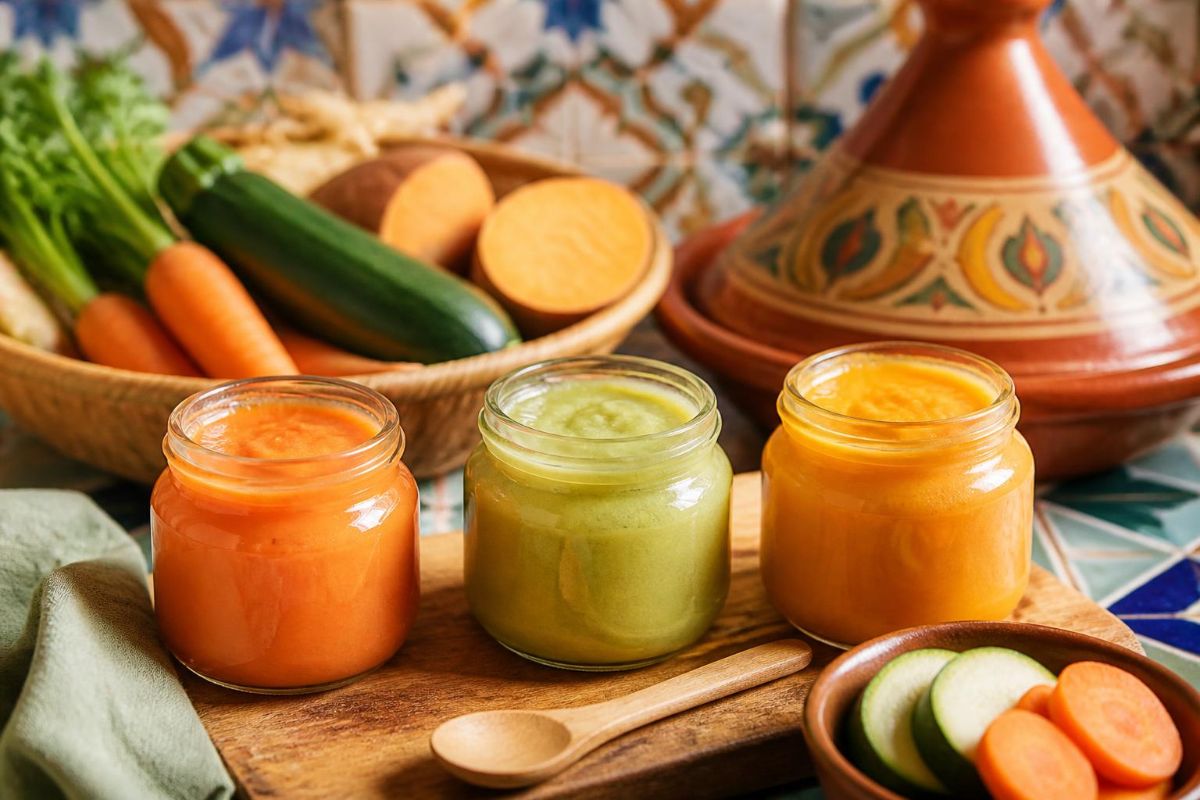
Two criteria count: texture and shape. The food must be soft enough for your baby to squash against their palate with their tongue (INSPQ). And it must be big enough to hold in their hand, long enough to stick out of their closed fist; the UK's NHS speaks of pieces the size of an adult's finger.
| Food | How to prepare it |
|---|---|
| Carrot, courgette, turnip, squash | Cooked until melting, in sticks |
| Very ripe banana, pear or peach | Raw, washed and peeled, in big wedges |
| Avocado | In thick slices |
| Chicken, turkey or beef | Well cooked, no bone or skin, in big tender strips |
| Fish | Well cooked, in big pieces, with all bones removed |
| Egg | Hard-boiled, or in a well-cooked omelette cut into sticks |
| Potato, pasta, rice | Well cooked and cooled |
| Lentils, chickpeas | As a patty, or mashed into a spread on a stick of bread |
These examples follow the NHS and INSPQ lists. Cooked foods are served well cooled, raw fruit and vegetables are washed and peeled, and no salt or sugar is added to their share. In a Moroccan family, the day's tagine or couscous naturally provides melting vegetables and tender meat: take their share before the salt, stock cube and smen (aged clarified butter).
Think about iron every day: strips of meat, fish, egg, lentil or chickpea patties. It is the answer to the main criticism from French paediatricians. Our easy dishes for 6 to 8 months also come in a finger-food version.
Foods to avoid until age 4
Some foods stay dangerous until age 4, whatever the weaning method. The INSPQ notably lists:
- peanuts, walnuts and other tree nuts, whole seeds;
- whole fresh grapes, raisins, slices of sausage;
- raw carrot and celery, popcorn, hard sweets, chewing gum, ice cubes;
- foods skewered on a toothpick or kebab stick.
The general rule: hard, small and round, smooth and sticky foods are the riskiest. So grapes are cut in four, raw carrot, turnip or apple are grated, and bones, fish bones, stones and pips are removed. On a Moroccan table, this also concerns olives, which are salty and have stones, almonds and whole dates: they will wait, or be given crushed or as a powder.
From the shop
To feed themselves, and make a mess without stress
A stable high chair where they sit properly upright, a long-sleeved bib, a plate that stays put and cutlery sized for small hands: BLW needs nothing more.
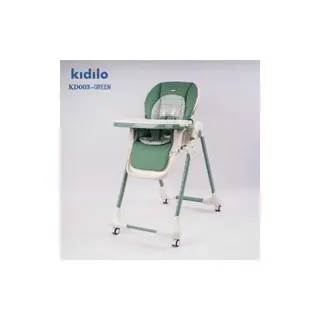 −52 %KidiloKD003 convertible baby high chair – Kidilo715 DH
instead of 1 490 DHView product −9 %BadabulleLong-sleeved baby bib, animals, 4 months to 3 years – Badabulle118 DH
instead of 130 DHView product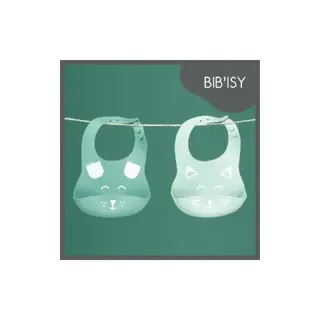 −9 %BabymoovBib’Isy silicone bibs, x2 – Babymoov200 DH
instead of 220 DHView product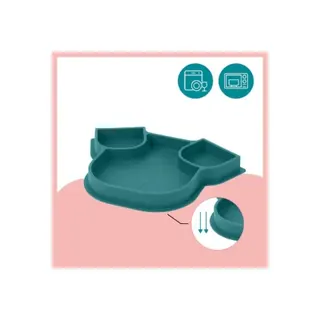 −22 %BabymoovIsy Plate silicone divided baby plate, dog – Babymoov164 DH
instead of 210 DHView product −9 %BadabulleFlexible learning cutlery – Badabulle50 DH
instead of 55 DHView product- The whole aisle · Baby high chairs21 products online, delivered anywhere in Morocco.Open the aisle
Products sold by La Maison du Bébé, publisher of this magazine. Prices as of 12 October 2026; please check the product page.
Gagging or choking: knowing the difference
Parents often mix the two up, yet the difference is clear.
| Gagging | Choking | |
|---|---|---|
| What you see | Watering eyes, tongue pushing forward, a retching movement (NHS), they cough and spit out | They can no longer breathe, cough or make a sound (INSPQ), they gasp or turn bluish (AAP) |
| The noise | Noisy | Silent |
| What it is | A normal reflex that protects them from choking (INSPQ) | A life-threatening emergency |
| What you do | Stay calm beside them and let them manage | Act immediately |
Gagging is common at the start, especially with BLW. If your baby gags at every meal for several days, talk to a doctor, advises the INSPQ. And if the piece is partly stuck but they are coughing hard, encourage them to cough, without intervening.
What to do if a baby chokes
These steps are learned on a first-aid course, which no article replaces: you learn, among other things, how to hold your baby. Here is the procedure described by the INSPQ.
Baby under 1 year:
- Shout for help and have someone call 141 without delay.
- Give 5 firm back blows between the shoulder blades with the heel of your hand.
- Turn them over and give 5 firm chest thrusts in the middle of the chest, with two fingers, just below the nipple line.
- Alternate 5 back blows and 5 chest thrusts until they breathe, cough or cry.
Child aged 1 and over: firm abdominal thrusts, with your fist placed just above the navel, inwards and upwards, until they breathe, cough, speak or cry.
Once the episode is over, even if everything seems back to normal, have them checked at the emergency department: complications can occur (INSPQ). Our article on preventing accidents at home complements this advice for the whole house.
BLW and purées: can you combine them?
Yes, but preferably not at the same meal. The INSPQ advises against offering purées and pieces together, since the mouth and tongue do not work the same way. Nothing stops you alternating, though: the spoon for a rushed dinner, pieces at the next meal. The NHS also points out that some babies start with pieces, others with smooth purées, and both paths lead to varied textures.
For allergens, the rule does not change with BLW: introduce them early, one at a time, in a suitable form, as our article on baby food allergies explains.
Frequently asked questions
Does baby-led weaning increase the risk of choking?
The data are reassuring but incomplete. According to the Quebec guide Mieux vivre (INSPQ), babies who feed themselves are no more at risk of choking than those fed purées, even though they gag more. French paediatricians believe this risk has been poorly assessed. In every case, safety rests on three pillars: your baby's age and development, suitable foods and supervision at every moment.
My baby has no teeth yet: can they eat pieces of food?
Yes, if the pieces are soft enough. The INSPQ's criterion is not the number of teeth: your baby must be able to squash the food against their palate with their tongue. A carrot cooked until it melts, a ripe banana or a piece of avocado pass this test; a raw carrot or raw apple do not. These hard foods must be grated or cooked until age 4.
How long does a BLW meal last?
Often longer than a spoon-fed meal, and that's normal, the INSPQ reminds us. Your baby must also be able to sit unsupported for the whole meal, which means 15 to 20 minutes. On rushed days, you can spoon-feed them and go back to BLW at the next meal. Don't interrupt to speed things up: they decide the pace and the amount.
My baby hardly eats anything with BLW: is that serious?
Not at the beginning: until about age 1, milk remains their main source of nutrients, according to the INSPQ, and your baby knows their appetite. French paediatricians do note that BLW carries a risk of insufficient energy, iron and zinc. Offer iron-rich foods every day and have their growth curve monitored; if it dips, talk to the paediatrician and add purées.
Sources
- Diversification alimentaire menée par l'enfant (DME)Mieux vivre avec notre enfant, Institut national de santé publique du Québec (INSPQ) · Canada (Quebec)
- Risques d'étouffement – à surveiller jusqu'à 4 ansMieux vivre avec notre enfant, Institut national de santé publique du Québec (INSPQ) · Canada (Quebec)
- Intervenir en cas d'étouffementMieux vivre avec notre enfant, Institut national de santé publique du Québec (INSPQ) · Canada (Quebec)
- Comment introduire les aliments ?Mieux vivre avec notre enfant, Institut national de santé publique du Québec (INSPQ) · Canada (Quebec)
- Les nouvelles recommandations du PNNS sur la diversification alimentaireComité de nutrition de la Société française de pédiatrie, Perfectionnement en Pédiatrie (2022), document diffusé par l'AFPA · France
- Your baby's first solid foodsNHS · United Kingdom
- Choking Prevention for Babies & Children: What Every Parent Needs to KnowHealthyChildren.org, American Academy of Pediatrics (AAP) · United States