









Article contents
Key points
- Separation anxiety often starts around 8 months and can peak between 10 and 18 months.
- Announcing your departure and leaving without dragging it out beats slipping away while he sleeps.
- The WHO places crawling on all fours between 5.2 and 13.5 months, and some babies skip it.
- An object that fits through an empty toilet roll tube can choke him.
- Night waking often returns: a calm, predictable bedtime routine helps.
You put your baby on the rug for a minute to go and hang out the washing, and the screaming starts before you reach the door. The same child who smiled at everyone a month ago now buries his face in your neck when his aunt comes near. Nothing to worry about: in a baby of 8 months, it is even a sign that his brain has crossed a milestone.
This month he is also setting off on expeditions toward the electric socket or the abandoned shoe. Here is how to support him, for the heart and for the floor.
The "8-month anxiety": what is going on in his head
Your baby can now tell familiar faces from others. He also understands that you are a person separate from him, explains the French family allowance fund (Caf), which devotes a feature to this stage. But he does not yet know that you will come back when you leave the room. The result: every departure feels like a disappearance.
The Quebec guide Mieux vivre notes that around 8 to 9 months, a child tolerates separation less well, and that fear of unfamiliar people is a normal stage. The US CDC likewise lists among the 9-month milestones reacting when a parent leaves, and being shy or clingy with strangers.
According to the Caf, this anxiety can appear between 6 and 9 months and lasts from a few weeks to a few months. The MSD medical manual has it starting around 8 months, peaking between 10 and 18 months, then fading by about 2 years. Both sources agree on the essentials: it is a stage of development, not a whim.

Leaving without drama: what helps
Many mums have gone back to work, and baby spends his days with his mima (grandmother), a nanny or at nursery. What helps, according to the Caf and the MSD manual:
- Announce your departure: tell him you are leaving and that you will come back. Avoid slipping away while he sleeps.
- A short goodbye, calm and always the same, without turning back at every cry.
- The right moment: fed and rested, he copes better with your leaving.
- Gradual absences, short at first, with someone he knows.
- An object that carries your smell, a scarf or a comforter, for the moments without you.
At family gatherings, do not force him into the arms of guests: give him time to watch. If a nursery start is coming up, our advice on settling into nursery covers the first weeks in detail.
Crawling, reversing, rolling: he is on the move
Every baby invents his own method. Mieux vivre describes a child who first crawls backwards, then forwards. Others roll to the toy they want or travel on their bottoms.
Crawling on all fours comes when it comes. The WHO researchers, who followed babies from Ghana to the United States, saw it appear between 5.2 and 13.5 months, and 4.3% of children never did it. An 8-month-old who stays sitting and watching is therefore not "late".
To tempt him, the CDC advises placing a toy just out of reach and cheering when he gets it. A rolling ball, a cushion to climb, a tunnel of chairs covered with a sheet: the living room becomes a playground, in the spirit of free movement.
The raking grasp, before the pincer
Watch him pick up a crumb: he rakes it in with his whole hand, fingers curled. This raking grasp is among the CDC's 9-month milestones. The pincer grip between thumb and forefinger comes next: Mieux vivre places it between 9 and 12 months.
Pieces to pick up from his plate
Mealtimes are the best training for his fingers. Between 7 and 9 months, the UK's NHS advises moving toward three meals a day, with lumpier textures and pieces to hold. The CDC invites you to let him eat by himself with his fingers and drink a few sips of water from a cup, accepting that it will spill.
Offer melt-in-the-mouth pieces: a stick of well-cooked carrot, a floret of broccoli, a wedge of avocado. Cut grapes and cherry tomatoes into quarters, as the NHS asks, and always stay next to him. Gagging, watering eyes and the tongue pushing the food out are part of learning; choking, on the other hand, is an emergency.
Why nights sometimes go downhill
According to Naître et grandir, babies this age wake on average 3 or 4 times a night, and separation anxiety, around 8 months, can make them call for you at bedtime and in the middle of the night. Their needs revolve around 12 to 15 hours per 24 hours, naps included.
The same site advises an evening routine with the steps always in the same order, with a moment of connection, ending with the calmest activities and dim light. If the waking sets in, our feature on sleep regression may help.
The house at baby's height
A crawling baby sees everything lying at floor level, and tastes it. The Canadian Paediatric Society, quoted by Quebec public health, suggests a simple test: any object that fits through an empty toilet roll tube is a choking risk. The same source lists balloons among the dangers, asks you to knot plastic bags before throwing them away and to limit cords to 20 cm.
The CDC adds: lock away medicines and cleaning products. Think too of the glass of scalding tea left on the meïda, the low table: on all fours, baby reaches it faster than you think. Socket covers and the rest of the equipment are in our room-by-room checklist.
From the shop
To crawl, explore and feel reassured
A roll and a mat to invite him forward, a toy to grab, a comforter for the separations of the day and two simple protections for the floor he is discovering. Check the age on the packaging.
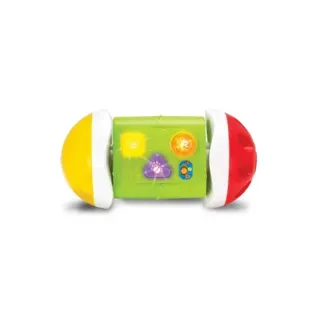 −48 %WinFun3-in-1 activity roller – WinFun109 DH
instead of 210 DHView product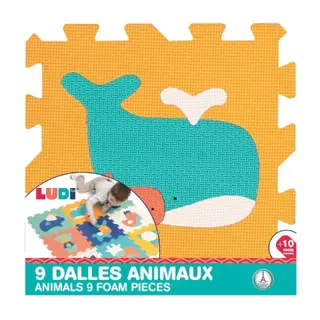 −42 %LudiAnimal tiles play mat, from birth – Ludi143 DH
instead of 245 DHView product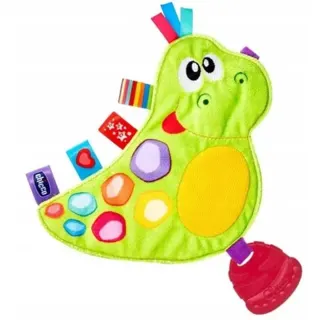 −48 %ChiccoDiego Dino Arthur activity toy, from 3 months – Chicco94 DH
instead of 180 DHView product −9 %DoomooYou&Me reversible comforter, Beige – Doomoo255 DH
instead of 280 DHView product −10 %Safety 1stSocket covers, 12 pieces with 4 keys – Safety 1st27 DH
instead of 30 DHView product −10 %Safety 1stGel corner protectors, x4 – Safety 1st27 DH
instead of 30 DHView product- The whole aisle · Baby activity toys21 products online, delivered anywhere in Morocco.Open the aisle
Products sold by La Maison du Bébé, publisher of this magazine. Prices as of 12 October 2026; please check the product page.
Health this month
Keep the health record up to date and check the dates in the vaccination schedule in Morocco. The earlier stages are in baby at 7 months; what comes next, when he pulls himself up to standing and looks for hidden objects, is in our article on baby at 9 months.
Frequently asked questions
At what age does a baby start to crawl or go on all fours?
There is no fixed age. In the WHO study, healthy babies started crawling on hands and knees between 5.2 and 13.5 months, and 4.3% never did it at all. Some crawl backwards first, others roll or shuffle along on their bottoms. What matters is that he tries to move. A baby who cannot sit alone by 9 months does deserve medical advice, according to the CDC milestones.
How long does separation anxiety last?
France's family allowance fund (Caf) speaks of a few weeks to a few months, with intensity varying from child to child. The MSD medical manual has it starting around 8 months, peaking between 10 and 18 months and generally fading by about 2 years. If after age 2 it stops him going to nursery or playing with other children, the manual recommends medical advice.
My 8-month-old refuses his grandmother's arms. What should I do?
Do not force him. Around 8 or 9 months, wariness of less familiar faces is normal, and the Caf advises respecting his pace. Keep him close to you while his grandmother talks softly, holds out a toy or plays peekaboo. When she is going to look after him, the MSD manual suggests she first spends time with you and the baby, and that you stay for the first few times.
Should I sneak out to avoid the tears?
No. The Caf recommends telling him you are leaving and that you will come back, and avoiding slipping away while he sleeps as far as possible. The MSD manual advises a brief, calm goodbye, without dwelling on the crying, a leaving routine that is always the same, and not giving up on separations altogether.
What can a baby who is starting to crawl play with?
Toys that make him want to move and search: a rolling ball, an activity roll, a cloth to hide a rattle under, stacking cups, board books. A comforter that carries your smell helps at moments of separation. Keep away anything that fits through an empty toilet roll tube and respect the age on the packaging.
Sources
- « L'angoisse du 8e mois », une étape clé pour le bébéCaisse d'allocations familiales (Caf), magazine Vies de famille · France
- Anxiété de séparation et peur de l'étrangerMSD Manual, professional edition (2025 revision) · International
- Étapes du développement de l'enfantMieux vivre avec notre enfant de la grossesse à deux ans, INSPQ · Canada (Quebec)
- Motor development milestonesWorld Health Organization (WHO), child growth standards · International
- Milestones by 9 MonthsCenters for Disease Control and Prevention (CDC), Learn the Signs. Act Early. · United States
- Le sommeil de bébéNaître et grandir · Canada (Quebec)
- Your baby's first solid foodsNHS · United Kingdom
- Prévenir les étouffementsMieux vivre avec notre enfant de la grossesse à deux ans, INSPQ · Canada (Quebec)