









Article contents
Key points
- Crawling on all fours appears between 5.2 and 13.5 months according to the WHO, and some babies skip it.
- Looking for a hidden toy shows he knows objects exist out of sight.
- The American Academy of Pediatrics recommends a developmental screening at 9 months.
- The WHO advises 3 to 4 meals a day from 9 months, plus 1 to 2 snacks if needed.
- Furniture fixed to the wall, gates at the top and bottom of stairs: now is the time.
Slip his rattle under a scarf, right in front of him. A few months ago, your baby would have looked away, as if the object had ceased to exist. Today he lifts the cloth and waves his find with a triumphant air. This little game sums up one of the great conquests of the 9-month-old: he now knows that things keep existing when he cannot see them.
The same month, he often gets on all fours, pulls himself up on the sofa and understands your "no". It is also the age of a developmental check-up with the paediatrician. This guide goes over these milestones, the normal differences between babies and what to adapt at home.
Under the scarf, the toy still exists
Psychologists call it object permanence. The Quebec guide Mieux vivre first describes, between 6 and 9 months, a baby who looks for a half-hidden object. Then he finds a completely hidden toy: at 9 months UNICEF mentions peekaboo and searching for objects you hide. The US CDC adds that he follows the dropped spoon with his eyes when it falls out of sight.
This period is also one of protests when you move away, and of reserve with strangers: two behaviours the CDC expects to see at this age. We covered them in the article on baby at 8 months.

On all fours, then standing at the sofa
Most 9-month-olds sit alone and stay sitting without support, two CDC milestones at this age. For the rest, the WHO data, collected on four continents, show wide latitude among healthy children:
- crawling on all fours appeared between 5.2 and 13.5 months, and a small minority (4.3%) skipped it;
- standing with support, between 4.8 and 11.4 months.
At 9 months UNICEF describes a baby who pulls himself up on furniture, and advises settling him next to it, with a toy placed on the sofa seat for example. Mieux vivre then places the first steps along furniture between 9 and 12 months. For what comes next, everything is in our article on first steps.
His hands are progressing too. He bangs two objects together, rakes crumbs toward himself, and UNICEF sees him already picking up small objects between thumb and forefinger.
What he understands, what he says
Your baby understands far more words than he says. According to UNICEF, he understands "no" and points at objects. The CDC describes a baby who raises his arms to be picked up, repeats "mamamama" or "babababa" and looks when called by name. Mieux vivre adds that he grasps certain familiar words, especially when they come with a gesture.
The CDC suggests repeating his sounds and adding real words, naming the pictures in a book as you point to them, and teaching simple gestures such as waving "bye-bye". More detail in our guide to baby's language.
The 9-month visit to the paediatrician
This age is a milestone check. The American Academy of Pediatrics, cited by the CDC, recommends a general developmental screening at 9 months, then at 18 and 30 months. It relies on validated questionnaires: the milestone lists for the general public, the CDC points out, do not replace them.
Prepare for the visit by noting what your baby does, what he does not do yet and what you wonder about. Bring the health record, and check the scheduled vaccines in our Moroccan vaccination schedule while you are there.
At the table: three meals, and soon snacks
The WHO recommends 3 to 4 meals a day from 9 to 23 months, with 1 to 2 snacks as needed, on top of milk. UNICEF gives a guide of about 125 g of food three to four times a day between 9 and 11 months, plus a healthy snack. These are orders of magnitude, not targets.
The CDC advises varying textures, from mashed to finely chopped, and offering a refused food again later. Let him eat with his fingers and drink from a cup. If the family harira tempts him, take his portion before the salt and stock cube, which the NHS advises against for babies, and serve grapes and cherry tomatoes cut into quarters.
Standing up in his cot: adapting the sleeping space
A baby who pulls himself up does it in his cot too, sometimes in the middle of the night. Quebec public health asks for the mattress to be set at its lowest position as soon as he sits or gets on all fours: at 9 months, that is already done or to be done right now. Remove hanging mobiles and keep the cot free of cushions and soft toys.
For this age group the CDC counts 12 to 16 hours of sleep a day including naps, and insists on regular times for sleeping and eating.
Furniture, stairs, windows: the home of a baby who pulls up
A baby who pulls up grabs onto everything. Quebec public health asks you to fix chests of drawers, bookcases, wardrobes and the TV to the wall, and to install a gate at the top of each staircase, preferably at the bottom too. The Montreal Children's Hospital specifies that at the top of the stairs only a gate fixed to the wall is suitable. It recommends safety devices on windows and never leaving a child alone on a balcony.
In many Moroccan homes, the stairs lead to the terrace, where the washing dries: a closed door or a gate is a must. The other risks of this age are reviewed in our feature on accidents in the home.
From the shop
Search, stack, drink and make safe
Container games and hide-and-seek toys to exercise his memory, a cup suited to his age and two pieces of equipment for the home he is exploring on his feet. Check the age on the packaging.
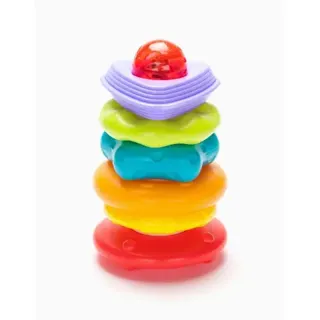 −48 %EurekakidsStacking rings, 5 pieces – Eurekakids78 DH
instead of 150 DHView product −48 %LudiBath set: boats and stacking cups – Ludi112 DH
instead of 215 DHView product −60 %BadabulleBath book and puppet – Badabulle36 DH
instead of 90 DHView product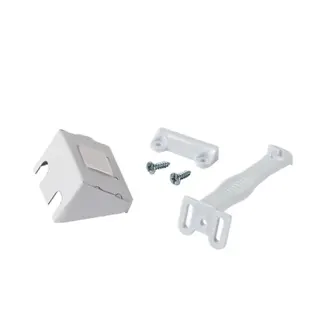 −35 %Safety 1stDrawer locks, set of 7 – Safety 1st26 DH
instead of 40 DHView product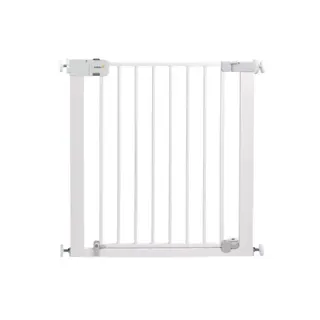 −31 %Safety 1stAuto-close safety gate, white – Safety 1st475 DH
instead of 690 DHView product- The whole aisle · Baby activity toys21 products online, delivered anywhere in Morocco.Open the aisle
Products sold by La Maison du Bébé, publisher of this magazine. Prices as of 12 October 2026; please check the product page.
In a few weeks he will cruise along the furniture and point with his finger: these new skills are described in the milestones for baby at 10 months.
Frequently asked questions
When does a baby stand up on his own?
The range is wide. Babies followed by the WHO stood with support between 4.8 and 11.4 months, and stood alone between 6.9 and 16.9 months. Place him near a stable sofa with a toy on top. Talk to the paediatrician if he does not push down with his legs when you hold him standing, one of the signs UNICEF mentions at this age.
What does the paediatrician check at the 9-month visit?
Growth, general health and vaccines, but also development. The American Academy of Pediatrics recommends a general developmental screening at this age, using validated questionnaires. The CDC's milestone lists help you prepare the conversation without replacing this screening. Before the visit, note what your baby does, what surprises you and your questions.
My 9-month-old does not say “mama” yet. Should I worry?
No. At 9 months the CDC mainly expects repeated syllables such as “mamamama” or “babababa”, not real words. The Quebec guide Mieux vivre places first words around the first birthday. A 9-month-old who does not babble or does not respond to his name should, however, be seen by the paediatrician, according to UNICEF.
At 9 months, should he move to four meals a day?
Not necessarily. The WHO recommends 3 to 4 meals a day from 9 to 23 months, with 1 to 2 snacks as needed, while breastfeeding continues. UNICEF gives a guide of about 125 g of food three to four times a day between 9 and 11 months, plus a healthy snack. He eats more at some meals than others: let him show you when he is done.
Why does my 9-month-old throw everything on the floor?
Because he is experimenting. The Mieux vivre guide explains that at this age he links his actions to their consequences and repeats the same gestures to understand. The CDC notes that he looks for the dropped object that has fallen out of sight, and suggests making it a game: hand back the spoon and he will let go again. At the table, expect some mess: the CDC considers it normal at this age.
Sources
- Milestones by 9 MonthsCenters for Disease Control and Prevention (CDC), Learn the Signs. Act Early. · United States
- Les grandes étapes du développement de votre bébé à 9 moisUNICEF Parenting · International
- Motor development milestonesWorld Health Organization (WHO), child growth standards · International
- Étapes du développement de l'enfantMieux vivre avec notre enfant de la grossesse à deux ans, INSPQ · Canada (Quebec)
- Aménager un environnement sécuritaire pour votre enfantMieux vivre avec notre enfant de la grossesse à deux ans, INSPQ · Canada (Quebec)
- Bébés et bambins, 0-24 mois (Les meilleurs soins pour les blessures traumatiques)Trauma Centre, Montreal Children's Hospital · Canada (Quebec)
- Infant and young child feedingWorld Health Organization (WHO) · International
- Your baby's first solid foodsNHS · United Kingdom