









Article contents
Key points
- In healthy children, unaided walking appears between 8.2 and 17.6 months (WHO).
- Pulling up, cruising along furniture, pushing a box: they practise alone, on the floor, at their own pace.
- A wheeled baby walker exposes your child to falls down stairs and burns, and may delay walking.
- Bare feet at home; outdoors, light shoes with a flexible sole, in the right size.
- If they are not walking alone at 18 months, or lose skills, show them to the doctor.
They pull themselves up against the sofa, cruise along the coffee table, let go with one hand, then plop back down. The whole family is waiting for the first step, and the question comes up at every visit to grandma’s: when do babies walk, and should you help? The answer comes down to a very wide range of ages and a few simple actions.
The baby walker is not one of them. Paediatric societies clearly advise against it, and here is why, along with what works better in its place.
At what age do babies walk?
Most children start walking between 12 and 15 months, say the paediatricians of the French Association of Ambulatory Paediatrics (AFPA), and it is not unusual to wait until 18 months without cause for concern. The WHO motor development study shows how wide the variation is: among 816 healthy children followed in Ghana, India, Norway, Oman and the United States, unaided walking appeared between 8.2 and 17.6 months.
| Step towards walking | Age reached by healthy children (WHO) |
|---|---|
| Sitting without support | 3.8 to 9.2 months |
| Standing with support | 4.8 to 11.4 months |
| Crawling on hands and knees | 5.2 to 13.5 months |
| Walking holding on | 5.9 to 13.7 months |
| Standing alone | 6.9 to 16.9 months |
| Walking alone | 8.2 to 17.6 months |
These windows run from the 1st to the 99th percentile: they describe normal variation, not a timetable to keep to. The CDC, the American public health agency, thinks in terms of vigilance thresholds: at age 1, it expects a baby who walks holding on to furniture; at 18 months, a child who walks without holding on, a step reached by at least 75% of children that age. The month-by-month stages are detailed in our articles on your baby at 11 months and the 12-month review.

How can you help with first steps?
By giving them space and floor time, rather than making them walk. The AFPA paediatricians advise letting them play and move alone in a space big enough to explore. The Geneva child health service also encourages varied positions: sitting cross-legged, kneeling, legs tucked.
In practice, the CDC suggests:
- safe supports: a sofa, a very stable coffee table, your hands;
- things to push: an empty box, a small chair, a push toy;
- encouragement to practise alone, without rushing them.
The floor remains their best training ground, which is the whole principle of free movement. And as soon as they pull up, the house must keep up. The Montreal Children’s Hospital asks you to fix shelves, furniture and televisions to the wall, and to fit gates at the top and bottom of stairs, with a gate screwed to the wall at the top. Our room-by-room safety checklist will guide you.
The baby walker: what paediatricians say
Paediatricians advise against it, and some call for it to be banned. A baby walker gives a baby who is not yet walking the speed and height of an older child. The American Academy of Pediatrics (AAP) lists the accidents that follow:
- falling down stairs, with fractures and serious head injuries;
- burns, because they reach higher;
- drowning, if they roll to a pool or a bath;
- poisoning, from products they could not otherwise have reached.
In the United States, these accidents send thousands of children to hospital every year, and the AAP calls for a ban on the manufacture and sale of wheeled walkers. Canada took the step in 2004: their manufacture, import, advertising and sale are prohibited there. The CDC states plainly that baby walkers are not recommended, and the AFPA considers them contraindicated for reasons of posture and safety.
Nor does a walker help children walk earlier: according to the AAP, it may even delay first steps. Yet you can still find them in shops in Morocco, and someone may offer you one as a gift. The safest course is not to use it. If the family insists, remind them what the AAP describes: accidents happen on stairs, near heat sources and water, in a few seconds of inattention.
Push cart, ride-on: the good alternatives
A push cart is pushed while standing, once your child can support themselves on their legs: they move it forward at their own pace and let go when they want. The CDC lists push toys among the useful aids for practising walking, and suggests safe push or pull toys around 18 months.
A ride-on is straddled: your child moves by pushing with their feet, sitting low, both feet on the ground. It takes over once walking is under way, before the balance bike or trike, which our guide to trikes and balance bikes compares. Our ride-ons section brings together models suited to the youngest.
From the shop
To practise walking, without a baby walker
A push cart, low and stable ride-ons, a pull-along toy and soft slippers: ways to support first steps at a range of prices. Check the minimum age of each model.
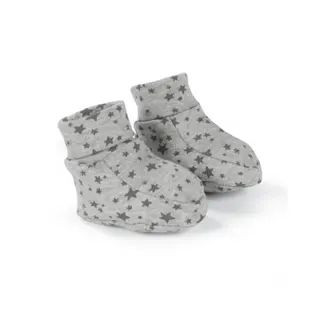 −48 %Walking MumStars Be baby booties, grey – Walking Mum78 DH
instead of 150 DHView product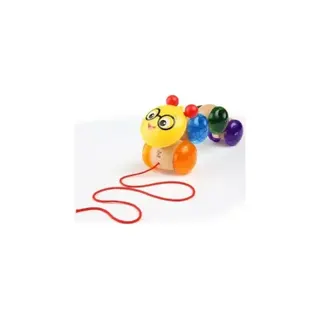 −48 %HapeInch Along Cal wooden pull-along caterpillar – Hape127 DH
instead of 245 DHView product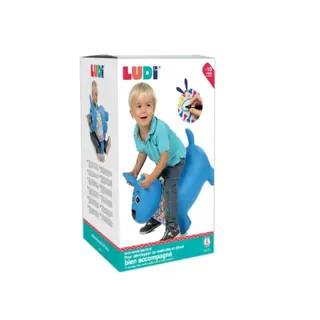 −48 %LudiMy Bouncing Dog inflatable toy, from 10 months – Ludi190 DH
instead of 365 DHView product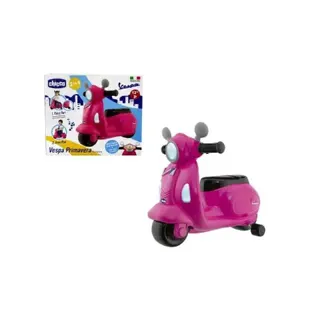 −48 %ChiccoVespa Primavera scooter ride-on, pink – Chicco463 DH
instead of 890 DHView product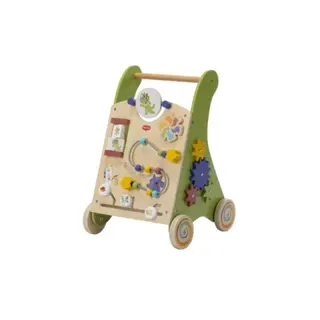 −9 %Tiny LoveBorn to Party wooden push walker – Tiny Love719 DH
instead of 790 DHView product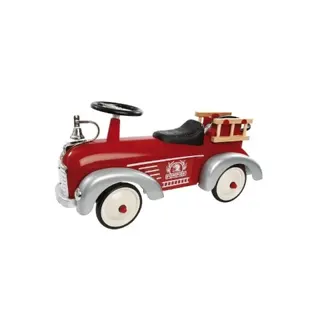 −48 %BagheraSpeedster Firefighter ride-on for children – Baghera962 DH
instead of 1 850 DHView product- The whole aisle · Baby ride-ons11 products online, delivered anywhere in Morocco.Open the aisle
Products sold by La Maison du Bébé, publisher of this magazine. Prices as of 12 October 2026; please check the product page.
Bare feet or shoes?
Bare feet at home, shoes outdoors. The AFPA paediatricians recommend bare feet throughout the learning period. The Geneva health service recommends leaving them bare as often as possible on a safe floor, and considers steps on grass, in sand or in water beneficial: the beach and the garden are excellent terrain.
In winter, on cold tiles, non-slip socks are a good alternative, according to the same service, and soft slippers with a thin, non-slip sole do the same job. For going out, the AFPA advises a shoe that is easy to put on, with a thin, flexible sole and a rigid heel counter. Have them try it on before you buy, and check the size often, because feet grow fast.
Flat feet, bowed legs: is this normal?
Most of the time, yes. The Geneva health service explains that babies have flat, soft feet until about age 2, and that flat feet remain common until 6. While learning to walk, all sorts of positions are seen: feet turned in or out, walking on tiptoe, bowed or knock-kneed legs.
The same document gives a simple rule: if any of these features is painful or hinders your child’s mobility, talk to the paediatrician.
They are not walking at 18 months: what to do?
Show them to the doctor, without waiting for the next visit. The AFPA points out that waiting until 18 months is not unusual, but it is also the age at which the CDC expects most children to walk without support: the examination takes stock. The doctor looks at how they stand, move and use their hands, and checks that other areas are progressing. The other milestones for this age are gathered in our article on the 18-month-old.
Frequently asked questions
Should I hold my baby’s hands to help them walk?
You can, if they ask for it: the CDC lists your hands among the useful supports, along with stable furniture. The main thing is that they also practise alone. The AFPA paediatricians stress independence: space to play and move freely. Let them pull up, cruise along the sofa, let go and sit back down at their own pace, without pushing them to move forward.
My baby does not crawl on hands and knees: is that a problem?
Not in itself. In the WHO motor development study of healthy children, 4.3% were never seen crawling, so it is not a compulsory stage. Let them explore the floor in their own way. What should prompt a visit to the doctor is missed milestones, such as not walking alone at 18 months, or lost skills.
When should I put shoes on my baby?
When they walk outdoors. At home, the AFPA paediatricians and the Geneva health service recommend bare feet while learning, or non-slip socks on a cold floor. For going out, choose a light shoe that is easy to put on, with a thin, flexible sole and a rigid heel counter. Try it on before buying and check the size often.
Is a stationary activity centre, without wheels, dangerous?
It is the alternative to the baby walker offered by the American Academy of Pediatrics: it looks like a walker but does not roll, which removes the risk of falling down stairs. It is still a seat: the WHO recommends not leaving a baby strapped into equipment for more than an hour at a time. The floor, the playpen or your lap remain the best places to play.
Sources
- WHO Motor Development Study: Windows of achievement for six gross motor development milestonesOrganisation mondiale de la santé, Multicentre Growth Reference Study (Acta Paediatrica, 2006) · International
- La marche, un apprentissage qui commence dès la naissanceSanté.fr (contenu édité par l'Association française de pédiatrie ambulatoire, AFPA) · France
- Position des pieds et des jambes du jeune enfant – Comment chausser mon enfant ?Service de santé de l'enfance et de la jeunesse, République et canton de Genève · Suisse
- Baby Walkers: A Dangerous ChoiceAmerican Academy of Pediatrics (HealthyChildren.org) · États-Unis
- Milestones by 1 YearCenters for Disease Control and Prevention (CDC), Learn the Signs. Act Early. · États-Unis
- Milestones by 18 MonthsCenters for Disease Control and Prevention (CDC), Learn the Signs. Act Early. · États-Unis
- Les meilleurs soins pour les blessures traumatiques : Bébés et bambins, 0-24 moisHôpital de Montréal pour enfants, Centre de traumatologie · Canada
- To grow up healthy, children need to sit less and play moreOrganisation mondiale de la santé (OMS) · International