









Article contents
Key points
- At 3, they hold a conversation, ask “why” and are understood by others most of the time.
- Words help them through their tantrums: teach them to name what they feel.
- Dressing, eating with a fork, tidying up, waiting their turn: the best preparation for school.
- In Morocco, official preschool is for ages 4 and 5: at 3, several options coexist.
- Speech that is hard to understand outside the family at 3: ask a speech therapist’s opinion.
“Why is the sky blue? Why are you leaving? Why do I have to tidy up?” A 3-year-old talks a lot, argues, negotiates, and starts to really play with others. It is also the age when the question of school enters family conversations, sometimes long before your child is concerned.
Here are the paediatric milestones at 3, what you can expect from their language and emotions, where potty training stands, and what really prepares them for life in a classroom.
What can a 3-year-old do?
Most 3-year-olds climb stairs alternating feet, pull on loose trousers by themselves and are understood by others most of the time. The table brings together the milestones of the American CDC, reached by at least 75% of children of that age, those of the Canadian Paediatric Society (CPS) and those of the French screening booklet at 36 months.
| Area | What most children do around age 3 |
|---|---|
| Body | Goes up and down stairs one foot per step, runs easily, jumps on the spot and off a step |
| Hands | Threads large beads, eats with a fork, copies a circle when shown, screws and unscrews lids, stacks 6 to 8 blocks |
| Independence | Pulls on loose trousers, a jacket or a hat alone, tidies their toys, asks for help |
| Language | Speaks in sentences, says “I”, gives their first name, asks questions, holds a short conversation |
| Relationships | Joins other children to play, starts to wait their turn, spontaneously shows affection to friends |
| Thinking | Sorts by shapes and colours, completes a 3 or 4-piece puzzle, understands the difference between 1 and 2, avoids a hot object when warned |
These lists are there to spot a gap, not to rank children. The CPS advises talking to the doctor if your child seems behind in more than one area, and reminds us that a child born early is assessed by their corrected age.

How does a 3-year-old talk?
At 3, a child holds a conversation: the CDC expects at least two back-and-forth exchanges, questions starting with “who, what, where, why”, and speech that others understand most of the time. The speech therapy centre in Neuchâtel, Switzerland, describes a child at this age who expresses themselves in sentences and takes part in family conversations.
To help, the CDC suggests speaking to them in sentences a little longer than theirs. If they say “cat gone”, reply: “yes, the cat has gone into the garden”. Read together, asking what is happening in the picture, then what will happen next.
At home, they may hear Darija, Amazigh, Arabic or French: our notes on the multilingual child explain how to support these languages. The main stages since birth are in our article on language from 0 to 3.
Tantrums and emotions: what changes at 3
Tantrums do not disappear at 3, but your child has new tools to get through them: words. The CDC advises talking about their emotions with them and giving them the vocabulary to say what they feel (“you’re disappointed, you wanted to stay at the park”). It also suggests teaching them ways to calm down: breathing deeply, hugging a soft toy, retreating to a quiet corner.
The CPS notes that at this age children readily resist changes of routine. A rushed departure, a meal at a different time, an unplanned visit to relatives can be enough to set off the storm. The CDC advises setting a few simple, clear rules, such as “we play with gentle hands”, showing what to do instead when the rule is broken, and praising them when it is kept.
The right reactions during and after a tantrum are detailed in our article on young children’s tantrums. If a little brother or sister has just arrived, also read our advice on sibling jealousy.
Potty training at 3: where are they?
Many children are in the middle of learning, others not yet. The CPS places interest in the potty between 2 and 4 for most children, and advises seeing a doctor if they are still not using the toilet at 4. Accidents are part of learning, especially in times of change, such as the birth of a baby or a house move.
The gentle method and the equipment are in our guide to potty training. One point deserves attention: a child who holds back from having a bowel movement can become constipated, which makes stools painful and slows learning, the CPS warns. Our article on constipation gives the useful steps.
Are they ready for school?
In Morocco, official preschool covers children aged 4 and 5. At 3, depending on the family, a child is still at home, in a crèche or nursery, or already in the first section of a private school. To compare the options, see our guide to nursery school in Morocco.
Being “ready” at this age is mostly about independence and enjoying being with others. Naître et grandir points out that in nursery school children learn to wait their turn, follow rules, tidy their things, hang up their clothes and wash their hands before snack time, and that until age 6, play remains the most important activity for development. At home, this means:
- dressing alone in easy clothes: elastic-waist trousers, shoes with Velcro;
- eating alone with a fork and drinking from a cup;
- tidying their toys into boxes at their height;
- washing their hands alone, on a stable step stool at the sink;
- getting used to separation: the CDC expects a 3-year-old to calm down within ten minutes of your leaving, for example when dropping them at nursery.
The CDC also advises preparing them for new places and people with stories or pretend games: playing “teacher”, telling the story of a child’s day at school. For the list of things to pack and the first days, see our article on starting crèche or nursery school.
Which games and toys at 3?
At 3, they like games with simple rules, modelling dough and stories. The CDC suggests:
- counting games: the steps on the stairs, fingers, olives on the plate;
- matching and opposites games: finding two identical pictures, saying big or small, fast or slow;
- an activity box with paper, pencils and colouring books;
- modelling dough to squash, pinch and roll into balls, which builds hand strength for writing and buttons;
- cooking: washing vegetables or mixing the dough with you;
- instructions in two or three steps: “go and get your shoes and your coat”.
It is also the age of first board games, the ones that teach waiting your turn, a skill the French screening booklet looks at in 36-month-olds. Our guide to board games by age helps you choose. Our creative games and puzzles sections complete the selection.
From the shop
Games for a 3-year-old
First board games, puzzles that grow with them, water colouring and skittles: simple games for learning to wait your turn, count and handle things. All are recommended from age 3 or earlier; check the age on each product page.
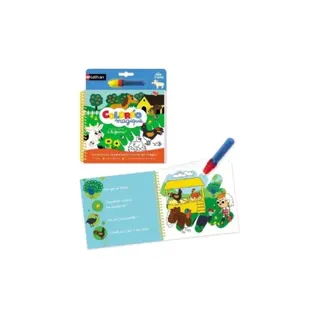 −41 %NathanColoréo magic water colouring, On the farm – Nathan59 DH
instead of 100 DHView product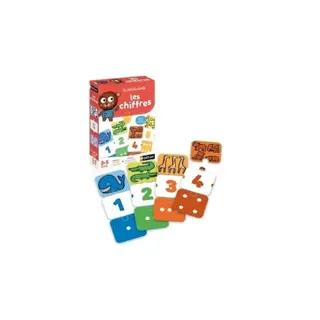 −48 %NathanNumbers educational game, 6 games, from 3 years – Nathan70 DH
instead of 135 DHView product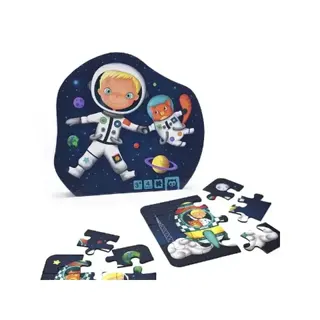 −48 %EurekakidsAstronaut 4-in-1 progressive puzzle, from 3 years – Eurekakids75 DH
instead of 145 DHView product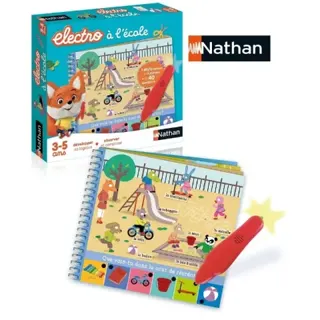 −48 %NathanElectro School game – Nathan86 DH
instead of 165 DHView product −48 %CayroPole-Pole wooden skittles game – Cayro114 DH
instead of 220 DHView product −48 %NathanPreschool (Petite Section) educational games box – Nathan140 DH
instead of 270 DHView product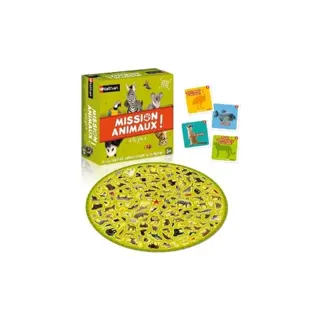 −48 %NathanMission Animaux board game – Nathan218 DH
instead of 420 DHView product- The whole aisle · Board games16 products online, delivered anywhere in Morocco.Open the aisle
Products sold by La Maison du Bébé, publisher of this magazine. Prices as of 12 October 2026; please check the product page.
Sleep, screens, activity: the WHO guidelines at 3
The WHO recommends, between 3 and 4 years:
- at least 180 minutes of physical activity a day, including 60 minutes of energetic activity (running, jumping, climbing);
- no more than one hour of screen time a day, and less is better;
- 10 to 13 hours of sleep, naps included if they take one, at regular times.
The CDC adds: no screens in their bedroom. The park, the beach, the school yard: our outdoor activities by age give ideas for reaching those three hours effortlessly.
When should you see a doctor?
Talk to the paediatrician or the health centre doctor as soon as a doubt sets in, without waiting for the next visit. The CDC puts it simply: you know your child better than anyone.
Frequently asked questions
My 3-year-old asks “why” all day long: how should I answer?
With short, true answers. The CDC counts “who, what, where, why” questions among the skills expected at age 3: it is how they make sense of the world and keep the conversation going. You can also turn the question back (“what do you think?”) and look for the answer together in a book. The CDC advises helping them find their own solutions, with your support.
At 3, my child no longer wants a nap: is that normal?
Yes, it happens. The WHO recommends 10 to 13 hours of sleep per 24 hours between ages 3 and 4, specifying that this total can include a nap: so it is no longer compulsory for everyone. If they refuse to sleep, keep at least a quiet time after lunch, and above all regular bedtimes and wake-up times, as the WHO asks.
At what age does a child start school in Morocco?
Preschool, as measured by official statistics, covers children aged 4 and 5: 78.7% of them were in preschool in 2023-2024, according to National Education figures reported by Hespress. Before 4, a child can stay at home, go to a crèche or nursery, or join the first section of some private schools. Ask the schools directly.
My 3-year-old still wets the bed: is that normal?
Yes. The Canadian Paediatric Society reminds us that night-time dryness can take several months, even years, longer than daytime dryness, and that a child may keep a nappy or training pants at night. Do not scold them: they cannot control these accidents. See a doctor, however, if they start wetting the bed again after at least six months dry, or if you notice redness, unusual urine or sudden, urgent needs.
Sources
- Milestones by 3 YearsCenters for Disease Control and Prevention (CDC), Learn the Signs. Act Early. · États-Unis
- Le développement de votre enfant : À quoi vous attendreSoins de nos enfants, Société canadienne de pédiatrie · Canada
- L'apprentissage de la propretéSoins de nos enfants, Société canadienne de pédiatrie · Canada
- Livret d'observations partagées Parents & Professionnels de la petite enfance (Repérer et guider)Délégation interministérielle à la stratégie nationale pour l'autisme au sein des TND et Cnaf · France
- 3, 2, 1… Parlez ! Développement du langage : points de repère et signaux d'alerteCentre d'orthophonie de Neuchâtel · Suisse
- To grow up healthy, children need to sit less and play moreOrganisation mondiale de la santé (OMS) · International
- Maternelle 4 ans et 5 ans: qu'est-ce que l'enfant y apprend?Naître et grandir · Canada (Québec)
- Éducation nationale : un taux de préscolaire de plus de 78% en 2023-2024Hespress FR · Maroc