





Article contents
Key points
- Consistency is what counts: soft stools, even far apart, are not constipation.
- A young baby who strains and goes red before a soft poo is not constipated.
- Correctly made-up bottles, fruit and vegetables after 6 months: the first steps.
- No thermometer in the bottom, no honey before age 1, no laxative without advice.
- Swollen tummy with vomiting, blood or white stools: see a doctor without delay.
Three days with nothing in the nappy. Then your baby wriggles, goes bright red and strains with a little groan, and you wonder whether you should do something. Baby constipation worries a lot of parents, but it is often confused with two perfectly normal situations: a breastfed baby who rarely poos, and a young baby who is learning to push.
The right question is not "how often?" but "what are the stools like?". Here are the benchmarks by age and type of feeding, the gentle steps that help, the ones best forgotten, and the signs that mean you should see a doctor.
How many poos a day is normal?
There is no single norm: the rhythm depends on age and feeding, and it varies a lot from one baby to the next.
| Age | What is usual |
|---|---|
| First 2 or 3 days | Meconium, dark and sticky stools, passed within the first 24 hours by 90% of newborns |
| First 4 to 6 weeks | 3 to 10 stools a day, yellowish to greenish, runny or very soft. Fewer than one a day may mean your baby is not drinking enough |
| After that, breastfed baby | The rhythm can slow down a lot, sometimes one stool every 3 to 7 days, which is fine as long as they stay soft |
| After that, formula-fed baby | Usually slightly fewer stools than a breastfed baby (about 2 a day versus 3 in the first months) |
| Around age 2 | Slightly under 2 stools a day on average |
Benchmarks from the INSPQ (Quebec) documents and the MSD Manual.
The American Academy of Pediatrics (AAP) sums it up well: the most important thing is consistency. Soft stools, even far apart, are not constipation.

My baby strains and goes red: are they constipated?
Not necessarily. The MSD Manual is clear: in young babies, straining does not mean constipation. A baby has to learn to coordinate the tummy muscles with those of the anus, and that takes a few weeks. They grunt, arch their back, go red, sometimes cry, then pass a soft stool. All is well: they are learning.
What should make you think of constipation:
- hard, dry stools, sometimes in small pellets ("rabbit droppings"), or on the contrary very large ones;
- a stool that is difficult or painful to pass, with real crying;
- fewer than 3 stools a week together with these hard stools, in an older child;
- a little blood on the stool or nappy, caused by a small tear;
- a drop in appetite, or tummy ache that gets better after a poo.
In a child over 1, small stains in the pants can also be a sign of constipation: liquid stool leaks around a hard, stuck stool.
Why is my baby constipated?
In the vast majority of cases, constipation is called functional: no illness is involved. The situations that make it more likely are well known:
- formula feeding, especially if bottles are not made up correctly. Follow the amounts of water and powder exactly, never diluting more or adding an extra scoop: our article on how to make up a bottle explains the right steps;
- starting solids, when cereals and solid foods arrive and fibre and drinks do not keep up;
- heat, in summer or on chergui days (the hot, dry wind from the desert): a baby who is too hot can run short of fluids, and not drinking enough is one of the classic causes of constipation;
- toilet training, when the child holds back, often after a painful poo. A vicious circle sets in: it hurts, they hold on, the stools get harder;
- a passing illness, or a change in routine (travel, starting nursery).
More rarely, cow's milk protein allergy can show up as constipation, often with vomiting or blood in the stools (see food allergies in babies). Organic causes are rare, but they do exist: they show from birth or through other symptoms, listed in the box at the end.
What to do depending on your baby's age
Before starting solids
- Breastfed baby: offer the breast more often. It is the only "drink" they need.
- Formula-fed baby: first check how the bottles are made up. The NHS says you can offer a little cooled boiled water between bottles. The paediatricians at mpedia recommend a water low in minerals: in Morocco, our article on choosing water for your baby helps you pick one.
- Do not switch formula on your own: if constipation persists, it is up to the doctor to decide whether the milk needs changing.
- Gently massage their tummy and fold their thighs up towards it, as the AFPA paediatricians suggest. It relaxes them, and many babies enjoy this moment.
After starting solids
- Fruit and vegetables at every meal, with variety. The MSD Manual mentions prune juice, possible after 3 to 6 months: ask the doctor for the right amount.
- Water with and between meals, in a glass or cup. The AAP points out, however, that drinking more is not enough on its own to treat established constipation.
- Cereals and dairy in moderation: these foods can slow things down in some children. Our guide to starting solid foods helps you put together balanced plates.
At potty age
No pressure. Sit your child on the potty or the toilet for a few minutes after meals or before bed, and praise them whether or not they have done anything. Their feet should rest flat, on the floor or on a step stool: that is the right position for pushing. If toilet training coincides with constipation, talk to the doctor, and reread our advice on potty training.
From the shop
For potty age, gently
Before age 2, no equipment is needed for constipation. When toilet training starts, a stable potty or a toilet seat reducer, and a step stool so feet rest flat, help your child sit comfortably.
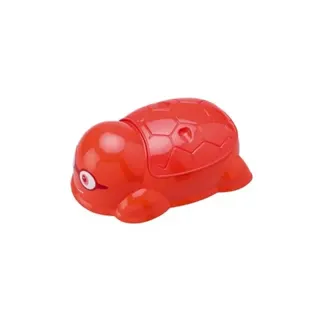 −48 %SaroTurtle potty with lid, orange – Saro62 DH
instead of 120 DHView product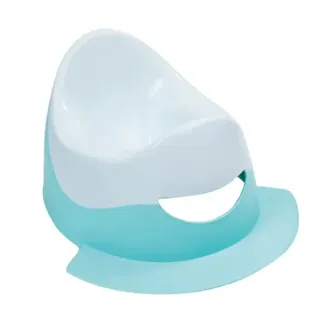 −48 %Bebe ConfortMulti-comfort baby potty, turquoise – Bébé Confort94 DH
instead of 180 DHView product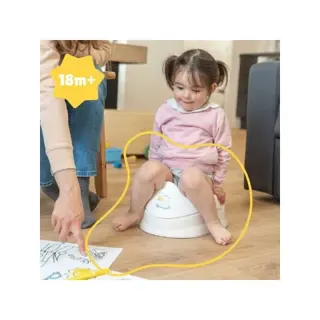 −9 %BadabulleMouette training potty with removable bowl – Badabulle123 DH
instead of 135 DHView product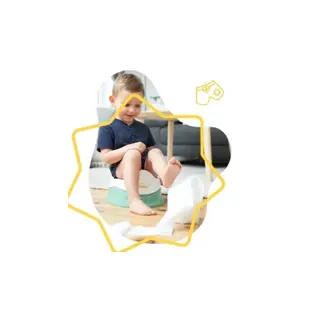 −4 %BadabulleErgonomic training potty – Badabulle182 DH
instead of 190 DHView product −48 %SaroAnatomical non-slip toilet seat reducer, green – Saro94 DH
instead of 180 DHView product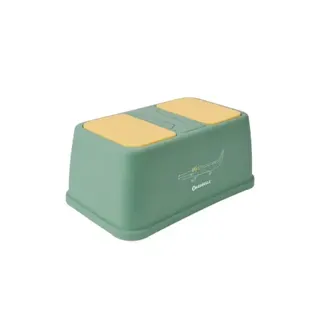 BadabulleNon-slip children’s step stool – Badabulle200 DHView product
 - The whole aisle · Baby potties and toilet seat reducers16 products online, delivered anywhere in Morocco.Open the aisle
Products sold by La Maison du Bébé, publisher of this magazine. Prices as of 12 October 2026; please check the product page.
What is best avoided
When a laxative is needed, in a child who already eats solids, the doctor prescribes it for several weeks, sometimes several months. The NHS stresses that you should not stop too early, because constipation comes back quickly. And see a doctor promptly: the longer it lasts, the harder it is to get back to normal bowel habits.
Frequently asked questions
My breastfed baby hasn't pooed for 5 days: are they constipated?
Not necessarily. After the first 4 to 6 weeks, some breastfed babies have much less frequent stools, sometimes one every 3 to 7 days, while still drinking enough. If the stools stay soft and your baby feeds well, wets nappies and is well, it is not constipation. During the first weeks, however, fewer than one stool a day is a reason to see a doctor.
Should I give water to a constipated baby?
It depends on how they are fed. A breastfed baby who is not yet eating solids simply needs more feeds. The NHS says a formula-fed baby can be offered a little cooled boiled water between bottles, ideally low in minerals according to the paediatricians at mpedia. Once solids have started, water goes with meals, but the AAP points out that water alone is not enough to treat constipation.
Do prune juice, olive oil or honey help with constipation?
Prune juice can be offered after 3 to 6 months, according to the MSD Manual; ask the doctor for the right amount. A spoonful of olive oil does not appear in any of the recommendations we consulted. As for honey, avoid it completely before age 1: it can cause infant botulism, a serious illness that makes the baby floppy and stops them feeding well.
Can I stimulate my baby with a thermometer or cotton bud to help?
This is not recommended. The French ambulatory paediatricians of the AFPA, writing on mpedia, explain that inserting a thermometer can cause small ulcers in the anus and make a fissure worse. Suppositories mostly trigger a poo that would have come a little later anyway. If your baby seems really blocked or in pain, ask a doctor or pharmacist before doing anything.
Blood in the nappy after a hard stool: is it serious?
Most of the time, a large hard stool has caused a small tear (fissure) in the anus, which bleeds a little. Still show it to your doctor: the constipation needs easing so the fissure can heal and your baby stops being afraid to push. See a doctor quickly if there is a lot of blood, if it is mixed into the stool, if the stools are black or if your baby seems unwell.
Sources
- Constipation in childrenNHS · United Kingdom
- Urine et sellesMieux vivre avec notre enfant, INSPQ · Canada (Quebec)
- La constipation du bébé avant 6 mois : symptômes et traitementsmpedia.fr, French Association of Ambulatory Paediatrics (AFPA) · France
- Constipation chez l'enfantMSD Manual, Professional Version · United States
- Constipation in ChildrenHealthyChildren.org, American Academy of Pediatrics · United States