





Article contents
Key points
- ORS, sold in pharmacies, is the right drink: in very small amounts, several times an hour.
- Keep breastfeeding, and always make up formula at its usual strength.
- No fizzy drinks, even flat, and no juice: they can worsen diarrhoea. Plain water does not replace ORS.
- Under 6 months, repeated vomiting, dry nappies, drowsiness: see a doctor right away.
- Wash hands with soap after every nappy change: gastroenteritis is very contagious.
Three watery stools since this morning, a bottle brought back up, slightly dark circles under the eyes: gastroenteritis in babies quickly causes worry, and rightly so. The illness itself is almost always mild. What matters is the water and mineral salts your baby loses with every stool and every bout of vomiting, which have to be replaced in time.
A simple product sold in pharmacies is usually enough to prevent dehydration: oral rehydration solution. Here is how to give it, how to feed your baby during those few days, and the signs that should never be left to wait.
Gastroenteritis: why do babies dehydrate so quickly?
Gastroenteritis, the “stomach bug”, is an infection of the stomach and intestines, usually caused by a virus. It brings diarrhoea, vomiting, sometimes fever and tummy pain. The WHO defines diarrhoea as three or more loose or watery stools a day, or stools that are clearly more frequent than usual. The soft stools of a breastfed baby, on the other hand, are normal.
The problem is what your baby loses: water and mineral salts, with every stool. Vomiting speeds up dehydration even more, the Canadian Paediatric Society points out. France’s Assurance maladie stresses that babies under 6 months are the most vulnerable, and the French-speaking paediatric gastroenterologists of the GFHGNP list being under one year old among the risk factors for severe dehydration. On days when the chergui, Morocco’s hot desert wind, blows and your baby is already sweating a lot, reread our advice on protecting them from the heat.

The signs of dehydration to watch for
No single sign is enough, the GFHGNP notes: it is a combination of several signs that should raise the alarm. The pointers from the Assurance maladie, the Canadian Paediatric Society and CHU Sainte-Justine:
| What you observe | What should alarm you |
|---|---|
| Nappies | Fewer than 4 wet nappies in 24 hours, or no urine for more than 8 hours |
| Mouth and eyes | Dry or sticky mouth and tongue, sunken eyes with dark circles, crying without tears |
| Fontanelle | The “soft spot” on top of the head is sunken |
| Skin | Pale, grey or mottled |
| Behaviour | Baby unusually restless or, on the contrary, floppy, drowsy, hard to wake, moaning |
| Breathing | Faster than usual |
| Weight | Clear weight loss: the Assurance maladie is concerned beyond 5% |
Oral rehydration solution (ORS): the step that protects
ORS is a precise mixture of water, salts and sugar that the body absorbs even in the middle of diarrhoea. The WHO makes it the basis of treatment when dehydration is absent or moderate, and the GFHGNP describes it as the only drink suited to acute diarrhoea in babies. It is sold as sachets of powder in pharmacies: always keep a few in your baby’s medicine cabinet.
To prepare it, follow the leaflet to the letter, because the amount of water depends on the product. The Assurance maladie insists: never change the dilution. CHU Sainte-Justine points out that a solution that is too concentrated or too diluted can be dangerous, and the GFHGNP advises against “homemade” solutions, which are prone to errors.
How should you give it? Slowly, and often:
- Offer it several times an hour, in very small amounts, then gradually increase if your baby keeps it down. They can drink as much as they want.
- If they vomit, give it well chilled, by spoon or in small sips, every 5 to 10 minutes, as the Assurance maladie advises.
- After a bout of vomiting, CHU Sainte-Justine suggests a 30 to 60-minute break before gently starting again.
- If they refuse the bottle or cup, a small soft spoon, a needle-free syringe or a dropper will do the job.
- Keep giving ORS as long as diarrhoea remains frequent.
The WHO also pairs ORS with a course of zinc, which shortens the episode of diarrhoea: only the doctor can say whether it is right for your child.
Breast, bottle, meals: how should you feed your baby during gastroenteritis?
You do not put a baby on a fast: all the sources consulted agree on this.
- Breastfed babies: keep breastfeeding, with more frequent, shorter feeds, and ORS between feeds.
- Formula-fed babies: always make up formula at its usual strength, never diluted. Countries do differ on one point, though: the Assurance maladie suggests replacing milk with ORS for 4 to 6 hours at most, then reintroducing it; the NHS and the Canadian Paediatric Society instead advise keeping the usual bottles, in smaller amounts and more often. Follow your doctor’s advice.
- If your baby already eats solids: keep their usual meals, in small portions, as soon as they are hungry. CHU Sainte-Justine specifies that restrictive diets are not recommended. Simply avoid fatty or spicy dishes and very sugary foods.
After age 2, the Assurance maladie lists among well-tolerated foods rice, grated or stewed apple, banana, quince compote (sfarjal in Morocco) and toast, before a return to the usual diet within three to four days.
From the shop
To help your baby drink and protect their bottom
None of these products treats gastroenteritis: soft spoons and a cup help you give ORS in small sips, and the rest is for cleaning and protecting the nappy area. Wipes are handy when you are out, but on irritated skin lukewarm water or liniment is gentler.
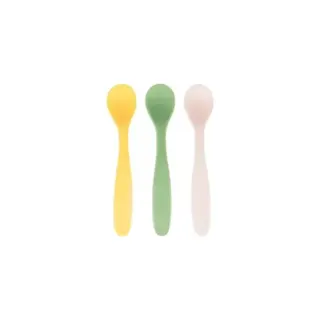 −8 %BadabulleSoft spoons, set of 3, BPA-free – Badabulle46 DH
instead of 50 DHView product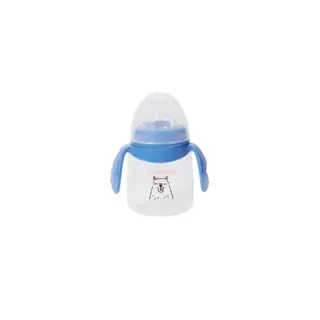 −9 %BadabulleLeak-proof cup with soft silicone spout, 180 ml – Badabulle73 DH
instead of 80 DHView product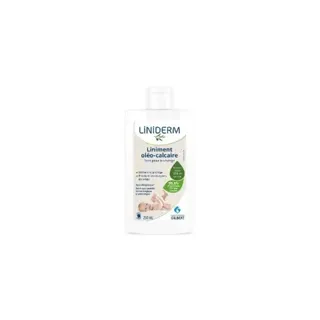 −48 %Laboratoires GilbertGilbert Liniderm oleo-calcareous liniment, 250 ml26 DH
instead of 50 DHView product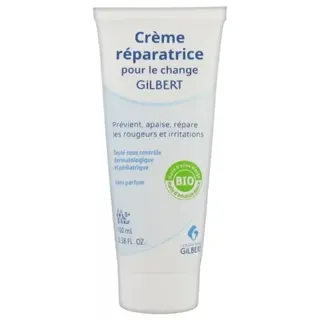 −49 %Laboratoires GilbertRepairing nappy cream, 100 ml – Gilbert35 DH
instead of 68 DHView product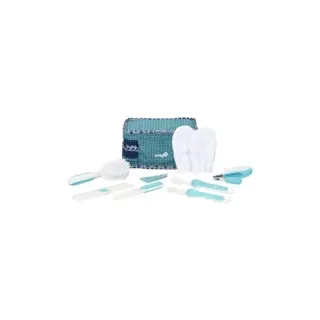 −48 %Safety 1stArctic newborn baby care kit, 8 pieces – Safety 1st156 DH
instead of 300 DHView product- The whole aisle · Parapharmacy (outside mega menu)64 products online, delivered anywhere in Morocco.Open the aisle
Products sold by La Maison du Bébé, publisher of this magazine. Prices as of 12 October 2026; please check the product page.
Water, fizzy drinks, medicines: what is best avoided
- Plain water does not rehydrate properly: it provides no salts, and the Canadian Paediatric Society warns of a risk of low blood sugar or salt.
- Fizzy drinks, even flat, fruit juice, sweet tea and broths do not have the right balance of sugar and salt, and can make diarrhoea worse. Cola “to settle the stomach”, a family remedy that is still widespread, is considered contraindicated by the paediatricians behind mpedia.
- Rice water is not recommended as a rehydration drink by the Canadian Paediatric Society. Rice can be part of an older child’s meals, but it never replaces ORS.
- Medicines for diarrhoea or vomiting: never without medical advice. The Assurance maladie specifies that loperamide is not recommended under age 12 and that clay-based gut-coating remedies should be avoided under age 2.
- For fever, paracetamol is the standard; ibuprofen is contraindicated in case of dehydration. Ask your doctor or pharmacist for the dose suited to your child’s weight, and see our article on fever in babies.
Hygiene: stopping the whole family from catching it
Gastroenteritis is very contagious. Viruses pass via hands, toys and objects put in the mouth, and also, the WHO points out, via contaminated water and food. The right habits, according to the NHS and CHU Sainte-Justine:
- wash your hands with soap after every nappy change, after using the toilet and before cooking;
- clean the changing table, toilets, taps and door handles every day;
- wash soiled laundry separately, at a high temperature;
- do not share towels, cutlery or glasses, and keep your baby at home.
Diarrhoea quickly irritates the bottom. Change your baby as soon as they are dirty, clean gently with water, dry well and apply a protective cream: CHU Sainte-Justine recommends a zinc-based ointment and avoiding commercial wipes on irritated skin. All the steps are in our article on nappy rash.
To prevent the next ones, the WHO lists exclusive breastfeeding up to 6 months, safe drinking water (see which water to give your baby in Morocco), handwashing with soap and vaccination against rotavirus, a virus behind many cases of severe diarrhoea in children. Our article on pneumococcal and rotavirus vaccines explains more.
When does gastroenteritis become an emergency?
Most cases of gastroenteritis are treated at home. Green vomit, blood, a baby who keeps nothing down despite ORS or who becomes floppy, however, call for quick action. The full list is below; to know where to go and what to take, see our guide to paediatric emergencies.
Frequently asked questions
How long does gastroenteritis last in a baby?
Vomiting usually stops within one or two days and diarrhoea within five to seven days, according to the UK’s NHS. Stools can take up to ten days to return to normal. Under age 2, have your child seen quickly by a doctor as soon as they have real diarrhoea (at least three watery stools within a few hours), and without delay under 6 months or at the slightest sign of dehydration. Over age 2, see a doctor if it lasts more than two days or gets worse.
Can I keep breastfeeding a baby with gastroenteritis?
Yes, and it is actually recommended. Offer the breast more often, for shorter feeds, and give oral rehydration solution between feeds. The WHO points out that breast milk is one of the foods to continue during diarrhoea. If your baby refuses the breast or vomits everything, see a doctor right away; if they have far fewer wet nappies or show other signs of dehydration, call 141.
Does flat cola help with gastroenteritis?
No. This still very common remedy is not recommended: fizzy drinks, even flat, do not have the right balance of sugar and salt and can make diarrhoea worse, Montreal’s CHU Sainte-Justine children’s hospital points out, and the paediatricians behind mpedia consider cola contraindicated. The only suitable drink for rehydrating a baby is oral rehydration solution, sold in pharmacies.
When can my baby go back to nursery after gastroenteritis?
When they are better and the diarrhoea and vomiting have stopped. France’s Assurance maladie advises keeping them at home during the illness to limit its spread. In the UK, the NHS asks families to wait at least 48 hours without diarrhoea or vomiting before a child returns to school. Each nursery has its own rules: check with yours.
Can I make my own rehydration solution?
It is not recommended. The French-speaking paediatric gastroenterologists of the GFHGNP point out that homemade solutions are prone to errors, and CHU Sainte-Justine that a mixture that is too concentrated or too diluted can be dangerous. ORS sachets sold in pharmacies have a precise composition: always keep a few at home and follow the amount of water stated on the leaflet exactly.
Sources
- Diarrhée et gastro-entérite de l'enfant : que faire et quand consulter ?ameli.fr, Assurance maladie · France
- Planche Réhydratation orale (2025)Groupe francophone d'hépatologie, gastroentérologie et nutrition pédiatriques (GFHGNP) · France
- Gastro-entérite aiguë chez l'enfant : que faire ?mpedia.fr, French Association of Ambulatory Paediatrics (AFPA) · France
- La prévention et le traitement de la diarrhée et de la déshydratation chez les enfantsCaring for Kids, Canadian Paediatric Society · Canada
- La gastro-entérite : information destinée aux parentsCHU Sainte-Justine, Montreal · Canada (Québec)
- Diarrhoea and vomitingNHS · United Kingdom
- When to get urgent medical help for babies and children under 5NHS · United Kingdom
- Diarrhoeal disease (fact sheet)World Health Organization (WHO) · International