





Article contents
Key points
- Difficulty breathing, blue or grey skin, floppy or unconscious baby: call 141 without delay.
- Under 3 months, a fever of 38 °C or more calls for immediate medical advice.
- Spots that do not fade when you press on them: this is an emergency.
- Product or medicine swallowed: Poison Control Centre on 0801 000 180, or 141.
- Take the health booklet, the medicines given and your notes.
It is midnight, your baby is burning hot, whimpering and barely drinking. Should you wake everyone and rush to paediatric emergencies, call 141, or wait until morning to see the paediatrician? Every parent knows this moment of hesitation.
Most minor childhood illnesses can be treated at home or at the doctor’s surgery, Quebec’s Naître et grandir reminds parents. A few signs, however, are unmistakable: they call for action right away. Here is how to recognise them, how to sort situations by urgency, and what to take with you on the day you have to go.
141, emergency department or doctor: how do you decide?
Three levels to keep in mind:
| Situation | What to do | Examples |
|---|---|---|
| Life-threatening emergency | Call 141 (SAMU, the Moroccan emergency medical service) | Very difficult breathing, unconscious or very floppy baby, seizure, blue or grey skin |
| Serious problem | Paediatric emergency department, or a doctor within the hour | Fever under 3 months, signs of dehydration, fall on the head in a young baby |
| Illness with no sign of severity | Doctor the same day or in the next few days | Fever after 6 months, or under 39 °C between 3 and 6 months, in a baby who drinks and plays; cough without breathing difficulty; spots without fever |
141 is the Ministry of Health’s Allô SAMU line. Other useful numbers: Civil Protection 15, police 19, Royal Gendarmerie 177.
When in doubt, call before you set off. Your paediatrician, if they can be reached, or 141 will help you choose the right place. In France, health authorities likewise ask parents to call before going: waits in emergency departments can be very long, and a baby who is only mildly ill comes across plenty of other germs there.

The signs that mean you should call 141
These signs, drawn from the recommendations of the UK’s NHS and Naître et grandir, must never wait until morning. Call 141 if your baby:
- is breathing badly: very fast or irregularly, with unusual noises, a grunt with every breath out, the tummy or the skin between the ribs sucking in, the nostrils flaring;
- changes colour: blue, grey, very pale or mottled skin, lips or tongue (on dark skin, check the palms and the soles of the feet), or cold, clammy skin;
- no longer responds normally: they are floppy, hard or impossible to wake, or have lost consciousness;
- has a seizure;
- has a stiff neck, a bulging fontanelle (the soft spot on top of the head), or cannot bear light;
- has an unusual cry: weak, very high-pitched or continuous;
- has spots that do not fade when you press a clear glass against them;
- has swelling of the lips, tongue or throat and difficulty swallowing;
- has not passed urine for 12 hours;
- has a temperature below 36 °C, or is shivering and stays cold to the touch;
- may have been shaken: France’s Assurance maladie asks parents to call emergency services immediately, because early care limits the damage.
The NHS insists on one last point: trust your instincts. If you feel something serious is happening, call. And do not drive alone with a baby who is very unwell: get someone to drive you, or wait for the ambulance.
Lethargic baby or just tired?
A sick baby sleeps more than usual, and that is normal. What should worry you is the quality of their wakefulness. Naître et grandir describes a lethargic child as drowsy, hard to wake or, on the contrary, unusually irritable, unable to respond as they normally would. The NHS talks of a “floppy” baby who does not wake as easily as usual.
On the other hand, the Pays de la Loire Regional Health Agency in France points out that a child who keeps drinking, playing, smiling and communicating generally shows no sign of severity, even with a fever. Watch your baby when they are awake: do they follow you with their eyes, show interest in the breast or bottle, calm down in your arms? Our article on fever in babies details the other pointers.
Difficult breathing: the signs to recognise
Lay your baby down bare-chested, somewhere calm, and watch them for a minute. These signs show they are working hard to breathe:
- their tummy sucks in under the ribs, or the skin between the ribs sucks in with every breath;
- their nostrils flare;
- they grunt or moan with every breath out;
- they breathe much faster than usual, or irregularly;
- their lips turn blue or pale.
Any one of these signs is reason enough to call 141. In babies, they often come with bronchiolitis in winter: our article explains how to count their breathing rate. If they are choking and can no longer cough, cry or breathe, act immediately and get someone else to call 141. Under 1 year: five back blows, with your baby face down along your forearm, head lower than the body, then five chest thrusts with two fingers in the middle of the chest, just below the nipple line; repeat until the object comes out. If they are coughing hard, let them cough, without patting their back. If they lose consciousness, call 141 immediately. Even if the object has come out, have them examined quickly by a doctor. The techniques for older children are taught in first-aid courses.
Fever, dehydration, accident: when should you go to paediatric emergencies?
These situations are not always life-threatening, but they call for a prompt examination, at the paediatric emergency department if your doctor cannot be reached within the hour. The pointers from the NHS and Naître et grandir:
- a fever of 38 °C or more under 3 months, or 39 °C or more between 3 and 6 months;
- signs of dehydration: no tears, very dry mouth, fewer than three wees in 24 hours despite rehydration solution (see our article on gastroenteritis in babies);
- green or yellow-green vomit, or blood in the stools or vomit;
- a fall on the head under 4 months, or under 2 years with a lump on the side or back of the head; at any age, loss of consciousness, vomiting more than twice, drowsiness or unusual behaviour after the knock;
- a burn to the face, hands, feet or genitals, or one that is very painful or large;
- a button battery swallowed, or even a suspicion of it: go to the emergency department immediately or call 141, even if your baby seems fine; a battery can burn the oesophagus within two hours. Do not make them vomit and give them nothing to eat or drink;
- a magnet or a sharp object swallowed: paediatric emergency department.
If your baby has swallowed a medicine or a household product, call the Poison Control Centre (0801 000 180, free number) or 141 straight away. Prevention, room by room, is covered in our article on accidents at home.
What can wait for the doctor’s surgery
The Pays de la Loire Regional Health Agency lists among the situations to show your own doctor, without going to the emergency department:
- a fever above 38 °C in a child aged 3 months or more who is drinking and stays responsive (under 39 °C if they are under 6 months);
- vomiting or diarrhoea with no sign of dehydration;
- a cough without breathing difficulty;
- spots without fever (our guide to childhood rash illnesses helps you recognise them).
Naître et grandir adds, for a same-day appointment: a fever lasting more than 72 hours, a choking episode, even one that resolved, a small object stuck in the nose or ear, a burn on an arm, leg, back or tummy, and any child who was a passenger in a car accident, even without visible injury.
What to take to the emergency department with your baby
Get these ready in two minutes:
- the health booklet: vaccinations, weight, medical history, current treatments;
- the medicines given in the last few hours, in their box, with the time and amount of each dose;
- in case of poisoning, the packaging of the product swallowed;
- your notes: temperatures, feeds, wet nappies, time of the first symptoms;
- your papers: ID, health insurance card, recent prescriptions;
- for your baby: nappies, wipes, a change of clothes, a muslin, their comforter and something to feed them;
- a charged phone.
In the emergency department, children are not seen in order of arrival but according to severity: in Quebec, a triage scale ranks patients from 1 to 5, Naître et grandir explains. If your baby’s condition changes while you wait, tell the staff straight away, as their priority may change.
From the shop
The health booklet, always ready
A booklet cover keeps the health booklet clean and holds prescriptions and medical reports together; a travel care pouch keeps the thermometer and small care items at hand, at home or on the move.
 −48 %Pasito a PasitoCotton health record cover, white – Pasito a Pasito234 DH
instead of 450 DHView product −48 %Pasito a PasitoChloé health record cover, grey – Pasito a Pasito312 DH
instead of 600 DHView product −48 %Pasito a PasitoNido Volante health record cover, blue – Pasito a Pasito354 DH
instead of 680 DHView product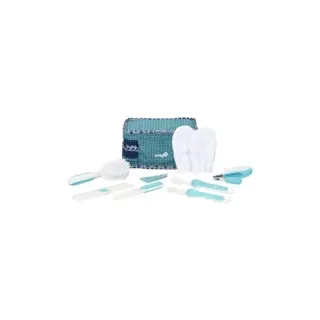 −48 %Safety 1stArctic newborn baby care kit, 8 pieces – Safety 1st156 DH
instead of 300 DHView product −9 %BabymoovTravel baby care kit – Babymoov346 DH
instead of 380 DHView product- The whole aisle · Health record covers6 products online, delivered anywhere in Morocco.Open the aisle
Products sold by La Maison du Bébé, publisher of this magazine. Prices as of 12 October 2026; please check the product page.
Frequently asked questions
Should I call 141 or go straight to the emergency department?
For a life-threatening emergency, call 141: your baby is breathing badly, no longer responds, is having a seizure or changes colour. Do not drive a baby in that state yourself, the NHS warns. For a serious but stable situation, calling your paediatrician first helps you choose the right place and avoids a pointless wait, which French health authorities also recommend.
My baby has a fever in the middle of the night: should I go to the emergency department?
It depends on their age and condition. Under 3 months, a temperature of 38 °C or more calls for medical advice without delay, at the emergency department if your doctor cannot be reached. Over 3 months, a baby who drinks, plays and smiles can usually wait for an appointment, unless they are under 6 months with 39 °C or more. Difficult breathing, unusual drowsiness or spots on the skin: call 141.
What should I do if my baby has swallowed a medicine or a household product?
Call the Moroccan Poison Control and Pharmacovigilance Centre on 0801 000 180 (free number) or 141 straight away, even if your baby seems fine, and keep the packaging to hand to describe the product. Do not make them vomit and give them nothing to eat or drink, not even milk. If they lose consciousness, breathe badly or have a seizure, call 141 immediately. To prevent these accidents, store household products and medicines up high, in a locked cupboard.
My baby has bumped their head: when should I see a doctor?
Quebec’s Naître et grandir advises going to the emergency department for any baby under 4 months who has bumped their head, and for a child under 2 with a lump on the side or back of the head. The same applies, at any age, if they lost consciousness, vomit more than twice, become drowsy, confused or unusually irritable, or have a seizure.
My baby has red spots: how can I tell if it is serious?
Press a clear glass against the spots. If they stay visible through the glass, like small bruises or bleeding under the skin, call 141: the UK’s NHS treats this as an immediate emergency. If they fade, they are most often spots from a viral illness; see a doctor if your baby has a fever, especially under 3 months, or seems unwell.
Sources
- When to get urgent medical help for babies and children under 5NHS · United Kingdom
- Rashes in babies and childrenNHS · United Kingdom
- Quand aller à l'urgence?Naître et grandir (reviewed by CHU Sainte-Justine) · Canada (Québec)
- L'enfant qui s'étouffeNaître et grandir · Canada (Québec)
- What Parents Need to Know About Button and Lithium Coin BatteriesHealthyChildren.org, American Academy of Pediatrics (AAP) · United States
- PoisoningNHS · United Kingdom
- Consulter les services d'urgences ou pas : recommandations aux parentsRegional Health Agency (ARS) Pays de la Loire · France
- Syndrome du bébé secouéameli.fr, Assurance maladie · France