





Article contents
Key points
- An ear infection usually follows a cold: germs travel up from the throat to the ear.
- Fever, crying, night waking, refusing the bottle: in babies, the signs are often indirect.
- Not every ear infection needs antibiotics: only an examination of the eardrum can decide.
- Nothing in the ear: no oil, drops or cotton buds without medical advice.
- Tobacco smoke, bottles given lying down and repeated colds make ear infections more likely.
The cold seemed to be clearing up, and then your baby wakes up screaming at 2 a.m., refuses the bottle and has a fever again. They rub their cheek against your shoulder and tug at their ear. A baby ear infection is one of the most common infections of early childhood, especially between 6 months and 3 years, and it very often comes right on the heels of a cold.
It hurts, and the pain is often what worries parents most. Yet it is rarely serious. Here is how to spot it in a baby who cannot yet say “it hurts”, what the doctor will do, and what you should not put in their ear.
What is an ear infection, and why do babies get so many?
Paediatricians call it acute otitis media: an infection of the middle ear, the small air-filled space behind the eardrum. It is caused by a virus or a bacterium, and most often follows a cold (nasopharyngitis).
The route is simple. During a cold, the Eustachian tube, the little channel linking the middle ear to the back of the throat, swells. In young children it is short and open, so germs from the nose and throat travel up it easily. The risk is highest in the first year, then falls with age.
Some factors raise the risk, according to French and Canadian health authorities:
- nursery and group childcare, where colds multiply;
- tobacco smoke, from cigarettes or shisha, at home or in the car;
- bottles given while the baby is lying down;
- not breastfeeding;
- prematurity, reflux or a cleft palate.

How can you tell if a baby has an ear infection?
A young baby cannot pinpoint pain, so the signs are often indirect. France’s Assurance maladie and the Canadian Paediatric Society list in particular:
- a fever, often above 38 °C, which sometimes comes back in the middle of a cold;
- unexplained crying, irritability, waking at night;
- refusing the bottle or the breast, sometimes vomiting or diarrhoea;
- a baby who rubs or pulls at their ear;
- a yellowish discharge from the ear, sometimes found on the sheet in the morning: a sign that the eardrum has burst under the pressure of pus.
None of these signs is enough on its own. Only an examination of the eardrum with an otoscope, the doctor’s small lighted instrument, can confirm an ear infection.
What does the doctor do? Antibiotics or not?
It all depends on what they see behind the eardrum. A red eardrum with no fluid behind it points to a “congestive” ear infection of viral origin: it clears up on its own within a few days, without antibiotics. A bulging eardrum with pus behind it points to a “purulent”, bacterial ear infection.
In France, the Assurance maladie sums up what to do for a purulent ear infection as follows:
- under 3 months, specialist advice at the hospital;
- between 3 months and 2 years, antibiotics;
- over 2 years, antibiotics if fever, pain or discharge are significant; otherwise, it is possible to wait and see the doctor again if symptoms last more than 48 to 72 hours.
In Canada, paediatricians also suggest waiting 24 to 48 hours for a child who is not very bothered and has no high fever. If an antibiotic is prescribed, give the full course, even if your baby feels better after two days. Antibiotic ear drops are not indicated for acute otitis media.
From the shop
To keep an eye on fever and keep the nose clear
No product treats an ear infection. A reliable thermometer helps you track fever, and regular nose rinsing during colds is one of the recommended prevention habits.
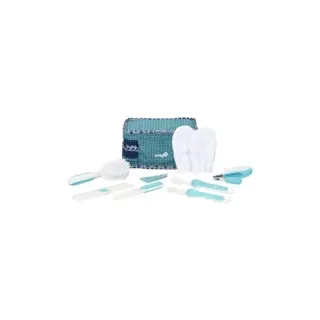 −48 %Safety 1stArctic newborn baby care kit, 8 pieces – Safety 1st156 DH
instead of 300 DHView product −37 %Safety 1stArctic newborn baby care kit, 6 pieces – Safety 1st177 DH
instead of 280 DHView product −9 %BabymoovTravel baby care kit – Babymoov346 DH
instead of 380 DHView product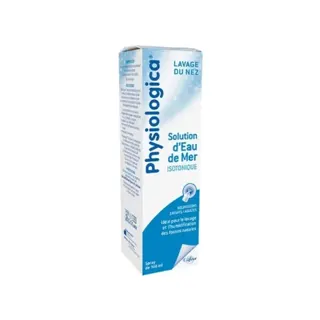 −48 %GifrerIsotonic seawater nasal spray, 100 ml – Gifrer29 DH
instead of 56 DHView product −41 %BelvitalManual baby nasal aspirator, from birth – Belvital41 DH
instead of 70 DHView product- The whole aisle · Parapharmacy (outside mega menu)64 products online, delivered anywhere in Morocco.Open the aisle
Products sold by La Maison du Bébé, publisher of this magazine. Prices as of 12 October 2026; please check the product page.
Bath, flying, warm oil: the common myths
“He caught an ear infection from the bath water.” No. A middle ear infection comes from the throat, through the Eustachian tube, not from the ear canal. Baths are therefore fine. The one exception: if the eardrum has burst and the ear is discharging, keep water out of the ear during washing while it heals. Otitis externa, which affects the ear canal and is treated with drops, is a different illness.
“You can fly with an ear infection.” Better to avoid it during the acute phase, the Assurance maladie advises. Once the infection has cleared, nothing stops you travelling: our tips for flying with a baby help you prepare the trip.
“A few drops of warm oil ease the pain.” No. The NHS advises against putting oil, drops or a cotton bud in a child’s ear without medical advice. If the eardrum has burst, whatever you put in can reach the middle ear.
“Ear infections are contagious.” The ear infection itself is not passed on. The cold that came before it is.
What about glue ear?
After an ear infection, fluid can remain behind the eardrum, without pain or fever: this is glue ear, or otitis media with effusion. It often goes unnoticed and mainly shows up as temporary hearing loss. According to the Assurance maladie, this fluid often clears within two to three months.
If it persists beyond that and the child hears less well, an ENT specialist may suggest fitting tiny ventilation tubes in the eardrum, called grommets. It is a short procedure. A child who no longer reacts to soft sounds, turns the volume up or whose speech is stalling should be brought to the doctor’s attention.
Can ear infections be prevented?
You cannot avoid them all, but you can reduce how many your child gets:
- rinse your baby’s nose with saline during colds, as explained in our article on nose rinsing for babies, using single-dose vials or a seawater nasal spray suited to their age;
- zero tobacco at home and in the car;
- never give a bottle lying down, and do not let your baby fall asleep with one;
- breastfeed if you can: Quebec paediatricians advise at least the first 6 months;
- limit the dummy if ear infections keep coming back; our guide explains when and how to stop the dummy gently;
- wash your hands often, cough into your elbow, and keep your baby at home during the acute phase of an ear infection;
- keep vaccinations up to date: the pneumococcal vaccine protects against ear infections caused by that bacterium. The ages are in our Moroccan vaccination schedule.
For the colds that so often come before an ear infection, our guide to your baby’s cold gathers the right steps. And if fever is the main problem, see also fever in babies.
Frequently asked questions
Is an ear infection contagious?
The ear infection itself cannot be passed on, Canadian paediatricians point out. The cold or virus that came before it, however, is contagious. France’s national health insurance (Assurance maladie) advises keeping the child at home during the acute phase, mainly for their comfort, and having the whole family wash their hands often to limit the spread of viruses.
My baby keeps getting ear infections: what should I do?
Talk to your doctor, who will look for what is encouraging them: adenoids, reflux, allergy, smoking at home, bottles taken lying down. The Canadian Paediatric Society also advises limiting the dummy in children who get a lot of ear infections. The good news: according to the Assurance maladie, they become less frequent as children grow and are rare after age 6.
Can an ear infection make my baby deaf?
Temporary hearing loss is possible after an ear infection, because of fluid left behind the eardrum. It usually improves within a few weeks. If it lasts more than 3 months, the NHS says treatment may be needed, such as small grommets fitted by an ENT surgeon. Tell the doctor if your child seems not to hear as well.
How long does an ear infection last in a baby?
Most ear infections improve in two to three days, with or without antibiotics depending on the case. If the eardrum has burst, it heals in about ten days. Fluid that sometimes remains behind the eardrum can take two to three months to clear. See the doctor again if fever or pain persist beyond 48 to 72 hours.
Should I clean my baby’s ears with cotton buds?
No. The NHS advises against putting cotton buds, oil or drops in a child’s ear without medical advice. For everyday washing, a damp washcloth is enough to clean the outer ear and behind the ear during bath time, without ever going into the ear canal.
Sources
- Reconnaître une otite moyenne aiguëameli.fr, Assurance maladie · France
- Otite moyenne aiguë : que faire et quand consulter ?ameli.fr, Assurance maladie · France
- Consultation, traitement et évolution de l'otite moyenne aiguëameli.fr, Assurance maladie · France
- Prévenir l'otite moyenne aiguë de l'enfantameli.fr, Assurance maladie · France
- L'otiteCaring for Kids, Canadian Paediatric Society · Canada
- L'otite moyenneNaître et grandir · Canada (Québec)
- Colds, coughs and ear infections in childrenNHS · United Kingdom