





Article contents
Key points
- Milk or thrush? Milk wipes off easily; thrush patches stay stuck.
- Antifungal treatment is prescribed: no home remedies, no gentian violet.
- Breastfeeding: mother and baby are treated at the same time, even if she has no symptoms.
- Teats, dummies, teething rings: into boiling water after every use.
- Baby refusing to feed: see a doctor without delay.
As your baby yawns, you notice white patches on the tongue and inside the cheeks. Milk? Possibly. But if they do not come off when you wipe them, it is probably oral thrush. Oral thrush in babies is a very common infection in infants, and almost always mild.
It still calls for a few precautions: recognising it, having a doctor confirm it, stopping it from coming back, and not forgetting the mother if she is breastfeeding.
What is oral thrush?
Oral thrush, or oral candidiasis, is a mouth infection caused by a microscopic fungus, a yeast called Candida albicans. This fungus often lives in babies' mouths without causing any problem, explains the Canadian Paediatric Society. But a baby's immune system is still developing, so the yeast can multiply and cause an infection.
It mostly appears in the first 6 months and usually lasts one to two weeks, according to Naître et grandir, a Quebec parenting resource. It is more common after a course of antibiotics. Most of the time it does not hurt. Some babies are fussy or struggle to feed, however, and the NHS notes they may go off their feeds.

Milk or thrush: how can you tell the difference?
The test is simple: gently run a clean gauze pad or cotton bud over the patches, as Naître et grandir suggests.
| Milk residue | Oral thrush | |
|---|---|---|
| When wiped | Comes off easily | Stays stuck |
| Appearance | Thin white coating | White patches, like curdled milk |
| Where? | Anywhere | Tongue, inside the cheeks and lips, sometimes the palate and gums |
| Other signs | None | Sometimes a red bottom, a fussy baby, difficult feeds |
These pointers combine those of the Canadian Paediatric Society, Naître et grandir, the INSPQ and the NHS. If the patches will not budge, have your baby seen by a doctor to confirm the diagnosis.
Should you see a doctor, and how is thrush treated?
Mild thrush often clears without treatment within one to two weeks, according to the Canadian Paediatric Society and Naître et grandir. Medical advice is needed, though, in several situations:
- your baby is under 4 months old, as the NHS specifies;
- you are breastfeeding, because you may need treatment too;
- the patches are painful, or your baby is feeding poorly;
- your baby also has a red nappy area;
- the thrush has not cleared after a few days, or keeps coming back.
The doctor may prescribe an antifungal medicine to apply inside the mouth. The Canadian Paediatric Society stresses that the product must reach the infected areas properly, and that treatment continues a little while after the patches have gone, to avoid a relapse: follow the prescribed duration exactly. In the United Kingdom, gels sold without prescription are only suitable from 4 months; before that age, no product without medical advice.
Gentian violet, used for a long time, is no longer recommended: the INSPQ reports that it could increase the risk of cancer, and Health Canada advised against using it for thrush in 2019, Naître et grandir recalls.
Thrush and nappy rash: the same fungus
Candida also loves the warm, damp environment of the nappy. The Canadian Paediatric Society describes, in some babies, shiny red patches in the folds of the groin and bottom, with small red dots that can spread to the lower tummy and upper thighs. Mpedia, the website of French paediatricians, notes that oral thrush often comes with this red bottom. The doctor may then prescribe an antifungal cream for the whole nappy area. The other everyday steps are in our article on nappy rash.
Thrush and breastfeeding: the mother is treated too
When a baby is breastfed, the fungus can pass from the mouth to the mother's breasts, and then back again. The signs in the mother, according to the Canadian Paediatric Society:
- red or pinkish, tender nipples;
- shiny or flaking skin on the areola;
- unusual pain during feeds, or between feeds;
- sharp, deep pain inside the breast.
Naître et grandir is clear: mother and baby must be treated at the same time, even if the mother has no symptoms. Treatment for the nipples is decided with the doctor or pharmacist. For hygiene, wash your nipples after each feed, dry them well, and choose breast pads without a plastic lining: according to the Canadian Paediatric Society, plastic helps the fungus multiply. Milk you have already expressed is not contaminated if there is no suspicious sore on the nipple, and you can carry on expressing: our guide to expressing breast milk explains how to look after your equipment.
Breast pain is not always thrush. The NHS points out that the baby's position at the breast is one of the most common causes of pain while breastfeeding. Our article on cracked nipples helps you tell the difference, and a midwife or lactation consultant can watch a feed.
Hygiene: stopping thrush from coming back
The fungus survives on objects your baby puts in their mouth, the INSPQ reminds us. Good habits:
- wash bottle teats, dummies and teething rings in boiling water after each use; Naître et grandir then suggests rinsing them in a half water, half white vinegar mixture;
- sterilise bottles after each use and dummies regularly, as the NHS recommends;
- replace teats and dummies regularly;
- never share a dummy, teat or teething toy between children;
- clean the breast pump parts that touch the milk with the same care;
- wash your hands often.
Do you need a steriliser? No: boiling water is enough. The appliance mainly saves time when your baby has several bottles a day. Our steriliser buying guide explains when to sterilise and up to what age.
From the shop
For cleaning bottles and teats
Nothing here treats thrush. For a bottle-fed baby or one who uses a dummy, a bottle brush and, if you wish, a steriliser make daily hygiene easier; a saucepan of boiling water does the job just as well.
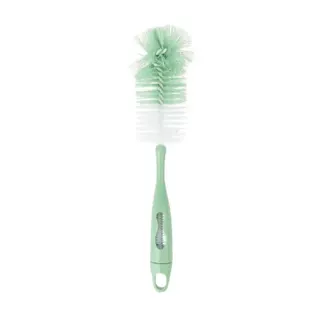 −8 %Badabulle2-in-1 bottle and teat brush, green – Badabulle55 DH
instead of 60 DHView product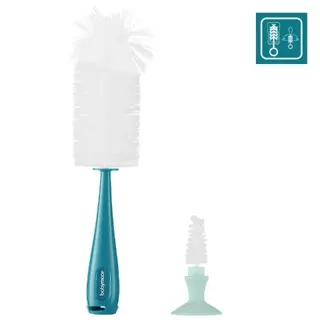 −9 %BabymoovBottle brush – Babymoov73 DH
instead of 80 DHView product −19 %BabymoovBottle drying rack – Babymoov228 DH
instead of 280 DHView product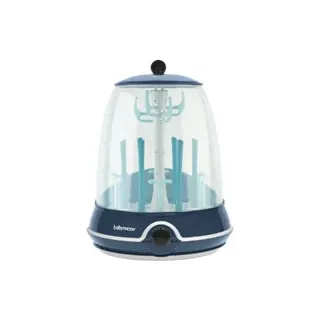 −9 %BabymoovTurbo Vapeur(+) electric sterilizer – Babymoov901 DH
instead of 990 DHView product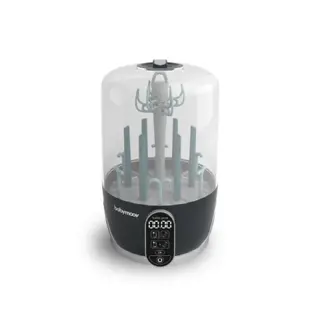 −14 %BabymoovTurbo Pure sterilizer and bottle dryer – Babymoov1 629 DH
instead of 1 890 DHView product- The whole aisle · Electric bottle sterilizers3 products online, delivered anywhere in Morocco.Open the aisle
Products sold by La Maison du Bébé, publisher of this magazine. Prices as of 12 October 2026; please check the product page.
Frequently asked questions
Does oral thrush hurt my baby?
Usually not: the Canadian Paediatric Society and Quebec's INSPQ describe it as generally painless. Some babies are fussy or have trouble feeding, though, and the NHS notes they may go off their feeds. If your baby seems to be in pain, is drinking less, or the patches look sore, have them seen by a doctor.
Can I keep breastfeeding when my baby has thrush?
Yes, as long as the mother is treated at the same time as the baby. Naître et grandir recommends treating both together, even if the mother has no symptoms, and washing then drying the nipples well after every feed. Milk you have already expressed is not contaminated as long as there is no suspicious sore on the nipple. Talk to your doctor or a lactation consultant.
Is oral thrush contagious?
It can pass from one person to another: between a baby and the breastfeeding mother, in both directions, and through objects that go in the mouth, such as dummies, bottle teats or shared teething rings. The fungus survives on these objects, the INSPQ points out. Wash them in boiling water after each use, do not share them between children and wash your hands often.
Why has my baby got thrush after antibiotics?
Thrush is more common after a course of antibiotics, notes the Canadian Paediatric Society: the fungus, often present in the mouth without causing trouble, can then multiply. That is no reason to stop a prescribed antibiotic. Keep an eye on your baby's mouth during and after the treatment, and see a doctor if white patches appear.
Do I need a steriliser when my baby has thrush?
Not necessarily. The INSPQ recommends sterilising objects that touch your baby's mouth by boiling them, and the NHS advises sterilising bottles after each use. A saucepan of boiling water is therefore enough. An electric steriliser mostly saves time if your baby has several bottles a day. Remember to replace teats and dummies regularly as well.
Sources
- Le muguetCaring for Kids, Canadian Paediatric Society · Canada
- Le muguetNaître et grandir · Canada (Quebec)
- Muguet dans la boucheMieux vivre avec notre enfant, INSPQ · Canada (Quebec)
- Oral thrush (mouth thrush)NHS · United Kingdom
- Breast pain and breastfeedingNHS · United Kingdom
- De retour de maternité : les premiers bobos de bébémpedia.fr, French Association of Ambulatory Paediatrics (AFPA) · France