





Article contents
Key points
- Roseola: high fever for 3 to 5 days, then small pink spots as it drops.
- Chickenpox: contagious until the crust stage; no ibuprofen, no aspirin.
- Hand, foot and mouth: above all, keep your child drinking, as mouth ulcers can bother them.
- Measles: fever, cough, red eyes, then a rash; the vaccine is the best protection.
- Spots that do not fade under a glass: call 141.
Three days of high fever, then, just as everything seems to be settling down, small pink spots on the tummy and neck. Or a few itchy blisters, mouth ulcers that stop your child drinking. A baby rash with fever is most often the sign of a viral illness of early childhood, a “rash illness” (doctors say exanthem), which is almost always mild.
Almost, because some need treatment, and measles can be serious. Here is how to recognise them, what to do for each one, and the simple test that should make you call 141 without hesitation.
Rash and fever: the right reflexes first
Even before looking for the name of the illness, check two things:
- The glass test. Press a clear glass against the spots. If they fade under pressure, they are “ordinary” spots. If they stay visible through the glass, like small bruises or bleeding under the skin, call 141 (SAMU, the Moroccan emergency medical service): the UK’s NHS treats this as an immediate emergency.
- Age and fever. The NHS asks for prompt medical advice for a baby under 3 months with a temperature of 38 °C, or a child aged 3 months or more with 39 °C or above, and whenever a rash worries you.

Comparison table of childhood rash illnesses
| Illness | Who? | How it starts | The spots | Contagious period |
|---|---|---|---|---|
| Roseola | Mostly 6 months to 2 years | High fever, often above 39.5 °C, for 3 to 5 days | Small pink spots that fade under pressure, on the neck, face, arms and legs, as the fever drops; not itchy | Saliva, droplets |
| Chickenpox | Mostly children; more serious in babies | Mild fever, up to 38 °C | Itchy fluid-filled blisters, then crusts, in 2 or 3 waves; palms and soles spared | From 1 to 2 days before the spots until the crust stage |
| Hand, foot and mouth | Mostly 6 months to 4 years | Fever of 38 to 39 °C, red throat, poor appetite | Painful mouth ulcers, small blisters on the palms, soles, sometimes the buttocks | From 2 days before the rash; virus in the stools for about 4 weeks |
| Scarlet fever | Rare before age 2, mostly ages 5 to 10 | Sudden fever above 38.5 °C, sore throat | Red skin, rough like sandpaper, starting in the skin folds; “strawberry” tongue | 10 to 21 days without treatment, 24 to 48 hours on antibiotics |
| Measles | Unvaccinated people, especially young children | Fever, runny nose, cough, red eyes, small white spots inside the cheeks | Rash that starts on the face and neck and spreads down over about 3 days; lasts 4 to 8 days | From 4 days before to 4 days after the rash |
Sources: Canadian Paediatric Society (roseola), France’s Assurance maladie (chickenpox, hand, foot and mouth, scarlet fever), WHO (measles).
Roseola: fever first, spots afterwards
This is the typical rash illness of babies aged 6 months to 2 years. For 3 to 5 days the fever runs high, even though most children do not seem very ill. Then it drops, and small pink-red spots appear, sometimes surrounded by a paler halo; they go away within a few hours to 2 days.
Antibiotics do nothing for it: it is a virus. Give plenty to drink, ease your baby’s discomfort if needed, and they can go back to nursery as soon as they feel well enough, according to the Canadian Paediatric Society. Some children have a seizure during the fever: it is frightening, and it calls for medical advice. Our article on fever in babies explains how to react.
Chickenpox: easing the itching safely
After an incubation period of about 14 days, small red spots turn into 3 to 4 mm blisters filled with clear fluid that turns cloudy before crusting over. They are very itchy, can affect the scalp and mouth, and healing takes 10 to 12 days, according to the Assurance maladie.
What to do, according to the Assurance maladie:
- wash the skin with a mild soap and pat dry, without rubbing;
- cut nails short with round-tipped scissors and brush them, to limit scratching and secondary infection;
- do not apply talc, powder or cream, which encourage secondary infection;
- for fever, no ibuprofen or other anti-inflammatory, which are contraindicated with chickenpox, and never aspirin, because of the risk of Reye’s syndrome. Ask your pharmacist for the right medicine and the dose suited to your child’s weight.
Your child stays at home until all the blisters have crusted over. Let the nursery and your family know: chickenpox can be serious during pregnancy, and a mother-to-be who is not immune and has been in contact should talk to her doctor. For vaccination, see our article on recommended vaccines beyond the national programme.
Hand, foot and mouth: keeping your child drinking despite mouth ulcers
Common between 6 months and 4 years, this illness caused by enteroviruses starts with 1 to 2 days of fever, sore throat and poor appetite. Then come painful mouth ulcers, and small blisters on the palms (in 95% of cases), the soles of the feet and sometimes the buttocks. The rash lasts about ten days.
The main risk is dehydration, when mouth ulcers make your baby refuse to drink. The Assurance maladie advises:
- cold or lukewarm, soft foods, purées or soups, avoiding anything hot or hard;
- offering drinks often, with oral rehydration solution if they vomit or have diarrhoea (see our article on gastroenteritis in babies);
- paracetamol for fever, as ibuprofen is contraindicated in case of dehydration.
Keeping the child away from nursery is not compulsory if they have few lesions and are well. But the virus stays in the stools for about 4 weeks, sometimes longer: wash your hands carefully after every nappy change.
From the shop
To get through a rash illness
No product treats these illnesses. Scissors to keep nails short during chickenpox, a pouch to keep the thermometer and care items at hand, a cup and soft spoons to help a child with mouth ulcers drink.
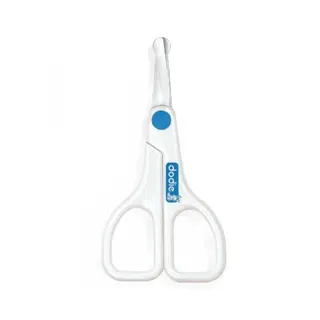 −48 %DodieBaby scissors, from 6 months – Dodie44 DH
instead of 84 DHView product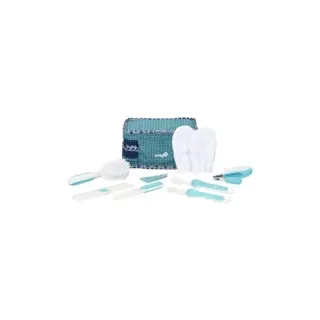 −48 %Safety 1stArctic newborn baby care kit, 8 pieces – Safety 1st156 DH
instead of 300 DHView product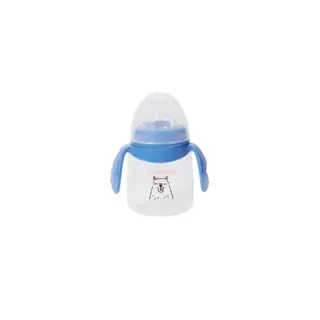 −9 %BadabulleLeak-proof cup with soft silicone spout, 180 ml – Badabulle73 DH
instead of 80 DHView product −8 %BadabulleSoft spoons, set of 3, BPA-free – Badabulle46 DH
instead of 50 DHView product- The whole aisle · Parapharmacy (outside mega menu)64 products online, delivered anywhere in Morocco.Open the aisle
Products sold by La Maison du Bébé, publisher of this magazine. Prices as of 12 October 2026; please check the product page.
Scarlet fever: the only one on the list caused by bacteria
Rare before age 2, thanks to antibodies passed on by the mother, scarlet fever mostly affects children aged 5 to 10, in winter. It is caused by a streptococcus. It starts suddenly: fever above 38.5 °C, sore throat, sometimes vomiting and tummy ache. One to two days later, the skin turns bright red and feels grainy to the touch, starting in the armpits, the creases of the elbows and the groin, and the tongue takes on a “strawberry” colour.
Because it is bacterial, it is treated with antibiotics, prescribed after an examination. Without treatment, the child stays contagious for 10 to 21 days; with appropriate treatment, for only 24 to 48 hours, the Assurance maladie specifies.
Measles: why it is talked about so much in Morocco
Measles (bouhamroun in Moroccan Arabic, or darija) is no minor illness. The WHO points out that it can lead to pneumonia, encephalitis, severe diarrhoea with dehydration, ear infection and even blindness, and that young unvaccinated children are the most at risk. It starts 7 to 14 days after infection, and it is one of the most contagious diseases there is: a single sick person can infect up to 18 people.
In Morocco, an outbreak caused 19,515 cases and 107 deaths between October 2023 and the end of December 2024, according to the Health Minister’s figures reported by Médias24, at a time when vaccination coverage had fallen to 77% in some regions. The vaccine is free in the public sector, and a child who has fallen behind can catch up: “vaccination can be given at any age”, the president of Infovac Maroc pointed out. The ages are in our Moroccan vaccination schedule, and the key facts about the vaccine in our article on measles and the MMR vaccine.
What if it is not a rash illness?
Not every rash comes from these illnesses. Impetigo, a skin infection, causes blisters that burst and leave golden crusts, which can spread, the NHS describes. For dry skin and a red bottom, see our articles on cradle cap and eczema and on nappy rash. And to understand why these viruses spread so easily in group settings, read our article on common nursery illnesses.
Frequently asked questions
How do I do the glass test on a rash?
Press the side of a clear glass against the spots and look through it. Spots that fade or disappear under pressure are most often caused by a viral illness. Spots that stay clearly visible, like small bruises or pinpoints of bleeding under the skin, mean you must call 141: the UK’s NHS treats this as an immediate emergency.
Can a baby catch chickenpox before 6 months?
It is possible, but less common: according to France’s Assurance maladie, a baby born to an immune mother is protected by her antibodies for 3 to 6 months. In babies, chickenpox can be complicated by pneumonia, and around the time of birth it is very serious. A baby under 6 months with a fever and a rash should be seen quickly by a doctor.
Should a child with hand, foot and mouth disease stay at home?
Not necessarily. The Assurance maladie specifies that exclusion is not required: the child can go to nursery if they have few lesions and feel well. If they have a lot of spots, a fever or trouble drinking, keep them at home and let the nursery know. The virus stays in the stools for several weeks: wash your hands thoroughly after every nappy change.
My child missed their measles vaccine: is it too late?
No. The president of Infovac Maroc pointed out in early 2025 that measles vaccination can be given at any age, and the Ministry of Health organised a catch-up campaign for ages 9 months to 18 years. The vaccine is free in the public sector. Talk to your doctor or the health centre, with the health booklet in hand.
Why do nails fall off after hand, foot and mouth disease?
A few weeks after the illness, one or more nails can come loose and then fall off: doctors call it onychomadesis. The Assurance maladie describes it as harmless, and the nails grow back within 6 to 12 weeks without lasting effects. This is often when parents make the link with the little spots of the previous weeks.
Sources
- La roséoleCaring for Kids, Canadian Paediatric Society · Canada
- Maladie pieds-mains-bouche : définition, symptômes et évolutionameli.fr, Assurance maladie · France
- Syndrome pieds-mains-bouche : que faire et quand consulter ?ameli.fr, Assurance maladie · France
- Reconnaître la varicelle : cause, symptômes et évolutionameli.fr, Assurance maladie · France
- Scarlatine : définition, transmission et symptômesameli.fr, Assurance maladie · France
- Measles (fact sheet)World Health Organization (WHO) · International
- L'épidémie de rougeole se généralise, mettant le Maroc en alerteMédias24 · Morocco
- Rashes in babies and childrenNHS · United Kingdom