




Article contents
Key points
- From age 1, the WHO recommends at least 180 minutes of physical activity a day, spread over the day.
- Babies benefit from the outdoors too: walks, a blanket in the shade, tummy time on the grass.
- Climbing, running, the odd tumble: Canadian paediatricians champion play that is "as safe as necessary".
- Between 10 am and 4 pm: shade, hat and sunscreen; near water, an adult within arm's reach.
- A helmet every time on a tricycle, balance bike or scooter, and never near a busy road.
Saturday morning, they are pacing around the flat, the tablet is never far away, and tempers are rising. An hour later, at the park, they run, climb, collect pebbles and come home hungry and calm. Outdoor activities for kids do not need to be organised: the outdoors does most of the work.
Here is why paediatricians encourage going out every day, play ideas by age from birth to 6, the place of "slightly risky" play, and the safety rules that matter in Morocco: sun, water, helmets and roads.
Why play outside every day?
Because children move more out there, and it does them good far beyond their muscles. The American Academy of Pediatrics (AAP) links outdoor play with better health, less stress and better mental wellbeing in children.
The Canadian Paediatric Society (CPS) goes further in a 2024 position statement. The studies it cites show that adding natural materials, loose objects to handle and opportunities for risk-taking to play spaces increases sustained physical activity and reduces time spent sitting. Outdoor play, with its small challenges, may also help reduce the risk of anxiety and teaches children to assess danger.
How much active play, by age?
The WHO does not set a time "outdoors", but a time for physical activity, and the outdoors is the easiest way to reach it.
| Age | WHO recommendation |
|---|---|
| Under 1 year | Floor-based play several times a day; at least 30 minutes of tummy time if not yet mobile |
| 1 to 2 years | At least 180 minutes of physical activity a day, at any intensity, spread over the day |
| 3 to 4 years | At least 180 minutes a day, including at least 60 minutes of moderate-to-vigorous activity |
| At any age | No more than one hour at a time strapped into a pushchair or seat |
Three hours sounds like a lot. Yet it adds up quickly: the walk to the corner shop, half an hour at the park, games in the courtyard, dancing in the living room.
Outdoor play ideas by age
Under 1. The AAP advises taking babies outside early, on walks or on a blanket, so they discover sounds, colours and textures, and doing tummy time outdoors too. Always in the shade: no direct sun before 6 months.
From 1 to 2. The advice from the CDC, the US public health agency, for this age lends itself well to the outdoors:
- balls to kick, roll and throw;
- a sandpit or the beach, with cups, spoons and a funnel;
- the swing, with a "ready, steady… go!" before every push;
- a walk to the park, the market or a bus ride, to discover new things.
From 2 to 3. The CDC suggests going to the park to climb on the equipment and run in safe spaces, kicking a ball back and forth, playing "follow the leader" (walking straight, turning, backwards, on tiptoe), drawing with chalk on the pavement or the terrace, and turning a big cardboard box into a car or a house. Playing with other children at the park also helps them learn to share and take turns.
From 3 to 6. Let them choose the activity and follow their lead. This is the age of dens, races, balancing along a low wall, supervised water play, the tricycle and then the balance bike. To choose between a tricycle, a balance bike and a scooter, our guide to tricycles, balance bikes and bicycles compares the options. Our development milestones at 2 years and 3 years round out these ideas.
"Slightly risky" play: let them climb, run, fall?
Yes, within limits. The CPS champions play that is "as safe as necessary" rather than as safe as possible. It defines risky play as any thrilling, exciting play with an uncertain outcome: climbing high, going fast, rough-and-tumble play, exploring a little away from adults depending on age. A toddler jumping off a chair and an older child climbing a tree are two examples it gives.
The key is the difference between a risk and a hazard. A risk is a challenge the child can see and assess according to their abilities. A hazard is a situation whose seriousness they cannot gauge: a busy road, a rough sea. Adults remove the hazards before play begins. The risks, they leave to the child. Injuries from risky play are generally minor, scrapes, bruises and cuts, the CPS notes.
This principle never calls into question protections with proven effectiveness, the CPS adds: the helmet, the car seat, the stair gate and the life jacket remain non-negotiable.
Sun, heat, water: safety rules in Morocco
The Moroccan sun calls for a few rules all year round. The AAP advises limiting exposure between 10 am and 4 pm, when UV rays are strongest, and covering children with light clothing, a wide-brimmed hat of about 7.5 cm (3 inches) that protects the face, ears and neck, and sunglasses that block at least 99% of UV rays. Sunscreen, SPF 15 at the very least and up to 50, is reapplied every 2 hours and after every swim. On chergui days (the hot, dry wind from the desert), also see our advice on protecting children from the heat.
Water demands total vigilance. The AAP points out that in the United States drowning is the leading cause of death among children aged 1 to 4, that a young child can drown in a few centimetres of water, and that it happens quickly and silently. It calls for touch supervision, an adult within arm's reach, during baths and swimming, and a life jacket in or near natural bodies of water. Swimming lessons can start after the first birthday, depending on the child's readiness. All the precautions for the sea are gathered in our article on babies at the beach.
Tricycle, balance bike, scooter: riding safely
The helmet goes on as soon as they ride. The AAP lists the bike helmet among the protective gear to wear for sports, and the CPS stresses that free play never means skipping the helmet. Choose enclosed areas or park paths, away from cars, and stay beside them while they learn to brake and steer.
How to choose a model by age and height is covered in the P92 guide mentioned above, and our scooters, bikes and tricycles department brings together the models available.
From the shop
For playing outside, in the sun or the shade
A UV-protection beach tent, a covering T-shirt and something to ride at every age: a selection across a range of prices. Choose between a tricycle and a balance bike according to your child's height and balance.
 −69 %Tutto PiccoloB.Serena sleeveless T-shirt, heather blue, whale print, boy – Tutto Piccolo81 DH
instead of 260 DHView product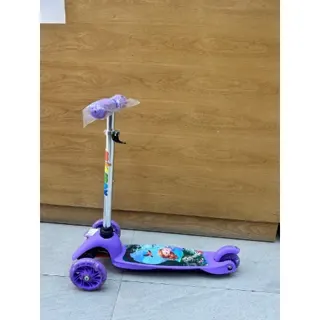 −44 %China Divers BrandDisney scooter, small size156 DH
instead of 280 DHView product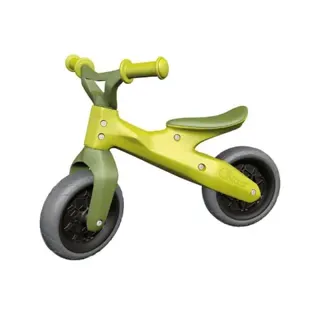 −48 %ChiccoEco+ balance bike, green, recycled plastic – Chicco390 DH
instead of 750 DHView product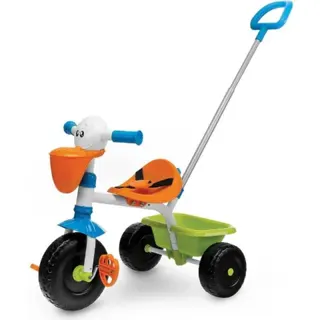 −48 %ChiccoPelican tricycle – Chicco411 DH
instead of 790 DHView product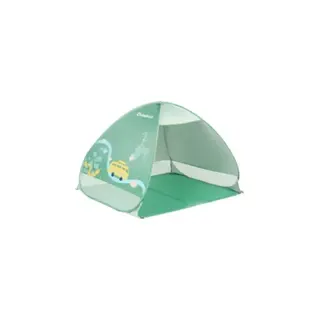 −9 %BadabulleChildren’s anti-UV tent, green – Badabulle592 DH
instead of 650 DHView product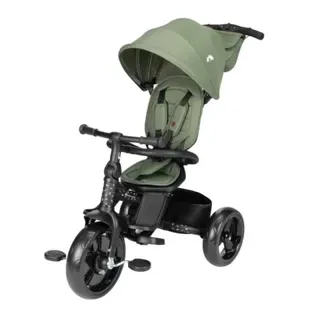 −9 %Bebe ConfortWindy 2-in-1 convertible tricycle, Mineral Green – Bébé Confort1 629 DH
instead of 1 790 DHView product- The whole aisle · Scooters, bikes and tricycles9 products online, delivered anywhere in Morocco.Open the aisle
Products sold by La Maison du Bébé, publisher of this magazine. Prices as of 12 October 2026; please check the product page.
Where to play outside in Casablanca and elsewhere in Morocco
Anywhere a child can run safely away from cars. In Casablanca, the Arab League Park, neighbourhood gardens, the Corniche at a quiet time of day or the Bouskoura forest offer plenty of space. Elsewhere, the beach outside the hottest hours, the countryside at the grandparents', a clean patch of open ground or the courtyard of the family home do the job just as well.
At home, a courtyard, a secure terrace or a small garden is enough for simple games: a sandpit, supervised water play, a play tent or outdoor play set, a few outdoor toys. In summer and during Ramadan, late-afternoon or early-evening outings let children play while avoiding the midday sun.
Frequently asked questions
Should you take a child out when it is cold or raining?
Yes, dressing them for the weather, as the American Academy of Pediatrics advises. Light rain, wind or grey skies do not stop anyone from running in a park, jumping in puddles or walking in the woods. Plan layers that are easy to take off, boots, and a change of clothes for the way home. Stay indoors during a thunderstorm.
Can you put sunscreen on a baby under 6 months?
Only as a fallback. The American Academy of Pediatrics asks parents to keep babies under 6 months out of direct sunlight, under a tree, a parasol or the pushchair hood. If shade and clothing are not enough, a small amount of sunscreen on small areas, such as the face, is acceptable. Our article on babies at the beach goes through these precautions.
When does a child need a helmet?
As soon as they ride anything. The American Academy of Pediatrics lists the bike helmet among the protective gear to wear for sports, and the Canadian Paediatric Society stresses that free play never means skipping the helmet. On a balance bike, tricycle, bicycle or scooter, it must be the right size, properly fastened and worn every time.
Can a 4- or 5-year-old play outside without an adult?
It depends on the child and the place. The Canadian Paediatric Society counts exploring with little or no supervision among the useful forms of play, depending on age and developmental stage. But some dangers are always beyond a young child: a busy road, a rough sea, a swimming pool. A familiar, enclosed courtyard is nothing like a busy street.
Sources
- To grow up healthy, children need to sit less and play moreWorld Health Organization (WHO) · International
- As safe as necessary: Risky play for childrenCaring for Kids, Canadian Paediatric Society · Canada
- Healthy childhood development through outdoor risky play: Navigating the balance with injury preventionCanadian Paediatric Society, Injury Prevention Committee (2024) · Canada
- AAP Encourages Families to Get OutsideAmerican Academy of Pediatrics (HealthyChildren.org) · United States
- Sun Safety: Information for Parents About Sunburn & SunscreenAmerican Academy of Pediatrics (HealthyChildren.org) · United States
- Drowning Prevention for Curious Toddlers: What Parents Need to KnowAmerican Academy of Pediatrics (HealthyChildren.org) · United States
- Milestones by 2 YearsCenters for Disease Control and Prevention (CDC), Learn the Signs. Act Early. · United States
- Milestones by 30 MonthsCenters for Disease Control and Prevention (CDC), Learn the Signs. Act Early. · United States