




Article contents
Key points
- You can sing to your baby from birth, ideally every day.
- The repetition in nursery rhymes and lullabies is thought to support early language.
- Finger and hand rhymes add gesture to words.
- Sing in your own language: Darija, Amazigh, Arabic, French or English, they all count.
- Parents often sing less after age 2: that is the moment to keep going.
Two in the morning, and your baby won't go back to sleep. Without thinking, you hum the lullaby your mother used to sing to you, "Nini ya moumou", or "Au clair de la lune". Your baby calms down, eyes closing. Songs for babies are no small detail: singing is one of the three things Canadian paediatricians recommend doing every day, along with reading and talking.
Here is why singing matters so much, which song to choose for which moment, and a selection of classics in French, Darija (Moroccan Arabic) and Amazigh (Berber). One note: we describe these songs without reproducing their lyrics. The best versions are often those of your own family.
What happens when you sing to a baby?
Singing captures a baby's attention, and it may also support their first steps into language. In its 2021 "Read, Speak, Sing" position statement, the Canadian Paediatric Society (CPS) brings together several findings:
- Attention. Changes in the pitch and tone of a voice, sung or spoken, hold an infant's attention.
- Language. Song, rhyme and rhythm may engage babies even more than speech alone. Lullabies and nursery rhymes rely on simple, repetitive structures that may support early language.
- The sounds of language. Pitch and rhythm are linked to phonological awareness, the ability to pick out the sounds in words, which will later help with learning to read.
- Confidence. Finger rhymes and clapping rhymes encourage creativity and self-assurance.
The CPS adds that singing and storytelling count just as much as books, especially in cultures with an oral tradition. Good news for families who have kept their grandmothers' songs.

Lullaby, nursery rhyme, finger play: which song for which moment?
Each moment of the day has its own music. This table helps you choose:
| Moment | Type of song | What it brings | Examples |
|---|---|---|---|
| Falling asleep | Slow, repetitive lullaby | A soothing ritual that signals sleep | Nini ya moumou, Au clair de la lune |
| Nappy change, bath, dressing | Short nursery rhyme | Attention and laughter during care | Une souris verte |
| Play on your lap | Finger or hand rhyme | Gesture linked to words, imitation | Ainsi font, font, font |
| From age 2 or 3 | Cumulative song, round | Memory, taking turns, singing together | Alouette, Frère Jacques |
At bedtime, the lullaby fits naturally into the evening routine, along with washing and a story. Our tips for helping your baby fall asleep gently cover the rest of the routine.
Our French classics
These songs have travelled across generations, and some are more than two centuries old:
- Au clair de la lune. An anonymous song thought to date from the 18th century, published in 1843. It holds a special place in history: it is the song Édouard-Léon Scott de Martinville recorded in 1860 with his phonautograph, the oldest known recording of a human voice.
- Frère Jacques. An 18th-century song, first printed in 1811, known in English as "Are You Sleeping, Brother John?". Long considered anonymous, it has been attributed by one musicologist to Jean-Philippe Rameau, a theory still debated. It is often sung as a four-part round, and exists in a great many languages.
- Alouette. A French-Canadian nursery song probably born in the 19th century, published in Montreal in 1879. Each verse repeats the previous ones while adding a part of the bird's body: good memory practice around age 3.
- Ainsi font, font, font. A children's song for the very young, sung with hand movements. Your baby watches first, then copies.
- Une souris verte. A short nursery rhyme, perfect during nappy changes.
Lullabies and nursery rhymes from Morocco: Darija, Arabic, Amazigh
"Nini ya moumou" is a Moroccan lullaby. It even appears among the lullabies of the world presented in a teaching resource from the Lyon education authority in France, alongside an anonymous Amazigh lullaby and an Egyptian lullaby.
The Amazigh repertoire is rich too. In 2016, the French publisher Didier Jeunesse devoted a book-and-CD to it, "Berceuses et comptines berbères", which brings together 27 lullabies, nursery rhymes, dances and traditional songs from Morocco and Algeria, in a bilingual Amazigh-French edition with a transcription in the Amazigh alphabet. It can be found in some libraries, and it is a lovely way to let a child hear Amazigh when their parents no longer speak it.
For Darija and Arabic, the best repertoire is often at home. Ask grandmothers, aunts and neighbours for the songs of their childhood: songs for playing, for bouncing baby on your knee, for sending them to sleep.
Is singing in several languages a good idea?
Yes. The CPS observes that music is often an easier way into a new language: a child dares to sing before daring to speak, and a familiar melody helps new words "go down". Still, a French or English nursery rhyme at nursery does not replace the songs from home.
The principle is the same as for speaking: sing first in the language you are comfortable with, the one that comes to you naturally at 2 in the morning. Our article on raising a bilingual child in Morocco explains how to keep several languages alive without worrying. To follow how their first words develop, see also language milestones from 0 to 3.
Musical toys, mobiles, night lights: are they useful?
Useful, yes; essential, no. A musical toy does not replace your voice, which responds to your baby, adapts to them and looks at them. But a jingling rattle, a sound ball or a small set of instruments add the pleasure of making sound yourself, and a musical mobile can help at bedtime.
A few tips for choosing:
- The age stated by the manufacturer, always, especially for small parts.
- A soft volume, adjustable if possible: test it at the height of your baby's ear before handing it over.
- Sounds your baby triggers themselves, rather than melodies that play on a loop.
Our baby activity toys section brings together rattles, balls and sets, and our toys by age guide helps you sort through them.
From the shop
Toys that make music
Your voice remains the most beautiful music for your baby. These toys complement it: a rattle or a ball that jingles, a set of instruments, a mobile or a musical night light for bedtime.
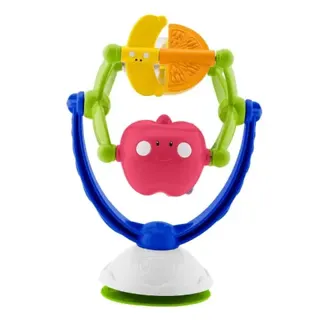 −48 %ChiccoFruits musical suction-cup rattle, from 6 months – Chicco156 DH
instead of 300 DHView product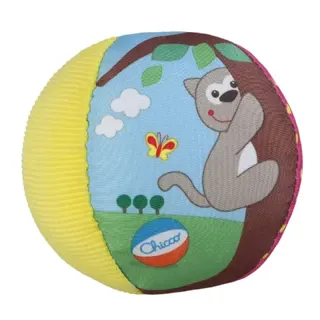 −48 %ChiccoSoft Ball musical toy, 3 months-3 years – Chicco104 DH
instead of 200 DHView product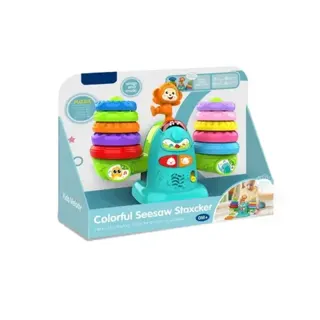 −52 %Kids MelodyMusical balance game – Kids Melody169 DH
instead of 350 DHView product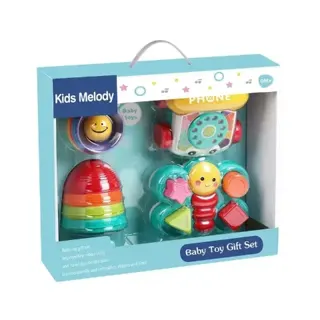 −50 %Kids MelodyBaby musical activity toy set – Kids Melody208 DH
instead of 420 DHView product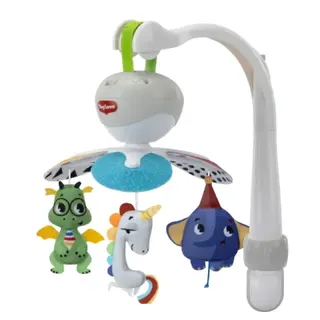 −9 %Tiny LoveTake Along 3-in-1 portable musical mobile, Born to Party – Tiny Love328 DH
instead of 360 DHView product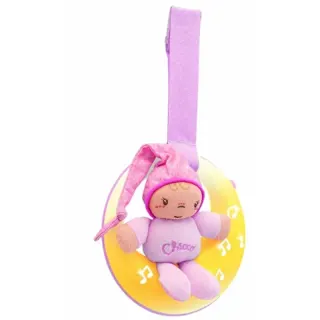 −48 %ChiccoFirst Dreams Petite Lune musical night light, pink – Chicco156 DH
instead of 300 DHView product- The whole aisle · Music8 products online, delivered anywhere in Morocco.Open the aisle
Products sold by La Maison du Bébé, publisher of this magazine. Prices as of 12 October 2026; please check the product page.
After age 2, keep singing
Canadian paediatricians have noticed something: in families, singing declines quickly after age 2. That is a pity, because it keeps helping language. Sing-along picture books, for example, help preschoolers enrich their vocabulary and hear the sounds of language more clearly.
To keep the habit going:
- Let them choose the bath-time or car-journey song.
- Make up a song about their day, to the tune of a familiar nursery rhyme.
- Sing together: a round like Frère Jacques amuses brothers and sisters and involves the older child in the baby's songs, an idea you will also find in our advice on sibling jealousy.
- Combine books and songs: our ideas for reading stories to your baby work with sing-along books too.
Frequently asked questions
From what age can you sing nursery rhymes to a baby?
From birth. The Canadian Paediatric Society recommends reading, talking and singing with your baby every day, from the very first days. A newborn does not understand the words, but the changes in pitch and tone of your voice capture their attention. Lullabies, nursery rhymes, made-up songs: anything goes, in the language of your choice.
Are French or English nursery rhymes useful if we speak Darija at home?
Yes, as an extra. The Canadian Paediatric Society notes that music is often an easier way into a new language: a child dares to sing before daring to speak, and familiar melodies help them remember new words. But keep your heartfelt songs in Darija or Amazigh too: the home language remains the foundation.
Can musical toys replace parents' voices?
No. Canadian paediatricians stress that the changes in pitch and tone of a speaking or singing voice capture a baby's attention, and that their brain develops when an adult responds warmly to their babbling. A musical toy can entertain, accompany a routine or introduce new sounds, but it does not respond to their babbling. Use it as an instrument to share, not as a babysitter.
My 3-year-old doesn't want me to sing any more: should I stop?
Not necessarily. Canadian paediatricians observe that singing declines quickly in families after age 2, even though it keeps supporting language. Change the format: let your child choose the song, try clapping games or hand rhymes, sing-along picture books, or a song made up about their day. Singing themselves also helps them gain confidence speaking, the CPS notes.
Sources
- Read, Speak, Sing: Promoting early literacy in the health care setting (27 January 2021)Canadian Paediatric Society · Canada
- For lifelong health, read, speak and sing to your baby from birth: PaediatriciansCanadian Paediatric Society (press release) · Canada
- La chanson d'Azur et Asmar / La berceuse (dossier École et cinéma 2010-2011)Music education advisers of the Rhône, Lyon education authority · France
- Sélection comptines et chansons : Berceuses et comptines berbères, 27 chansons du Maroc et d'Algérie (Didier Jeunesse, 2016)Médiathèque L'Écho, Le Kremlin-Bicêtre · France
- Frère Jacques (chanson)French-language Wikipedia · International
- Au clair de la luneFrench-language Wikipedia · International
- Alouette (chanson)French-language Wikipedia · International
- Ainsi font, font, fontFrench-language Wikipedia · International