




Article contents
Key points
- The core principle: 'help me to do it myself', in a prepared environment at the child's height.
- Few objects, simple and tidy: the environment offers what the child needs, nothing superfluous.
- The best activities are real ones: pouring, washing, tidying, dressing, helping with meals.
- A review of 32 studies shows moderate positive effects, but in schools, not at home.
- Before enrolling your child, check the teachers' training rather than the label.
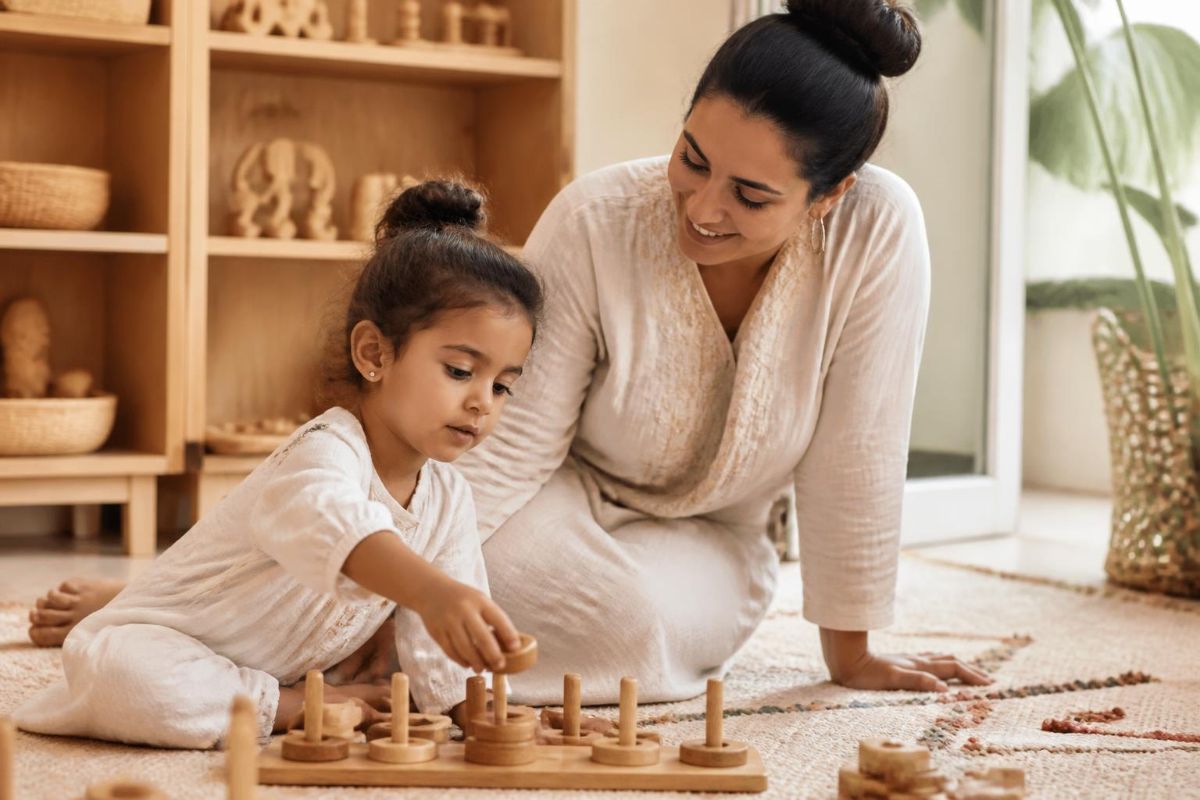
On social media, Montessori at home looks like a beige bedroom, a wooden shelf and toys lined up to the millimetre. The reality is simpler, and far cheaper. Montessori is first and foremost a way of looking at a child: as someone capable of doing a great deal on their own, if you give them the room and the time.
Here is where the approach comes from, the principles that really matter at home, activities by age using everyday objects, and what the research says about it, without embellishment.
Who was Maria Montessori?
Maria Montessori (1870-1952) was one of Italy's first women doctors. On 6 January 1907, she opened the first Casa dei Bambini, the "children's house", in the working-class district of San Lorenzo in Rome. Watching these children in a setting designed for them, she found that they could educate themselves: she would call it "self-education".
In 1929, she founded the Association Montessori Internationale (AMI) to carry on her work. The association still trains Montessori educators today, and its texts are the reference for this article.

The principles that matter at home
There is no need to apply everything. Five ideas are enough to change daily life:
- "Help me to do it myself": this is the principle AMI places at the heart of early childhood. The aim is for the child to be able to act without immediate help from an adult.
- The prepared environment: the adult arranges the space so that it offers what the child needs to develop, and leaves out anything superfluous. Order, reality, beauty and simplicity, with furniture to the child's scale, is how the AMI glossary sums it up.
- Observe before you act: for one AMI trainer, observation is the key to preparing the environment. What is the child trying to do? What is stopping them?
- Remove the obstacles: a hook that is too high, trousers with buttons, a wobbly stool. The adult spots what holds back independence and takes it away.
- Real rather than pretend: AMI speaks of an environment rich in real-life experiences, right down to eating at the table with the family from the start of weaning.
Freedom of movement is also part of the approach from birth: a baby on the floor, free to move, rather than propped up in a seat. We devote a whole article to it, on free movement for babies.
Setting up your home without buying everything new
Get down on your knees and look at the room from your child's height. That is the starting point. A few changes are enough:
- a low shelf with four or five activities on display, each in its own basket, and the rest stored elsewhere;
- a hook at their height for their jacket and bag, near the door;
- a sturdy step stool in front of the washbasin so they can wash their hands on their own;
- a small table and chair, or a corner of the rug, for eating a piece of fruit or drawing;
- a book corner, with a few books displayed face out.
Fix any furniture that could tip over to the wall, and check the room with our home safety checklist. For the bedroom, from the floor bed to the shelf, read our article on the Montessori bedroom.
Montessori activities by age, with everyday objects
The best activities are those from real life: the child copies what you do, at their own level. Several of the ideas below come from the CDC, the US public health agency, in its age-by-age tips; the others use objects you already have.
| Age | Practical life | Hands and senses |
|---|---|---|
| 0 to 12 months | Free time on the floor; meals at the table with the family from the start of weaning | A basket of everyday objects to explore: wooden spoon, scarf, cup |
| 1 to 2 years | Putting dirty laundry in the basket, carrying cups to the table, tidying away toys | Filling and emptying, pouring with a spoon or funnel in the bath, shape sorters, stacking |
| 2 to 3 years | Washing vegetables, stirring a batter, pulling on loose trousers or their jacket | Threading large beads, modelling dough, matching games |
| 3 to 6 years | Setting the table, pouring water from a small jug, folding napkins, watering a plant | Sorting by colour or shape, puzzles, first letter and number games |
Show the movement slowly, then let them try. The result won't be perfect: a badly folded napkin matters less than a child who folded it alone. And leave them free time too, with no activity on offer.
For the youngest, our ideas for baby play activities from 0 to 12 months complement this table. And if your 3-year-old is starting school soon, these everyday skills are also the best preparation, as our article on your 3-year-old explains.
Montessori toys: simple, real and few
The word "Montessori" on a box guarantees nothing. A good toy in this spirit is simple, often made from natural materials, focused on one action (stacking, fitting, pulling, sorting) and suited to the child's age. It lets the child act, instead of flashing lights and talking in their place.
Our guide to educational and Montessori toys by age offers a selection age group by age group. Our wooden toys and stacking and shape-sorting toys sections bring together the classics.
From the shop
A few simple toys in the Montessori spirit
Wooden toys to stack, pull or handle, and a step stool to join in with household life: a few simple objects that let the child act. Check the age shown on each product page.
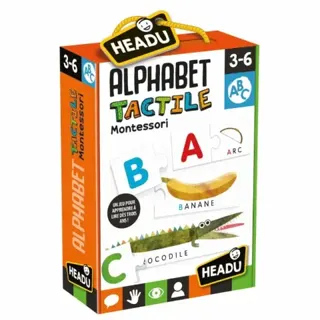 −48 %HeaduTactile Alphabet Montessori game – Headu65 DH
instead of 125 DHView product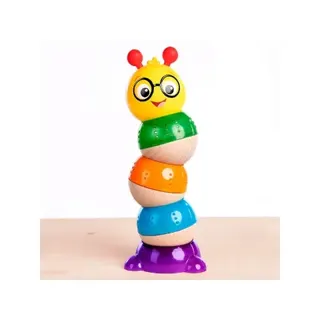 −48 %HapeBalancing Cal wooden stacking and balance game – Hape75 DH
instead of 145 DHView product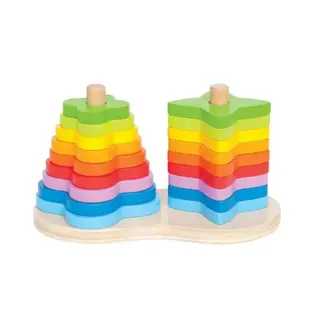 −48 %HapeRainbow stacking game, 12 months-3 years – Hape101 DH
instead of 195 DHView product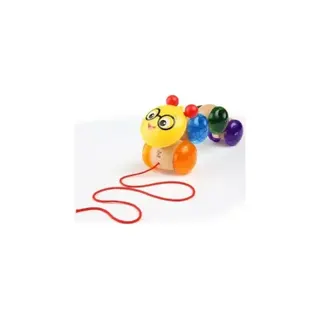 −48 %HapeInch Along Cal wooden pull-along caterpillar – Hape127 DH
instead of 245 DHView product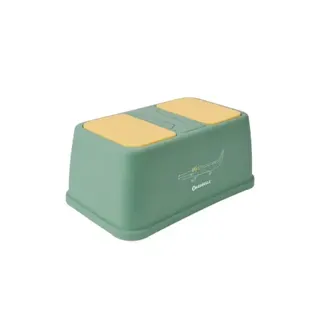 BadabulleNon-slip children’s step stool – Badabulle200 DHView product
 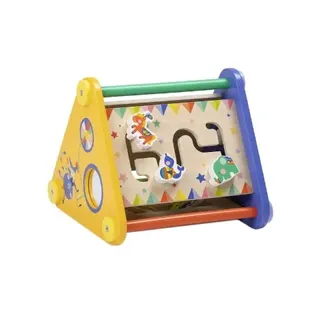 −48 %EurekakidsCircus activity triangle – Eurekakids200 DH
instead of 385 DHView product- The whole aisle · Wooden toys3 products online, delivered anywhere in Morocco.Open the aisle
Products sold by La Maison du Bébé, publisher of this magazine. Prices as of 12 October 2026; please check the product page.
What does the research say about Montessori?
Moderate positive effects, measured in schools. In 2023, a systematic review published in Campbell Systematic Reviews analysed 32 studies comparing Montessori education with traditional teaching. It found positive effects on academic results (effect size 0.24) and even more on skills such as executive functions (0.36), which help children concentrate, plan and control themselves.
Three honest caveats are needed. These studies concern schools, from preschool to secondary school, and none measures the effect of Montessori at home. Several authors have links with the Montessori world, which the review declares. And the effects are clearer in preschool and primary school, as well as in private schools.
At home, the value of the approach lies mainly in its principles, which echo paediatricians' advice: letting the child join in everyday tasks, play freely, move around, and limiting complicated toys.
Montessori schools in Morocco: what to check
Several schools and nurseries in Morocco say they follow this approach. The label alone tells you nothing about what happens in the classroom. Before choosing, ask three questions: what training have the teachers had, and from which organisation? Do the children choose their own activities, with a full set of materials at their height? How many children are there per adult?
Our guide to preschool in Morocco sets out the full checklist for comparing schools, whatever their teaching approach.
Frequently asked questions
From what age can you do Montessori at home?
From birth. The Association Montessori Internationale describes environments for babies from about 2 to 14 months, then for toddlers up to age 3. With a newborn, it is mostly about order, stable routines and freedom of movement on the floor. Practical life activities, such as tidying up or helping with meals, come later, at the pace of the child's progress.
Do I need to buy Montessori materials?
No. For the Association Montessori Internationale, the prepared environment offers what the child needs to develop and leaves out anything superfluous. Quebec's parenting resource Naître et grandir points out that expensive or complicated toys are not necessary. A low shelf, a few baskets, a step stool and objects from the kitchen are enough to start. Wooden toys are nice, not compulsory.
Does Montessori mean letting the child do everything, with no rules?
No. In the Association Montessori Internationale's writings, the adult keeps an active role: observing the child, preparing their environment and removing whatever stops them from acting independently. Safety rules and household rules remain the family's own. The child's freedom works within a framework you have designed for them, with time to finish what they start.
Can you do Montessori in a small flat?
Yes, because the essentials take up little room: a floor area to move about, a low shelf with four or five activities, a hook at their height for their jacket, a sturdy step stool in front of the washbasin. Rotate toys instead of bringing them all out, and store the rest out of sight: fewer visible objects also means less mess to manage.
Sources
- Biography of Maria MontessoriAssociation Montessori Internationale (AMI) · International
- Prepared Environment (glossary)Association Montessori Internationale (AMI) · International
- The Development of Independence in the First 3 Years of LifeAssociation Montessori Internationale (AMI) · International
- Montessori 0-3Association Montessori Internationale (AMI) · International
- Montessori education's impact on academic and nonacademic outcomes: A systematic reviewCampbell Systematic Reviews (Randolph et al., 2023) · United States
- Milestones by 2 YearsCenters for Disease Control and Prevention (CDC), Learn the Signs. Act Early. · United States
- Milestones by 3 YearsCenters for Disease Control and Prevention (CDC), Learn the Signs. Act Early. · United States
- Stimuler bébé par le jeuNaître et grandir · Canada (Quebec)