









Article contents
Key points
- Hands become baby's first toy: they look at them, suck them, grip what you slip into them.
- Chewing on fists is normal: it does not necessarily mean hunger.
- Between 3 and 6 months, most babies take three naps a day.
- Bouncer, swing, pushchair: short breaks only, and floor time every day.
- Asleep in the car seat? Move baby to a flat surface, on the back, as soon as possible.
Lying on their back, baby lifts a hand in front of their face and stares at it for a long time, like an unknown object. It disappears, comes back, ends up in the mouth. For a 3-month-old baby, their own fingers are the great discovery of the moment. A few days later, a funny face from you makes them chuckle.
The US CDC publishes its milestones at 2 and then 4 months. At 3 months, your baby sits somewhere between the two, at their own pace. The smiles of the second month are still there; this month, the hands step onto the stage.
Hands: baby's first toy
Between 2 and 4 months, baby plays with their hands when lying on their back and grips a rattle slipped into their palm, without yet reaching for it themselves, describes the Quebec public health institute (INSPQ). The CDC counts among the 4-month milestones looking at their hands with interest, bringing them to the mouth, holding a toy placed in the hand and swinging an arm towards what attracts them.
So their hands spend a lot of time in their mouth. It is their way of exploring: at this age, everything goes in the mouth (INSPQ). The UK's NHS specifies that chewing on fists is normal and does not necessarily mean baby is hungry.
To help, the American paediatricians of the AAP recommend sturdy rattles, see-through rattles, cloth books with bright pictures and toys with varied textures. Choose light rattles that are easy to grip: baby must be able to hold them alone.
From the shop
Toys to grab for hands that are opening up
Light rattles with a slim handle, two soft chew toys, an arch to aim at and grab, a mat for floor play: a selection at various prices, suited to a 3-month-old.
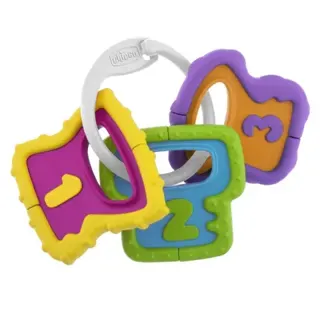 ChiccoColourful keys rattle, from 3 months – Chicco140 DHView product
 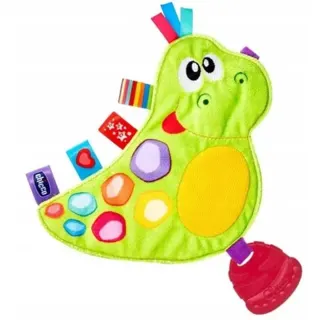 −48 %ChiccoDiego Dino Arthur activity toy, from 3 months – Chicco94 DH
instead of 180 DHView product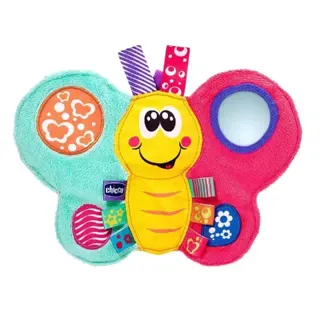 −48 %ChiccoDaisy Ninon the Butterfly activity toy, 3-24 months – Chicco94 DH
instead of 180 DHView product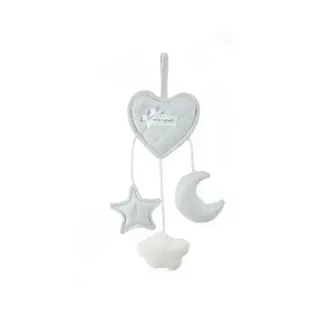 −48 %Pasito a PasitoOxford heart rattle, grey – Pasito a Pasito130 DH
instead of 250 DHView product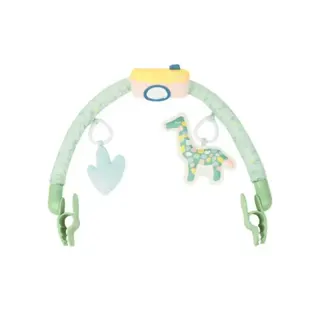 −11 %BadabulleSafari universal activity arch – Badabulle319 DH
instead of 360 DHView product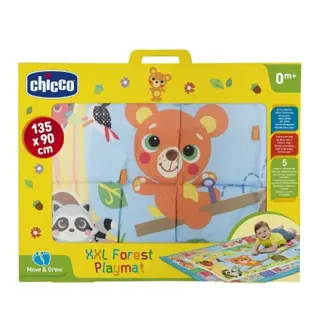 −48 %ChiccoMove’n Grow XXL forest activity gym – Chicco234 DH
instead of 450 DHView product- The whole aisle · Baby activity toys21 products online, delivered anywhere in Morocco.Open the aisle
Products sold by La Maison du Bébé, publisher of this magazine. Prices as of 12 October 2026; please check the product page.

The first chuckles
Laughter arrives in stages. According to the CDC, at 4 months most babies chuckle when you try to make them laugh, without yet bursting out laughing, and smile on their own to get your attention. Around 3 months, notes the INSPQ, baby also recognises familiar faces better.
A few games drawn from CDC advice: slowly move a colourful toy from left to right, then up and down, while baby lies on their back, to see whether they follow it; sing while gently moving their arms and legs for a few minutes; play peek-a-boo and watch for smiles. Songs from your own home do the job perfectly, and our selection of songs and nursery rhymes, from French to darija offers several.
A steadier head, forearms that push
By 4 months, the CDC expects a head held upright when baby is carried and support on the elbows or forearms on the tummy. At 3 months, baby is on the way. On the back, baby moves the legs and plays with the hands (INSPQ).
What helps most is the floor: a firm mat, on the back then on the tummy, several times a day. The CDC advises giving baby plenty of time every day to move, on the floor or on a play mat, and avoiding long periods in a swing, pushchair or bouncer. Our article on free movement explains this approach, and our guide to bouncers and swings helps you use them well.
Days take shape, nights are still short
According to Naître et grandir, most babies aged 3 to 6 months take three naps, in the morning, afternoon and late in the day, for 12 to 15 hours of sleep per 24 hours. They still need to feed at night. Their sleep cycles lengthen a little: 60 to 75 minutes, against 50 to 60 in a newborn.
Your best guide remains baby's tired signs, detailed by Naître et grandir: yawning, rubbing eyes, losing interest in toys, wanting to be held, a drooping head, fussiness. Our article on baby naps follows their evolution month by month.
Who feeds baby when you are not there?
Mealtimes do not change: milk, and only milk. The CDC does not budge: nothing else until about 6 months, not even water. What often changes at this age is who gives it. If you have gone back to work, a grandmother, a nanny or the nursery takes over. Pass on baby's habits and hunger signs: at 4 months, according to the CDC, a hungry baby opens their mouth on seeing the breast or bottle. Warn them also that baby sucks their fists without necessarily asking for food. To choose childcare, see nanny or nursery: the criteria to decide.
The car seat is neither a bed nor a piece of furniture
With outings and trips to see family, the infant car seat quickly becomes baby's second bed. It is not one. If baby falls asleep in the car seat, a swing or the pushchair, the AAP recommends moving them as soon as possible to a flat, firm surface, on the back. And outside the car, the seat goes flat on the floor, reminds the CISSS de l'Outaouais in Quebec: never on a table, counter or sofa bench from which it could tip over.
Follow-up this quarter
Vaccination appointments continue, and the health record remains your thread: see our vaccination schedule in Morocco for the dates. Note down your questions as the days go by, about naps, feeds or crying. If something worries you between visits, the CDC is clear: do not wait. Next month, it is all about grabbing hands and first rolls, with your 4-month-old.
Frequently asked questions
My 3-month-old eats their hands: are they hungry?
Not necessarily. The UK's NHS points out that chewing on fists is normal behaviour and does not mean baby is hungry or ready for anything but milk. At this age baby puts everything in their mouth to explore, notes the INSPQ. A more reliable hunger sign, according to the CDC: baby opens their mouth when they see the breast or bottle.
How many naps does a 3-month-old take?
Most often three: morning, afternoon and late in the day, according to the Quebec site Naître et grandir, which counts 12 to 15 hours of sleep per 24 hours between 3 and 6 months. Rather than the clock, follow baby's tired signs: yawning, rubbing eyes, losing interest in toys, a drooping head, fussiness. And do not compare with other people's babies: needs vary a lot.
When does a baby start laughing out loud?
Little by little. The CDC lists, among the 4-month milestones, a baby who chuckles when you try to make them laugh, without yet bursting into laughter. The INSPQ in Quebec speaks of a baby who laughs often between 4 and 6 months. If your 3-month-old smiles but does not chuckle yet, nothing is wrong: each child develops at their own pace.
How long can I leave baby in a bouncer?
As briefly as possible. The CDC advises avoiding long periods in a bouncer, swing or pushchair, and giving baby floor time every day, on a mat, to move freely. A bouncer helps out for a shower or a meal, under your eyes, but it does not replace the mat, where baby practises holding the head up and pushing on the arms.
Sources
- Developmental Milestones: 1-4 Months OldHealthyChildren.org, American Academy of Pediatrics (AAP) · United States
- Milestones by 4 MonthsCDC, Learn the Signs. Act Early. · United States
- How to Keep Your Sleeping Baby Safe: AAP Policy ExplainedHealthyChildren.org, American Academy of Pediatrics (AAP) · United States
- Étapes du développement de l'enfantMieux vivre avec notre enfant, INSPQ (Quebec public health institute) · Canada (Quebec)
- Le sommeil de bébéNaître et grandir · Canada (Quebec)
- Prévention des chutesCISSS de l'Outaouais (Quebec health network) · Canada (Quebec)
- Your baby's first solid foodsNHS · United Kingdom
- High temperature (fever) in childrenNHS · United Kingdom