









Article contents
Key points
- Independent walking appears between 8.2 and 17.6 months according to the WHO, often between 12 and 15 months.
- Barefoot on a safe floor at home; outside, shoes with a flexible sole.
- First words generally come around 12 months, approximate pronunciation included.
- Let him eat with his fingers and his spoon, always seated and supervised.
- Stairs gated at the top and bottom, cleaning products under lock and key.
He snatches the spoon from your hands, plunges it into the bowl, and half the purée ends up on his cheek. His other hand has already grabbed a piece of carrot, which he brings to his mouth with a look of intense concentration. Then he points at the bread and fires off a decisive "na!" An 11-month-old baby wants to do it himself, and he makes it known.
This month some let go of the sofa for two or three wobbly steps, others have no intention of doing so. Both are normal. Walking, words, meals: the milestones of this month, and what to make safe right now.
He wants to feed himself: how to help
The Canadian Paediatric Society describes, around 12 to 14 months, a child who eats with his fingers using thumb and forefinger, starts to use a spoon and drinks from a cup. The Quebec guide Mieux vivre specifies that he holds his cup with both hands and handles the spoon better, but still needs help to fill it. At 11 months, your baby is in the middle of learning.
On the menu side, the UK's NHS describes from 10 months three meals a day, a wider range of pieces to grab and a cup held more confidently. The US CDC expects, around age 1, to see him drink from an open cup that you hold for him and pick up crumbs with a pincer grip.
The NHS insists on two rules: a baby properly seated and strapped into his high chair, and an adult always present during the meal. As for utensils, learner cutlery and a stable cup are enough.

First steps: now, or in six months
No age is "the right one". WHO measurements placed standing without support between 6.9 and 16.9 months, and independent walking between 8.2 and 17.6 months, in perfectly healthy little ones. Geneva's child health service uses a range of 9 to 18 months for standing and walking.
The AFPA paediatricians, on the mpedia site, say most children start walking between 12 and 15 months, and that waiting until 18 months is neither rare nor worrying. The Canadian Paediatric Society describes, around 12 to 14 months, a child who cruises along furniture and "maybe" takes 2 or 3 steps without help.
How to help him launch
The AFPA's advice comes down to a few words: space, freedom and patience. Stand just out of his reach, arms outstretched, and encourage him to come to you. If you hold his hands, do not lift them higher than his shoulders. Reassure him after a fall, without rushing him: pressure can slow his progress. And let him drop back onto all fours whenever he wants.
The CDC advises sturdy push toys and stable furniture to practise with. A robust walker trolley plays that role; the baby walker, on the other hand, is not recommended for reasons of posture and safety, the AFPA paediatricians remind us. The whole path to walking is in our feature on first steps.
Barefoot or shoes?
At home, barefoot. The AFPA paediatricians explain that the sole of the foot feels the ground better and helps balance. Geneva's health service recommends going barefoot as often as possible, on a clean, warm and safe floor, or non-slip socks. In winter, on cold tiles, those socks are a good solution.
Shoes are for outdoors, on uneven, dirty or cold ground. Choose a light, flexible sole, try them on before buying and check the size often, advises the same service.
"Mama", "baba" and the first real word
Mieux vivre places first words around 12 months, with often approximate pronunciation, perfectly normal. The CDC expects, around age 1, to hear him call one of his parents "mama" or "dada", or by a nickname of his own. The Canadian Paediatric Society describes at 12 to 14 months "mama" or "dada", plus at least one other word that makes sense. In darija, "baba" does mean dad, and "mama" mum.
The CDC advises picking up and enriching his attempts: he says "ba", you answer "Yes, the ball!" If several languages are spoken at home, read our guide on children growing up with Darija, Arabic and French.
Evenings: regular times, no screens
Until his first birthday, the total recommended by the CDC remains 12 to 16 hours over a full day, naps included, with regular times. Keep screens out of the evening routine: before age 2, the CDC only accepts video calls with loved ones.
When he lets go of the furniture: stairs, kitchen, bath
A baby who launches himself falls, and that is normal. What is not normal is falling down the stairs. The Montreal Children's Hospital asks for a gate at the top and bottom of the steps, fixed to the wall at the top.
In the kitchen, keep hot drinks and the teapot out of reach: hot liquids burn a child's skin far faster than an adult's, the same hospital stresses. In the bathroom, an adult stays within arm's reach throughout the bath. Medicines, bleach and other cleaning products go in a locked cupboard, never under the sink. To go further, see how to prevent falls, burns and poisoning.
From the shop
To walk, eat and name the world
A stable walker trolley to practise standing, what he needs to feed himself without spilling it all, and a bath book with a puppet for naming animals. Check the age on each product page.
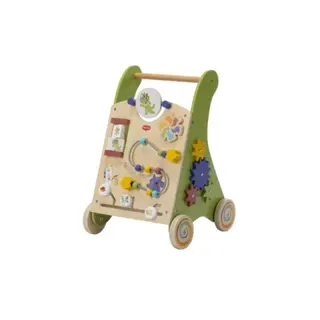 −9 %Tiny LoveBorn to Party wooden push walker – Tiny Love719 DH
instead of 790 DHView product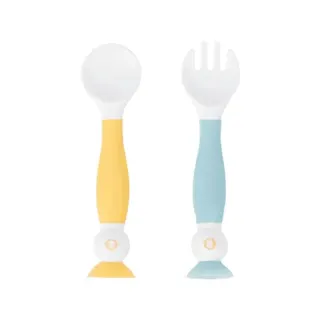 −9 %BadabulleFlexible learning cutlery – Badabulle50 DH
instead of 55 DHView product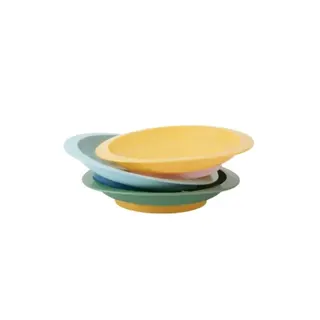 −9 %BadabulleNon-slip plates, set of 3 – Badabulle137 DH
instead of 150 DHView product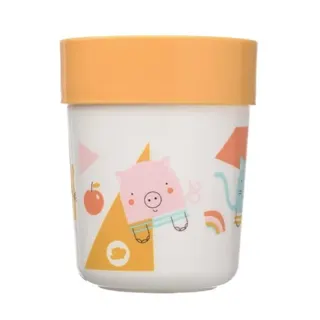 Maxi Cosi - Bébé ConfortDomino cup with non-slip base – Maxi-Cosi60 DHView product
  −9 %BadabulleLong-sleeved baby bib, animals, 4 months to 3 years – Badabulle118 DH
instead of 130 DHView product −51 %BadabulleBath book and puppet with stickers – Badabulle130 DH
instead of 265 DHView product- The whole aisle · Early learning25 products online, delivered anywhere in Morocco.Open the aisle
Products sold by La Maison du Bébé, publisher of this magazine. Prices as of 12 October 2026; please check the product page.
Preparing for the first-birthday visit
Note his words, his gestures, any first steps and what puzzles you: these observations will feed the 12-month appointment. The health record must be up to date: compare it with our vaccine table for Morocco. Last month he was learning to point and imitate, as told in our article on baby at 10 months. That leaves the review of the year, covered on our baby at 12 months page.
Frequently asked questions
My 11-month-old is not walking yet. Should I worry?
No, it is actually the most common situation. In the WHO study, healthy children walked alone between 8.2 and 17.6 months. The AFPA paediatricians say most start between 12 and 15 months, and that waiting until 18 months is neither rare nor worrying. What matters is that he is progressing, pulling himself up and trying to get around.
Do I need to buy shoes for his first steps?
Not for the house. Geneva's child health service advises leaving the child barefoot as often as possible, on a clean, warm and safe floor, or in non-slip socks. Shoes are for outdoors, on uneven, dirty or cold ground. Choose a flexible sole, try them on before buying and check the size often.
Can my 11-month-old eat what we eat?
Largely, yes, as long as you adapt. The NHS describes three meals a day and a variety of pieces at this age. Take his portion before adding salt, sugar or stock cube, cut small round fruit such as grapes into quarters, and stay with him throughout the meal, seated properly and strapped in.
How many words does an 11-month-old say?
Often none, or one or two. The Quebec guide Mieux vivre generally expects them around 12 months, often pronounced approximately. The Canadian Paediatric Society expects “mama” or “dada” and at least one other word at around 12 to 14 months. Before that, look above all at whether he understands everyday words and uses gestures.
Should I hold both his hands to help him walk?
You can, but without lifting his arms too high: the AFPA paediatricians specify that his hands should not go above shoulder height. It is often better to stand a little in front of him, arms open, and encourage him to come to you. Let him drop back onto all fours too: these comings and goings help him progress.
Sources
- Motor development milestonesWorld Health Organization (WHO), child growth standards · International
- La marche, un apprentissage qui commence dès la naissancempedia, French Association of Ambulatory Paediatrics (AFPA), on Santé.fr · France
- Position des pieds et des jambes du jeune enfant : Comment chausser mon enfant ?Child and Youth Health Service (SSEJ), canton of Geneva · Switzerland
- Étapes du développement de l'enfantMieux vivre avec notre enfant de la grossesse à deux ans, INSPQ · Canada (Quebec)
- Le développement de votre enfant : À quoi vous attendreCaring for Kids (Soins de nos enfants), Canadian Paediatric Society · Canada
- Milestones by 1 YearCenters for Disease Control and Prevention (CDC), Learn the Signs. Act Early. · United States
- Your baby's first solid foodsNHS · United Kingdom
- Bébés et bambins, 0-24 mois (Les meilleurs soins pour les blessures traumatiques)Trauma Centre, Montreal Children's Hospital · Canada (Quebec)