








Article contents
Key points
- Never before 4 months; around 6 months for the WHO, between 4 and 6 months for French paediatricians.
- Iron-rich foods first: meat, fish, egg, lentils, chickpeas.
- At first, just a few spoonfuls: milk remains the main food.
- Allergens such as egg or peanut are introduced early on, without delaying them.
- Take your baby's share of the tagine or harira before the salt, stock cube and smen go in.
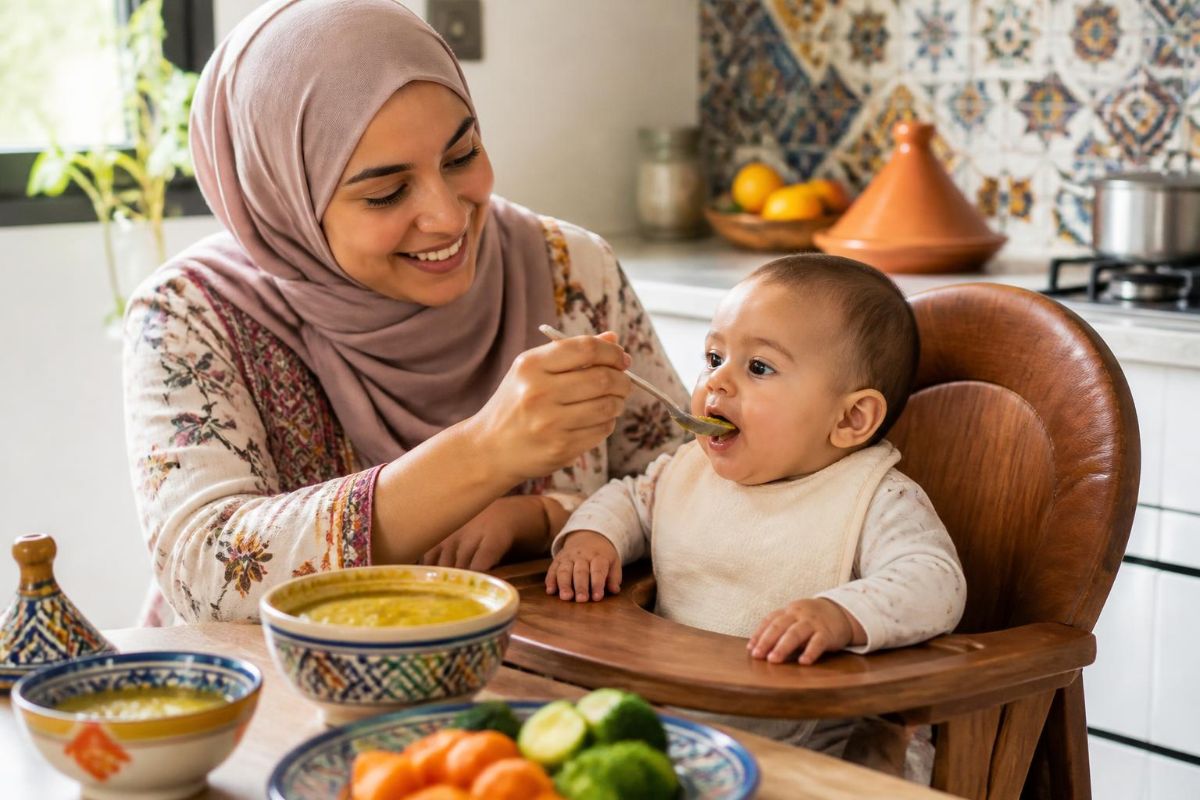
They stare at your plate, open their mouth when you do and reach for the bread. Everyone around the table has an opinion: your mother-in-law suggests a little broth from 4 months, a friend swears by jars, the paediatrician says 6 months. Starting solids (also called weaning, or complementary feeding) is the gradual move from milk alone to a varied diet, which carries on until around age 1.
Here we cover the start: when to begin, with what, and how to adapt family cooking. For what comes next, our blog offers a month-by-month weaning calendar.
6 months, or between 4 and 6 months?
Both answers exist, and they only seem to clash. The World Health Organization (WHO) recommends exclusive breastfeeding for six months, then introducing other foods from that age, with breastfeeding continuing to 2 years or beyond. The UK's NHS and the Quebec guide Mieux vivre avec notre enfant (INSPQ) also say "around 6 months".
In France, the guidelines of the Programme national nutrition santé, taken up in 2022 by the Nutrition Committee of the French Society of Paediatrics (SFP), place the start between 4 and 6 months. They rely in particular on the position of the European Society for Paediatric Gastroenterology, Hepatology and Nutrition (ESPGHAN) and on one argument: exclusive breastfeeding prolonged beyond 6 months risks leaving iron intake too low. The Australasian Society of Clinical Immunology and Allergy (ASCIA) sums up the common ground: around 6 months, but never before 4 months.
Why not earlier? Before 4 months the digestive system is not mature enough, the INSPQ explains, and foods given too early take the place of milk instead of adding to it. Too late, on the other hand, and your baby risks missing nutrients and finding it harder to accept new foods. For a premature baby, use the corrected age. Between 4 and 6 months, the right moment is decided with your paediatrician, by looking at your baby rather than the calendar.
Signs your baby is ready, and the ones that mislead
Around 6 months, three signs appear together, according to the NHS:
- they sit up and keep their head steady;
- they coordinate eyes, hands and mouth: they see a food, grab it and bring it to their mouth;
- they swallow instead of pushing everything back out with their tongue.
The INSPQ stresses two points: that they sit without support in their high chair, and that they control their head well enough to turn it away when they want to refuse.
What proves nothing, on the other hand: chewing their fists, waking more often at night or asking for more milk. These are normal behaviours at this age, and starting solids will not make them sleep longer (NHS).
What to start with
There is no compulsory order between food groups, according to the SFP. Two principles help you choose:
- Iron-rich foods from the start. This is the INSPQ's priority: meat, poultry, fish, egg, pulses (lentils, chickpeas, beans), tofu or iron-fortified baby cereal, at least twice a day between 6 and 12 months.
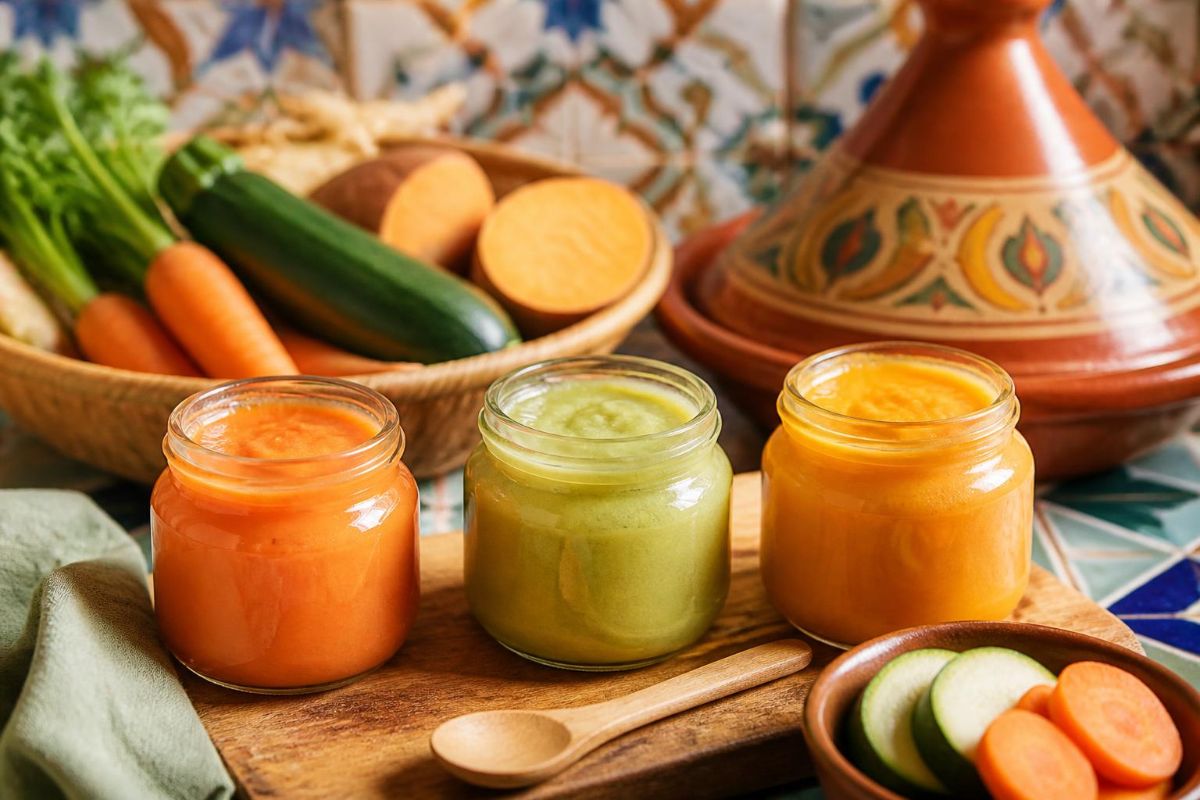
- Varied vegetables, including the less sweet ones. Starting with vegetables may make them easier to accept later, whereas starting with fruit may slow that down, the SFP notes. The NHS suggests carrot, potato, sweet potato, broccoli or cauliflower, then fruit such as apple or pear, cooked until soft.
The very first purées, of courgette, carrot or squash, are detailed step by step in our sheet on vegetable purées for babies, and our easy dishes for 6 to 8 months take over from there.
How much, and how often?
Very little at first. The INSPQ speaks of a few small spoonfuls, once a day or more, building up to 2 or 3 meals; the WHO also counts 2 to 3 meals a day between 6 and 8 months. Milk remains their main source of energy: on demand at the breast; with bottles, the guidelines in our article on how much milk by age still apply.
They set the quantity. When hungry, they take an interest in the food and open their mouth. When they have finished, they close their mouth, sulk, push the spoon away, turn their head or play with the food, the INSPQ describes. Respect those signals without insisting.
A refusal is not final: sometimes a food has to be offered up to 10 times, or more, before it is accepted (INSPQ, SFP). Without forcing, rewarding or punishing, recommends the SFP.
Smooth, mashed, then lumps
Many start with smooth purées before moving on to thicker textures. The NHS advises moving towards mashed food, lumps and finger foods as soon as your baby is able, and carrying on offering lumps even if they protest. French paediatricians go the same way: finger foods can be offered from 6 months, under supervision, and their introduction should not be delayed beyond 10 months (SFP).
Gagging is part of learning: watering eyes, tongue pushing forward, a retching movement (NHS). It is a reflex that protects them from choking, the INSPQ explains. Always stay next to them while they eat. Some parents choose pieces from the outset, without a spoon: that is baby-led weaning, which has its own safety rules.
Allergens, from the start
Egg, peanut, fish, dairy, wheat: these foods are no longer delayed. The SFP brings them in from 4 to 6 months, the NHS around 6 months, and the INSPQ at the same time as other foods. Introduce them one at a time, in small amounts, to spot any reaction (NHS), then keep them on the menu regularly. Peanut and tree nuts are given as powder or smooth purée, never whole; egg, well cooked.
If your baby has severe eczema or an already known food allergy, talk to your doctor before starting (SFP, NHS). The signs to watch for and what to do are in our article on introducing allergens.
The family dish, baby's version
There is no need to cook separately every day: baby's food can often be the family's, adapted to their age (INSPQ). The golden rule: take their share before seasoning. The NHS rules out added salt, including that from stock cubes and cooking water, as well as sugar.
- Vegetable tagine or couscous: take out carrots, courgettes, turnips or squash as soon as they are tender, before the salt, stock cube and smen (Moroccan aged clarified butter), then blend or mash with a little unsalted cooking water.
- Harira (the Moroccan lentil and chickpea soup): a ladle taken out before the salt, blended finely, brings lentils and chickpeas, two iron-rich pulses.
- Meat or chicken from the tagine: a small amount, well cooked, without bone or skin, blended with the vegetables. The SFP counts about 10 g of meat, fish or egg a day before age 1, at a single meal.
- Spices and herbs: cumin, cinnamon, parsley or coriander, which the SFP encourages, give flavour and colour.
For drinks, a few sips of water in an open cup go with meals from 6 months (NHS). To choose that water, see our article which water to give your baby in Morocco.
What to keep for later
- Honey, until age 1, because of the risk of botulism (SFP).
- Added salt and sugar (NHS).
- Cow's milk as the main drink before age 1; it can, however, be used in cooking (NHS). Plant-based drinks are not recommended before age 1 (SFP), and rice drinks until age 5 (NHS).
- Hard or round foods that can cause choking: whole nuts (not before age 3, according to the SFP), raw carrot or apple, whole grapes and cherry tomatoes, which should be cut in four (NHS).
- Raw or undercooked meat, fish and eggs, as well as raw-milk cheeses (SFP).
From the shop
For their first meals
A stable chair, soft spoons, a plate that stays put, an open cup and bibs. A cooking food processor is a comfort, not a must.
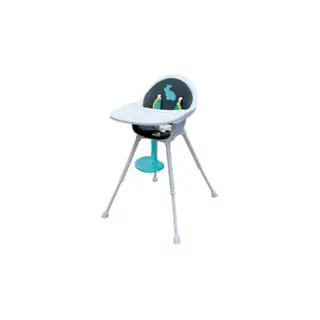 −63 %Babysun3-in-1 convertible high chair – Babysun364 DH
instead of 990 DHView product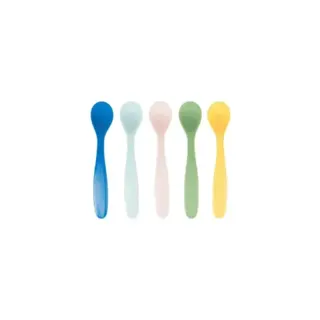 −9 %BadabulleSoft spoons, set of 5, from 4 months – Badabulle77 DH
instead of 85 DHView product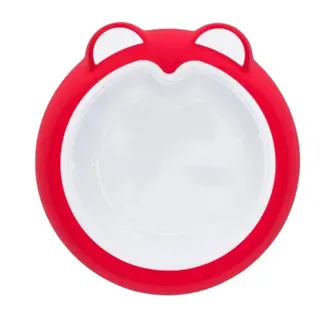 −45 %BadabulleNon-slip baby plate, intense pink – Badabulle61 DH
instead of 110 DHView product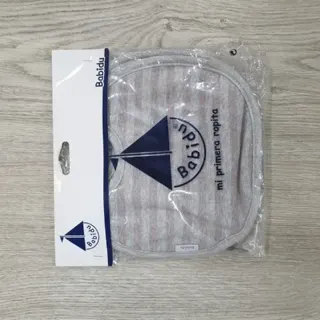 −74 %BabiduSet of 3 bibs, grey and pink – Babidu73 DH
instead of 280 DHView product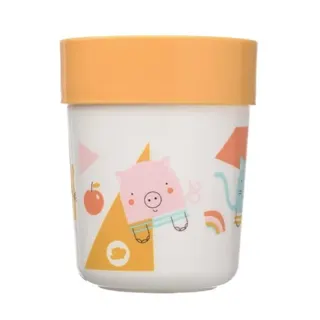 Maxi Cosi - Bébé ConfortDomino cup with non-slip base – Maxi-Cosi60 DHView product
  −19 %BabymoovNutribaby One 4-in-1 multifunction food processor – Babymoov1 447 DH
instead of 1 790 DHView product- The whole aisle · Baby high chairs21 products online, delivered anywhere in Morocco.Open the aisle
Products sold by La Maison du Bébé, publisher of this magazine. Prices as of 12 October 2026; please check the product page.
Frequently asked questions
Do I need to wait several days between two new foods?
Not for every food. The Quebec guide Mieux vivre (INSPQ) considers it unnecessary to wait a few days between two new foods: you can add several on consecutive days. For allergenic foods such as egg, peanut, fish or wheat, the UK's NHS does advise introducing them one at a time, in small amounts, so that any reaction is easy to spot.
Homemade purée or jars: which should I choose?
Both are fine. French paediatricians encourage homemade, with seasonal, local produce and no added salt or sugar. They acknowledge that jars offer regulated balance and safety, but note their price, a taste unlike homemade food and mixes that teach flavours less well. With a jar, don't try to finish it: the portion shown is an average, not a target.
Can I give bread or couscous from 6 months?
Yes. Gluten, found in wheat, is introduced right from the start of solids, in gradually increasing amounts, according to the French Society of Paediatrics, and the NHS lists it among foods to offer around 6 months. Well-cooked fine semolina mixes easily into a vegetable purée. A piece of bread can serve as a finger food from 6 months, always supervised, with your baby sitting properly.
Is purée given before or after milk?
At the very beginning, the NHS advises offering a small amount of food before the usual milk, without worrying about how much they eat. Milk remains their main source of energy: carry on with breastfeeds or bottles as usual. According to the INSPQ, babies drink about the same amount of milk until 8 or 9 months, then gradually take less as their meals increase.
Sources
- Alimentation du nourrisson et du jeune enfantWorld Health Organization (WHO) · International
- Les nouvelles recommandations du PNNS sur la diversification alimentaireComité de nutrition de la Société française de pédiatrie, Perfectionnement en Pédiatrie (2022), document diffusé par l'AFPA · France
- Your baby's first solid foodsNHS · United Kingdom
- Food allergies in babies and young childrenNHS · United Kingdom
- Quand introduire les aliments ?Mieux vivre avec notre enfant, Institut national de santé publique du Québec (INSPQ) · Canada (Quebec)
- Comment introduire les aliments ?Mieux vivre avec notre enfant, Institut national de santé publique du Québec (INSPQ) · Canada (Quebec)
- Premiers aliments à offrir à votre bébé - de 6 à 12 moisMieux vivre avec notre enfant, Institut national de santé publique du Québec (INSPQ) · Canada (Quebec)
- Infant Feeding and Allergy Prevention (2020)Australasian Society of Clinical Immunology and Allergy (ASCIA) · Australia