









Article contents
Key points
- At 6 months, most babies sit by propping themselves up on their hands.
- First meals: a variety of vegetables and fruit, no salt or sugar, and no honey before age 1.
- Gagging is normal at first, but never take your eyes off baby during a meal.
- No tea or sweet drinks: a few sips of water from an open cup, with meals.
- Cleaning products, breakables, windows: make the house safe before baby moves.
Propped against your tummy, sitting on your lap, he leans toward the table with both hands out and grabs the spoon before you do. At 6 months, baby's point of view changes: he is discovering the world sitting up, and he fully intends to taste it.
Sitting, first meals, first teeth: it is a busy month. You spotted his "ready to eat" signs at 5 months; now comes the practice.
Sitting, but not quite on his own
At 6 months, sitting while propping on the hands is something most babies can do, according to the CDC, whose charts reflect what at least three out of four children achieve. UNICEF describes a baby who is starting to sit without support and rocks back and forth. Both descriptions are right, because the gap between babies is wide.
The World Health Organization (WHO) measured it in 816 children followed on four continents: in a healthy child, sitting without support arrives between 3.8 and 9.2 months. Yet that is the narrowest of the six motor windows studied: the one for walking alone is almost twice as wide.
To help, the CDC suggests holding him sitting up straight with toys in front of him, so he learns balance. The rest of the time, the floor is still his best playground: on his tummy, he now pushes up on straight arms (CDC).

The first spoonfuls: how to start
Six months is exactly the age the WHO sets for introducing other foods, with breastfeeding continuing to 2 years or beyond. The French Paediatric Society opens the door from 4 months: if you have already started, you are within the guidelines.
The first weeks are for discovering, not for replacing milk. A food that is refused can be offered again, without forcing: it sometimes takes 10 tries or more, according to the UK's NHS and French paediatricians alike.
To begin, the NHS suggests single vegetables and fruits, cooked until soft: carrot, potato, broccoli, apple, pear, and also less sweet vegetables such as cauliflower or spinach. Textures change quickly, from smooth purée to mashed and then melt-in-the-mouth pieces: French guidelines call for offering pieces from 6 months, without waiting beyond 10 months. So-called allergenic foods (egg, fish, dairy, wheat, peanut powder) are no longer delayed: they are introduced from the start, as our article on baby food allergies explains.
What to avoid: added salt and sugar, stock cubes included (NHS), and honey until age 1, because of the risk of botulism (French Paediatric Society, UNICEF). No special products are needed: market vegetables, cooked without salt until tender then blended or mashed, make perfect first purées. The details are in our step-by-step guide to starting solids. As for equipment, see our advice on choosing a high chair; a few soft spoons are enough to get started.
From the shop
For first meals and explorer's hands
Soft spoons, a plate that stays put, easy-to-wash bibs, and for play, rings to handle, a suction rattle and a bath book: the essentials for this new stage, with nothing superfluous.
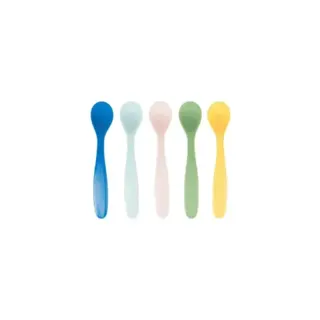 −9 %BadabulleSoft spoons, set of 5, from 4 months – Badabulle77 DH
instead of 85 DHView product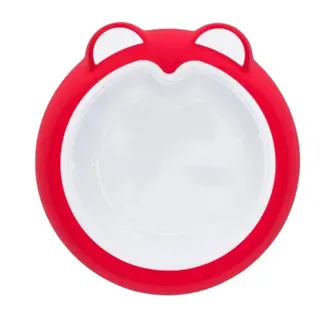 −45 %BadabulleNon-slip baby plate, intense pink – Badabulle61 DH
instead of 110 DHView product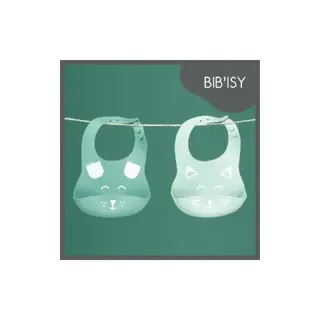 −9 %BabymoovBib’Isy silicone bibs, x2 – Babymoov200 DH
instead of 220 DHView product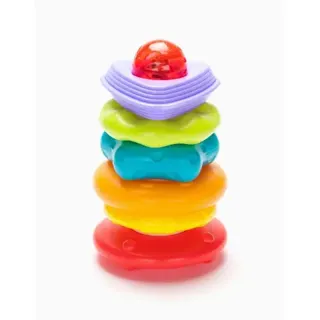 −48 %EurekakidsStacking rings, 5 pieces – Eurekakids78 DH
instead of 150 DHView product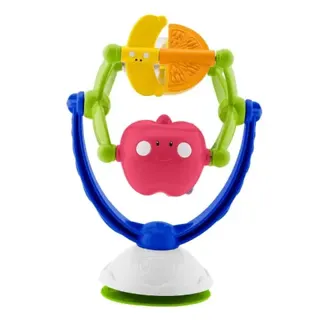 −48 %ChiccoFruits musical suction-cup rattle, from 6 months – Chicco156 DH
instead of 300 DHView product −48 %LudiMagic bath book, from 6 months – Ludi52 DH
instead of 100 DHView product- The whole aisle · Baby activity toys21 products online, delivered anywhere in Morocco.Open the aisle
Products sold by La Maison du Bébé, publisher of this magazine. Prices as of 12 October 2026; please check the product page.
What does he drink now?
Milk remains his main drink. With meals, the NHS advises introducing a few sips of water around 6 months, in an open cup or one without a valve, which is better for his teeth. Which water to choose in Morocco? Our article on baby's water sorts it out.
Tea, even weak, even mint tea, has no place: the NHS considers it unsuitable for babies and young children, and the sugar added to it damages teeth.
Gagging or choking: knowing the difference
Gagging is common at first, and normal: it is how he learns to manage textures. The NHS describes it: watering eyes, tongue pushing forward, retching movements. Choking is different and demands immediate action. Hence the absolute rule: always stay next to baby while he eats. Also ask your paediatrician which foods are a choking risk, as the CDC advises.
First teeth, restless nights
Most babies get their first teeth around 6 months, but some start before 4 months, others after 12, and a few are even born with a tooth, the NHS notes. The central incisors come first, then the lateral incisors around 8 months; the bottom teeth often come before the top ones.
Red gums, one flushed cheek, drooling, a need to chew, restless sleep: these signs often go with teething, sometimes with a slight rise in temperature that stays under 38 °C. Contrary to a persistent belief, no evidence links teething to diarrhoea (NHS). To soothe him at night, the CDC suggests talking softly, rocking, singing, and offering your fingers or a dummy.
Play: peekaboo, dropped toys and narrated walks
At 6 months he recognises familiar faces, laughs and loves looking at himself in a mirror (CDC). He passes an object from one hand to the other and tries to grab what is out of reach (UNICEF).
The game of the moment: he drops, you pick up. The CDC sees a cause-and-effect lesson in it, so hand back the fallen toys, again and again. UNICEF suggests playing peekaboo and commenting on whatever he puts in his mouth; on walks, at the market or in the garden, name what he is looking at (CDC). Stacking rings suit these games well: he grabs them, passes them from hand to hand, tastes them.
The house, before he gets moving
He is not getting around yet, but that will not last. UNICEF advises putting sharp, fragile or electrical items out of reach right now, storing cleaning products and liquids safely, and keeping windows closed. Think also of products stored under the sink or on the terrace. Our room-by-room tour of the house will guide you.
For the vaccines due at this age, see our vaccination schedule in Morocco, and use the appointment to talk about starting solids. And next month? Meet your baby at 7 months.
Frequently asked questions
How much should I offer at the very first meals?
At the start there is no amount to reach. The NHS advises offering a small portion before the usual breastfeed or bottle, without worrying about how much is eaten, and UNICEF suggests starting with 2 or 3 spoonfuls. Milk stays the main food: the WHO recommends continuing breastfeeding up to 2 years or beyond, alongside meals, which will gradually grow.
And when can my baby have cow's milk?
As a main drink, not before 12 months: according to the NHS, cow's milk does not give the right balance of nutrients before then. You can use it in cooking, in a purée for example, from about 6 months. Plant-based drinks are not recommended before age 1, according to French paediatricians. Until the first birthday, breast milk or infant formula comes first.
My 6-month-old is not rolling over yet. What should I do?
The CDC expects most 6-month-olds to roll over from tummy to back, and UNICEF advises talking to the doctor if a baby this age cannot roll. It is not necessarily serious, but it deserves a check-up. Meanwhile, give plenty of tummy time and back time on the floor, with a favourite toy placed just out of reach to invite rolling.
What toys should I give at 6 months?
Toys baby can grab with one hand, as UNICEF recommends, and safely taste: rings, rattles, cloth or bath books, soft balls. A safe mirror among the toys is a big hit at this age. Avoid small parts, respect the age on the packaging, and play together: the CDC stresses back-and-forth turn-taking.
Sources
- Milestones by 6 MonthsCDC, Learn the Signs. Act Early. · United States
- Les grandes étapes du développement de votre bébé à 6 moisUNICEF, Parenting portal · International
- WHO Motor Development Study: Windows of achievement for six gross motor development milestonesWHO, Multicentre Growth Reference Study (Acta Paediatrica, 2006), RTI International summary · International
- Infant and young child feedingWorld Health Organization (WHO) · International
- Your baby's first solid foodsNHS · United Kingdom
- Drinks and cups for babies and young childrenNHS · United Kingdom
- Baby teething symptomsNHS · United Kingdom
- Les nouvelles recommandations du PNNS sur la diversification alimentaireNutrition Committee of the French Paediatric Society, Perfectionnement en Pédiatrie (2022), circulated by AFPA · France