





Article contents
Key points
- First tooth around 6 months on average; all 20 milk teeth are in by about age 3.
- Drooling, swollen gums, chewing, restless nights: yes. Fever above 38 °C, diarrhoea: no.
- Chill the teething ring in the fridge, never the freezer.
- No numbing gel, no sugary biscuit and no amber necklace.
- A feverish, drowsy or inconsolable baby: look for another cause with the doctor.
They drool enough to soak three bibs a day, chew everything within reach and wake up crying after sleeping so well. The family already has its diagnosis: "it's the teeth." Often, that is true. Teething is a normal stage, sometimes uncomfortable, that every baby goes through in their own way.
But teeth get blamed for a lot. A fever or diarrhoea is readily put down to them, which can delay a diagnosis. Here is the usual timeline, the symptoms that really are down to teeth, those that are not, and ways to soothe your baby without taking risks.
At what age do babies get their teeth?
Most babies start teething around 6 months. But the normal range is wide: some start before 4 months, others after 12 months, and a few are even born with a tooth, the UK's NHS reminds us. All 20 milk teeth are usually in place between ages 2 and 3.
The bottom front teeth often lead the way. Here are the benchmarks from the Quebec guide Mieux vivre avec notre enfant, in months:
| Teeth | Lower jaw | Upper jaw |
|---|---|---|
| Central incisors | 5 to 10 months | 6 to 12 months |
| Lateral incisors | 7 to 16 months | 8 to 13 months |
| First molars | 11 to 19 months | 11 to 19 months |
| Canines | 16 to 23 months | 16 to 22 months |
| Second molars | 20 to 31 months | 20 to 33 months |
Notice that the first molars often arrive before the canines. And if your child celebrates their first birthday without a tooth, it is not necessarily a problem: the American Academy of Pediatrics (AAP) reminds us that some babies still have none at that age.

The real symptoms of teething
Teething does not make a baby ill, French national health insurance (Assurance maladie) insists. It can, however, be painful. The signs described by the NHS and by French national health insurance:
- a red, swollen gum that is tender where the tooth is coming through;
- a lot of drooling, which can irritate the chin;
- a red cheek, sometimes a small rash on the face;
- the urge to bite and chew hard objects;
- a grumpy baby who eats less and sleeps badly;
- rubbing of the face, gums or ears;
- a slightly raised temperature, which stays below 38 °C.
Sometimes a small bluish bubble appears on the gum up to two months before the tooth. This eruption cyst usually needs no treatment, the Quebec guide specifies. And some teeth come through with no symptoms at all.
Fever, diarrhoea, red bottom: what teeth do not explain
This is the key point. A fever above 38 °C is not caused by teeth, French national health insurance and the AAP remind us. It most often signals an infection that needs to be assessed. The same goes for diarrhoea: the NHS states that no evidence links teething to diarrhoea, and French national health insurance lists it among the symptoms not to blame on teeth, like a general change in how your baby seems.
A red bottom, finally, should not automatically be put down to teeth, the Quebec guide warns. A teething period can coincide with an irritated bottom, but lasting redness deserves the care described in our article on nappy rash.
In practice, faced with a feverish baby, follow the guidelines in our guide to fever in babies, not the schedule of their teeth. And if they rub their ear and cry at night, also think about ear infections.
How can you soothe your baby?
Simple measures remain the most effective:
- Cuddles and distraction. Playing, rocking, singing: French national health insurance and the NHS recommend comforting and distracting your baby.
- A gum massage with a clean, well-washed finger, or a damp gauze pad.
- A chilled teething ring. Choose a solid one, with no liquid inside, as the AAP advises. Chill it in the fridge, never the freezer: too hard and too cold, it can hurt the gum (NHS, INSPQ, French national health insurance). Never tie it around your baby's neck.
- Wipe away the drool regularly with a clean cloth, to avoid irritating the chin. A bib also keeps clothes dry.
On two points, countries differ. For cold, the AAP also suggests a very cold damp washcloth, even one put in the freezer, whereas the NHS, French national health insurance and the Quebec guide only mention the fridge. For food, the NHS suggests, from 6 months, letting your baby chew on pieces of raw fruit or vegetables under supervision; French national health insurance advises against it, for fear a piece might get stuck in the throat, and prefers a purée or a fresh yoghurt if the age allows. If in doubt, choose the most cautious option.
From the shop
Safe things to chew on
A solid teething ring or toy to chill in the fridge, a gum massager, an easy-to-grip rattle and bibs for the drool: that is all you need.
 −34 %Babymoov2-in-1 silicone teething spoon, beige – Babymoov59 DH
instead of 90 DHView product Tiny LoveSustain teething toy – Tiny Love200 DHView product
 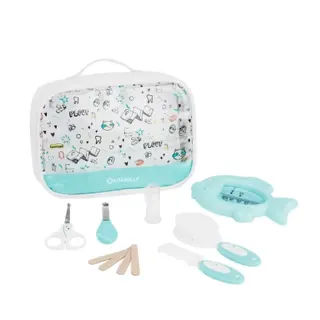 −57 %BadabullePlouf baby care kit – Badabulle138 DH
instead of 320 DHView product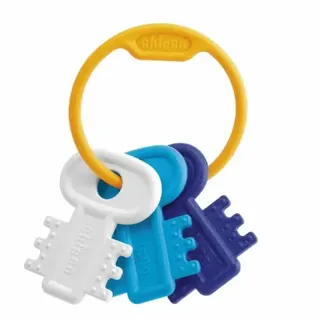 −41 %ChiccoKeys rattle, blue – Chicco82 DH
instead of 140 DHView product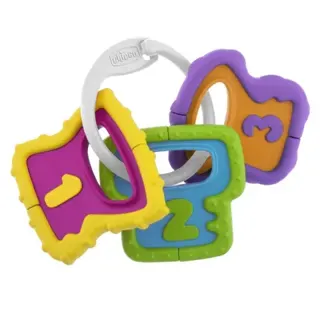 ChiccoColourful keys rattle, from 3 months – Chicco140 DHView product
 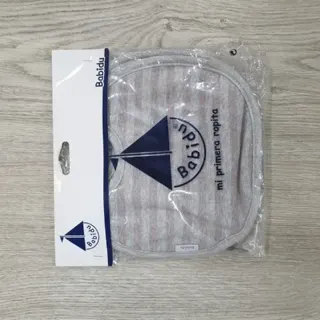 −74 %BabiduSet of 3 bibs, grey and pink – Babidu73 DH
instead of 280 DHView product- The whole aisle · Teething rings2 products online, delivered anywhere in Morocco.Open the aisle
Products sold by La Maison du Bébé, publisher of this magazine. Prices as of 12 October 2026; please check the product page.
Gels, homeopathy, biscuits: what does not work, or carries a risk
- Numbing gum gels. French national health insurance considers them dangerous: if swallowed, they can reduce the swallowing reflex and cause choking. The Quebec guide also mentions the risk of a serious blood disorder. The NHS is more nuanced, but notes their lack of proven effectiveness and reserves only gels designed for children, sold in pharmacies.
- Homeopathy and "natural" teething products. The NHS does not recommend them, and the US authorities have warned against certain homeopathic tablets and gels.
- Teething biscuits. They do not soothe and often contain sugar.
- Aspirin or alcohol on the gums, and piercing the gum: to be avoided, according to French national health insurance.
The amber necklace: a danger, not a remedy
Pretty, and often given with love, the amber necklace is nevertheless advised against by French national health insurance, the Quebec guide and the AAP. The risk is twofold, the AAP explains: strangulation, especially during sleep, and choking if the necklace breaks and a bead is swallowed or inhaled. The US Food and Drug Administration (FDA) issued a warning in December 2018, after cases of children choking on beads, and one of an 18-month-old strangled by an amber necklace during a nap.
As for the pain-relieving effect, the AAP is clear: no research supports the idea that body heat releases a soothing substance from amber. The AAP also advises against any jewellery for infants, bracelets included. The Quebec guide also cites the risk of choking and strangulation.
And what about medicines?
If the pain really bothers your baby, a painkiller can help, but only after getting advice. Paracetamol is the most used; aspirin is ruled out. Ask your doctor or pharmacist for the dose suited to your child's weight, and choose a sugar-free form. The minimum ages for ibuprofen also differ between countries: another good reason to ask for advice. Only one medicine at a time, French national health insurance specifies.
As soon as the first tooth appears, it gets brushed: our article on brushing your baby's teeth explains how, with which toothpaste and when to book a dentist appointment.
Frequently asked questions
How long does teething last?
There is no standard length. The UK's NHS notes that some teeth come through with no pain at all, and that for others the mild symptoms last only a few days. French national health insurance (Assurance maladie) stresses that everything varies from one child to another and from one tooth to another. If the discomfort drags on or comes with a fever, look for another cause with the doctor.
Can a baby be born with a tooth?
Yes, it happens. The NHS notes that some babies are born with their first tooth. Milk teeth start to form during pregnancy, and at birth all 20 are already waiting under the gums, the Quebec guide explains. Just mention this early tooth to the paediatrician at a check-up.
Can I let my baby wear an amber necklace only during the day, under supervision?
No. The American Academy of Pediatrics advises against any jewellery for infants, worn day or night. The risk of strangulation is highest during sleep, but a bead can come off at any time and be swallowed or inhaled, French national health insurance (Assurance maladie) reminds us. And no study shows that amber relieves pain.
Why does my baby rub their ear when teething?
The NHS and French national health insurance (Assurance maladie) list this among the possible signs of teething, along with red cheeks or drooling. But an ear infection also makes a baby want to touch their ear. If your baby has a fever, seems to be in pain or is not their usual self, have them examined: only a doctor can look at the eardrum.
Can the top teeth come through before the bottom ones?
Yes, although it is less common. In general, the bottom front teeth lead the way, and the bottom teeth often come before their upper neighbours, according to the NHS and the Quebec guide. The order and timing vary a lot, though: the American Academy of Pediatrics reminds us that some babies still have no teeth at their first birthday.
Sources
- Baby teething symptomsNHS · United Kingdom
- Tips for helping your teething babyNHS · United Kingdom
- Les symptômes de la poussée dentaireAssurance maladie (ameli.fr) · France
- Poussée dentaire : comment soulager son enfant et quand consulter ?Assurance maladie (ameli.fr) · France
- Dents de bébéMieux vivre avec notre enfant, INSPQ · Canada (Quebec)
- Looking after your baby's teethNHS · United Kingdom
- Teething Necklaces and Beads: A Caution for ParentsHealthyChildren.org, American Academy of Pediatrics · United States
- Baby's First Tooth: 7 Facts Parents Should KnowHealthyChildren.org, American Academy of Pediatrics · United States