





Article contents
Key points
- Before teeth: a damp gauze pad on the gums. From the first tooth: the toothbrush.
- Brush twice a day, and the evening brushing is the most important.
- A smear of fluoride toothpaste, then a pea-sized amount at around 2 or 3 years.
- Never a bottle of milk, juice or sweet drink to fall asleep with.
- First dentist visit around age 1.
The first tooth has just come through, a small white spot on the bottom gum. Is it time to get out the baby toothbrush? Yes. Every health authority consulted, in France, the United Kingdom, the United States and Canada, agrees on this point: cleaning teeth starts with the first one.
Where they differ is on the amount of fluoride before age 3, which explains the contradictory advice you hear at the pharmacy or from relatives. Here is how to make sense of it, how to brush a toddler who wriggles, and how to avoid bottle tooth decay.
Why look after teeth that will fall out?
Because they are needed for a long time. According to French national health insurance (Assurance maladie), milk teeth stay in place for 6 to 13 years depending on the tooth. They allow chewing and clear speech, shape the face and guide the permanent teeth into place.
Their enamel is also thinner than that of permanent teeth, so more fragile. A cavity can appear before age 2 and progress fast, warns the Quebec guide Mieux vivre avec notre enfant. It hurts, makes eating and sleeping harder, and children who have early cavities are more likely to have more later.

Before the first tooth: cleaning the gums
The routine starts even before teeth. The French Union for Oral Health (UFSBD) advises cleaning your baby's gums after every feed with a damp gauze pad. The Canadian Paediatric Society (CPS) speaks of a clean, damp washcloth, twice a day. It is also a way of getting your baby used to having their mouth touched.
Some care kits include a silicone gum massager, handy for massaging sore gums during teething.
Which toothbrush for a baby?
A soft-bristled brush, designed for toddlers and suited to their age. As for upkeep, the sources give simple guidelines:
- replace it every 3 months, according to the UFSBD, or as soon as the bristles splay, according to the Quebec guide;
- rinse it after each use and let it air dry, head up, without a cap;
- never share it, even between brothers and sisters.
Electric toothbrushes are not mentioned by the sources consulted for this age: a soft manual brush is enough.
How much toothpaste, and with how much fluoride?
Everyone agrees on three points: a fluoride toothpaste protects against decay, the amount must be tiny for a toddler, and you spit without rinsing. The UK's NHS explains why: rinsing with water washes the fluoride away.
The differences are about age and dose:
| Organisation | From the first tooth to age 2-3 | After that |
|---|---|---|
| UFSBD (France) | Fluoride toothpaste, the size of a grain of rice, up to age 2; one of its leaflets specifies 1,000 ppm of fluoride | A pea from age 2 |
| Assurance maladie (France) | A smear of toothpaste, with no more than 500 ppm of fluoride up to age 3 | 500 ppm from 3 to 6, then 1,000 to 1,500 ppm |
| NHS (United Kingdom) | A smear of fluoride toothpaste up to age 3 | A pea from 3 to 6 |
| AAP (United States) | A grain of rice of fluoride toothpaste | A pea from age 3 |
| Quebec guide (INSPQ) | A grain of rice of fluoride toothpaste from the first tooth | Not specified |
| Canadian Paediatric Society | Fluoride toothpaste only if the dentist advises it, when there is a risk of decay | A pea from age 3 |
Why these differences? The aim is to protect the teeth without a young child swallowing too much fluoride. That is why all the sources stress the very small amount, and why the Quebec guide asks you to keep the tube out of reach. The ppm (parts per million) shows the fluoride content: it is printed on the tube.
In practice: a smear the size of a grain of rice from the first tooth, a pea at around 2 to 3 years, and the dentist's advice if your child already has spots or cavities.
How do you brush a toddler's teeth?
- Get them comfortable: sitting on your lap, head resting against your chest, as the NHS suggests. You can see their teeth, and they feel held.
- Brush all surfaces of the teeth with small circular movements.
- Aim for two minutes, twice a day. At first, the main thing is to build the habit.
- Never skip the evening brushing. The Quebec guide explains that we produce less saliva while asleep, which leaves the field open to cavities.
- Have them spit, without rinsing, as soon as your child is able to.
From the shop
For well-protected first teeth
A gum massager for first care, and cups or a glass to move away from the bottle gradually: small tools that help keep good habits.
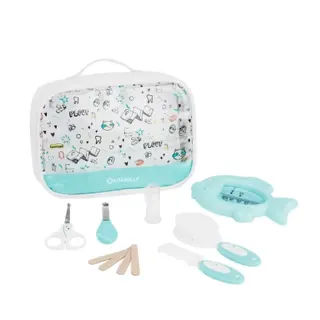 −57 %BadabullePlouf baby care kit – Badabulle138 DH
instead of 320 DHView product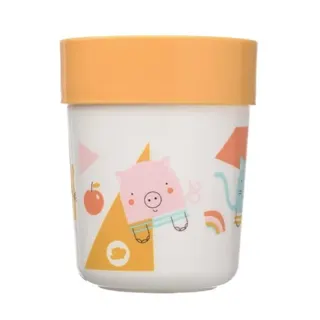 Maxi Cosi - Bébé ConfortDomino cup with non-slip base – Maxi-Cosi60 DHView product
  −9 %BadabulleLeak-proof cup with soft silicone spout, 180 ml – Badabulle73 DH
instead of 80 DHView product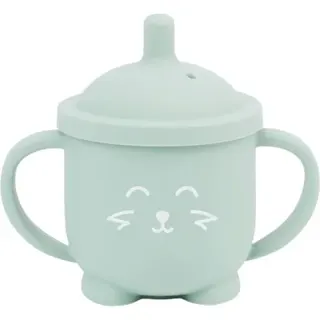 −9 %BabymoovIsy silicone straw cup, fox – Babymoov191 DH
instead of 210 DHView product- The whole aisle · Baby hygiene and care39 products online, delivered anywhere in Morocco.Open the aisle
Products sold by La Maison du Bébé, publisher of this magazine. Prices as of 12 October 2026; please check the product page.
Bottle, juice, sweets: the enemies of first teeth
Bottle tooth decay is well known to dentists. When a child falls asleep with a bottle of milk, juice or sweet drink, the liquid pools in the mouth and saliva no longer cleans the teeth. According to French national health insurance (Assurance maladie), milk teeth can then blacken very quickly, decay, or even fall out.
The rules that protect:
- At bedtime and overnight, nothing but water in the bottle, advises the Quebec guide. The NHS also accepts breast milk or infant formula at night, but no other drink.
- No bottle or beaker carried around all day, except with water. If the habit has set in, gradually dilute the contents until only water is left.
- A cup from 6 months. The NHS prefers a valve-free cup, where the liquid flows freely. The UFSBD reserves spout cups for the first year. The ideal, according to the Quebec guide, is to give up the bottle around age 1. Our training cups and glasses help with the transition.
- No juice or sweet drinks every day. The NHS reminds us that water and milk are the best drinks for young children. The sweet glass of tea offered by family, juice from a carton or syrup bathe the teeth in sugar. Keep sweets for mealtimes. For water, see which water to give your baby in Morocco.
- A dummy never dipped in sugar or honey, and never "cleaned" in an adult's mouth. French national health insurance also advises not sharing your baby's spoon. The rest is covered in our dummy guide.
When first meals begin, the same principles apply: our article on starting solid foods explains how to avoid added sugar.
The first dentist visit
The recommendations agree: a first visit within 6 months of the first tooth, and at the latest around age 1. The UFSBD and the American Academy of Pediatrics (AAP) set the limit at the first birthday; French national health insurance says 6 to 12 months. After that, one visit a year according to the UFSBD, every 6 months according to the CPS, unless the dentist says otherwise.
This first appointment is mainly about prevention. According to the UFSBD, the dentist examines the teeth and jaw growth, assesses the risk of decay and fluoride intake, and cleans the teeth if needed. In Morocco, book with a dental surgeon used to young children, and bring the health record. Our article on your baby at 12 months covers the other milestones of that age.
Between visits, a useful tip: once a month, lift their lip and look at their teeth in good light, as the CPS advises, and book an appointment at the slightest doubt.
Frequently asked questions
Do you need to treat a cavity in a milk tooth?
Yes. Even though it will fall out, a decayed milk tooth hurts and can make it hard for a child to eat, sleep or speak, French national health insurance (Assurance maladie) reminds us. It also guides the permanent tooth growing underneath. Children who have early cavities are more likely to have more later, too. The Quebec guide insists: treating milk teeth matters for a child's health.
My child swallows toothpaste. Is that serious?
With the right amount, a smear the size of a grain of rice, no: that is exactly why so little is used. Teach them to spit, without rinsing. Keep the tube out of reach, because they should not eat it. If they have swallowed a large amount of toothpaste, call the Anti-Poison Centre (0801 000 180, toll-free) or 141.
Can breast milk cause cavities?
Like all milks, it contains natural sugars. French national health insurance (Assurance maladie) and the Canadian Paediatric Society list it among the liquids that promote decay when they stay in contact with the teeth for a long time. None of the sources consulted advises stopping breastfeeding because of this, though: they stress careful evening brushing and keeping an eye on the teeth.
Until what age should I help my child brush their teeth?
Longer than you might think. The French UFSBD advises brushing for the child until age 2, letting them do it around age 4 under supervision, and checking their technique until age 6. The NHS speaks of help until at least age 7, the American Academy of Pediatrics until age 7 or 8. Let them try on their own, then go over their teeth again.
At what age should I move to a toothpaste with more fluoride?
Around age 6, when the first permanent teeth arrive. French national health insurance (Assurance maladie) then recommends a toothpaste with 1,000 to 1,500 ppm of fluoride. Before that age, use a children's toothpaste whose fluoride content is shown on the tube, and ask the dentist for advice if your child has already had cavities.
Sources
- Les dents de votre enfant de la naissance à 6 ans (fiche conseil)Union française pour la santé bucco-dentaire (UFSBD) · France
- Le fluor, démêlons le vrai du fauxUnion française pour la santé bucco-dentaire (UFSBD) · France
- L'importance des dents de lait et les risques liés aux caries chez le tout-petitAssurance maladie (ameli.fr) · France
- Looking after your baby's teethNHS · United Kingdom
- Baby's First Tooth: 7 Facts Parents Should KnowHealthyChildren.org, American Academy of Pediatrics · United States
- Dents de bébéMieux vivre avec notre enfant, INSPQ · Canada (Quebec)
- La santé des dents de votre enfantCaring for Kids, Canadian Paediatric Society · Canada