





Article contents
Key points
- Rinse with baby lying on their side, into the upper nostril, then switch sides.
- The right moment: before breast or bottle feeds, and before sleep.
- No need to rinse a nose that is not running: too many rinses irritate.
- No medicated drops or decongestant without medical advice.
- Fast or laboured breathing, refusing to drink: see a doctor the same day, or call 141.
Three in the morning. Baby takes two sips, lets go of the breast or the teat, gets cross, tries again. Their breathing makes a little snoring sound. A baby’s blocked nose is nothing serious in the vast majority of cases. But it is exhausting for the whole family, because an infant breathes mainly through the nose and cannot yet blow it.
The good news is that one simple step, done well, really changes things: the nasal rinse. Paediatricians sometimes call it “nasopharyngeal clearance”. Here is how to get it right, when to do it, and when a blocked nose should make you see a doctor.
Why does a baby’s nose block so often?
Because everything is tiny, starting with the nostrils. A little mucus is enough to get in the way of the air. In the first months, many babies have a stuffy nose even when they are not ill: it is perfectly normal mucus that their body cannot yet clear on its own.
Then come the colds. Before the age of 7, a child can catch six to eight a year, especially if they go to a nursery (we talk about this in our article on nursery illnesses). Crying, dust, cigarette smoke or very dry air also clog the nose.
In Casablanca as in Rabat, damp winters and rarely heated homes do not help: little noses often run from November to March.
The problem is not the mucus itself, it is what it prevents. A baby who cannot breathe well through the nose struggles to feed, tires quickly during meals and sleeps in short stretches.

The step that brings relief: the nasal rinse
The nasal rinse remains the first care, at any age. The principle is simple: you let a little saline run into one nostril while baby lies on their side, head firmly held, and the liquid comes out of the other nostril with the mucus. Then you sit baby up and repeat on the other side. Swiss guidelines suggest about half of a 5 ml pod, without going over 2 ml per nostril.
The detailed steps, with pictures, and how to choose a nasal aspirator are explained in our guide to nasal aspirators and nasal rinsing. Here we focus on the rest: when to do it, what else helps, what to avoid and when to see a doctor.
Saline, sea water: what goes in the nose (and what does not)
Saline pods remain the reference. They are single-use, so there is no risk of contamination, can be used from birth and are sold in every pharmacy in Morocco. One pod per rinse, then throw it away.
Sea water sprays (isotonic solutions) do the same job with a steadier flow. They are often more comfortable from a few months old, but each product has a minimum age: check the leaflet. Rinse the nozzle after use, and use the bottle for one child only.
Homemade salt solution also exists. In Quebec, the INSPQ gives the recipe:
- 10 ml of non-iodised salt;
- 2.5 ml of baking soda;
- 1 litre of boiled water, cooled.
It keeps for 7 days in the fridge in a closed glass jar, and you bring it back to room temperature before using it. It takes rigour. For a little one, the pods remain the simplest solution.
What does not go in a baby’s nose, on the other hand, is medicated drops or decongestants, unless prescribed. French and Quebec health authorities both remind us: the salt solution is enough, and the pharmacist is there to guide you. Antibiotics are useless against a cold, which is almost always viral.
From the shop
The essentials for a clear little nose
No need to buy everything: age-appropriate saline pods or a spray, a simple nasal aspirator and a cream for the skin around the nose are enough in most cases.
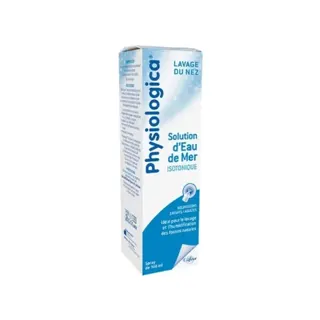 −48 %GifrerIsotonic seawater nasal spray, 100 ml – Gifrer29 DH
instead of 56 DHView product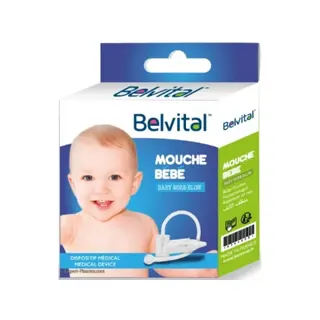 −41 %BelvitalManual baby nasal aspirator, from birth – Belvital41 DH
instead of 70 DHView product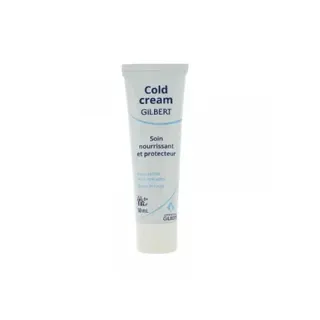 −48 %Laboratoires GilbertGilbert Cold Cream, 50 ml24 DH
instead of 46 DHView product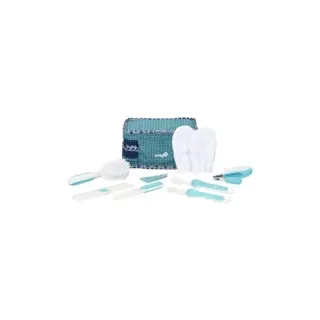 −48 %Safety 1stArctic newborn baby care kit, 8 pieces – Safety 1st156 DH
instead of 300 DHView product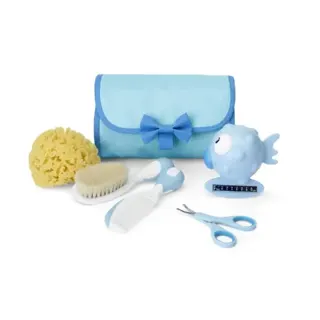 −48 %ChiccoHygiene Set toiletry kit, blue, from birth – Chicco270 DH
instead of 520 DHView product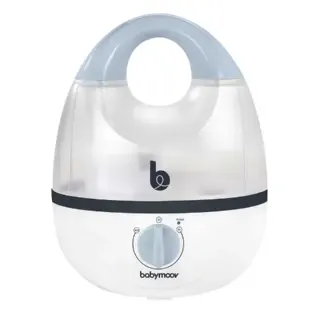 −9 %BabymoovHygro nursery air humidifier – Babymoov810 DH
instead of 890 DHView product- The whole aisle · Baby nasal aspirators1 products online, delivered anywhere in Morocco.Open the aisle
Products sold by La Maison du Bébé, publisher of this magazine. Prices as of 12 October 2026; please check the product page.
Is the nasal aspirator one of the good steps?
Opinions differ from one country to another. A Swiss prevention document advises parents against it, the French HAS does not recommend deep suctioning in bronchiolitis, while a British medical leaflet finds the few studies reassuring. Rinsing with saline therefore remains the basic step. The aspirator is only a supplement, used gently at the entrance of the nostril, when secretions are thick. The P90 guide mentioned above details how to use it.
Other things that help
- Split feeds: shorter, more frequent breast or bottle feeds tire a baby who breathes badly less.
- Offer fluids regularly, breast or bottle depending on age, to keep secretions thin.
- Humidify the bedroom air if it is dry, with a well-maintained humidifier. A badly cleaned machine does more harm than good.
- Use steam: a few minutes in a steamy bathroom before a feed can soften the mucus. Stay away from very hot water and keep baby in your arms.
- Protect the skin under the nose, quickly irritated by wiping: a thin layer of petroleum jelly or an unperfumed moisturising cream is enough.
- Air the home every day and never smoke near baby, neither in the house nor in the car.
Keep a kit ready with pods, soft tissues and a thermometer: our article on baby’s medicine cabinet details the essentials to have at home.
How long does a blocked nose last?
A simple cold generally lasts about ten days, sometimes up to two weeks in an infant. Fever, when there is any, usually goes away in under 48 hours.
Secretions often change appearance along the way: clear at first, then thicker. What matters is how they evolve and baby’s general condition.
If they become thick, yellow or green to the point of completely blocking the nose, especially with a fever, have baby seen by a doctor the same day. The same applies if they seem to have ear pain, or if the nose has been running for more than ten days. A cold can be complicated by an ear infection. And when fever joins in, our guide to fever in babies helps you take stock.
Blocked nose or bronchiolitis: how to tell the difference?
A cold stays “up high”: runny nose, a little cough, a grumpy baby who still plays and eats more or less. Bronchiolitis goes down into the small airways. The cough becomes more frequent, breathing speeds up, sometimes whistles, and the tummy sinks in under the ribs with each breath.
It is a common infection in infants, especially in winter. It is usually managed at home, but needs close watching. In both cases, the nasal rinse remains the first care. All the signs to know are in our article on bronchiolitis, and the rest of the care for colds in our guide to colds in infants.
Frequently asked questions
How many times a day can you rinse a baby’s nose?
As often as needed when baby is blocked up: in practice before every breast or bottle feed and before naps, so several times a day during a cold. When the nose stops running and baby breathes well, you stop. Too many rinses, for no reason, end up irritating the skin around the nostrils.
Can you rinse a newborn’s nose?
Yes, the technique is the same from birth, with a saline pod at room temperature and great gentleness. However, a newborn under one month old with a runny nose must be seen by a doctor the same day, even if they seem well.
Saline solution or sea water spray: which should I choose?
Both are salt solutions that thin the mucus. Saline pods are single-use, so very hygienic, and suitable from birth. Sea water sprays are handy, but each product has a minimum age: read the leaflet or ask your pharmacist for advice.
My baby screams during the nasal rinse. Am I hurting them?
The feeling is unpleasant but not painful, and most babies protest. What helps: quick, confident movements, a firmly held head, a small amount of liquid and a cuddle straight afterwards. If you can’t manage, ask your pharmacist or paediatrician to show you the technique once.
Is a nasal aspirator recommended?
Opinions differ. Some health documents advise against it, others judge it safe and useful. Keep to the common-sense rule: rinsing with saline remains the basic step, and the aspirator is only a supplement, used gently at the entrance of the nostril, never deep or repeatedly.
Sources
- Rhinopharyngite de l'enfantSanté.fr, French public health information service · France
- Prise en charge du premier épisode de bronchiolite aiguë chez le nourrisson de moins de 12 mois (recommandations 2019)Haute Autorité de santé (HAS) · France
- Hygiène nasale de l'enfantMieux vivre avec notre enfant, INSPQ · Canada (Quebec)
- Nez bouché ou qui coule chez l'enfantMieux vivre avec notre enfant, INSPQ · Canada (Quebec)
- Nez bouché : le lavageCantonal programme for health promotion, ages 0-4 (document distributed by the CHUV) · Switzerland
- Blocked nose in babies (snuffles)Patient.info · United Kingdom