





Article contents
Key points
- Bronchiolitis: a cold that moves down to the airways, with fast, wheezy breathing.
- The first two days of breathing difficulty are when it can worsen: watch closely.
- Nasal rinses, split feeds, sleeping flat on the back: the core of the care.
- No routine chest physiotherapy, syrup or antibiotic for a first episode.
- Under 2 months, premature, or drinking less than half: see a doctor quickly.
For two days, baby just had a cold. Tonight, they are coughing more, their breathing speeds up and makes a little whistle, and they drop the bottle after a few sips. This is often how bronchiolitis starts: a virus that travels down from the nose into the smallest airways, the bronchioles.
The infection is very common in infants, frightening to watch, and most often managed at home. It still calls for close watching, especially in the first days and in the youngest babies. Here is how to recognise it, what really helps, and the signs that must never wait.
What is bronchiolitis, and who gets it?
It is an acute viral infection of the bronchioles. Their lining becomes inflamed and secretions clog them, which gets in the way of airflow. The main culprit is the respiratory syncytial virus, or RSV. It affects children under 2, and comes back every year as an epidemic, in autumn and winter.
Not all babies have the same risk of a severe form. French authorities call for extra vigilance:
- before 2 months (corrected age for a premature baby), because of the risk of pauses in breathing;
- for babies born before 36 weeks of pregnancy;
- in the case of heart or lung disease, immune deficiency or neuromuscular disease;
- when baby is exposed to tobacco, during pregnancy or at home;
- when the breathing difficulty (cough, fast or wheezy breathing) began less than 48 hours ago: this is the period when any infant can get worse.

How do you recognise it?
It all starts like a cold, sometimes with a mild fever. Then comes a dry cough, and the breathing changes: faster, wheezy, noisy on breathing out. Baby may struggle to feed and sleep, because breathing takes more effort.
Two signs should catch your eye:
- the breathing rate: count their breaths for one minute, with baby calm, watching their tummy rise. Above 60 a minute, France’s Haute Autorité de santé (HAS) considers the bronchiolitis to be at least moderate;
- the chest indrawing: the skin sinks in between or under the ribs with each breath in, and the nostrils flare. It is a sign that baby is making an effort to breathe.
The acute phase lasts about ten days on average. The first two days after the breathing difficulty appears, not after the cold starts, are when symptoms can worsen; after that, they ease gradually. A small leftover cough can last two to four weeks.
The right steps at home
Most mild cases of bronchiolitis are managed at home. The HAS advice to parents comes down to a few steps:
- Rinse the nose with saline, baby lying down, head turned to the side, before meals and bedtime. This is the first care: our article on nasal rinsing details it step by step. A nasal aspirator can complement it, gently, at the entrance of the nostril; deep suctioning is not recommended.
- Split feeds: smaller, more frequent breast or bottle feeds. Keep breastfeeding; if baby struggles to latch, express your milk to give it another way.
- Lay baby on their back, flat, with no pillow or wedge, as the rules of safe sleep require.
- Keep the room at around 19 °C, aired, without overheating.
- Ban tobacco from the house and car.
- Keep baby at home: nursery is not desirable during the acute phase.
For fever, if there is any, the rules are the same as for any infant; our guide to baby colds also lists the syrups and remedies to avoid.
From the shop
What you need to care for and monitor at home
No product treats bronchiolitis. These are for the basic steps: clearing the nose before feeds, protecting irritated skin and taking the temperature with a reliable thermometer.
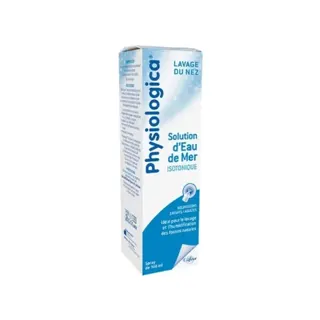 −48 %GifrerIsotonic seawater nasal spray, 100 ml – Gifrer29 DH
instead of 56 DHView product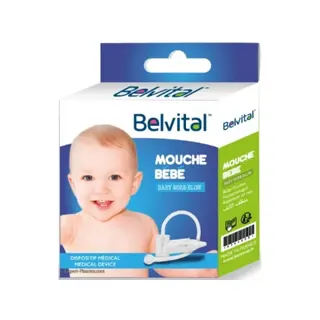 −41 %BelvitalManual baby nasal aspirator, from birth – Belvital41 DH
instead of 70 DHView product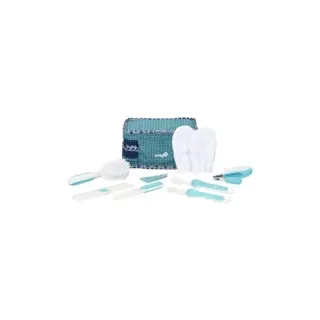 −48 %Safety 1stArctic newborn baby care kit, 8 pieces – Safety 1st156 DH
instead of 300 DHView product −9 %BabymoovTravel baby care kit – Babymoov346 DH
instead of 380 DHView product −48 %Laboratoires GilbertGilbert Cold Cream, 50 ml24 DH
instead of 46 DHView product- The whole aisle · Baby nasal aspirators1 products online, delivered anywhere in Morocco.Open the aisle
Products sold by La Maison du Bébé, publisher of this magazine. Prices as of 12 October 2026; please check the product page.
What is useless, or no longer used
The 2019 French guidelines cleared out the treatments for bronchiolitis. For a first episode in an infant under 12 months, the HAS does not recommend:
- chest physiotherapy in outpatient care, for lack of data showing a benefit. “Clapping”, vibration and postural drainage techniques are even contraindicated;
- cough syrups and mucus thinners, contraindicated;
- antibiotics, even with a fever, unless there is an associated bacterial infection;
- bronchodilators, corticosteroids and nebulised adrenaline or hypertonic saline.
This does not mean nothing is done: you help baby breathe and drink while their body clears the virus. If physiotherapy is offered to you, ask your paediatrician; it can be discussed for certain fragile children.
When is hospital admission needed?
Sometimes bronchiolitis becomes severe. The HAS recommends hospital in severe forms, and considers it in moderate ones, in particular when baby needs oxygen, when they drink less than half of their intake over three consecutive feeds, or when they are under 2 months old.
In hospital, the care is mainly supportive: oxygen if needed, nasal rinses, help with feeding when baby can no longer drink enough.
Preventing bronchiolitis: everyday precautions and new protections
Everyday habits remain the foundation, until the child is 2 and throughout the epidemic season:
- wash hands for 30 seconds before and after every contact with baby;
- wear a mask if you have a cold or are coughing;
- avoid crowded, enclosed public places, and if possible nursery before 3 months;
- avoid kisses on baby’s face and hands, including from brothers and sisters;
- air the home every day and do not smoke indoors.
In Morocco, the first weeks are also those of visits and the sbou3 (the baby-naming celebration on the seventh day). In the cold season, kindly asking everyone to wash their hands and to avoid kissing baby’s face and hands is not impolite at all.
Two medical protections now exist. The first is a vaccine for pregnant women, given in France between 32 and 36 weeks of pregnancy: its antibodies pass to the baby and protect them until about 6 months (see our article on vaccines during pregnancy). The second is a monoclonal antibody, nirsevimab (Beyfortus), injected into the newborn in a single dose, protective for at least 5 months. In a study cited by the French health insurance service, involving 1,270 infants, it cut hospital admissions for RSV bronchiolitis by 85%. Another antibody of the same type, clesrovimab, is also authorised in France. These strategies are recommended in France; their availability and cost in Morocco should be checked with your gynaecologist or paediatrician.
Frequently asked questions
Is bronchiolitis contagious?
Yes, very. The virus spreads through coughs, sneezes, kisses, but also through hands and objects: toys, towels, dummies. Many adults and older children carry it with a simple cold, without knowing. During the acute phase, France’s Haute Autorité de santé considers nursery “not desirable”: keep baby at home while they are ill, to limit the spread of the virus.
Baby breathes better propped up: can they sleep in their bouncer?
No, not overnight nor for unsupervised naps. Even during bronchiolitis, the Haute Autorité de santé keeps sleeping on the back, flat, in a cot with no pillow or wedge, in line with the rules for preventing sudden infant death. To help them breathe, rinse their nose before putting them down.
How long does the cough last after bronchiolitis?
The acute phase lasts about ten days on average. A small, isolated cough can then persist: around two weeks according to the French health insurance service, up to four weeks according to the Haute Autorité de santé. Beyond that, or if other signs persist, ask for paediatric advice. A cough that worsens, with fever or breathing difficulty, should be seen without waiting.
Vaccine in pregnancy or injection at birth: what is the difference?
The vaccine, given to the mother between 32 and 36 weeks of pregnancy, makes her produce antibodies that pass to baby, protected until about 6 months. Nirsevimab is an antibody injected directly into the newborn. In France, one is generally enough, except in premature birth or if birth is less than 14 days after the vaccine. Their availability in Morocco should be checked with your doctor.
Can my baby get bronchiolitis again?
It is possible: bronchiolitis concerns all children under 2, and several viruses can cause it, even though RSV dominates. The 2019 French guidelines cover the first episode before 12 months. If episodes of wheezy breathing keep coming back, talk to your doctor: they call for a different assessment.
Sources
- Prise en charge du premier épisode de bronchiolite aiguë chez le nourrisson de moins de 12 mois (recommandations 2019)Haute Autorité de santé (HAS) · France
- Reconnaître la bronchioliteameli.fr, French national health insurance · France
- Prévenir la survenue de la bronchioliteameli.fr, French national health insurance · France
- Les infections courantes et votre enfantCaring for Kids, Canadian Paediatric Society · Canada
- Toux chez l'enfantMieux vivre avec notre enfant, INSPQ · Canada (Quebec)
- When to get urgent medical help for babies and children under 5NHS · United Kingdom