




Article contents
Key points
- Tradition places the celebration on the seventh day, with the name announcement and often the aqiqa.
- Customs change from region to region: Salé, Oujda, Fez, the North or the South.
- The mother has barely recovered from the birth: delegate cooking, welcoming and tidying up.
- Hands washed before holding baby, no kisses on the face, sick visitors kept at a distance.
- No henna or kohl on the newborn; henna can decorate the guests' hands instead.
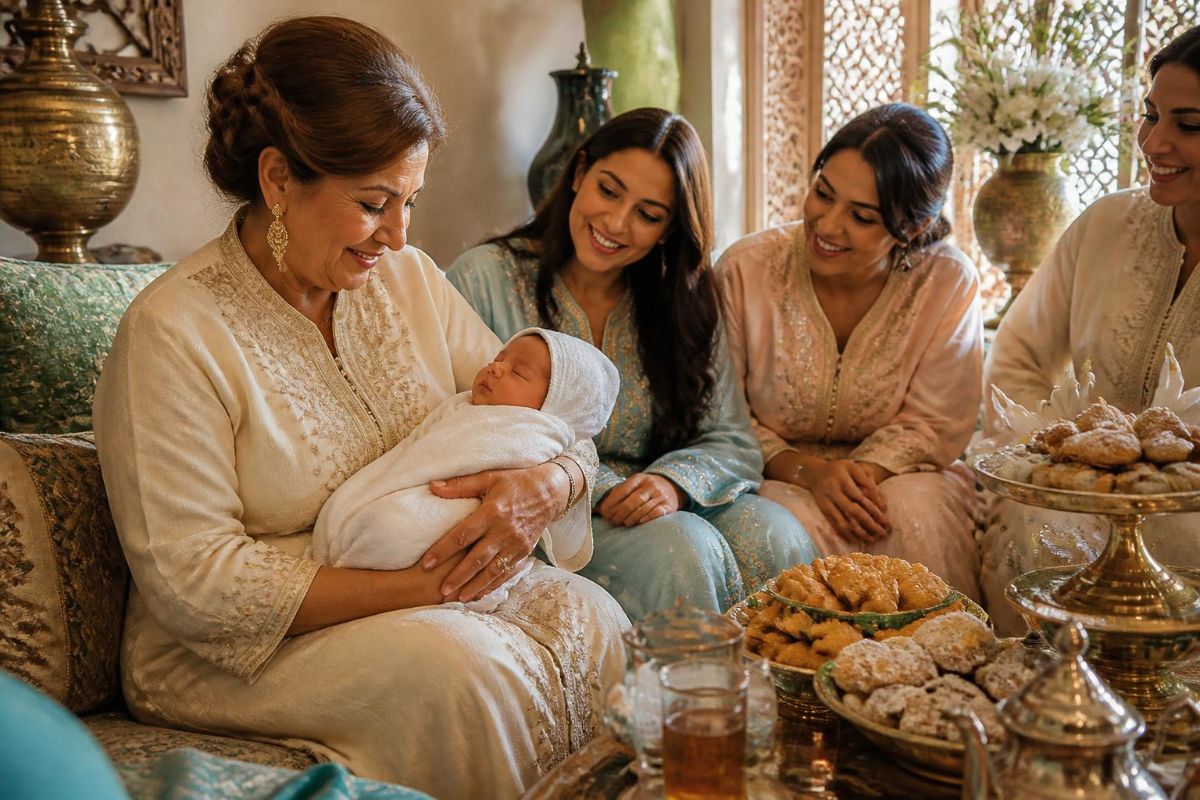
At dawn on the seventh day, the house already smells of harira and cinnamon, the aunts are bustling about and someone is hunting for the embroidered outfit bought for the occasion. The sbou3 (السبوع), the seventh-day celebration, brings together in many Moroccan families the announcement of the baby's name, the aqiqa sacrifice and a big shared meal. It is a joyful moment, and often the newborn's first real outing into the wider family.
It is also a party held one week after giving birth, around a baby only a few days old. Here are the customs by region, ideas for the menu, the outfit and the gifts, and the precautions that protect baby and mother. For any question of religious practice, the advice of a qualified person you trust remains the reference: here, we talk about traditions, organisation and health.
Sbou3, aqiqa, smiya: what do these words mean?
Sbou3 refers to the seventh-day celebration, "a day of celebration par excellence", according to the Moroccan mothers' website mamanmaroc.ma, which describes the sacrifice of a sheep in the North and Centre and the announcement of the name that day. The aqiqa, also pronounced laâkika, is the sacrifice offered to mark the birth.
In Salé, the newspaper Le Matin described how it unfolds in a family attached to local traditions: at dawn on the seventh day, the eldest of the family sacrifices a sheep for the smiya, the naming ceremony, and the chosen name is announced to ululations and music. The same article says that the father, or the eldest of the family, recites the call to prayer into the newborn's ear.
One practical point, often forgotten in all the excitement: the name announced at the sbou3 must also be registered with the civil registry within 30 days of the birth. The steps are explained in our article on registering a birth in Morocco, including the documents you need, and the rules on choosing a name in what the law allows for your baby's name.
Customs that change from region to region
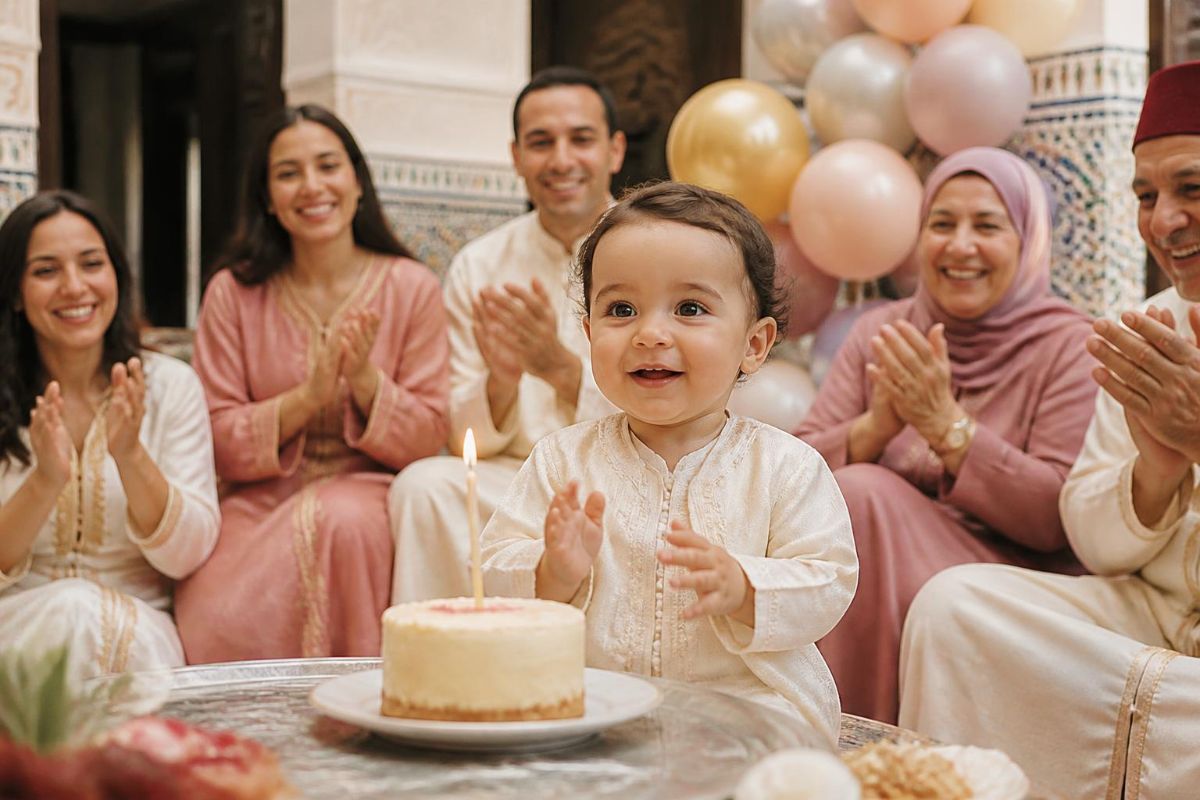
Each region, and almost every family, has its own habits. Descriptions published since the early 2000s give an idea:
| Region | What the sources describe |
|---|---|
| Salé | Henna party organised by the expectant mother's mother on the eve of the birth; sfouf (a toasted flour, almond and sesame sweet) for the new mother during the first seven days; the day before the celebration, the lkmassa (clothes, toiletries, toys); at dawn, harira and sfouf, then the sacrifice and the name; a big dinner in the evening (Le Matin, 2007) |
| Oujda and the Oriental region | Seven days of festivities with the Al Arfa troupe; couscous, berkoukech (semolina, lentils, chickpeas and dried meat) and taqnatta; henna on the mother's hands and feet; baby's bath on the seventh day, accompanied by songs (MAP, 2003) |
| Fez | The day before, a procession of young women carrying the trousseau, kaftans and sheets; baby washed by the paternal grandmother; traditional dishes, popular and Andalusian songs in the evening |
| North | Preparations start two months before the birth; lunch with the meat of the sheep; in the afternoon, the mother wears her finest clothes and receives her gifts, to the sound of Andalusian songs |
| South | Name announced during the celebration; the village women prepare several dishes for the new mother; songs and dances of the region |
The last three rows come from mamanmaroc.ma. There is no obligation to do it all: keep what means something to your family, and leave the rest.
Planning the sbou3 without wearing out the new mother
On the seventh day, the new mother is still bleeding, sleeping in short bursts and learning to feed her baby. France's national health insurance advises her to avoid heavy lifting for several weeks after the birth, to recover with short naps while baby sleeps, and to surround herself with help from family and friends. So the sbou3 should be organised around her, not thanks to her.
A few simple rules:
- Decide on the format together: a small rite with close family, a family lunch or a big reception.
- Appoint an organiser: a sister, sister-in-law or friend who handles the caterer, welcoming guests and tidying up.
- Set aside a quiet room for mother and baby, for feeds and naps, with no need to justify it.
- Set an end time, announced in advance.
- Split things up if needed: the seventh-day rite with close family, and the big party a few weeks later.
If the baby was born by caesarean, recovery calls for even more care: see recovering after a caesarean. And to understand what the body goes through during this period, read our guide to the nfissa and the weeks after giving birth.
The menu, from dawn to dinner
The menus described by the Moroccan press often follow the rhythm of the day:
- early morning: harira and sfouf, with milk or coffee, as in Salé;
- during the day: the meat of the sacrificed sheep, served to close family, as in the North, or the couscous and berkoukech of the Oriental region;
- in the evening: a big dinner for family and friends;
- for the new mother: her own dishes, such as the sfouf of the first seven days or the soup of onion, nfoula and smen (aged butter) described by Le Matin in Salé.
With a buffet, think about the heat. Advice relayed by Médias24 in July 2026, from the Moroccan Ministry of Health, points out that food poisoning is more common in hot weather: keep the cold chain intact and do not leave dishes with sauce or mayonnaise sitting in the warmth. And if the mother is breastfeeding, our guide to what to eat while breastfeeding sorts fact from fiction.
Baby's outfit, gifts and keepsakes
The sbou3 outfit is often chosen with care. It must be comfortable first: soft fabric, the right size, easy opening for nappy changes. Adjust the layers to the season and the room temperature. In very hot weather, paediatrician Moulay Saïd Afif reminded Médias24 readers that babies under six months are particularly vulnerable to dehydration, and recommended light cotton clothing. On safety, Quebec's public health institute INSPQ recommends cords of no more than 20 cm on clothing, and keeping small objects out of reach: beads, pompoms and decorative buttons that come loose have no place near a little mouth.
From the shop
For the seventh-day outfit and keepsakes
A soft outfit in the right size, suited to the season, and a keepsake to treasure: a few ideas, with no obligation at all.
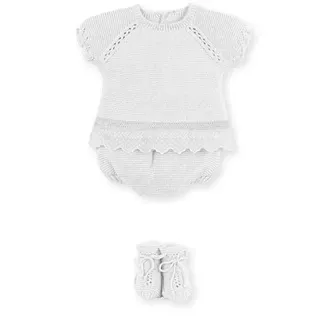 Mac IlusionTenderness 3-piece christening outfit, white, size 3 months – Mac Ilusion500 DHView product
 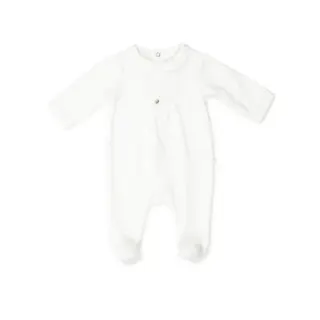 −74 %Pureté du bébéEssentials velvet sleepsuit, 3 months, white – Pureté du bébé203 DH
instead of 780 DHView product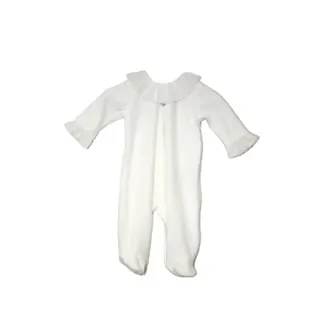 −74 %Pureté du bébéEssentials velvet sleepsuit, girl, 1 month, beige, model 216 – Pureté du bébé164 DH
instead of 630 DHView product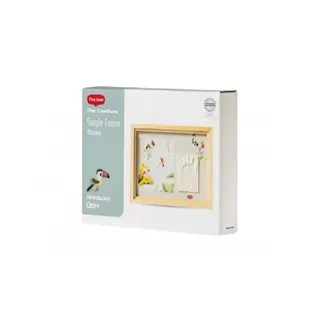 −9 %Tiny LoveTiny Creations Simple Frame baby print frame, wood – Tiny Love209 DH
instead of 230 DHView product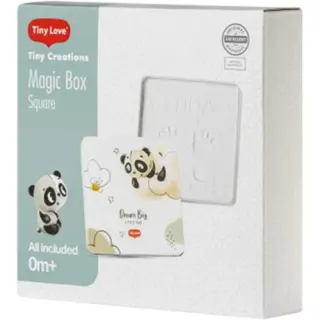 −9 %Tiny LoveTiny Creations Magic Box baby print kit, square metal box – Tiny Love146 DH
instead of 160 DHView product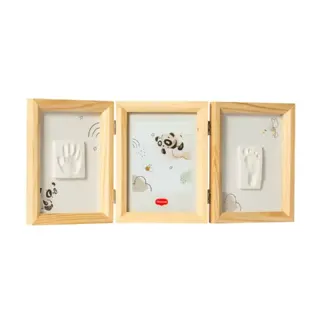 −9 %Tiny LoveTiny Creations wooden double photo and print frame – Tiny Love291 DH
instead of 320 DHView product- The whole aisle · Christening and coming-home outfits16 products online, delivered anywhere in Morocco.Open the aisle
Products sold by La Maison du Bébé, publisher of this magazine. Prices as of 12 October 2026; please check the product page.
For gifts, tradition has its landmarks: in Salé, the lkmassa brings together clothes, toiletries and toys for mother and baby, and in the North the new mother receives her presents in the afternoon. To avoid duplicates, a baby registry shared with the family saves everyone time, and our useful newborn gift ideas will inspire the undecided. Think too of gifts that lighten the load: a home-cooked dish, a morning of housework, an hour of looking after the older children.
For keepsakes, a footprint frame or a keepsake box will hold on to the memory of these first days.
Protecting baby during the celebration
A seven-day-old newborn is vulnerable to viruses, especially in the cold season. The French national health insurance's advice for preventing bronchiolitis applies perfectly to the sbou3:
- wash your hands with soap for 30 seconds before holding baby;
- avoid kisses on baby's face and hands;
- limit contact to close adults who are not ill, and ask anyone with a cold to wear a mask;
- air the rooms regularly;
- don't smoke near baby or in the house.
The French health insurance even advises keeping babies under 3 months away from crowded indoor places, family gatherings included. In practice, introduce baby for a few minutes, in their parents' arms, then take them back to their quiet room. Avoid passing them from arms to arms, turn the music down when they are around, and keep them away from incense fumes.
That leaves two traditions to skip for baby: henna and kohl (khôl, the traditional eyeliner). Our explanations, with sources, are in our article on bathing your newborn, including kohl and henna. And amid all the hugs, remind everyone not to touch the umbilical cord: the right moves are in our guide to umbilical cord care, day by day.
Frequently asked questions
Does the sbou3 have to be held exactly on the seventh day?
Moroccan tradition places it on the seventh day: the day of the celebration, the name and, in many families, the sacrifice. For the date of the aqiqa itself, which is a matter of religious practice, ask a qualified person you trust. As for the party, nothing stops you from marking the rite with close family that day and saving the big reception for later, once the mother has recovered.
Who organises and who pays for the sbou3?
There is no single rule: it all depends on families and regions. In Salé, the newspaper Le Matin described the expectant mother's own mother organising a henna party on the eve of the birth, and the family bringing the lkmassa the day before the celebration: clothes, toiletries and toys for mother and baby. Talk about it early, as a couple, then with both families, so nobody feels left out.
Can we put henna on baby for the sbou3?
It is best not to. Some traditions, like the one in Oujda described by the MAP news agency, coated the newborn in olive oil mixed with henna until the sixth day. But, as our article on newborn bathing explains, henna can cause severe jaundice in a baby with G6PD enzyme deficiency, which is often undiagnosed at that age. Save it for the hands of the mother and the guests.
What should baby wear on the day of the sbou3?
A festive outfit, but comfortable first: soft fabric, the right size, easy poppers for nappy changes. Adjust the layers to the room temperature: in very hot weather, a Moroccan paediatrician pointed out in 2026 that babies under six months are highly vulnerable to dehydration and recommended light cotton. Avoid cords longer than 20 cm and small decorations that can come loose.
Sources
- « Laâkika » célébrée dans le respect des traditions séculaires (6 mars 2007)Le Matin · Morocco
- La naissance chez les Oujdis (13 mai 2003, dépêche MAP)Bladi.net, after the MAP news agency · Morocco
- Les préparatifs du baptême (novembre 2020)Moroccan mothers' website (mamanmaroc.ma) · Morocco
- Vague de chaleur : les gestes à adopter pour protéger les plus vulnérables (2 juillet 2026)Médias24 (with Prof. Moulay Saïd Afif, paediatrician) · Morocco
- Prévenir la survenue de la bronchioliteameli.fr, French national health insurance · France
- Après l'accouchement : le retour à la maisonameli.fr, French national health insurance · France
- Prévenir les étouffements (février 2026)Mieux vivre avec notre enfant, INSPQ · Canada (Quebec)