





Article contents
Key points
- A cold usually lasts under ten days, sometimes two weeks in a little one.
- A nasal rinse before feeds and bedtime remains the step that helps most.
- No cough medicine or mucus thinner before age 2, and never drops that unblock the nose.
- Green mucus alone does not mean antibiotics are needed.
- Fast or laboured breathing, refusing to drink: see a doctor without waiting.
A runny nose for three days, a little cough at night, bottles left half-finished: a baby’s cold is the most ordinary illness of early childhood, and one of the most wearing for parents. Before age 2, a child can catch eight to ten a year, according to the Canadian Paediatric Society.
No medicine cures it: it is a virus, and it goes away on its own. Your role lies elsewhere. Helping baby breathe, drink and sleep, setting aside false remedies, and spotting in time the signs that mean you should see a doctor.
Cold, rhinopharyngitis: what are we talking about?
Rhinopharyngitis is the medical name for a child’s cold: a mild viral infection of the nose and back of the throat. Rhinoviruses cause about half of cases, coronaviruses about one in five, and other viruses such as RSV can also be involved. It mostly affects children from 5 months to 8 years, with a peak in autumn and winter.
After an incubation of 1 to 7 days, the nose blocks and then runs, baby sneezes and coughs, and an irritated throat can make feeding difficult. A moderate fever, under 39 °C, often comes with the first days. The eyes may turn red.
The virus spreads through droplets, kisses, hands and objects put in the mouth: toys, spoons, towels. In winter, when the whole family gathers in the living room and little cousins swap toys, it travels fast. Nursery also multiplies contacts: our article on nursery illnesses explains why the first year there is often a heavy one.

How long does a baby’s cold last?
A cold usually clears up in under ten days, according to the French health insurance service. In the youngest, it can drag on for up to two weeks, as Canadian paediatricians and the NHS note. Symptoms peak after 2 to 3 days, then fade.
| Symptom | Usual duration |
|---|---|
| Fever, most often moderate | 3 days at most |
| Blocked or runny nose | 2 to 10 days |
| Cough | Up to 10 days |
| The cold as a whole | Under 10 days, sometimes 2 weeks |
Secretions change appearance along the way: clear at first, then thick, yellow or green. The French health insurance service is clear: coloured secretions, like fever, do not on their own mean a bacterial superinfection.
The steps that really bring relief
A cold is not cured, it is accompanied. These simple steps make the difference day to day:
- Rinse the nose before breast and bottle feeds and before bedtime, with saline pods. The step-by-step technique is detailed in our article on nasal rinsing. A nasal aspirator can complement it, in moderation: the French health insurance service reminds us that used too often, it irritates. To choose one and use it well, see our guide to nasal aspirators and nasal rinsing.
- Offer fluids often, even without a request: breastfeeding on demand, smaller, more frequent bottles, water for an older child. France’s Haute Autorité de santé (HAS) advises splitting the feeds of a congested infant.
- Keep the bedroom cool and aired, between 18 and 20 °C, without overheating or overdressing baby. Air conditioning dries out the nasal lining.
- Lay baby on their back, flat, even with a cold. Some sites advise raising the head; for an infant, the HAS keeps sleeping flat, with no pillow or wedge, as the rules of safe sleep require.
- Protect the skin under the nose, quickly irritated, with a little petroleum jelly or an unperfumed moisturising cream.
- Ban tobacco from the house and car, and wash the whole family’s hands often.
Humidifier: useful or not?
On this point, recommendations differ. The French health insurance service and Santé.fr advise humidifying the bedroom of a child with a cold. The Canadian Paediatric Society, for its part, does not recommend cool-mist humidifiers, because of the risk of contamination by germs and mould, nor hot-water vaporisers, which can burn.
In practice, a humidifier is not essential. In a coastal city where the winter air is already humid, it probably adds little. It can be considered in a bedroom dried out by air conditioning or a space heater. If you use one, like our Babymoov humidifier, empty and clean it every day following the instructions, place it out of reach and never pointing at baby’s face.
From the shop
To get through a cold gently
None of these products cures a cold: they help clear the nose, protect irritated skin and, if the bedroom air is dry, humidify it. Saline pods are bought at the pharmacy.
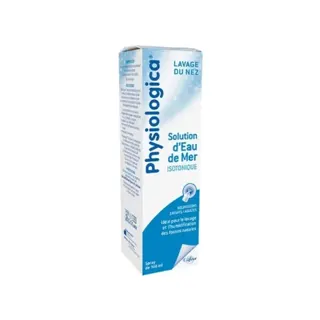 −48 %GifrerIsotonic seawater nasal spray, 100 ml – Gifrer29 DH
instead of 56 DHView product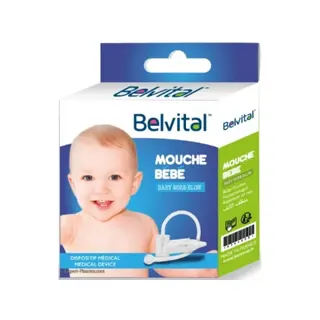 −41 %BelvitalManual baby nasal aspirator, from birth – Belvital41 DH
instead of 70 DHView product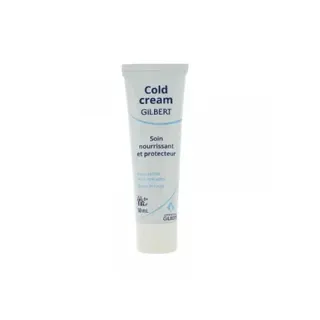 −48 %Laboratoires GilbertGilbert Cold Cream, 50 ml24 DH
instead of 46 DHView product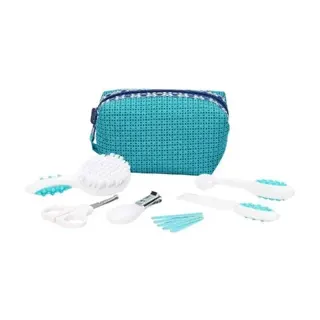 −37 %Safety 1stArctic newborn baby care kit, 6 pieces – Safety 1st177 DH
instead of 280 DHView product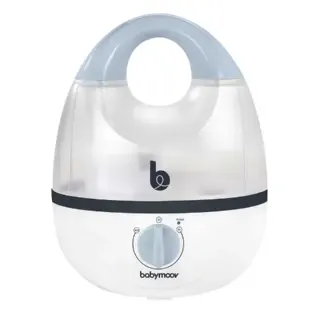 −9 %BabymoovHygro nursery air humidifier – Babymoov810 DH
instead of 890 DHView product- The whole aisle · Baby nasal aspirators1 products online, delivered anywhere in Morocco.Open the aisle
Products sold by La Maison du Bébé, publisher of this magazine. Prices as of 12 October 2026; please check the product page.
Syrups, drops, remedies: what is better avoided
This is often where a cold gets complicated: from trying too hard to do the right thing.
- Cough syrups and mucus thinners are contraindicated before age 2 in France. In Canada and the United Kingdom, any cough and cold medicine is advised against before age 6, unless a doctor says otherwise. Canadian paediatricians stress that no evidence shows they work, while their side effects are real.
- Drops or sprays that “unblock the nose” (decongestants) are contraindicated before age 15 in France. For a baby’s nose, only a salt solution is used.
- Antibiotics are useless: they do not shorten a cold and prevent neither ear infection nor sinusitis.
- Aspirin is never given to a child with a cold.
- Honey is not for babies under one year, the NHS reminds us.
- “Natural” products (essential oils, chest rubs, herbal teas) are not risk-free for all that. The Canadian Paediatric Society asks you to consult a doctor before giving them to a child. As for the cut onion under the bed, no health authority recommends it.
If baby has a fever and seems uncomfortable, our article on baby fever takes stock. For any medicine, ask your doctor or pharmacist for the dose suited to your child’s weight.
And the cough: should you calm it?
No, generally not. Coughing clears mucus: it is a defence reflex, useful to baby. It can last up to ten days, a little longer than the runny nose. A cough that still has not improved after 10 days deserves medical advice.
Some coughs should alert you sooner. A hoarse, “barking” cough with a high-pitched noise on breathing in suggests croup: the NHS asks for urgent help if the child struggles to breathe. Fast, wheezy breathing with the tummy sinking in under the ribs suggests bronchiolitis, especially before age 1.
When the cold becomes complicated
Most colds stop there. Sometimes a complication sets in, most often bacterial: an ear infection, which shows as ear pain or discharge, a pus-filled conjunctivitis, more rarely sinusitis. Before 3 months, the French health insurance service flags a higher risk of breathing difficulty and pauses in breathing, which may justify hospital monitoring.
Frequently asked questions
Can you go out with a baby who has a cold?
Yes. The Canadian Paediatric Society reminds us that a child with a cold can keep up their usual activities, outdoor play included, if they feel well enough. Dress them for the weather, avoid crowded, enclosed places where they would pick up other viruses, and stay at home if they have a fever or seem listless.
My baby has green mucus: do they need antibiotics?
Not necessarily. Over the course of a cold, mucus often goes from clear to thick, yellow or green, and the French health insurance service states that this alone does not mean a bacterial infection. Antibiotics do not work on cold viruses. See a doctor, though, if the nose is still running after 10 days, or with a lasting fever or ear pain.
Can you give honey to a baby who is coughing?
Not before 1 year. The UK’s NHS only suggests a warm lemon and honey drink after the age of one, and advises against hot drinks for little ones. Before that age, the best remedy remains to offer the breast, bottle or water often, depending on age, and to rinse the nose before feeds.
Does cold weather or bare feet on tiles give you a cold?
No. A cold is caused by viruses, which spread through cough droplets, kisses, hands and objects baby puts in their mouth, such as toys. Dressing baby for the room temperature is a matter of comfort. To limit contagion, washing the whole family’s hands is far more useful.
Can a baby with a cold go to nursery?
If they have no fever and stay in good form, a simple cold generally does not stop them going, but each nursery has its own rules. Keep them at home if they have a fever, drink poorly or are tired. For bronchiolitis, France’s Haute Autorité de santé considers group care undesirable during the acute phase.
Sources
- Reconnaître la rhinopharyngite du bébé et de l'enfantameli.fr, French national health insurance · France
- Rhinopharyngite de l'enfant : que faire et quand consulter ?ameli.fr, French national health insurance · France
- Rhinopharyngite de l'enfantSanté.fr, French public health information service · France
- Prise en charge du premier épisode de bronchiolite aiguë chez le nourrisson de moins de 12 mois (recommandations 2019)Haute Autorité de santé (HAS) · France
- Le rhume chez les enfantsCaring for Kids, Canadian Paediatric Society · Canada
- Le recours à des médicaments en vente libre pour soigner les symptômes du rhumeCaring for Kids, Canadian Paediatric Society · Canada
- Nez bouché ou qui coule chez l'enfantMieux vivre avec notre enfant, INSPQ · Canada (Quebec)
- Colds, coughs and ear infections in childrenNHS · United Kingdom