





Article contents
Key points
- Cradle cap: no itching, and it usually improves by about 4 months.
- To loosen it: oil or emollient, soft brush, then a gentle baby shampoo.
- Eczema: a fragrance-free emollient all over the body, twice a day.
- No soap, no fragrance and no change of diet without medical advice.
- Weeping patches, yellow crusts, fever or a drowsy baby: see a doctor without delay.
Those little yellowish patches on your baby's scalp that crumble when you run a brush through: they are very probably cradle cap. Nothing serious, nothing dirty, and nothing to do with milk. But when redness also appears on their cheeks and they rub their face against the sheet, the question changes: cradle cap, or infant eczema?
Both are common, often affect the head and face, and are not treated in quite the same way. Here is how to tell them apart, what works for each, which products to leave on the shelf and the signs that should send you to the paediatrician.
Cradle cap or eczema: how can you tell the difference?
The simplest criterion is itching. Cradle cap does not itch and does not bother your baby, the UK's NHS points out. Eczema does itch, sometimes enough to disturb sleep.
| Cradle cap (seborrheic dermatitis) | Eczema (atopic dermatitis) | |
|---|---|---|
| Look | Yellowish or greyish, greasy scales in patches | Red patches, dry and rough skin, sometimes weeping then crusting |
| Where? | Mostly the scalp; sometimes the face, neck folds, behind the ears, the nappy area | Cheeks, forehead, chin, arms and legs; the nose and bottom are often spared |
| Itching | No | Yes, often intense |
| When? | The first months; usually improves by about 4 months | Most often from 3 months, in flare-ups |
| Course | Goes away by itself | Flare-ups and calmer spells, improves with age |
Based on the NHS, the Canadian Paediatric Society and French national health insurance (Assurance maladie).
The two can occur together, and in a very young baby the line is not always clear. If you are unsure, the paediatrician will tell the difference. Other spots, on the body or with a fever, have other causes: our article on childhood rashes helps you spot them.

Why does my baby have cradle cap?
The name is misleading. According to Quebec's health authorities, these crusts come from an excess of sebum on the scalp, sometimes kept going by shampoo that has not been rinsed out well. It is not an infection, an allergy or a lack of hygiene. And it is not contagious.
Seborrheic dermatitis can spread beyond the scalp: redness in the neck folds, behind the ears, on the face or under the nappy, the Canadian Paediatric Society (CPS) describes. It usually improves around 4 months and clears up without treatment. Care is mostly for comfort and appearance.
How do you remove cradle cap gently?
The NHS, the CPS and the Quebec guide describe the same three-step routine:
- Soften. Gently massage the scalp with an oil or an emollient, then leave it to work. The CPS advises washing about an hour later; the Quebec guide says a few hours.
- Loosen. Go over it with a soft-bristled hairbrush or a fine comb, without forcing. Scales that resist will come away another day.
- Wash. A gentle baby shampoo, then a careful rinse with lukewarm water. The Quebec guide suggests leaving the shampoo on for 10 to 15 minutes before rinsing.
You can repeat this once a day for a few days. But washing too often dries out the scalp, the CPS warns. If nothing changes, your pharmacist can suggest a suitable shampoo.
Which oil should you choose? Here, opinions differ. Quebec lists olive oil among the options; the NHS advises against it because it may not suit a baby's skin, and rules out peanut oil because of the allergy risk. Argan oil, so common in our bathrooms, is not mentioned by any of the sources consulted. The safest choice remains a mineral oil for babies or your usual emollient, fragrance-free.
What to avoid, according to the NHS: picking off the crusts with your nails, soap, adult shampoos and any scented product.
From the shop
For a well-cared-for scalp and skin
A soft brush and a fine comb to loosen the scales, what you need to keep nails short, cotton clothes: the essentials, with no scented products.
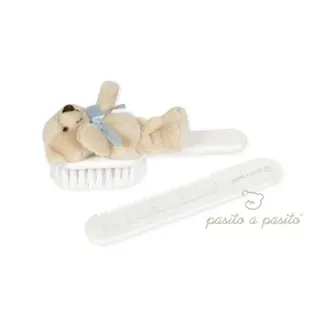 −48 %Pasito a PasitoBrush and comb set, blue Bear – Pasito a Pasito130 DH
instead of 250 DHView product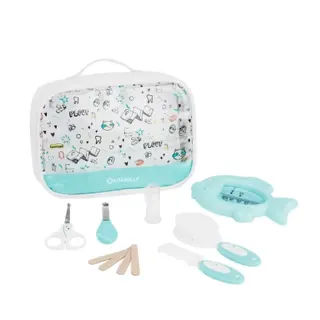 −57 %BadabullePlouf baby care kit – Badabulle138 DH
instead of 320 DHView product −48 %Safety 1stArctic newborn baby care kit, 8 pieces – Safety 1st156 DH
instead of 300 DHView product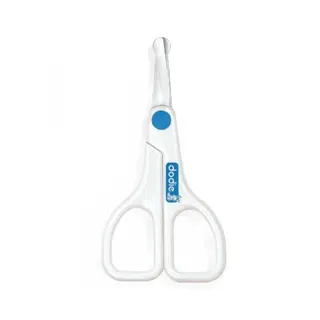 −48 %DodieBaby scissors, from 6 months – Dodie44 DH
instead of 84 DHView product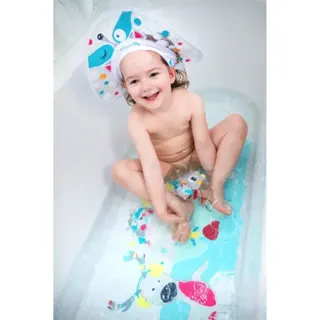 −9 %BadabulleRacoon shampoo shield visor – Badabulle91 DH
instead of 100 DHView product −74 %Pureté du bébé3-piece cotton set, 3M, beige 02 220 – Pureté du bébé153 DH
instead of 590 DHView product- The whole aisle · Baby hygiene and care39 products online, delivered anywhere in Morocco.Open the aisle
Products sold by La Maison du Bébé, publisher of this magazine. Prices as of 12 October 2026; please check the product page.
Infant eczema: dry, itchy skin
Atopic eczema, or atopic dermatitis, affects 10 to 20% of children, according to French national health insurance (Assurance maladie, ameli.fr). It most often appears from 3 months. In babies, the patches are symmetrical, on the rounded parts of the face (forehead, cheeks, chin) and on the arms and legs. The nose and bottom are usually spared, but the folds behind the ears are often cracked and weeping.
Itching dominates: your baby is restless, sleeps badly and rubs their cheeks against the sheet. Between the patches, all the skin is dry.
Eczema is not contagious. It rests on skin whose protective barrier works poorly and on a family tendency: 50 to 70% of affected children have a close relative with it. Dry, cold air is among the aggravating factors, and heat makes people scratch more, the NHS reminds us. Moroccan winters without heating, like chergui days (hot, dry wind), can therefore trigger a flare-up.
Daily care for atopic skin
The basic treatment is routine, every day, even when the skin is fine.
- Bathing: short, in lukewarm water. Hot water and soaps dry out the skin, the Quebec guide reminds us. French national health insurance and the CPS accept a daily bath, as long as you moisturise straight afterwards.
- Washing: a soap-free, fragrance-free bar or gel. Nothing in the bath water, no bubble bath and no essential oils.
- Drying: pat dry with a soft towel, without rubbing.
- Emollient: a fragrance-free emollient cream all over the body, twice a day according to French national health insurance, more often if needed according to the NHS. Petroleum jelly also works very well, according to the CPS. Take it out with a spatula or a pump bottle rather than with your fingers.
- Nails: kept short, to limit scratch marks. The NHS suggests anti-scratch mittens for the smallest babies.
Emollients are sold in pharmacies and in the baby hygiene and care aisle. If a cream stings, reddens or itches, stop using it and ask your pharmacist for an alternative. For the basics of washing, see our guide to newborn bath time and hygiene.
Clothes, heat, hammam: daily life with delicate skin
Clothes. Cotton, worn loose. Wool and synthetic fibres irritate. Long sleeves and trousers limit scratching and keep the emollient on the skin, notes the CPS. Rinse laundry well and skip the scented fabric softener.
Heat. An overdressed baby is hot, and heat keeps the itching going. Dress them lightly in summer and air their room: our tips on protecting your baby from the heat apply doubly.
The hammam and traditional products. A very hot room, scalding water, a scrub with the kessa glove: it is the opposite of what atopic skin needs. Black soap (savon noir), rose water and scented oils also fall into the category of soaps, fragrances and cosmetics that French national health insurance asks you to avoid.
Kisses. A person with a cold sore (herpes) must not kiss a baby with eczema, or share their cutlery: herpes can cause a serious infection on atopic skin. At visits or at the sbou3, the celebration on the seventh day, do not be afraid to say so.
Diet. Do not cut out any food, for your baby or for a breastfeeding mum, without medical advice. Allergies are covered in our article on baby food allergies.
What treatments can the doctor offer?
During a flare-up, an emollient is not enough. The doctor then prescribes a cortisone cream or ointment (a topical corticosteroid), choosing its strength and duration. It is applied only on the patches, exactly as directed, often for one to three weeks, French national health insurance specifies.
Many parents are afraid of these creams. French national health insurance answers clearly: side effects are rare and mostly occur with excessive or prolonged use, and failures often come from treatment that is too timid. Antibiotics and antiseptics are only used for a secondary infection. Allergy tests are not routine.
Eczema is not a reason to skip vaccines, which follow the Moroccan vaccination schedule; during a severe flare-up, the doctor may simply postpone an injection. And for redness limited to the nappy area, it is a different story: see our article on nappy rash.
Frequently asked questions
Is cradle cap caused by milk?
No, despite its name. It comes from an excess of sebum on the scalp, sometimes made worse by shampoo that has not been rinsed out well, according to Quebec's health authorities. It is not an infection, an allergy or a lack of hygiene, and it is not contagious. It is not a sign of allergy either: changing your baby's milk will make no difference.
Can I scratch or pick off cradle cap?
It is better not to. The UK's NHS advises against picking at it, because damaged skin can become infected. Soften the scales first with a mineral oil or an emollient, brush gently with a soft brush, then wash. A few hairs sometimes come away with the scales: that is normal, and they grow back.
Does baby eczema come from a food allergy?
Not necessarily. Eczema often runs in families, and only some of the children affected also have a food allergy. French national health insurance (Assurance maladie) and the NHS ask you not to change anything in your baby's diet, or in the diet of a breastfeeding mum, without medical advice. Tests are only useful if the eczema resists a well-followed treatment, or if your baby is not gaining weight well.
Are cortisone creams dangerous for a baby?
Prescribed by the doctor and applied as directed, they are the reference treatment for flare-ups. According to French national health insurance (Assurance maladie), side effects are rare and mostly occur with excessive or prolonged use. It even stresses that these creams have an undeserved bad reputation, and that treatment failures often come from using them too timidly.
Does infant eczema go away with age?
Most of the time, it improves. There is no cure, but it can be kept well under control with regular care. According to French national health insurance (Assurance maladie), about 70% of childhood eczema disappears before adolescence, although it can come back later. In the meantime, the aim is to space out the flare-ups and relieve the itching.
Sources
- Cradle capNHS · United Kingdom
- Atopic eczemaNHS · United Kingdom
- Eczéma ou dermatite atopique : causes, symptômes et évolutionAssurance maladie (ameli.fr) · France
- Dermatite atopique : que faire et quand consulter ?Assurance maladie (ameli.fr) · France
- Consultation et traitement en cas d'eczéma ou dermatite atopiqueAssurance maladie (ameli.fr) · France
- La peau de votre bébéCaring for Kids, Canadian Paediatric Society · Canada
- Boutons, rougeurs et autres problèmes de peau chez l'enfantMieux vivre avec notre enfant, INSPQ · Canada (Quebec)