





Article contents
Key points
- Lukewarm water and cotton wool are enough: a clean piece for each eye.
- Ears: only the outer part, never a cotton bud inside.
- Nails: wait for the first week, then file after the bath or during sleep.
- Kohl can contain a lot of lead: not on the eyes, not on the navel.
- Henna and a very hot hammam: be careful, especially in the first months.
The first days of newborn care are often more intimidating than they are difficult. Those little eyes that stick a bit on waking, those tiny nails that already scratch, those ears you hardly dare touch: it all comes down to lukewarm water, cotton wool and a lot of gentleness.
Families also have habits to pass down, from kohl to the hammam. Some are precious, others carry a real risk for a newborn. Here is how to care for the face, eyes, nose, ears and nails, step by step, and what the sources say about our traditions.
The kit: not much, but the right things
For daily washing, the UK's NHS asks for very little: a bowl of lukewarm water, cotton wool, a soft towel, a clean nappy and, if needed, a change of clothes. Add a soft nail file and a pair of round-tipped scissors, a soft brush and a medical thermometer.
A grooming kit often brings all this together, and it makes a good gift to put on your birth list. The rest of the first weeks' equipment is listed in our newborn layette guide.
Settle in a warm room, on the changing mat or a towel, with everything within reach before you start.

Washing the face and eyes
The NHS describes the technique like this: a piece of cotton wool soaked in lukewarm water, wiped around the eye from the inner corner, by the nose, outwards, using a clean piece for each eye. Then wash the rest of the face, the neck and the hands the same way, and dry gently by patting, not forgetting the neck folds.
In the morning, small crusts sometimes stick the lashes together. A clean washcloth dipped in lukewarm water loosens them, explains the Quebec guide Mieux vivre avec notre enfant. An eye that often waters and crusts over on waking, with no redness, suggests a tear duct that is not fully open yet. It often opens by itself during the first year.
On the other hand, a red eye and swollen eyelids stuck together with yellowish pus suggest an infection: our article on sticky eyes and conjunctivitis tells you what to do.
The nose: only if it is blocked
A clean nose needs no care. Simply wipe the entrance of the nostrils with damp cotton wool. When it is blocked, rinsing with saline is the right move, before feeds: it is all explained in our article on relieving a baby's blocked nose and in our nasal aspirator guide.
The ears: the outer ear, never the canal
Clean only the outside of the ear and behind it, with clean, damp cotton wool. The NHS is categorical: never use a cotton bud inside your baby's ear. Then dry gently, behind the ear too.
The nails: wait, then file
During the first week, a newborn's nails are still attached to the skin: do not cut them, you could hurt your baby, warns the Quebec guide. After a few days, the tip of the nail comes away. As soon as the nails are long enough to scratch, you keep them in shape:
- the hands: file them gently, rounding the corners to avoid scratches;
- the feet: cut them straight across, with small scissors or clippers, to avoid ingrown nails;
- the right moment: after the bath, when the water has softened the nails, or during sleep, when baby hardly moves (Quebec guide, NHS).
Nails grow fast: plan a short, regular session. Baby scissors with rounded tips make the job safer as baby grows.
From the shop
The essentials for little daily care
A kit with a nail file, round-tipped scissors, a soft brush and a thermometer covers the essentials; no need to pile up accessories.
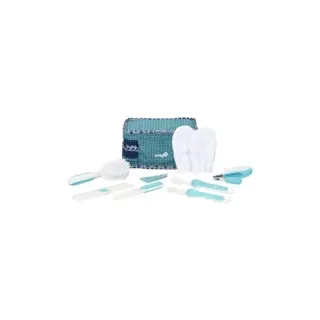 −48 %Safety 1stArctic newborn baby care kit, 8 pieces – Safety 1st156 DH
instead of 300 DHView product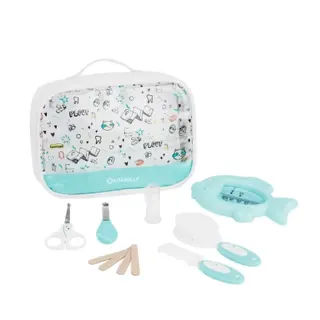 −57 %BadabullePlouf baby care kit – Badabulle138 DH
instead of 320 DHView product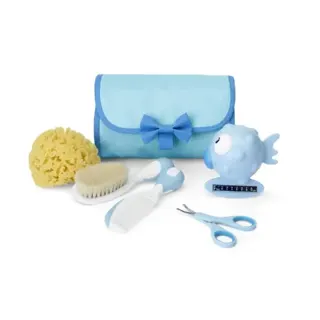 −48 %ChiccoHygiene Set toiletry kit, blue, from birth – Chicco270 DH
instead of 520 DHView product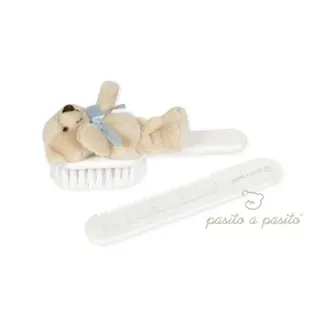 −48 %Pasito a PasitoBrush and comb set, blue Bear – Pasito a Pasito130 DH
instead of 250 DHView product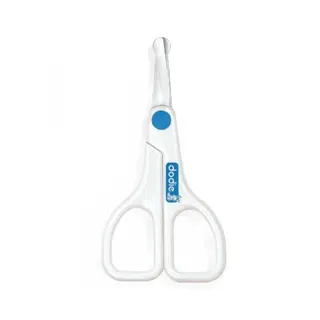 −48 %DodieBaby scissors, from 6 months – Dodie44 DH
instead of 84 DHView product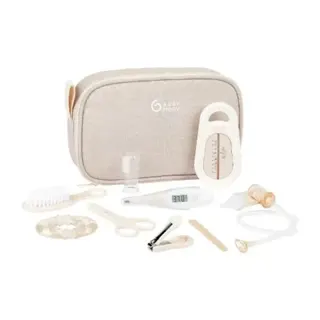 −9 %BabymoovBaby toiletry kit, sand, 9 accessories – Babymoov410 DH
instead of 450 DHView product- The whole aisle · Baby care kits14 products online, delivered anywhere in Morocco.Open the aisle
Products sold by La Maison du Bébé, publisher of this magazine. Prices as of 12 October 2026; please check the product page.
Skin, folds, hair and bottom
There is no need to bathe your baby every day, reminds the NHS. Between baths, this wash with a bowl is enough: face, neck, hands, then the bottom, washed with lukewarm water and carefully dried, folds included. Water alone is fine; if you use a product, choose one made for babies. For the bath, the water temperature and the safety rules, see our baby bath guide.
The umbilical cord is cared for separately, kept clean and dry: see our guide to umbilical cord care. Hair is brushed with a soft brush; if yellowish scales appear, they are probably cradle cap. And for the bottom, the steps are detailed in our article on changing nappies.
Kohl, henna, hammam: what the sources say about our traditions
Kohl. Putting kohl on a newborn's eyes is an old gesture, passed on with affection. The problem is what it contains. A medical thesis defended in Fez in 2014 points out that many kohls are made from galena, a lead ore. In Quebec, lead poisoning has been reported in children of 7 months, 11 months and 2 and a half years exposed to imported kohl: the samples analysed contained 78% and 92% lead. The Agence régionale de santé du Centre, in France, lists kohl among the main sources of lead exposure and notes that poisoning is more frequent and more serious the younger the child. Lead affects brain development. The same thesis notes that kohl is sometimes applied to the umbilical cord: there too, it has no place.
Henna. Natural henna contains a substance, lawsone, that can destroy red blood cells in people with G6PD deficiency, an enzyme abnormality more common around the Mediterranean, in Africa and in Asia. A case review published in 2023 describes a one-month-old girl who turned very yellow the day after henna was applied to her palms and soles. Since there is no way to know whether a newborn carries this deficiency, its authors recommend avoiding henna on them until it has been tested for. For the sbou3, the seventh-day celebration, henna can decorate the guests' hands rather than baby's.
The hammam. None of the health authorities consulted sets an age for the hammam. What we do know is that a newborn tolerates heat poorly: babies under six months are particularly exposed to dehydration, reminded Prof. Moulay Saïd Afif, paediatrician, in Médias24 in July 2026. If the family insists on taking baby, stay only briefly in the least hot room, keep them in your arms, pour lukewarm water over them tested with your elbow, offer the breast or bottle, and skip the exfoliating glove and the black soap. The NHS says it for any bath: never leave a baby alone in the water, not even for a second.
Frequently asked questions
Do I need to wash my baby every day?
No. The UK's NHS reminds us that a daily bath is not necessary. Between baths, a wash with a bowl is enough: face, neck, hands, then the bottom, with lukewarm water and cotton wool, drying the folds well. The bottom is cleaned at every change. For the bath itself, our bathtub guide details the temperature and safety rules.
Is a 'natural' or 'lead-free' kohl safe for babies?
You cannot tell by looking. A thesis defended in Fez cites an analysis of 18 kohls of various origins: only 4 met the regulations, the others were lead-based. French health authorities advise against traditional cosmetics for children. For a newborn, the safest thing is no kohl at all, neither on the eyes nor anywhere else.
What should I do if my baby's eye waters and sticks together on waking?
Often it is a tear duct that is not fully open yet: the eye waters and crusts over on waking, with no redness or swelling. Clean it with a clean washcloth and lukewarm water. The duct often opens by itself during the first year; ask a nurse or doctor to show you the massage that can help.
My baby scratches their face. What can I do?
Their nails grow fast: file them regularly, as soon as they are long enough to scratch, rounding the corners as the Quebec guide advises. The best time is after the bath, when nails are softened, or during sleep, when they hardly move. In the first weeks, prefer a file to scissors: it cannot nick the fingertip.
Sources
- Washing and bathing your babyNHS · United Kingdom
- Couper les ongles de votre bébéMieux vivre avec notre enfant, INSPQ · Canada (Quebec)
- Problèmes aux yeuxMieux vivre avec notre enfant, INSPQ · Canada (Quebec)
- Le khôl, un cosmétique responsable d'intoxications au plombBulletin d'information en santé environnementale, INSPQ · Canada (Quebec)
- Le saturnisme : intoxication par le plomb (guide pratique)Agence régionale de santé du Centre · France
- Les intoxications par le plomb chez les fabricants artisanaux de khôl dans la région de Fès (à propos de 12 cas)Thèse de médecine, Faculté de médecine et de pharmacie de Fès (2014) · Morocco
- Severe Hyperbilirubinemia Secondary to Henna Application in a Neonate With G6PD Deficiency: A Case Report and Literature ReviewCureus (2023), authors from Muscat · Oman
- Vague de chaleur : les gestes à adopter pour protéger les plus vulnérablesMédias24 · Morocco