





Article contents
Key points
- Change the nappy as soon as it is wet or soiled, and give your baby bare-bottom time whenever you can.
- Clean with water or a fragrance-free cleansing milk, then pat dry.
- A zinc oxide paste protects irritated skin; there is no need to use it when the skin is fine.
- No talc, and no antiseptic or antibiotic cream without medical advice.
- Bright red rash in the skin folds, spots, blisters or fever: have your baby seen by a doctor.
At changing time, you spot red patches on your baby's bottom. They cry the moment the cotton wool touches the skin, especially after a wee. Nappy rash, also called diaper rash or diaper dermatitis, is one of the most common small problems of the early years. It is rarely serious, but it hurts, and it heals better when you understand where it comes from.
The good news: in the vast majority of cases, a few changes to the changing routine are enough. Here is how to recognise simple irritation, treat it, prevent it, and spot the cases that need medical advice, such as a yeast infection.
Why does a baby's bottom turn red?
The main cause is simple: the skin stays in contact with urine and stools for too long. The mix of the two, plus moisture and heat under the nappy, weakens the skin, which turns red and sore. Doctors call it irritant dermatitis: it is the most common form, according to the American Academy of Pediatrics (AAP).
Other factors are often added to the mix:
- a nappy that is not changed often enough, or is too tight and rubs;
- irritating products: soap, bubble bath, laundry detergent, scented wipes or wipes containing alcohol, scented nappies;
- diarrhoea, which means more acidic stools;
- teething, when babies swallow more saliva;
- a course of antibiotics, which encourages the growth of a fungus, Candida;
- more rarely, a bacterial infection or an allergy to something in the nappy or a cream.

Simple irritation or yeast infection: how can you tell?
The look of the skin gives good clues, even though only a doctor can say for sure.
| Simple irritation | Yeast infection (Candida) | Bacterial infection | |
|---|---|---|---|
| Look | Pink or red patches where the nappy touches the skin | Bright red, shiny, with sharp edges, sometimes with small spots | Pus-filled spots, crusts, weeping |
| Groin folds | Most often spared | Often affected, sometimes the worst hit | Varies |
| Context | Late changes, diarrhoea, teething | After antibiotics, irritation that drags on | Rare |
| What to do | Care at home | See a doctor: antifungal cream on prescription | See a doctor quickly |
Based on descriptions by the American Academy of Pediatrics.
If the redness also affects the face, scalp or neck folds, it may be another skin condition: our article on cradle cap and eczema helps you tell the difference.
The changing routine that heals and prevents
- Change the nappy as soon as it is wet or soiled, without waiting for the next feed. This is the single most effective step. The rhythm and technique are covered in our guide to changing your baby's nappy.
- Clean gently, with no soap on irritated skin: lukewarm water, or a fragrance-free water-and-oil preparation such as the lime-water liniment (liniment oléo-calcaire) sold in pharmacies. For very sore skin, the AAP suggests rinsing with a small bottle of water rather than rubbing.
- Pat dry, without rubbing, right into the folds.
- Let the bottom air whenever possible, for a few minutes at each change.
- Protect irritated skin with a barrier cream or paste (see below).
- Put on a nappy that is snug but not tight, especially at night.
Cream, paste, cleansing milk: what should you put on your baby's bottom?
On healthy skin, a protective cream is not essential at every change, Quebec's health authorities remind us. It becomes useful as soon as the skin turns red.
- Zinc oxide and petroleum jelly are the two references for the AAP. They form a barrier against moisture. Choose fragrance-free versions, from the baby hygiene and care aisle or the pharmacy. For widespread irritation, the pharmacist can suggest a paste with a higher zinc oxide content.
- Thin layer or thick layer? The sources differ a little. The NHS speaks of a thin layer of barrier cream at each change; the AAP and Quebec's INSPQ advise a generous layer that does not need to be wiped off completely at each change. In practice: a clearly visible layer on irritated skin, then a lighter one once things improve.
- Liniment, a mix of oil and lime water, cleans without soap. On raw skin, you then apply the barrier paste.
What to avoid, according to the NHS, the AAP and the INSPQ: talc, antiseptic creams and lotions, over-the-counter antibiotic ointments, which can make the irritation worse, and products containing fragrance or lanolin. Cortisone creams and antifungals are used only on prescription.
From the shop
For skin-friendly nappy changes
A protective nappy cream, a cleansing milk to clean without soap, absorbent nappies and a washable changing mat: the essentials, with no scented products.
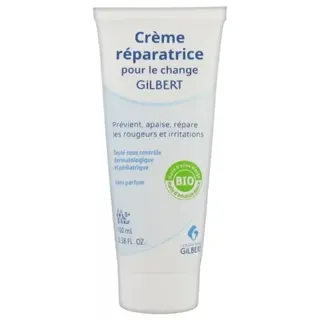 −49 %Laboratoires GilbertRepairing nappy cream, 100 ml – Gilbert35 DH
instead of 68 DHView product −48 %Laboratoires GilbertGilbert Liniderm oleo-calcareous liniment, 250 ml26 DH
instead of 50 DHView product −48 %Green TribuEco-friendly baby nappies, size 2, 3-6 kg, x28 – Green Tribu61 DH
instead of 118 DHView product −48 %Pasito a PasitoBohemian changing mat, blue – Pasito a Pasito286 DH
instead of 550 DHView product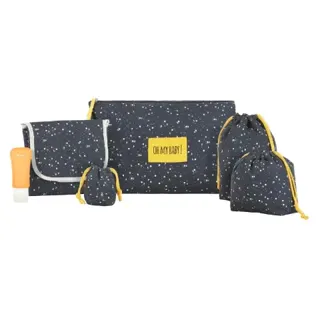 −49 %BadabulleChange & Go travel changing kit – Badabulle281 DH
instead of 550 DHView product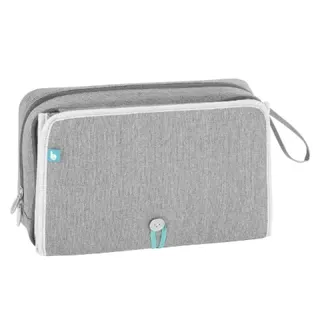 −35 %BabymoovNomadcare changing mat – Babymoov450 DH
instead of 690 DHView product- The whole aisle · Nappies1 products online, delivered anywhere in Morocco.Open the aisle
Products sold by La Maison du Bébé, publisher of this magazine. Prices as of 12 October 2026; please check the product page.
Heat, diarrhoea, cloth nappies: situations to watch
Heat. In summer, with the humidity of coastal cities or on chergui days (hot, dry wind), the skin under the nappy sweats and turns soggy. Build in more nappy-free time and change your baby more often. Dress them lightly, with no extra layers over the nappy.
Diarrhoea. Frequent, acidic stools attack the skin quickly. Change the nappy after every stool and always protect with a zinc oxide paste. Also keep an eye on your baby's hydration: our article on gastro and dehydration explains the warning signs.
Nappies. Disposable nappies contain crystals that gel the urine and separate it from the stools, which limits the irritating mix. Some are scented: avoid them if your baby reacts. Cloth nappies are fine too, provided you change them often and follow the washing instructions. During a flare-up, the AAP suggests temporarily switching to very absorbent disposables.
Bathing. A daily bath in lukewarm water, with no bubble bath, helps keep the area clean. The NHS does advise against more than two baths a day, which dry out the skin. The right moves are in our guide to bathing your baby safely.
Frequently asked questions
Wipes or water: which is better for cleaning my baby's bottom?
Water remains the reference, especially on irritated skin. Quebec's health authorities recommend water or a fragrance-free water-and-oil preparation such as a cleansing milk (liniment), and keep wipes for emergencies. The NHS and the American Academy of Pediatrics accept them if they are fragrance-free and alcohol-free. At home, choose water; when you are out, suitable wipes will do the job.
Is talc good for a red bottom?
No. The NHS advises against talc, as well as antiseptic creams or lotions, for nappy rash. It is better to have clean skin, patted dry, a few minutes of air, then a layer of zinc oxide paste or petroleum jelly if it is irritated. Powders do not protect the skin from the moisture in the nappy.
Do reusable nappies cause more nappy rash?
No study points to an ideal type of nappy, the American Academy of Pediatrics reminds us. Cloth nappies are generally a little less absorbent: during a bout of irritation, very absorbent disposable nappies can help the skin heal faster. If you use cloth nappies, change them often and follow the manufacturer's washing instructions.
How long does nappy rash last?
Simple irritation usually improves within a few days with good care. The American Academy of Pediatrics advises calling the doctor if the redness does not go away or gets worse after two to three days of treatment. A yeast infection, for example, will not clear up without a prescribed antifungal cream. See a doctor sooner if your baby seems to be in pain or has a fever.
Why does my baby have a red bottom when teething?
During teething, babies drool and swallow more saliva, which changes their stools. The American Academy of Pediatrics lists teething, like diarrhoea, among the situations that raise the risk of nappy rash. Change your baby more often during these periods and protect the skin with a zinc oxide paste.
Sources
- Nappy rashNHS · United Kingdom
- Common Diaper Rashes & TreatmentsHealthyChildren.org, American Academy of Pediatrics · United States
- Boutons, rougeurs et autres problèmes de peau chez l'enfantMieux vivre avec notre enfant, INSPQ · Canada (Quebec)
- Choisir et changer les couchesMieux vivre avec notre enfant, INSPQ · Canada (Quebec)