





Article contents
Key points
- Crying increases from week 2, peaks around 6 to 8 weeks, then eases around 3 or 4 months.
- Comforting a baby does not make them demanding: they learn that their needs are answered.
- A weak, very high-pitched or continuous cry, unusual for your baby, means calling 141.
- At the end of your strength: baby on their back in the cot, door closed, and someone to take over.
- Shaking a baby can kill them or leave serious lasting damage: never.
He has eaten, he has been changed, he has no fever, and yet he cries. Again. When your baby is crying and you cannot work out why, minutes feel like hours, and everyone around you has an explanation: he is hungry, he is cold, he has picked up bad habits.
Crying is in fact his main way of communicating, reminds Quebec’s Institut national de santé publique (INSPQ). Here is what is normal, what soothes, what should raise the alarm, and how to protect you both when exhaustion takes over.
How much crying is normal?
According to Naître et grandir, a baby cries about two hours a day on average; France’s Assurance maladie speaks of 2 to 3 hours in a healthy baby. The UK’s NHS, the INSPQ and Naître et grandir describe the same curve:
| Age | What happens |
|---|---|
| Around 2 weeks | Crying increases |
| Around 6 to 8 weeks | It reaches its peak |
| Around 3 to 4 months | It drops noticeably |
A spell often lasts around 45 minutes, sometimes up to 2 hours. And late afternoon and evening are when babies are hardest to console, notes the NHS.
When these intense spells keep coming in a healthy baby, we talk about colic: our article on baby colic is devoted to it.

Why is my baby crying? The checklist
First go through the simple needs, the ones cited by the NHS and Naître et grandir:
| Possible cause | What may put you on the track | What helps |
|---|---|---|
| Hunger | The last feed was a while ago, or a growth spurt | Breast or bottle, even if the last feed was 2 hours ago |
| Tiredness | Busy day, waking between sleep cycles | Calm, soft light, rocking |
| Discomfort | Dirty or wet nappy, too hot or too cold, blocked nose | Change, adjust clothing, clear the nose |
| Swallowed air | Crying during or just after a feed | A pause and a burp |
| Need for contact | Calms down as soon as you pick them up | Arms, skin-to-skin, babywearing |
| Too much stimulation | Visitors, noise, being passed from arms to arms | A quiet, dimly lit room |
| Pain or illness | An unusual, more piercing cry; fever, earache | Take their temperature, see a doctor if needed |
A stuffy nose makes sucking hard for a baby: our article on nose cleaning shows how to clear it. Later, teething joins in.
Does comforting your baby spoil them?
No. Naître et grandir is categorical: a baby never cries to manipulate, and comforting them every time they cry cannot spoil them. The INSPQ adds that they learn their needs are being taken care of, and Santé.fr confirms that responding to crying does not make a child spoiled. Responding quickly and calmly helps them feel loved and safe, and become calmer.
You often hear that a baby who is carried too much “gets used to arms”: none of the public health sources we consulted says that about a newborn.
What soothes a crying baby
No technique works every time, and what worked yesterday can fail tonight, warns the INSPQ. Try, one after the other:
- the breast, if breastfed: sucking comforts as much as it feeds;
- contact: in your arms, skin-to-skin, or in a baby carrier;
- movement: rocking, walking, a stroll with the pushchair;
- soft, steady background sound: your voice, a lullaby, the sound of rain or waves;
- calm: less light, less noise, fewer people around;
- a caress: gently rub his back, with baby against you or face down across your lap;
- a lukewarm bath: it calms some babies and winds others up, notes the NHS; the Assurance maladie recommends water at 37 °C.
Watch out for the opposite excess: too much rocking and singing can also stop him falling asleep, remarks the NHS. And if he falls asleep in the pushchair, the rocker or the car seat, put him back as soon as possible on a firm, flat surface in his cot: that is the rule of safe sleep.
From the shop
To rock, carry and soothe
No product stops a baby from crying. A baby carrier keeps them against you with your hands free, a baby rocker soothes them during awake moments under your eye; a comforter goes with cuddles, but does not belong in a newborn’s cot.
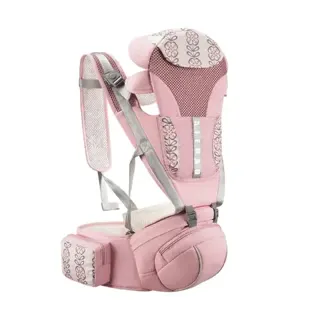 −40 %AiebaoBaby carrier, birth to 15 kg, pink – Aiebao290 DH
instead of 480 DHView product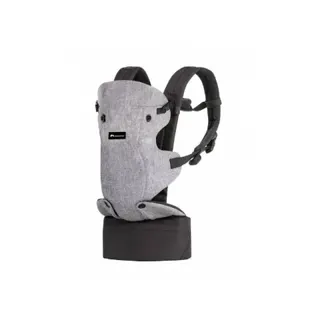 −22 %Bebe ConfortGO4 4-position convertible baby carrier, Black – Bébé Confort537 DH
instead of 690 DHView product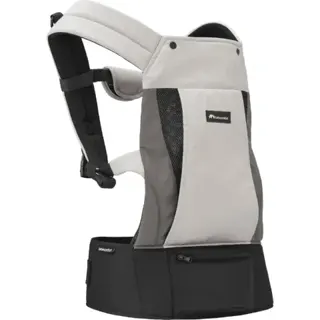 Bebe ConfortPhysionest ergonomic baby carrier, Gray Mist – Bébé Confort990 DHView product
 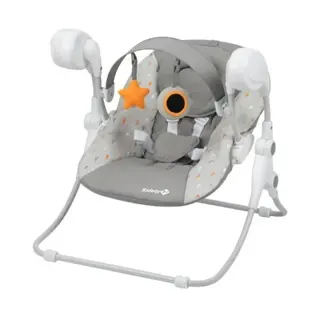 −33 %Safety 1stAlceo 2-in-1 bouncer-swing, Warm Gray – Safety 1st1 339 DH
instead of 1 990 DHView product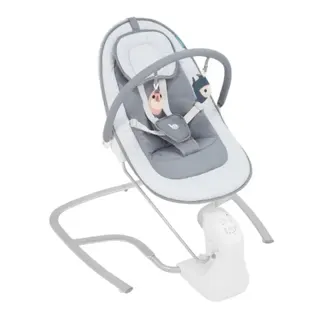 −30 %BabymoovSwoon Light electric baby swing – Babymoov1 534 DH
instead of 2 190 DHView product −9 %DoomooYou&Me reversible comforter, Beige – Doomoo255 DH
instead of 280 DHView product- The whole aisle · Baby carriers6 products online, delivered anywhere in Morocco.Open the aisle
Products sold by La Maison du Bébé, publisher of this magazine. Prices as of 12 October 2026; please check the product page.
When should crying raise the alarm?
Unusual crying can be the sign of an illness. The NHS cites a cry that does not sound like their usual cry, or continuous crying that nothing calms, and lists a weak, very high-pitched or continuous cry among the emergency signs. Santé.fr adds that pain often produces a different, more piercing cry.
The INSPQ asks you to see a doctor when your baby cries inconsolably and also behaves differently, is not eating, not sleeping, has a fever, vomits, has abnormal stools or may have been injured. Naître et grandir adds blood in the stools, excessive crying that continues after 3 months and poor weight gain. For fever, our article on baby fever gives the thresholds by age.
From around 6 months, some babies cry so hard that they stop breathing for a few seconds, even briefly lose consciousness: this is a breath-holding spell. The INSPQ considers it harmless, since breathing starts again by itself, but asks you to see a doctor if it happens before 6 months or lasts more than a minute.
When you cannot take any more: handing over
Being at the end of your tether in front of crying that will not stop is neither abnormal nor shameful, especially during the nfissa, the forty days after birth, when the body is recovering and nights are broken. What matters is having a plan, the one suggested by the Assurance maladie, the INSPQ, Naître et grandir and the NHS:
- Hand over: dad, grandmother, an aunt or a trusted friend can take the “crying shift” while you go out or sleep.
- On your own? Put baby down safely: on their back, in their cot, with nothing around, then close the door and leave the room.
- Breathe: a few slow, deep breaths, a glass of water, a call to someone you trust.
- Go back to check about every 10 minutes, but only pick them up again once you are calm.
Leaving a baby to cry for a few minutes in a safe cot is not dangerous, Santé.fr admits. Shaking them always is.
If exhaustion sets in, talk to your doctor, as Santé.fr advises. Our article on the baby blues and postpartum depression helps you tell the difference, and our article for new dads gives ideas for taking a share of the nights.
Shaken baby syndrome: what everyone around the baby must know
Shaking a baby can cause serious brain damage. According to the Assurance maladie, this head injury, caused by violent shaking, leads to death in more than 10% of cases and to lasting damage in 75% of cases: developmental delay, epilepsy, paralysis, vision or hearing problems. It mostly affects babies under one year old, two thirds of them before 6 months, and most often happens when an exhausted adult is exasperated by crying.
The people responsible are most often fathers or people who look after the child, the Assurance maladie specifies. So explain the dangers of shaking to everyone who looks after your baby: dad, nanny, grandparents, older siblings.
The signs that should alert you after a shaking: unusual drowsiness, a floppy baby or, on the contrary, a stiff one, seizures, pauses in breathing, vomiting for no reason, loss of smiles and babbling, abnormal eye movements. If you think a baby may have been shaken, call 141 immediately: early care limits the damage. While waiting for help, if they vomit or have a seizure, lay them on their side.
Frequently asked questions
Is it okay to let a baby cry?
Comforting a baby does not spoil them, remind Naître et grandir and the INSPQ: a newborn does not cry out of whim. But if you are at the end of your tether, laying them on their back in the cot and leaving the room for a few minutes is not dangerous, Santé.fr admits. Go back to check on them about every 10 minutes. What is dangerous is shaking a baby, even out of exhaustion.
Why does my baby cry mostly in the evening?
Late afternoon and evening are when babies are hardest to console, notes the UK’s NHS. Santé.fr sees tension built up during the day, fading light and parents’ tiredness. Naître et grandir advises planning fewer activities at those hours. If the crying spells are long and come back every evening, it may be colic.
My baby cries during the feed. Are they still hungry?
Not necessarily. According to Naître et grandir, crying during a feed can also mean they are no longer hungry, need a burp, have colic or want to suck for comfort. Conversely, a baby fed two hours earlier can be hungry again, especially during a growth spurt. A blocked nose can also make feeding hard.
What are breath-holding spells?
From around 6 months, some babies cry so hard that they hold their breath for a few seconds, and can briefly lose consciousness. The INSPQ describes it as harmless: breathing starts again by itself. See a doctor if it happens before 6 months or lasts more than a minute, and call 141 at the slightest doubt about their breathing.
My baby cries as soon as I put them down. Is that a whim?
No. A baby never cries to manipulate you, stresses Naître et grandir: the need to be close to their parents is one of the reasons they cry. Carrying them against you, skin to skin or in a carrier, often soothes them. For sleep, though, they always lie on their back in their own cot, even if they protest a little when you put them down.
Sources
- Syndrome du bébé secouéameli.fr, Assurance maladie · France
- Pleurs du bébéSanté.fr, Service public d'information en santé · France
- Pleurs du nouveau-néMieux vivre avec notre enfant, INSPQ · Canada (Quebec)
- Les pleurs de bébéNaître et grandir · Canada (Quebec)
- Soothing a crying babyNHS · United Kingdom
- When to get urgent medical help for babies and children under 5NHS · United Kingdom