








Article contents
Key points
- Into the cold within 2 hours, within 1 hour when it is above 32 °C.
- Meat, fish: 1 to 2 days in the fridge; vegetables, fruit: 2 to 3 days (INSPQ).
- Thaw in the fridge, never on the worktop, and never refreeze.
- Heat only once: reheat the mealtime portion, stir, and check.
- What baby has touched with his spoon is not kept.
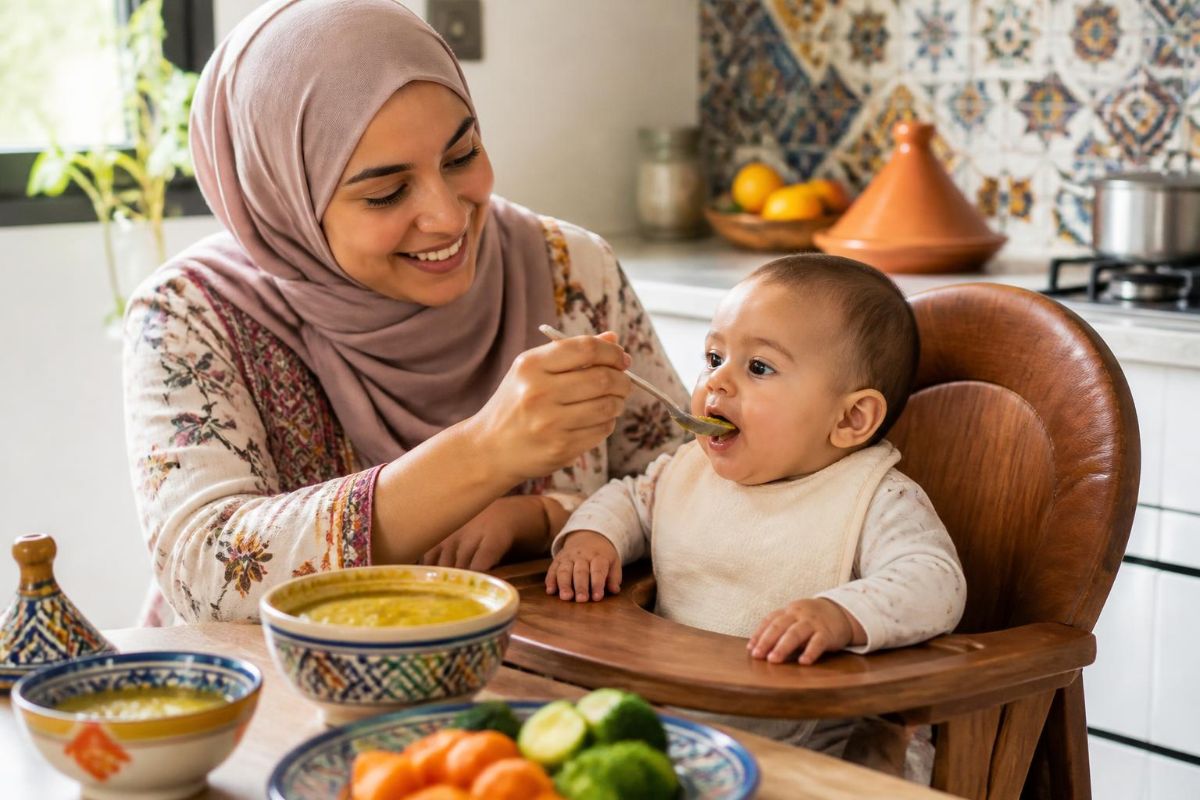
Sunday afternoon, the kitchen smells of carrot and cumin: you have just made the week’s purées. That leaves the awkward question: how long will it all keep? Storing baby purée follows a few simple but strict rules, because a little one copes with food poisoning far less well than an adult.
The WHO reminds us that children under 5 bear 29% of the burden of illness from contaminated food worldwide. No reason to give up homemade: you just need to cool well, freeze well and reheat well. Here are the times, the steps and the adjustments for Moroccan heat.
How long does homemade purée keep?
In the fridge, count 1 to 2 days for a purée containing meat, poultry or fish, and 2 to 3 days for a vegetable or fruit purée. In the freezer, 1 to 2 months for meat and fish, 2 to 3 months for vegetables and fruit. These are the times in Quebec’s Mieux vivre guide (INSPQ).
| Preparation | Fridge | Freezer |
|---|---|---|
| Vegetables, fruit | 2 to 3 days | 2 to 3 months |
| Meat, poultry, fish | 1 to 2 days | 1 to 2 months |
| Meat and vegetables mixed | 1 to 2 days | 1 to 2 months |
| Dish containing rice | 24 hours (NHS) | Not specified |
Sources do not all say the same thing. The NHS gives 2 days in the fridge for all cooked dishes. The US chart used by Colorado State University is more cautious for homemade food, at 1 to 2 days, but more generous for frozen fruit and vegetables, up to 6 to 8 months. Our advice: follow the shortest time, especially in summer, and always write the date on every pot.
The recipes themselves are in our articles on first purées for 6 to 8 months and meals from 9 months to 1 year.
Cool it fast: the step people forget
A purée that cools slowly on the hob spends hours at the temperature where bacteria multiply fastest, between 4 and 60 °C according to the US Department of Agriculture (USDA). The NHS asks you to cool dishes within 1 to 2 hours at most, and rice within 1 hour, before putting them in the fridge or freezer.
To go faster:
- Spread the still-hot purée in shallow containers or small portions.
- Stand them for a few minutes in a bath of cold water, lid on.
- Put them in the fridge as soon as they are no longer scalding.
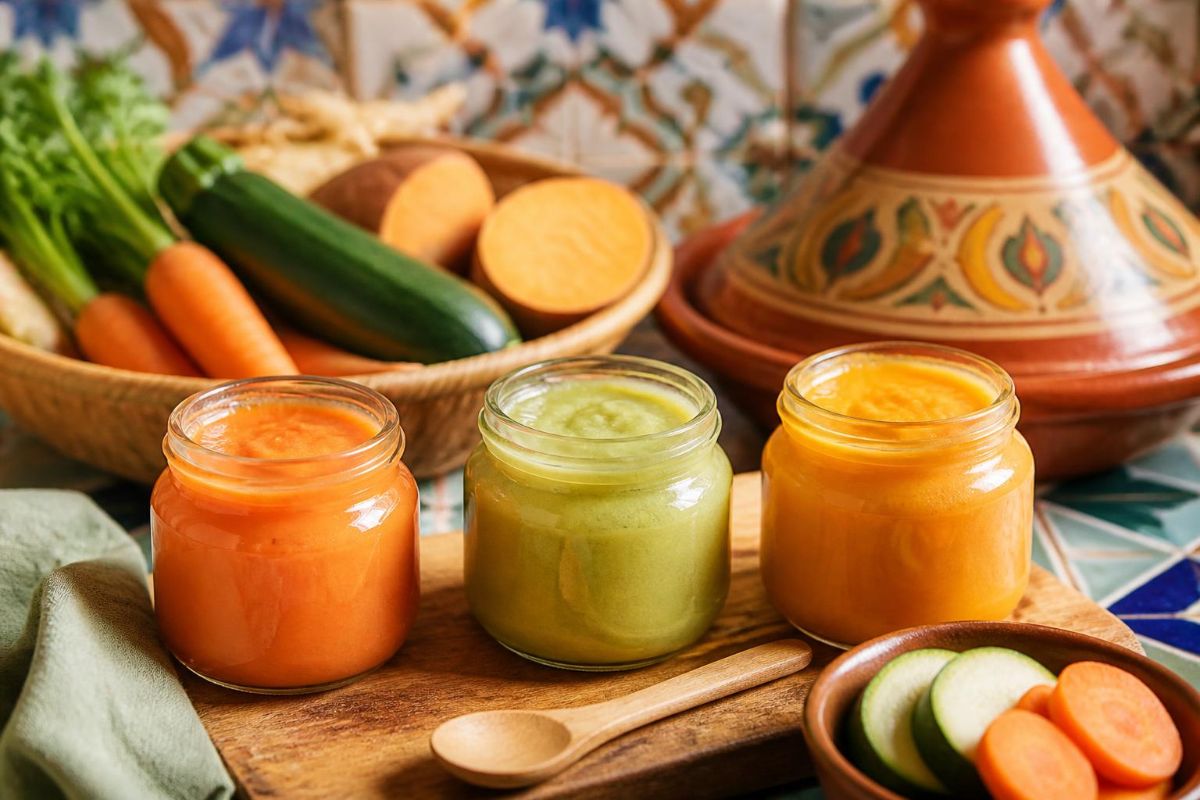
The INSPQ’s cube method works very well: pour the lukewarm purée into clean ice cube trays, cover, let it cool in the fridge, then freeze for 8 to 12 hours. Then pop the cubes into a freezer bag, press out the air and note the food’s name and the date.
Moroccan heat changes the game
The USDA sums up the rule with a time: a perishable food stays no more than 2 hours out of the cold, and only 1 hour above 32 °C. In July in Marrakech or Fès, or on a chergui day (hot desert wind) in Casablanca, a kitchen quickly passes that threshold.
In July 2026, the paediatrician Moulay Saïd Afif reminded Médias24 that the cold chain must be respected in great heat and that a baby must never be given food that has sat in the sun for a long time. In practice:
- take the purée out of the fridge at the last moment;
- for an outing, carry it cold in an insulated box with two cold sources, as the USDA advises, and reheat it on the spot;
- in great heat, keep to the shortest time in the table, or even prepare it the same day.
For nursery and picnics, our article on packed meals and the shop’s lunch box and insulated bag guide complete this advice.
Thawing safely
Thaw in the fridge overnight, or in the microwave on the defrost setting, recommends the NHS. Never on the worktop at room temperature, where the outside of the cube warms up while the middle stays frozen.
Once thawed, the purée is eaten within 24 hours if it thawed in the fridge, and straight away if it thawed in the microwave (NHS). It never goes back in the freezer (INSPQ). In the evening, simply take out the next day’s cubes and put them in a covered bowl in the fridge.
Reheating baby purée: saucepan, bain-marie or microwave?
All three work, provided you follow three rules: reheat only the mealtime portion, heat right through and then let it cool, and never reheat twice.
- Saucepan or bain-marie: the most even heating, over low heat, stirring.
- Microwave: in a small suitable dish, never in a closed container. Stir well, wait about 30 seconds, then check the temperature on the inside of your wrist (INSPQ). The microwave sometimes heats unevenly: a scalding mouthful can hide under a lukewarm surface, hence the importance of stirring well.
- Meat and egg: Colorado State University advises reheating them in a saucepan instead, to avoid overheating and spattering.
The NHS asks you to heat until the dish is piping hot all over, then let it cool before serving. For breast milk, the rules are different: see our article on storing breast milk.
Leftovers: what to keep, what to throw away?
What baby has touched is not kept. Saliva passes from the spoon to the bowl and bacteria settle in: Colorado State University asks that uneaten food be thrown away, and the NHS that what is left on the plate not be served again. The INSPQ adds that leftovers of reheated purée are thrown away too.
To limit waste:
- serve a small portion, then give more if baby is still hungry;
- with a shop-bought jar, pour the portion into a bowl and put the closed jar straight back in the fridge;
- throw away any jar with a rusty lid, chipped glass, or one that does not go “pop” when opened (INSPQ).
From the shop
Storing and carrying his little meals
Airtight pots in portions, ideally glass for reheating, and an insulated box for outings cover most needs. A cooking blender-steamer saves time without being essential.
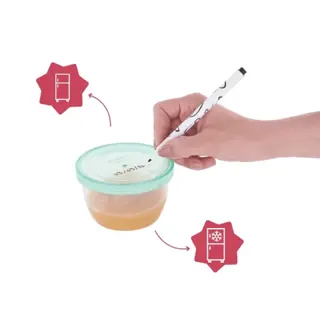 −9 %BadabulleBadabowls maxi-portion storage pots, 5 x 250 ml – Badabulle86 DH
instead of 95 DHView product −9 %BadabulleBadabowls Maxi Portions storage pots, 250 ml, set of 12 – Badabulle177 DH
instead of 195 DHView product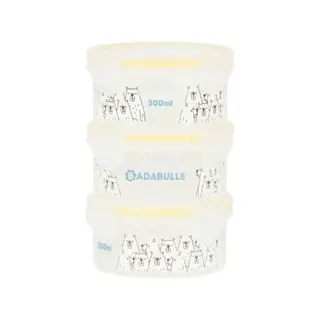 −9 %BadabulleMaxibox storage pots, 300 ml, set of 3 – Badabulle146 DH
instead of 160 DHView product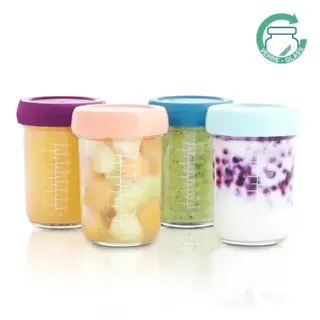 −9 %BabymoovSet of 4 Babybols glass food containers – Babymoov319 DH
instead of 350 DHView product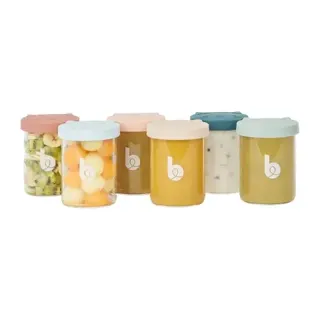 −9 %BabymoovIsy Bowls glass storage jars, 6 x 250 ml – Babymoov560 DH
instead of 615 DHView product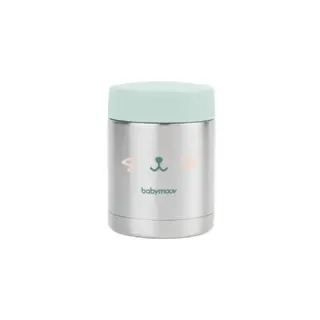 −9 %BabymoovEat’s Isy stainless steel hot and cold food jar, 350 ml – Babymoov255 DH
instead of 280 DHView product −19 %BabymoovNutribaby One 4-in-1 multifunction food processor – Babymoov1 447 DH
instead of 1 790 DHView product- The whole aisle · Baby food storage19 products online, delivered anywhere in Morocco.Open the aisle
Products sold by La Maison du Bébé, publisher of this magazine. Prices as of 12 October 2026; please check the product page.
Hygiene and equipment: the essentials
Hygiene starts before cooking. Wash your hands before cooking and after handling raw meat, fish or eggs; clean boards, utensils and worktop, and wash bowls and spoons in hot soapy water (NHS). The INSPQ advises doing it again each time you change food.
Moroccan cooking adapted for babies freezes well: couscous vegetables, harira set aside before the salt, or meatballs keep in portions.
Frequently asked questions
Can I give my baby purée straight from the fridge without reheating it?
Yes, for a fruit compote or purée, which is perfectly fine cold or at room temperature. For an already cooked vegetable, meat or fish purée, reheat it right through and then let it cool down: the NHS recommends heating until the dish is piping hot all over, then letting it cool before serving. In every case, serve only the mealtime portion.
How long does an opened baby food jar keep?
According to the US chart used by Colorado State University, an opened jar of fruit or vegetables keeps 2 to 3 days in the fridge, a jar of meat or egg only 1 day, and a meat-and-vegetable mix 1 to 2 days. Condition: do not feed baby straight from the jar. Pour the portion into a bowl and close the rest straight away.
Can I refreeze a thawed purée?
No. Quebec’s INSPQ is clear: a thawed purée does not go back in the freezer. The NHS advises eating it within 24 hours if it thawed in the fridge, and immediately if it thawed in the microwave. That is why mealtime-sized portions, in cubes or small pots, are so handy.
Do I need to sterilise pots and ice cube trays?
No, careful washing is enough. The NHS recommends washing bowls and spoons in hot soapy water, and the INSPQ cleaning utensils and the worktop before cooking and every time you change food. Let everything air-dry before filling. Sterilising mostly concerns milk equipment in the first months.
Sources
- L'essentiel sur les puréesMieux vivre avec notre enfant, Institut national de santé publique du Québec (INSPQ) · Canada (Québec)
- Children's food: safety and hygieneNHS · United Kingdom
- Keeping "Bag" Lunches SafeFood Safety and Inspection Service, US Department of Agriculture (USDA) · United States
- Food Safety for InfantsFood Smart Colorado, Colorado State University Extension (based on FoodSafety.gov) · United States
- Food safety (4 June 2026)World Health Organization (WHO) · International
- Vague de chaleur : les gestes à adopter pour protéger les plus vulnérables (2 juillet 2026)Médias24 (avec le Pr Moulay Saïd Afif) · Morocco