








Article contents
Key points
- In cooking from 6 months: purées, porridge, savoury flans, plain yoghurt.
- As the main drink: not before 1 year per the NHS, 9 to 12 months per Health Canada.
- Above 750 ml a day, the risk of iron-deficiency anaemia rises.
- Whole milk until age 2; neither skimmed milk nor rice drink before age 5.
- Raw milk and unpasteurised dairy: never, because of brucellosis and tuberculosis.
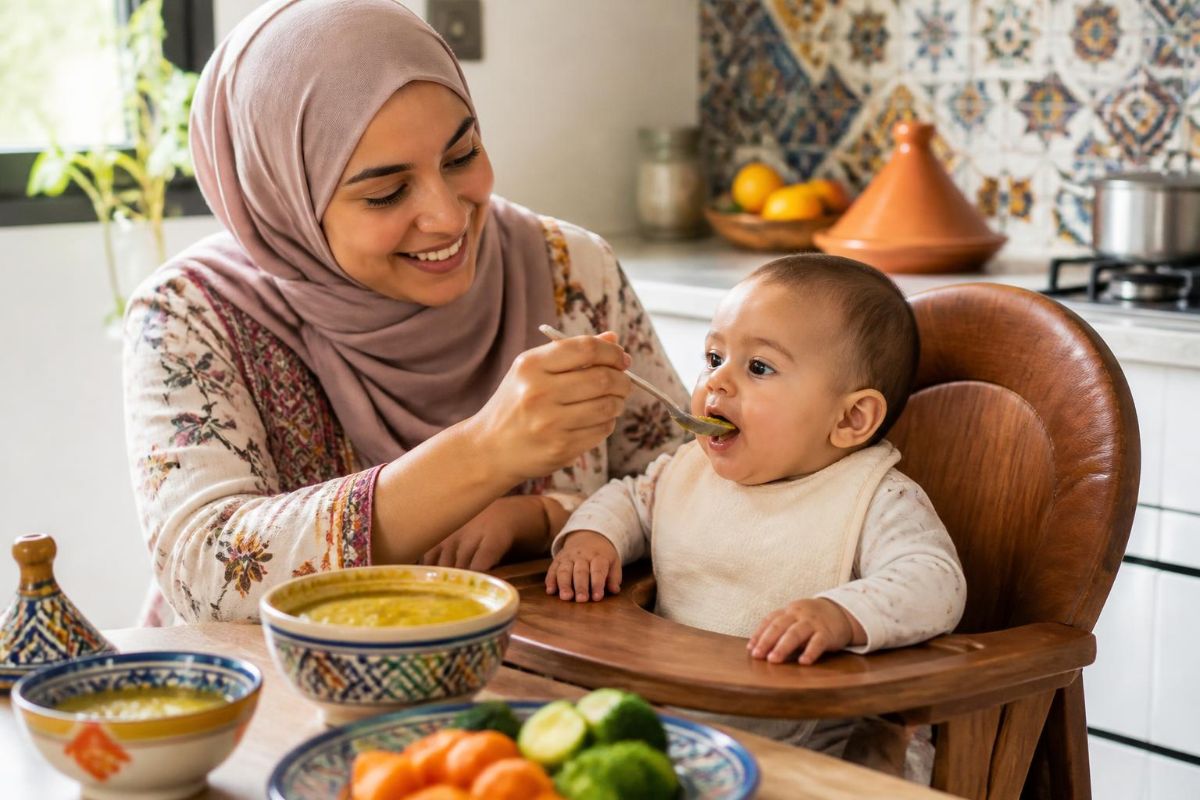
Baby is nearing a first birthday, and the question comes up at every visit to grandma's: “Can they drink farm milk now?” Cow's milk has a place in a baby's diet, but not at just any time, not just any kind and not in just any amount.
In short: in cooking from 6 months, as a drink around 1 year, always pasteurised, and without excess. Here is why, what the different health authorities say when they disagree, and how to handle the lben, raib and jben of our markets.
Why no cow's milk as a drink before 1 year?
Because cow's milk contains little iron, and in large amounts it takes the place of foods that supply it. Health Canada describes excessive cow's milk intake as the main risk factor for severe iron-deficiency anaemia in young children. And between 6 months and 2 years, a baby's iron needs are high.
The NHS therefore asks that cow's, goat's or sheep's milk not be given as the main drink before 1 year. Before that age, baby's milk drink remains breast milk or, if not breastfed, the infant formula recommended by their doctor. Iron deficiency and its signs are detailed in our article on anaemia in children.
In cooking, from 6 months
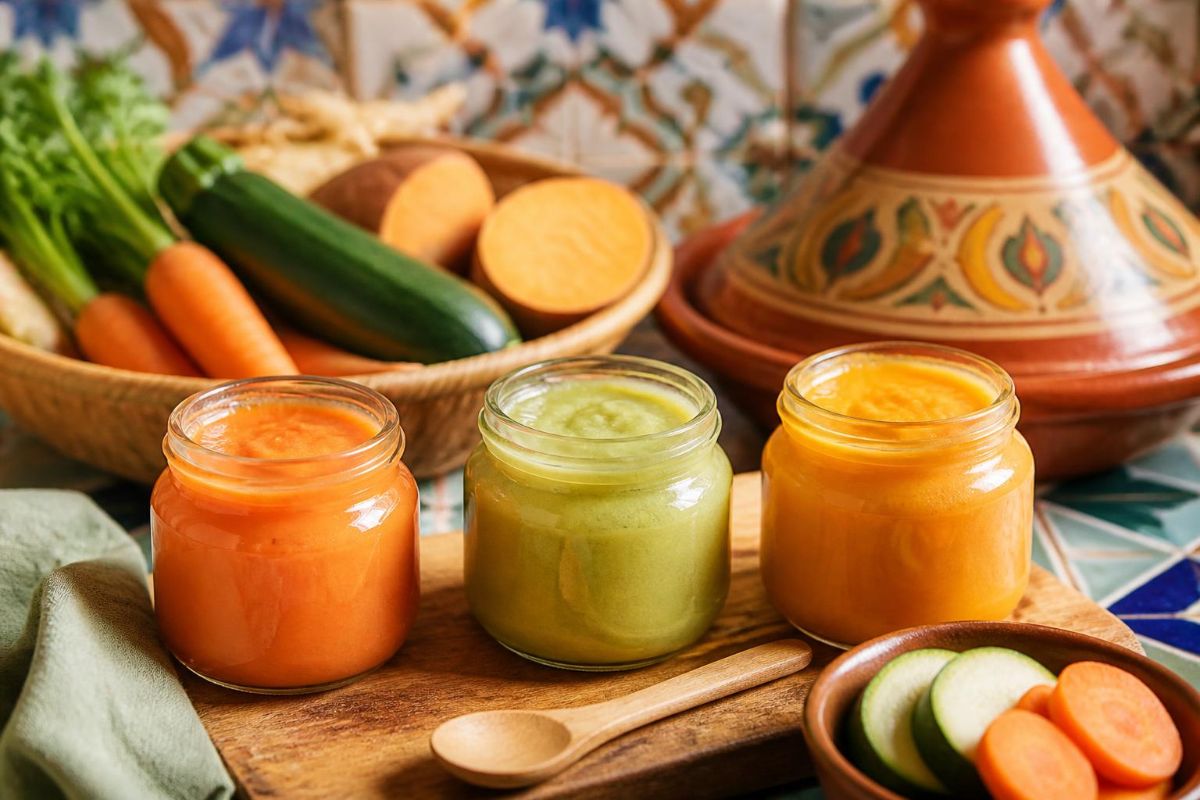
Cow's milk can, however, go into prepared foods from the start of complementary feeding, around 6 months, according to the NHS: a purée thinned with milk, a porridge, a savoury vegetable flan, a béchamel. Plain whole yoghurts find their place in the first months of complementary feeding; French paediatricians generally introduce cheese around 9 months, excluding raw-milk ones.
Cow's milk can also cause an allergy. If it triggers vomiting, diarrhoea, worsening eczema or hives, see a doctor: our article on CMPA, cow's milk protein allergy explains what to do.
9 months or 1 year: why countries do not say the same thing
Recommendations differ, and it helps to know why.
| Authority | Cow's milk as the main drink |
|---|---|
| NHS (United Kingdom) | Not before 1 year |
| Health Canada | Between 9 and 12 months, if baby already eats iron-rich foods |
| AAP (United States) | Not before 1 year; from 12 months, whole milk |
| WHO (2023 guideline) | For a non-breastfed baby of 6 to 11 months, infant formula or whole animal milk, conditional recommendation |
The WHO position is aimed first at countries where infant formulas are out of reach or too expensive. It has been criticised by European paediatricians: the nutrition group of the Spanish association of primary care paediatrics (AEPap) published an analysis in 2024 disagreeing on this point. In practice, in Morocco, the safest rule remains to wait until 1 year, or to follow your paediatrician's advice if baby is not breastfed.
If you breastfeed, there is no hurry: Health Canada lists continued breastfeeding as one of the options after 1 year, and breast milk then remains baby's milk drink. Our article on weaning covers the transition when you choose it.
How much cow's milk a day after 1 year?
Neither too much nor too little. The ceiling is the most important marker: 750 ml a day at most, according to Health Canada, to protect appetite and iron intake.
| Source | Guide for ages 1-2 |
|---|---|
| Health Canada | 500 ml of whole milk a day, not exceeding 750 ml |
| AAP (United States) | About 2 cups, close to 480 ml of whole milk a day |
| NHS (United Kingdom) | At least 350 ml of milk a day, or 2 portions of dairy |
| French paediatricians | 500 to 750 ml of milk and dairy equivalents a day (6 months to 3 years) |
A yoghurt, a raib or a piece of cheese count towards these amounts. A child who drinks three or four big bottles of milk a day and eats little at meals is typically the one to watch for anaemia.
Which milk to choose? Pasteurised whole milk: Health Canada speaks of milk at 3.25% fat, the AAP of whole milk between 12 and 24 months. The NHS does not recommend skimmed or 1% milk as the main drink before 5 years. Fortified, unsweetened plant-based drinks do not replace milk before 1 year; rice drink is to be avoided before 5 years, because of arsenic (NHS).
And “growing-up” milks? The NHS says no infant milk is needed after 12 months, and the AAP considers that milks aimed at young children bring no real advantage over a balanced diet, while costing more and often containing added sugar.
Raw milk, farm milk: why the answer is no
Raw, unpasteurised milk is never given to a child: the NHS and Health Canada are firm, because of the risk of food poisoning.
In Morocco, the risk has a name: brucellosis. An analysis of human cases reported between 2002 and 2019, published in 2021 by authors from the Ministry of Health, found unpasteurised milk consumption in 179 of the 181 patients whose exposure was known. During an outbreak in Laayoune in 2017, cases were strongly associated with drinking camel's milk. Raw milk can also transmit tuberculosis of animal origin: in April 2025, ONSSA (the national food safety office) and doctors warned about this risk, pointing to raw milk, fermented milk and raib sold outside controlled channels (Hespress).
Their advice: choose pasteurised, sterilised or UHT milk, check the ONSSA approval number on the packaging, and avoid milk sold by unauthorised units.
Lben, raib, jben: Moroccan dairy products for babies
Traditional dairy products have their place, provided they are made with pasteurised milk.
| Product | For baby | Points of caution |
|---|---|---|
| Lben (fermented milk) | From the start of complementary feeding, plain | Industrial pasteurised; no home-made lben from raw milk |
| Raib (curdled milk) | From the start of complementary feeding, plain | Flavoured versions are sweetened; check the label |
| Plain yoghurt | From the start of complementary feeding | Whole, no added sugar |
| Jben (fresh cheese) | Only if pasteurised | Farm jben is often made with raw milk |
| Goat's milk | Not as a drink before 1 year (NHS) | Pasteurised only |
| Camel's milk | Not as a drink before 1 year | Never raw (brucellosis) |
Sugar is the other trap: many shop-bought raib and yoghurts are sweetened or flavoured. Choose them plain and sweeten with fruit, as our guidelines on sugar for children explain. For organising meals after 1 year, see meals for 1-3 year olds.
Frequently asked questions
Can my 10-month-old baby drink cow's milk?
Guidelines differ. The UK's NHS asks you to wait until 1 year before making it the main drink. Health Canada allows it between 9 and 12 months if baby already eats iron-rich foods every day. In every case, baby can have it in prepared foods. If your baby is not breastfed, ask your paediatrician which milk suits them until 1 year.
Do we need to switch to a special milk after 1 year?
It is not necessary. The NHS states that after 12 months no infant milk is needed, whatever its name. The American Academy of Pediatrics adds that milks marketed for young children offer no real advantage over a varied diet. Pasteurised whole cow's milk, or continued breastfeeding, is enough.
Are lben and raib suitable for a baby?
Yes, if they are made with pasteurised milk and no added sugar. They are fermented milks that count among the day's dairy products, and they can be offered from the start of complementary feeding, like plain yoghurt. Avoid, however, home-made lben or raib made with raw milk, and the flavoured or sweetened versions sold in supermarkets.
How much dairy a day for a 2-year-old?
French paediatricians aim for 500 to 750 ml a day of milk and dairy equivalents between 6 months and 3 years, counting milk, yoghurts and cheese. The NHS gives a minimum of about 350 ml of milk a day, or two portions of dairy. The key is not to exceed 750 ml of milk a day, to keep appetite for iron-rich foods.
Sources
- Drinks and cups for babies and young childrenNHS · United Kingdom
- La nutrition du nourrisson né à terme et en santé : recommandations pour l'enfant âgé de 6 à 24 moisHealth Canada, Canadian Paediatric Society, Dietitians of Canada and Canadian Breastfeeding Committee · Canada
- Recommended Drinks for Children Age 5 & YoungerAmerican Academy of Pediatrics, HealthyChildren.org · United States
- Les nouvelles recommandations du PNNS sur la diversification alimentaireNutrition Committee of the French Society of Paediatrics, Perfectionnement en Pédiatrie (2022), distributed by AFPA · France
- WHO Guideline for complementary feeding of infants and young children 6-23 months of age (October 16, 2023)World Health Organization (WHO) · International
- Análisis crítico de las nuevas directrices de la OMS sobre alimentación complementaria en el lactante de 6 a 23 meses de edad (2024)AEPap Gastroenterology and Nutrition Group, Revista de Pediatría de Atención Primaria · Spain
- Brucellose à l'interface homme-animal-environnement au Maroc, 2002-2019 : analyse descriptive (2021)PAMJ - One Health (authors from Morocco's Ministry of Health) · Morocco
- Transmission de la tuberculose par le lait non pasteurisé : l'ONSSA et les professionnels de santé alertent (April 15, 2025)Hespress FR · Morocco