








Article contents
Key points
- The base: a low-sugar cereal food, a dairy food, a fruit, and water or milk.
- Msemen, harcha and baghrir with honey: rather at the weekend, in a child’s portion.
- Coated or puffed cereals are sugary products, to keep for occasional treats.
- No tea or juice every day; a whole fruit beats a juice.
- No appetite in the morning? A little something, then the rest during the morning.
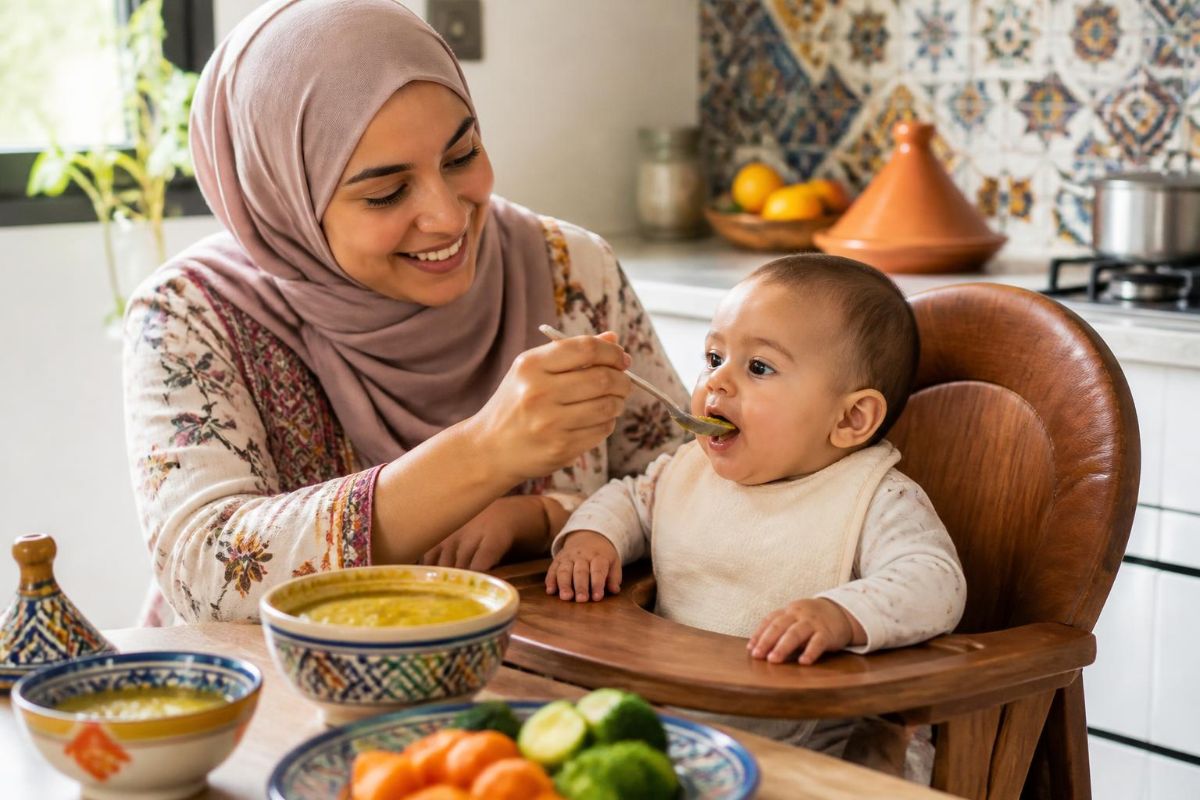
A quarter past seven, the school bag is not ready, and your child is staring at his bowl without touching it. A child’s breakfast is often decided in those few rushed minutes. Good news: it does not need to be complicated to be balanced, and the Moroccan table already offers very good foundations.
Here is what health authorities say, how to put together a morning bowl with what you have at home, what to think of msemen (the layered Moroccan flatbread) and shop-bought cereals, and what to do when your child is simply not hungry.
Why breakfast matters (without making it an obsession)
Breakfast provides the energy for the morning, France’s health insurance fund reminds us. For a child, it represents about 20% of the day’s intake, according to the Vidal site. So it is a real meal, not just a glass of milk gulped down standing up.
But balance is judged over the day, not over a single meal, the fund also stresses. A morning without appetite is no drama if lunch, afternoon snack and dinner are regular. The recommended organisation for children comes down to four meals: breakfast, lunch, afternoon snack and dinner, with no grazing in between. For snacks and lunch boxes, see our snack ideas for nursery and school.
The three pillars of a balanced breakfast
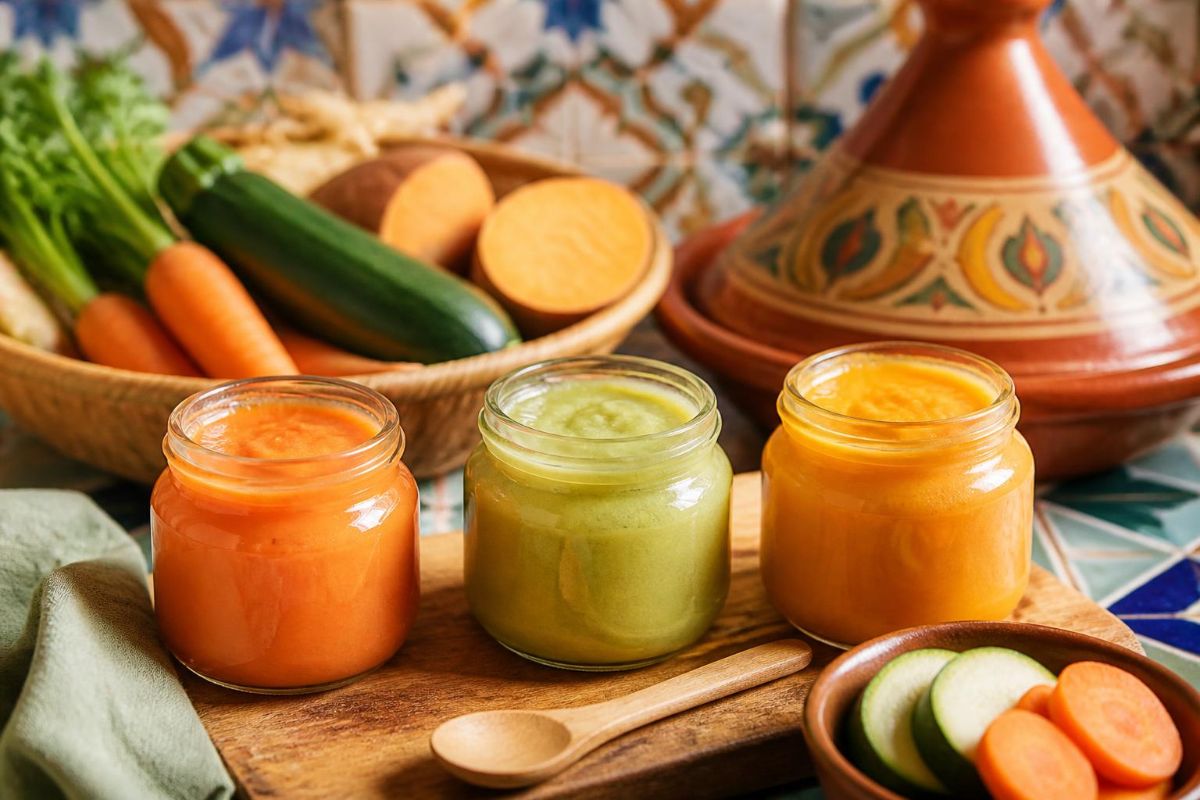
The health insurance fund sums up a child’s breakfast in three elements: a wholegrain, low-sugar cereal food, a dairy food and a fruit. Vidal adds a drink and a small amount of fat.
| Pillar | Moroccan examples | To limit |
|---|---|---|
| Cereal food | Wholemeal or barley khobz (bread), oats, plain baghrir (semolina pancake), semi-wholemeal bread | Pastries, coated cereals |
| Dairy food | Milk, lben (buttermilk), raïb (fermented milk) or plain yoghurt, pasteurised soft cheese | Flavoured, sweetened dairy |
| Fruit | Orange segments, banana, apple, pear, fig, chopped dates | Large amounts of juice |
| Drink | Water, milk | Sweet tea, fizzy drinks, “fruit” drinks |
| A little fat | Drizzle of olive oil, butter, egg | Daily frying |
Before age 2, the NHS advises not giving only wholegrain cereals: alternate with white or semi-wholemeal bread. For milk, it recommends at least 350 ml of milk a day, or two portions of dairy, and full-fat dairy up to age 2. The choice of milk and the amounts are detailed in our article on cow’s milk for children.
In Morocco, fruit is the pillar that is missing most often: according to the national survey by the Ministry of Health and the WHO reported by Le360, 76% of Moroccans eat fewer than five fruit and vegetables a day. A fruit at breakfast is already a point won.
Msemen, harcha, baghrir: how to fit them in?
These flatbreads are part of the pleasure of the morning, and there is no reason to ban them. They are cereal foods, often rich in fat (butter, cooking oil) and served with honey or sugar. The idea is therefore to keep them for the weekend or festive days, in a child’s portion, and to pair them with dairy and fruit.
A few easy adjustments:
- Baghrir: the lightest of the three, since it cooks without fat. Serve it plain or with a little soft cheese rather than drowned in butter and honey.
- Msemen: very flaky and rich. Half is enough for a 3-year-old; prefer it plain or with an egg rather than with the butter-and-honey mix.
- Harcha (a pan-fried semolina bread): made from semolina, filling. Make it with less butter and serve it with lben.
- Honey and amlou (almond, argan oil and honey spread): never before age 1 (risk of botulism). After that, in a thin layer and not every day: they are still sugars.
For under-3s, all this is cut into pieces and eaten seated. And salt? Family dishes already contain it: our article on salt, sugar and honey for children gives the ceilings by age.
Shop-bought cereals and hidden sugars
The colourful box promises “vitamins and energy”, but many children’s cereals are mostly very sugary. Vidal classes coated flakes and processed cereals among the sugary products to limit, and advises oats or muesli instead. The health insurance fund lists puffed cereals among ultra-processed foods.
An analysis by the Environmental Working Group, reported in 2014 by Pourquoi Docteur, calculated that children’s cereals sold in the United States were on average 40% sweeter than adult ones. The WHO recommends limiting free sugars to under 10% of intake, ideally 5%.
Instead, homemade porridge takes five minutes:
- Heat a small bowl of milk with two to three tablespoons of rolled oats.
- Let it thicken over low heat, stirring.
- Add half a mashed banana or a grated pear, and a pinch of cinnamon.
The fruit sweetens naturally, and you know exactly what is in the bowl.
From the shop
For a breakfast eaten at the table
A steady cup or a valve-free beaker to learn to drink, a plate that does not slide and lidded bowls to prepare the night before: nothing more.
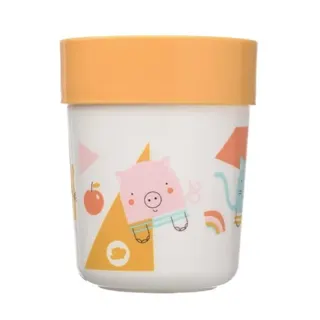 Maxi Cosi - Bébé ConfortDomino cup with non-slip base – Maxi-Cosi60 DHView product
  −9 %BadabulleLeak-proof cup with soft silicone spout, 180 ml – Badabulle73 DH
instead of 80 DHView product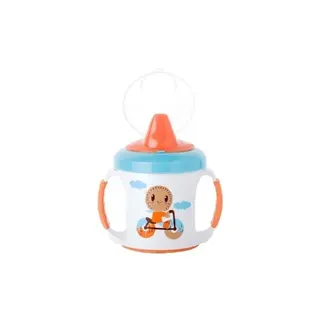 −48 %SaroCookie no-drip cup – Saro68 DH
instead of 130 DHView product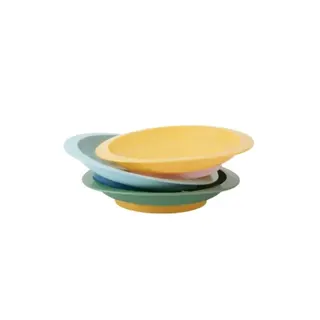 −9 %BadabulleNon-slip plates, set of 3 – Badabulle137 DH
instead of 150 DHView product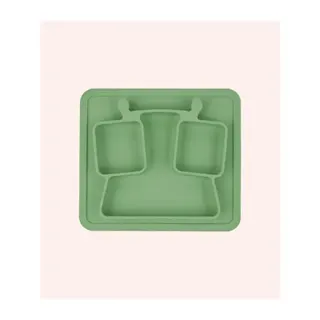 −9 %BadabulleNon-slip divided plate – Badabulle182 DH
instead of 200 DHView product −9 %BadabulleSet of 3 Fun Colors baby bowls with lids – Badabulle137 DH
instead of 150 DHView product- The whole aisle · Baby tableware54 products online, delivered anywhere in Morocco.Open the aisle
Products sold by La Maison du Bébé, publisher of this magazine. Prices as of 12 October 2026; please check the product page.
My child is not hungry in the morning: what can I do?
It is common, and you do not force it. Vidal advises adapting amounts to the child’s hunger, the main thing being that he eats the equivalent of a breakfast over the course of the morning. The health insurance fund reminds us not to make a child finish his plate.
What often helps:
- Wake him a little earlier: appetite rarely arrives in the ten minutes after waking.
- Start with a drink: a glass of water and then a bowl of warm milk go down more easily than a slice of bread.
- Offer small and varied: three orange segments, a piece of bread, a yoghurt, rather than a large plate.
- Eat with him, at the table, with no screens: French paediatricians remind us that mealtimes should be screen-free.
- Plan a back-up: if he has eaten almost nothing, slip a fruit and a piece of bread into his bag for the morning.
If your child eats little at every meal, and not only in the morning, our article on the child who won’t eat between 1 and 3 tackles the question more broadly.
Before nursery or school: our menus for the week
Here is a week of simple ideas, adaptable from 1 year by cutting the food up, and with no added sugar:
| Day | Breakfast |
|---|---|
| Monday | Milk porridge, grated pear |
| Tuesday | Bread and soft cheese, orange segments, milk |
| Wednesday | Scrambled egg, barley bread, tomato, lben |
| Thursday | Plain raïb, banana, a few rolled oats |
| Friday | Plain baghrir, soft cheese, sliced apple |
| Saturday | Half a plain msemen, glass of milk, chopped figs or dates |
| Sunday | Light harcha, lben, seasonal fruit |
For drinks, water or milk, served in a suitable cup or glass: the NHS recommends open cups or cups without a valve, better for teeth, and advises against the bottle after age 1. Tea and coffee are not suitable for young children, and fruit juice, if he has any, is heavily diluted and served at mealtimes (NHS). For the start of the school year, our list and good habits for nursery and preschool complete the morning routine. For tableware, the shop’s children’s tableware offers non-slip plates and lidded bowls.
Frequently asked questions
What should a 3-year-old have for breakfast?
A cereal food, a dairy food and a piece of fruit, in child-sized portions. For example: half a slice of bread with a little olive oil and soft cheese, a bowl of milk, and half a banana. Or a small bowl of milk porridge with grated pear. Offer water or milk to drink, not tea, and let him eat according to his hunger, without forcing him to finish.
Are shop-bought cereals bad for children?
Not all of them, but many are very sugary. The Vidal site classes coated cereals among the sugary products to limit, and France’s health insurance fund lists puffed cereals among ultra-processed foods. Prefer rolled oats or a no-added-sugar muesli, sweetened with fruit. Sugary cereals can stay an occasional treat, not the everyday breakfast.
Can my child have mint tea in the morning?
It is best to avoid it. The NHS considers tea and coffee unsuitable for babies and young children, and Moroccan tea is generally very sweet. In the morning, the right drink is water or milk. A child who asks for the family tea can have a splash of warm milk in a small glass: he shares the ritual without the sugar.
Does he need a snack at the morning break?
Only if he ate nothing or almost nothing on waking. In that case, a piece of fruit and a piece of bread in his schoolbag make up for the missed breakfast. A child who ate well does not need an extra snack in the morning: the French health insurance fund organises the day into four meals, breakfast, lunch, afternoon snack and dinner, with no grazing in between.
Sources
- Des repas équilibrés bien répartis dans la journée de l'enfant (27 juin 2024)ameli.fr, Assurance maladie · France
- Comment équilibrer le petit-déjeuner ?Vidal · France
- What to feed young childrenNHS · United Kingdom
- Drinks and cups for babies and young childrenNHS · United Kingdom
- Healthy dietWorld Health Organization (WHO) · International
- Les céréales pour enfants contiennent deux fois trop de sucres (15 mai 2014)Pourquoi Docteur, d'après l'Environmental Working Group (États-Unis) · France
- Etude. Les Marocains se nourrissent mal et ne font pas assez de sport (21 mai 2019)Le360 · Morocco