








Article contents
Key points
- Set baby’s portion aside before adding salt, stock cubes, smen, olives and preserved lemon.
- Cumin, cinnamon, turmeric, ginger, parsley and coriander: yes; chilli and harissa: later.
- Under 1 g of salt a day before age 1; 2 g at most between 1 and 3 (NHS).
- No honey before age 1: chebakia, amlou and honeyed sellou will have to wait.
- Sardines yes, twice a week; swordfish no, because of mercury.
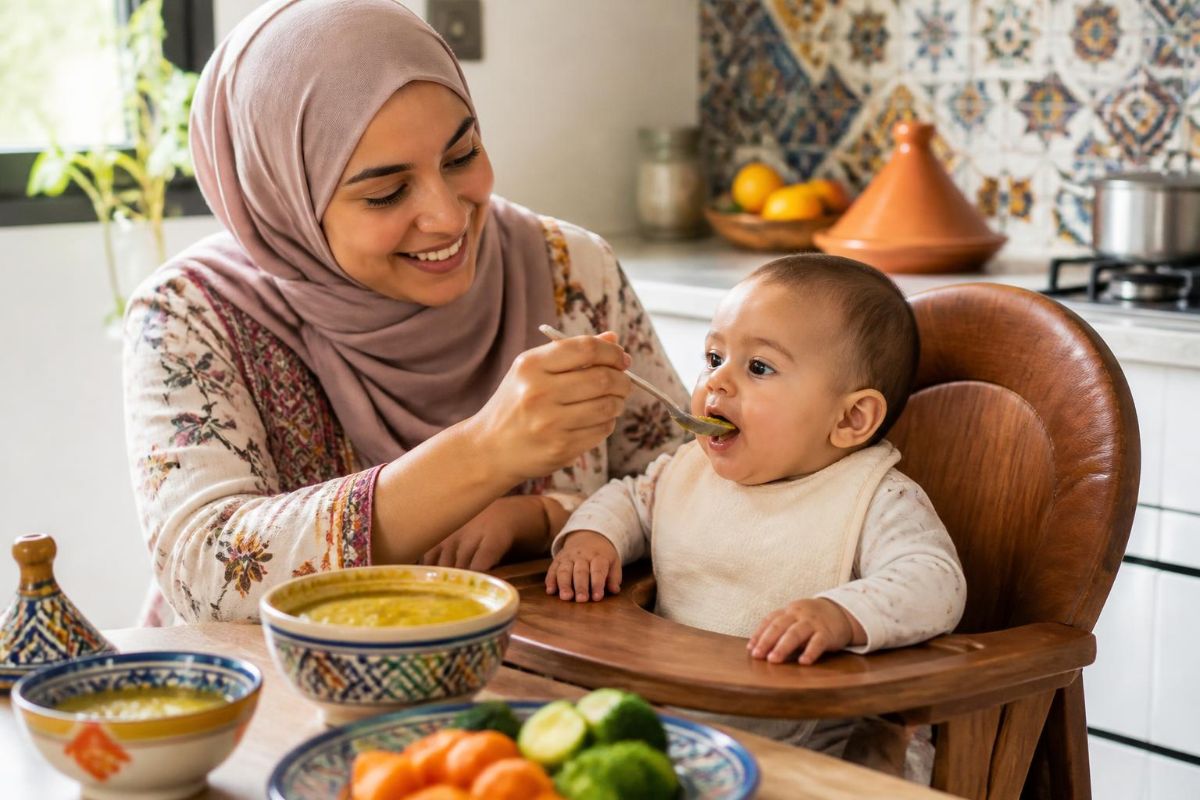
On Friday, the couscous arrives steaming in the middle of the table and your baby reaches out for the dish. Good news: Moroccan food suits babies very well. Soft vegetables, pulses, slow-cooked meat, mild spices: many of our dishes already look like what paediatricians recommend.
The problem is not the dish, it is the final seasoning. Salt, stock cube, smen (Moroccan fermented butter), olives and preserved lemon often go in at the end of cooking. So it is enough to serve your baby a little earlier. Here is what to keep, what to leave out, and how to adapt couscous, tagine or harira (the traditional soup) to his age.
From what age can a baby eat the family dish?
From the start of weaning, around 6 months, provided you adapt the texture and the seasoning. A baby does not need separate cooked meals: his portion can come from the family pot, finely blended at first, then mashed, then in small soft pieces.
| Age | Texture of the family dish | Example |
|---|---|---|
| 6-7 months | Blended smooth | Couscous vegetables blended with a little unsalted broth |
| 8-9 months | Mashed with a fork, small lumps | Mashed harira, mashed tagine vegetables |
| 10-12 months | Soft pieces to pick up | Couscous carrot and courgette as sticks, shredded meat |
| After 1 year | Cut pieces, almost like the grown-ups | Tagine in small pieces, always without added salt |
French paediatricians remind us that lumps should not be delayed beyond 10 months, and Health Canada wants lumpy textures by 9 months at the latest. Our first recipes for 6 to 8 months and our meal ideas for 9 months to 1 year detail these stages.
The golden rule: set aside before seasoning
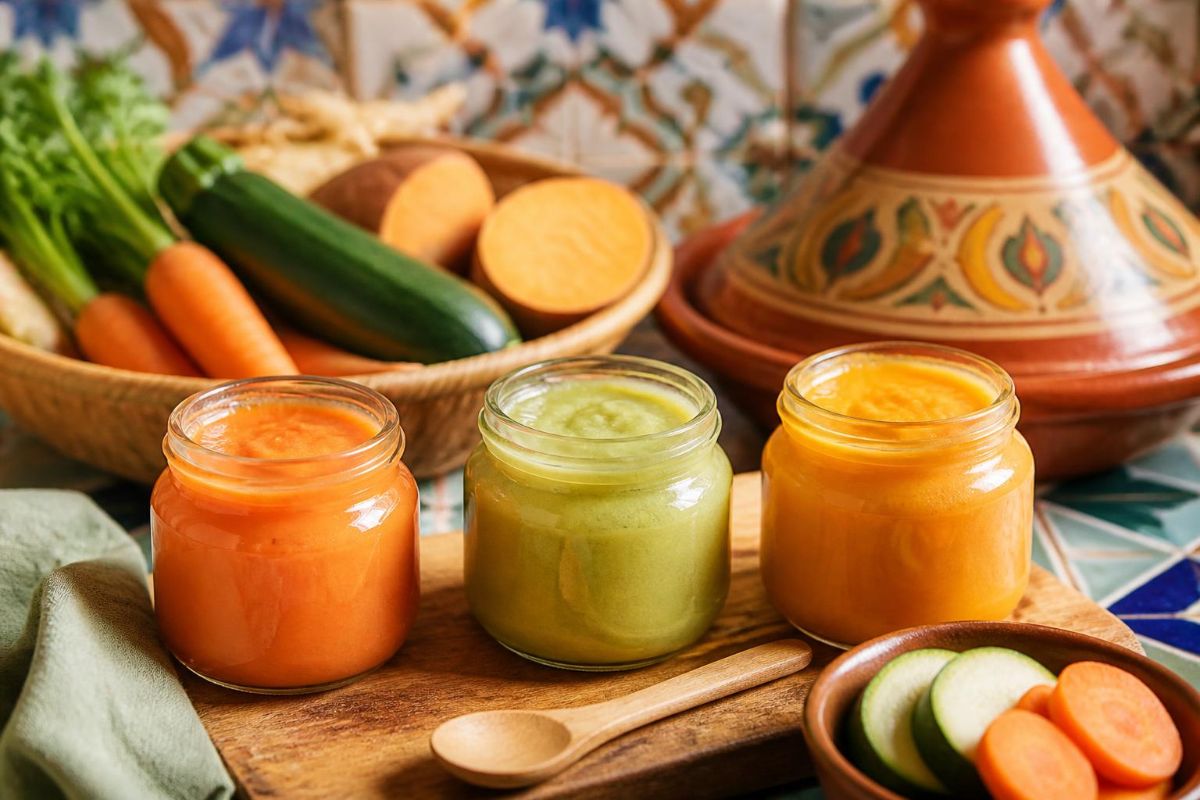
The simplest move is to take baby’s portion just before adding salt and condiments. Before age 1, the NHS sets the limit at less than 1 g of salt a day, and at 2 g at most between 1 and 3 years, because a baby’s kidneys cannot yet get rid of the excess. The NHS also advises against stock cubes, often very salty, including in the cooking water. The WHO points the same way: no added salt or sugar in baby’s food.
In Morocco, the issue is real. According to Ministry of Health estimates reported by Allo Docteurs, half of Moroccans eat nearly 12 g of salt a day, more than double the 5 g the WHO advises for adults, and the ministry has asked bakers to cut the salt in bread (H24info). A taste for salt is learned early: better not to train it.
In practice, when you cook:
- Soften the onions, meat and mild spices without salt.
- Add the vegetables and water, and let it simmer.
- Take baby’s portion (vegetables, a little meat, some broth) as soon as everything is tender.
- Only then, add salt, stock cube, smen, olives or preserved lemon for the rest of the family.
Spices, smen, olives, preserved lemon: what stays, what goes
Spices are not the enemy: French paediatricians actually recommend spices and aromatic herbs to give baby’s meals flavour and colour. It is salt and very salty condiments that cause the problem.
| Ingredient | For baby | Why |
|---|---|---|
| Cumin, cinnamon, turmeric, ginger, sweet paprika | Yes, in small pinches | Flavour without salt |
| Parsley, coriander, mint, onion, garlic | Yes | Aromatic, well cooked |
| Hot chilli, harissa | Later | Too hot for a little one |
| Stock cube | No | Very salty (NHS) |
| Smen | Avoid | Fermented butter, often salted, very strong taste |
| Olives, preserved lemon | Not before age 1, then rarely | Kept in salt; stones are a choking risk |
| Honey | Not before age 1 | Risk of botulism (NHS, Health Canada) |
| Raw olive oil | Yes, a drizzle | 1 to 2 teaspoons of oil a day before age 1 (SFP) |
To replace smen, a drizzle of raw oil added to the plate does the job. The SFP (French Society of Paediatrics) recommends preferring rapeseed and walnut oils, sometimes alternating with a little butter.
Couscous, tagine, harira: our baby versions
Couscous
Take carrot, courgette, turnip, squash and a few chickpeas from the broth before the salt and the sweet tfaya (caramelised onions and raisins). Before 9 months, blend the vegetables with a little broth. After that, mix them with 2 tablespoons of well-swollen fine semolina. Add 10 g of meat or shredded chicken, the amount the SFP recommends before age 1. Chickpeas should be peeled and mashed: whole, they are too hard and too round for a baby.
Tagine
A chicken or meat tagine with vegetables is ideal: long cooking, meat that falls apart, soft vegetables. Serve baby before adding olives and preserved lemon. Remove bones carefully. Tagines with honey and prunes will have to wait until 1 year because of the honey; prunes, stoned and mashed, are fine earlier, without the syrup.
Harira
Take a ladleful before the salt, smen and stock cube. Lentils, chickpeas and tomato make it an iron-rich dish. Blend finely at 6-7 months, then mash. If the family recipe contains beaten egg, check that it is well cooked. During Ramadan, chebakia (honey-dipped sesame pastries) are not for babies, and sellou (a sweet toasted-flour mix) is very sweet; our article on Ramadan and children covers the rest.
Fish
Sardines, so common in our markets, are an excellent oily fish; the SFP advises fish twice a week, one of them an oily fish. Cook them as sardine kefta or steamed, and remove every bone. The NHS asks you to avoid swordfish, shark and marlin for children, because of mercury.
From the shop
So that baby shares the family meal
A booster seat for the family table, non-slip bowls and something to carry his portion in: the essentials for eating like the grown-ups. A cooking blender-steamer helps, without being essential.
 −48 %BadabulleBooster Seat chair booster – Badabulle286 DH
instead of 550 DHView product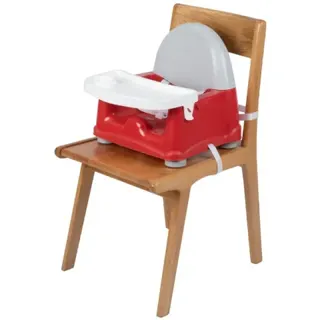 −41 %Safety 1stEasy Care chair booster, Red Campus – Safety 1st322 DH
instead of 549 DHView product −9 %BadabulleSet of 5 non-slip bowls and 3 soft spoons – Badabulle237 DH
instead of 260 DHView product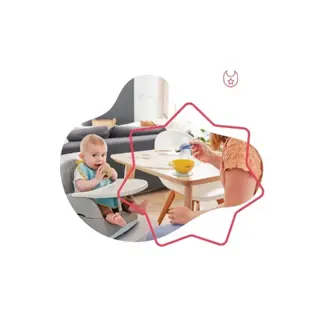 −9 %BadabulleSet of 3 Fun Colors baby bowls with lids – Badabulle137 DH
instead of 150 DHView product −9 %BabymoovEat’s Isy stainless steel hot and cold food jar, 350 ml – Babymoov255 DH
instead of 280 DHView product −19 %BabymoovNutribaby One 4-in-1 multifunction food processor – Babymoov1 447 DH
instead of 1 790 DHView product- The whole aisle · Baby food steamers and blenders4 products online, delivered anywhere in Morocco.Open the aisle
Products sold by La Maison du Bébé, publisher of this magazine. Prices as of 12 October 2026; please check the product page.
Eating at the family table, safely
Sharing the meal teaches a baby to eat: he watches, imitates, tastes. Sit him at the table, seated and strapped in, in a high chair or a chair booster seat once he sits well. The very hot shared dish stays out of his reach, and so does the teapot: tea, even mint tea, is not suitable for young children according to the NHS.
A few safety rules specific to our tables:
- olives, dates and prunes are always stoned and cut up;
- whole almonds, walnuts and peanuts are out before age 5 (NHS); almond is given as a powder, and chickpeas are peeled and mashed;
- chicken bones and fish bones are removed before serving;
- no sugary drink or juice with the meal: water, in a cup or glass.
On festive days, such as Eid al-Kabir, grilled meat is often too tough and too salty for a baby: our article on Eid with a baby suggests solutions. To take his portion to grandma’s, an insulated box or lidded bowls keep the meal cool.
Allergies and new foods: care with festive dishes
Family dishes mix many ingredients: egg, sesame (in bread or cakes), almond, fish, the gluten in semolina. Preferably introduce these allergens one at a time, in a simple dish, before meeting them mixed together. Our guide to food allergies in babies explains how, and our article on starting solids reminds you what to begin with.
Frequently asked questions
Can a 6-month-old have harira?
Yes, if you take his portion before the salt, smen and stock cube go in, then blend it finely. Lentils, chickpeas, tomato and herbs make it a good iron-rich dish. At first, take out the vermicelli if the texture bothers him, and cook any egg added until it is well set. Around 8 to 9 months, a harira mashed with a fork suits most babies.
Are cumin and cinnamon dangerous for babies?
No. French paediatricians encourage spices and aromatic herbs to give meals flavour and colour in place of salt. Start with a pinch, one spice at a time. The mild spices of Moroccan cooking (cumin, cinnamon, turmeric, ginger, sweet paprika) are fine; hot chilli, harissa and a very spicy ras el hanout can wait until the child is older.
Can my baby eat Moroccan bread?
Yes, in small pieces or as fingers, once he is eating foods he can hold. Just remember that bread contains salt: the Ministry of Health has asked bakers to reduce it. A small amount during the day is enough, and the rest of his plate should have no added salt.
Is smen off-limits for babies?
It is not toxic, but it is a fermented butter that is often salted and very strong in taste, so not well suited to a little one. Prefer a drizzle of raw oil added to his plate: French paediatricians advise 1 to 2 teaspoons of oil a day before age 1, preferably rapeseed or walnut, and sometimes a little mild butter.
Sources
- Foods to avoid giving babies and young childrenNHS · United Kingdom
- Salt in your dietNHS · United Kingdom
- Les nouvelles recommandations du PNNS sur la diversification alimentaireComité de nutrition de la Société française de pédiatrie, Perfectionnement en Pédiatrie (2022), document diffusé par l'AFPA · France
- Nutrition for healthy term infants: recommendations from six to 24 monthsHealth Canada, Canadian Paediatric Society, Dietitians of Canada and Breastfeeding Committee for Canada · Canada
- Drinks and cups for babies and young childrenNHS · United Kingdom
- Healthy dietWorld Health Organization (WHO) · International
- Hypertension, diabète... le Maroc veut moins de sel dans son pain (mis à jour le 25/06/2025)Allo Docteurs · France
- Bientôt moins de sel dans le pain, annonce le ministère de la Santé (9 janvier 2020)H24info · Morocco