


Article contents
Key points
- Aim for 18 to 20 °C: the range shared by the British and French guidelines, above the WHO minimum.
- A room thermometer, at cot height, saves you guessing.
- When the room is too hot or too cold, it is your baby's clothing that adapts, never the bedding.
- Heating: set low, 20 °C at most, away from the cot; no kanoun, brazier or portable stove.
- Air the room every day, even in winter: at least 10 to 15 minutes, with the window wide open.
In August, the chergui blows and the bedroom holds the heat until morning. In January, it is the opposite: cold walls, icy tiled floors, in homes that often have no central heating. In between, the same question keeps coming back: what temperature should your baby's room be, and how do you get there safely?
This article is about the room itself: the right guideline, how to measure it, how to cool the room in summer, heat it in winter and air it all year round. For night clothes (bodysuit, pyjamas, sleeping bag), follow our article how to dress a baby at night.
What is the right temperature for a baby's room?
Health authorities do not all give the same figure: 16 to 20 °C in the United Kingdom, 18 to 20 °C in France, 20 to 22 °C in Québec. In practice, between 18 and 20 °C, you are within both the British and the French guidelines, and above the minimum proposed by the WHO.
| Organisation | Guideline for the room | Useful detail |
|---|---|---|
| NHS and Lullaby Trust (United Kingdom) | 16 to 20 °C | Heating all night is rarely necessary |
| 1000 first days programme (France) | 18 to 20 °C | A baby sleeping bag rather than a duvet |
| ARS Hauts-de-France (bronchiolitis advice) | About 19 °C | Without wrapping the child up too much |
| INSPQ (Québec) | 20 to 22 °C | If the room suits you, it suits your baby too |
| WHO (housing, cold season) | At least 18 °C | A higher minimum may be needed for children |
| Canadian Paediatric Society | A comfortable temperature | If you are comfortable in the room, so is your baby |
Why avoid a room that is too hot? Because overheating, whether from the room, clothing or bedding, increases the risk of sudden infant death, as the NHS and the Canadian Paediatric Society (CPS) point out. And why a lower limit? The World Health Organization (WHO) proposes 18 °C as a safe indoor temperature in the cold season, and specifies that a higher minimum may be needed for children.
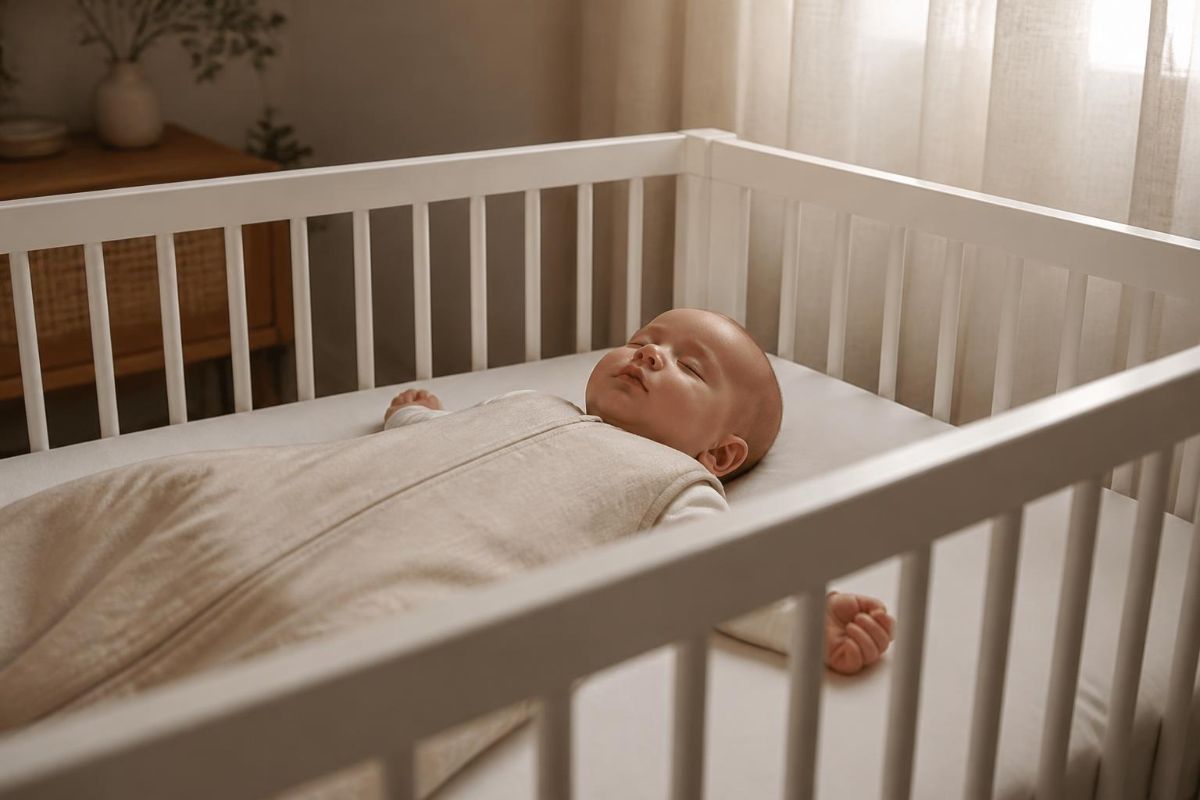
In Morocco, the bedroom sometimes falls outside this range: chergui nights in summer, an unheated house in winter. When the room cannot be adjusted, it is your baby's clothing that adapts, never the bedding: their cot stays empty, with no duvet, pillow or cot bumper, as our article on safe sleep explains.

How do you measure the temperature of your baby's room?
By hand, it is easy to get it wrong: the NHS and the Lullaby Trust advise a room thermometer in the room where your baby sleeps.
- Place it at cot height, away from the window, the radiator and direct sun, which distort the reading.
- Read it at bedtime and again early in the morning: without heating, the room can lose a few degrees overnight.
- Choose a model that also shows humidity (a thermo-hygrometer): useful in winter, when heating dries the air. Our guidelines are in the article dry air and humidity in your baby's room.
- Check your baby monitor: some models display the room temperature. Our guide to choosing a baby monitor details the options.
The thermometer measures the room, not your child. To know whether your baby is too hot or too cold, touch the back of their neck or their chest: the NHS specifies that cool hands and feet are normal.
Chergui, heatwave: how do you cool your baby's room in summer?
When the room goes above 25 °C, you have two levers: bring the room temperature down, and lighten everything else.
- During the day, keep the heat out: shutters or curtains closed on the sunny side, windows closed during the hottest hours.
- In the evening, air the room: the Lullaby Trust advises opening the bedroom door and a window if it is safe to do so, once the outside air has cooled.
- Ventilate without aiming: a fan can cool the room, as long as it is not pointed at your baby (Lullaby Trust). The same logic applies to air conditioning: direct the airflow away from the cot.
- Move the cot away from direct sun and heat sources, as the NHS and the Lullaby Trust advise.
- Lighten their clothing: above 25 °C, a nappy and a short, light garment are enough, according to Québec's National Public Health Institute (INSPQ).
Keep an eye on hydration too: according to the INSPQ, a baby who wets fewer nappies, with darker urine, may be too hot and slightly dehydrated. An exclusively breastfed baby does not need extra water before starting solids, the Lullaby Trust specifies; for older babies, see our article on water for babies in Morocco.
Winter with no heating: should you heat your baby's room?
Not necessarily. The Lullaby Trust considers it rarely necessary to heat the room all night: when the room is below the recommended range, adding a layer of clothing is generally enough. If you do use heating, set the appliance low, at 20 °C at most, and never place the cot near a radiator, a heater or a sunny window.
Keeping the warmth in without an appliance
- Close shutters and curtains as soon as it gets dark, and the bedroom door at night.
- Move the cot away from outside walls and windows, often the coldest spots.
Which portable heater, and which to ban?
- An electric heater (oil-filled radiator, convector heater) burns no fuel, so it does not give off carbon monoxide. Stand it firmly, away from the cot, curtains and laundry, set low, and never cover it.
- A butane gas or paraffin (kerosene) heater: like any combustion appliance, it can produce carbon monoxide, an invisible, odourless gas, points out France's public health agency, Santé publique France, which advises not to run it for more than two hours in a row and never to heat your home with a hob, an oven or a portable stove.
- The kanoun and the brazier, never for heating: Santé publique France points out that a brazier must never be used in an enclosed space, and a toxicologist from the Moroccan Anti-Poison and Pharmacovigilance Centre (CAPM) advises avoiding the kanoun for heating.
- A gas water heater is one of the appliances that can give off carbon monoxide (Santé publique France). Where it goes matters: according to the CAPM, it is best not to install it in a bathroom or a closed room without ventilation or a flue. And never block air vents (Santé publique France).
- Hot-water bottle and electric blanket: never in a baby's cot, the NHS insists.
How do you air your baby's room without making it cold?
Airing every day remains essential, even in the depths of winter: Santé publique France advises at least 10 minutes a day, the CAPM at least 15 minutes. Fresh air clears out the night's moisture.
- At the right time: in the middle of the day, when the outside air is mildest, while your baby is in another room.
- Wide open, for a short time: 10 to 15 minutes, then close it again, rather than a window left ajar all day.
- Door closed in the evening, so the room warms up before bedtime.
- No laundry drying near the cot: it fills the room with moisture.
ARS Hauts-de-France, a French regional health agency, actually combines the two measures in its bronchiolitis advice: a room at around 19 °C, aired regularly. If your child is coughing or breathing fast, read our article on bronchiolitis.
From the shop
To keep watch over the room at night
Soft night lights, placed away from the cot, to check your baby's neck without switching on the ceiling light.
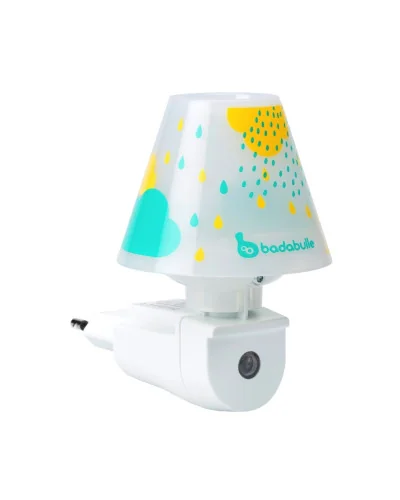 BadabulleWall night light Blue Drops BadabulleView product
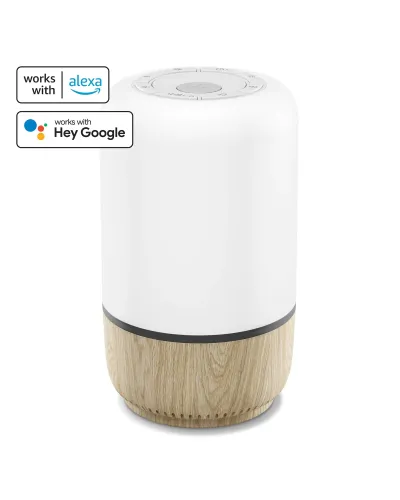 Maxi-CosiSoothe connected musical night light Maxi-CosiView product
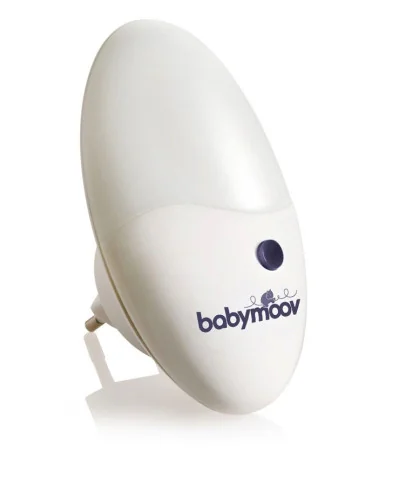 BabymoovWall night light BabymoovView product
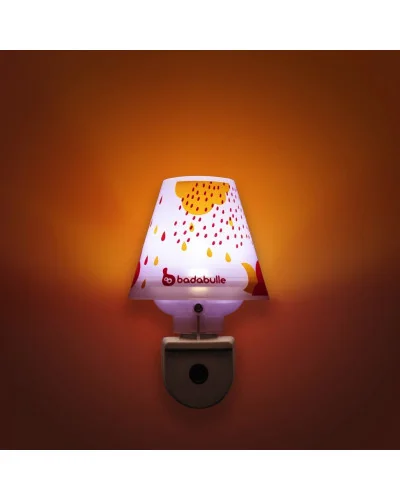 BadabulleAutomatic wall night light Pink Drops BadabulleView product
 ChiccoProjector Next2 Stars neutral beige ChiccoView product
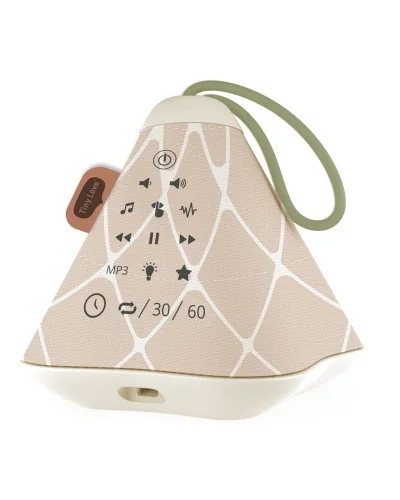 Tiny LoveTiny Dreamer 3-in-1 musical projector night light Boho Chic Tiny LoveView product
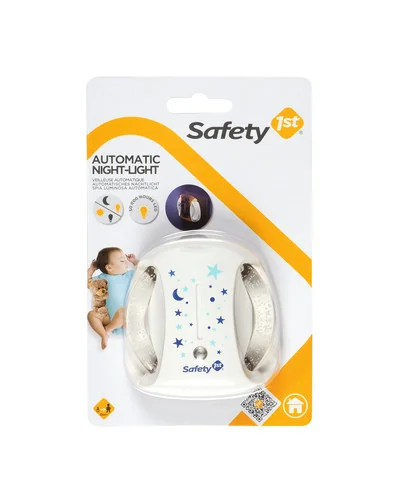 Safety 1stArctic automatic night light Safety 1stView product
- The whole aisle · All night lightsDelivered anywhere in Morocco, free from 300 DH.Open the aisle
Products sold by La Maison du Bébé, publisher of this magazine. Please check price and availability on the product page.
And what should your baby wear, depending on the room temperature?
The rule fits in one sentence: your baby needs only one extra layer of clothing compared with what you would wear to be comfortable in the same room, the American Academy of Pediatrics (AAP) points out. No hat indoors, no duvet: add or remove a layer, then check the neck. The season-by-season table of outfits is in our article on night clothes mentioned above, and our baby bodysuits come with short and long sleeves.
From the shop
One layer more or less: bodysuits and sleepsuits
Short-sleeved bodysuits for hot nights, long-sleeved ones for cool nights, and sleepsuits, including velour ones for winter.
 BabiduSleeveless baby bodysuit with press studs 9 months white BabiduView product
 BabiduShort-sleeved bodysuit beige 6 months BabiduView product
 BabiduLong-sleeved bamboo baby bodysuit white BabiduView product
 BabiduLong-sleeved baby bodysuit 6 months white BabiduView product
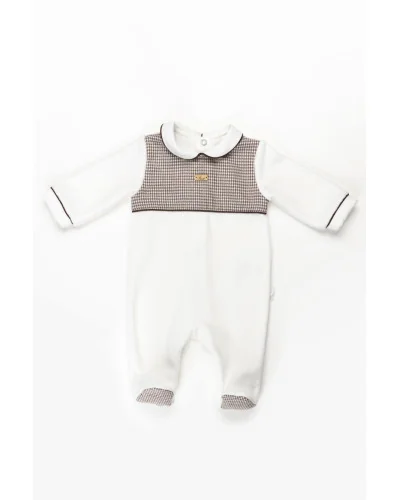 Pureté du bébéBoys' Charming velour sleepsuit 3 months beige Pureté du bébéView product
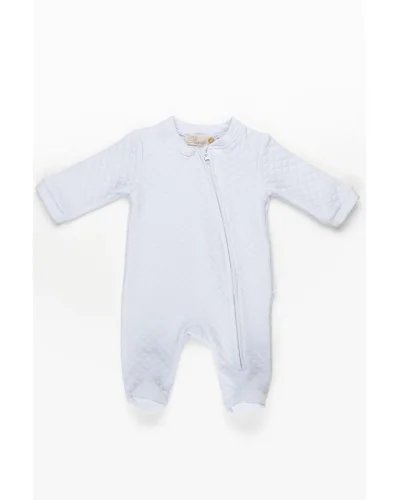 Pureté du bébéBoys' Essentials velour sleepsuit 3 months blue model 266 Pureté du bébéView product
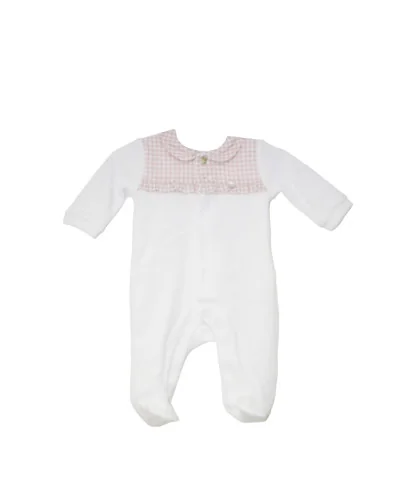 Pureté du bébéEssentials girls' velour sleepsuit 3 months white Pureté du bébéView product
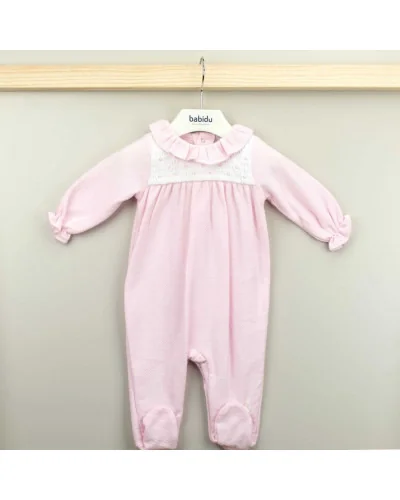 BabiduGirls' sleepsuit BabiduView product
- The whole aisle · All bodysuitsDelivered anywhere in Morocco, free from 300 DH.Open the aisle
Products sold by La Maison du Bébé, publisher of this magazine. Please check price and availability on the product page.
Frequently asked questions
Is 22 °C too hot for a baby's room?
It is above the British (16 to 20 °C) and French (18 to 20 °C) guidelines, and at the upper limit of the Québec guideline (20 to 22 °C): lighten their clothing instead, because overheating increases the risk of sudden infant death. Take off a layer: a bodysuit and light pyjamas, or a bodysuit under a thin sleeping bag, are often enough. Check their neck: if it is clammy, lighten further.
Is 16 °C or below too cold for a baby's room?
It is the bottom of the British range, which runs from 16 to 20 °C: your baby can sleep there if they are dressed warmly enough. Add a layer of clothing, for example a long-sleeved bodysuit under the sleepsuit and a warmer sleeping bag, rather than a blanket or a hat. If the room drops well below 16 °C, an electric heater set low can help, away from the cot.
Should I leave the heating on all night in my baby's room?
Rarely, according to the British Lullaby Trust: one extra layer of clothing is generally enough. If you leave a heater on, choose an electric one, set it low, at 20 °C at most, and keep it away from the cot, curtains and laundry. Santé publique France limits portable combustion heaters to two hours in a row: gas and paraffin heaters should therefore not run overnight in a bedroom, and charcoal never.
Can I use a gas heater in my baby's room?
It is best avoided in the room where they sleep. Any combustion appliance can give off carbon monoxide, an invisible, odourless gas. Santé publique France advises not to run a portable combustion heater for more than two hours in a row, and Morocco's Anti-Poison Centre advises avoiding the kanoun for heating. Choose an electric heater instead, and air the room every day.
Is a fan or air conditioning safe for a baby?
Yes, if the air is not directed at them. The Lullaby Trust accepts a fan to cool the room, as long as it is not pointed at your baby; the same caution applies to air conditioning. Keep the room within the recommended range rather than very cold, dress your baby lightly and check their neck at bedtime and during the night.
Where should I put the thermometer in my baby's room?
At cot height, on a piece of furniture, out of reach and away from anything that distorts the reading. Avoid the windowsill, the area near a radiator, direct sun and the top of a wardrobe, where the air is warmer. The NHS advises a room thermometer so you do not have to guess the temperature. A model that also shows humidity tells you about dry air too.
Sources
- Sudden infant death syndrome (SIDS)NHS
- Room temperatureThe Lullaby Trust
- Welcome to parenthood booklet, 1000 first days programme (in French)Ministry of Solidarity and Health
- Bronchiolitis: how to protect your child (in French)ARS Hauts-de-France (regional health agency)
- WHO Housing and Health Guidelines, chapter 4: Low indoor temperatures and insulationWHO
- Safe sleep for babiesCanadian Paediatric Society (Caring for Kids)
- Protecting your baby from extreme heat and cold (in French)INSPQ (Mieux vivre avec notre enfant)
- How to Keep Your Sleeping Baby Safe: AAP Policy ExplainedAmerican Academy of Pediatrics (HealthyChildren.org)
- Carbon monoxide poisoning: the right reflexes can save lives (in French)Santé publique France
- Three things to know about carbon monoxide poisoning, interview with the CAPM (in French)TelQuel (interview with a toxicologist from the Moroccan Anti-Poison and Pharmacovigilance Centre, 2017)