






Article contents
Key points
- Sleeping through the night means 5 to 6 hours in a row, not 8 pm to 8 am.
- Before 3-4 months, waking is normal: follow your baby's rhythm and impose nothing.
- At 12 months, 43% of babies in a Canadian study still did not sleep 8 hours straight.
- Methods that space out your responses to crying are not advised before 6 months.
- Loud snoring, breathing pauses or exhausted parents: talk to the doctor.
Two in the morning, third waking since midnight. And at every family visit, the same question: "So, is he sleeping through yet?" If your baby is not sleeping through the night, you are far from alone. It is true of many infants well past 6 months, and it is neither an illness nor a mistake on your part.
Here is what wakes babies at each age, what really helps, and what we know about "let them cry" methods.
What does "sleeping through the night" actually mean?
A lot less than people imagine. For the Réseau Morphée, a French health network dedicated to sleep, a baby sleeps through the night when they sleep 5 to 6 hours in a row, with no long waking or feed. Not from 8 pm to 8 am.
There is not even a single scientific definition: the Québec website Naître et grandir points out that some researchers use 5 consecutive hours, others 8. A Canadian study of nearly 400 infants, published in 2018 in the journal Pediatrics, puts expectations in perspective:
| Age | Do not sleep 6 h in a row | Do not sleep 8 h in a row |
|---|---|---|
| 6 months | 38% | 57% |
| 12 months | 28% | 43% |
These babies with broken nights developed no less well than the others, and their wakings were not linked to their mother's mood. They were, however, more often breastfed. Before age 1, Naître et grandir adds, no sleep disorder is diagnosed.

At what age does a baby sleep through the night?
Most often between 4 and 6 months, spontaneously, according to the paediatricians of the AFPA (the French association of community paediatrics). That is only an average. The sleep-wake rhythm is run by the brain: it matures in its own time and has nothing to do with hunger or the size of the stomach.
Before that milestone, waking after 2 to 4 hours of sleep is normal. After 6 months, continuous sleep is learned gradually, with your support, and wakings can return for a while: this is what is often called sleep regression.
Why does a baby wake up at night?
Because their sleep is made of short cycles, and between two cycles they come close to the surface. According to Naître et grandir, what wakes them changes with age:
| Age | What is normal | What often wakes them |
|---|---|---|
| 0-3 months | Cycles of 50 to 60 min, waking after 2 or 3 cycles | Hunger, needing to be close to you |
| 3-6 months | Cycles of 60 to 75 min, but easier waking | Hunger, heat or cold, dirty nappy, growth spurt |
| 6-12 months | 3 to 4 wakings a night on average | Separation anxiety (around 8 months), teeth, illness, a parent going back to work |
| 1-3 years | Longer nights, sometimes difficult bedtimes | Fears, separation, screens, moving house, starting nursery |
In Morocco, the season matters too. On chergui nights (the hot, dry wind from the desert), a bedroom that will not cool down wakes your baby, and the heat increases their need to drink. In winter, in a house without heating, it is the cold: see how to dress your baby at night. Family evenings that run late, the living-room television and late summer or Ramadan visits also delay falling asleep: Naître et grandir advises switching off screens at least an hour before bed.
Teeth, hunger, starting solids: the false leads
"He's hungry", "it's his teeth"... The AFPA paediatricians warn against these explanations, which push us to act when the wakings are part of normal sleep rhythm. After 4 months, waking does not necessarily mean your baby wants to feed: they often mostly need reassurance.
- A big bottle in the evening does not lengthen sleep cycles and can cause spit-up.
- Starting solids does not necessarily reduce wakings, according to Naître et grandir.
- A bottle left in the cot is best avoided: milk pooling in the mouth encourages cavities, even very early.
And night feeds? Recommendations differ. The Réseau Morphée considers that from 6 months a baby does not in principle need to eat at night. Naître et grandir points out that about 94% of breastfed babies aged 6 to 12 months still feed at least once a night, without it being a problem. If your baby is gaining weight well, it is up to you to decide with your paediatrician whether it is time to space them out.
What really helps, night after night
No trick makes a baby sleep ten hours in one go. These habits help set their internal clock:
- By day, light and movement. Go out in daylight, leave the curtains open during naps in the first months and, from 6 months, keep a regular wake-up time, weekends included.
- By night, "night light" mode. A soft night light, a few words in a low voice, no play, a nappy changed only if needed, and your baby back down quickly.
- A short routine, always the same. Wash, pyjamas, a song, a cuddle: about fifteen minutes, started at the first signs of tiredness (yawning, rubbing eyes, staring into space). Our ideas are in the article on the bedtime routine.
- A chance to fall back asleep. After 6 months, do not rush in at the first sound. If your baby is really crying, go and reassure them, stroke them, rock them, without systematically offering a drink.
- Baby close by in the early months. The Canadian Paediatric Society recommends sleeping in their own cot, in your room, for the first 6 months; a co-sleeping crib attached to your bed makes feeds easier.
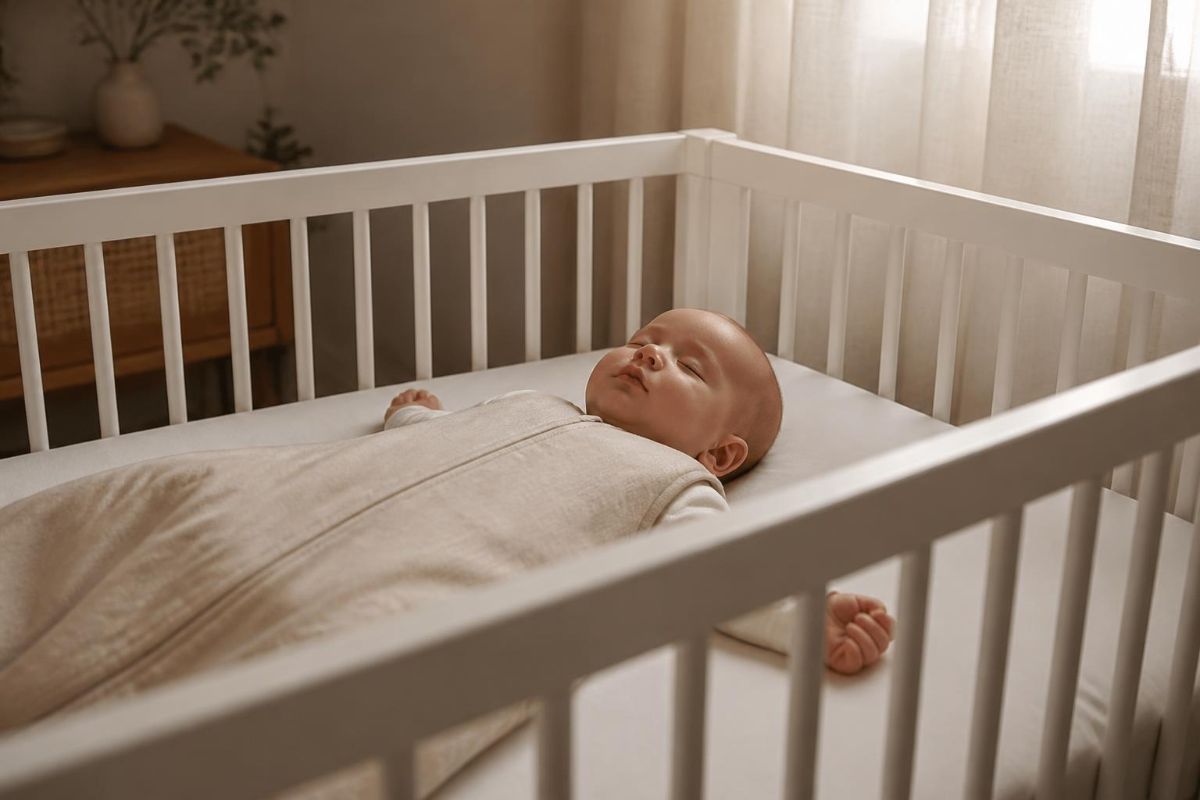
- Always safe. On the back, on a firm mattress, with no pillow, duvet or soft toy: it is all detailed in our article on safe sleep.
From the shop
For slightly gentler nights
No product will make a baby sleep through the night. A soft night light for feeds, a co-sleeping crib to keep your baby close and well-fitted sheets do make wakings easier, though. The comfort toy waits until after the first birthday to join the cot.
 −61 %BadabulleLily the Sheep portable night light lamp, pink – Badabulle215 DH
instead of 550 DHView product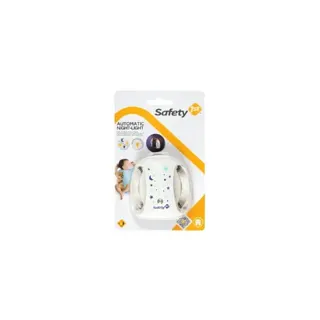 −35 %Safety 1stArctic automatic night light – Safety 1st150 DH
instead of 230 DHView product −9 %BadabulleBlue drops wall night light – Badabulle200 DH
instead of 220 DHView product −74 %BabiduFitted sheet, 60 x 120 cm, white – Babidu65 DH
instead of 250 DHView product −9 %Bebe ConfortAmara 2-in-1 bedside crib, Tinted Gray – Bébé Confort1 811 DH
instead of 1 990 DHView product −9 %DoomooYou&Me reversible comforter, Beige – Doomoo255 DH
instead of 280 DHView product- The whole aisle · Night lights and mobiles21 products online, delivered anywhere in Morocco.Open the aisle
Products sold by La Maison du Bébé, publisher of this magazine. Prices as of 12 October 2026; please check the product page.
"Let them cry", "5-10-15", the chair: what are these methods worth?
"5-10-15", or controlled comforting, means going to reassure your baby at ever longer intervals; it dates from the 1950s, notes Naître et grandir. The chair method, known as camping out, is more gradual: the parent sits by the cot, then moves a little further away each evening until leaving the room.
- Not before 6 months. Naître et grandir advises against them earlier: a very young baby who gets no response may stop asking to be fed, with a risk of dehydration.
- No harm and no lasting benefit measured. An Australian trial followed 326 children who had sleep problems at 7 months. Some parents were taught controlled comforting or the chair method around 8-10 months, with a nurse. At 6 years, there was no difference between the groups: behaviour, emotions, stress, parent-child relationship, mothers' mental health.
- Limits. The trial excluded children with developmental disorders, nearly a third of families were not followed up, and it says nothing about harsher methods where you close the door and do not come back.
- Prolonged crying is still not advised. According to the AFPA, a baby left to scream experiences great distress; Naître et grandir notes that a quick, calm response helps them fall back asleep.
In short: after 6 months these methods are a choice, not an obligation. If you try one, prefer the most gradual, never in the middle of an illness or a big change, and stop if it does you more harm than good.
And you, how do you hold on?
An adult needs 7 to 9 hours of sleep on average, notes Naître et grandir. With broken nights, irritability, forgetfulness and easy tears are normal; in the long run anxiety or depression can set in.
- Share the nights. Your partner can bring the baby to you for the feed, change the nappy and put them back down.
- Sleep when your baby sleeps, even 20 to 30 minutes, and limit coffee and tea from dinner onwards.
- Accept help. A grandmother who takes the baby out for a walk in the morning gives you a real break, especially during the nfissa, the 40 days after the birth.
- During wakings, keep a soft light, leave the phone aside and do not look at the clock.
If tiredness turns into lasting sadness, anxiety or an anger you can no longer control, talk to your doctor: our article on baby blues and postpartum depression helps tell the difference.
Frequently asked questions
Should I wake my baby at night to feed?
For the first four months it is better not to wake a sleeping baby, according to the Réseau Morphée, unless your baby was born premature or small and needs closely spaced feeds. The AFPA paediatricians add that waking a newborn for no reason can upset their rhythm. If the maternity unit or your paediatrician gave you feeding instructions, follow them.
Does a bigger bottle in the evening help my baby sleep longer?
No. The AFPA paediatricians point out that a big evening bottle does not lengthen sleep cycles, which depend on brain maturation, and that it can cause spit-up. Also avoid letting your baby fall asleep with a bottle in the mouth: milk pooling there encourages cavities, even in very young children.
My breastfed baby wakes often: is it because of breastfeeding?
Breastfed babies often wake more, and that is normal. In a Canadian study, babies who did not sleep 6 or 8 hours straight at 6 or 12 months were more often breastfed, with no effect on their development. According to Naître et grandir, about 94% of breastfed babies aged 6 to 12 months still nurse at least once a night. Sharing the nights with your partner helps you keep going.
Does teething stop my baby from sleeping through the night?
Teething can disturb a few nights, and Naître et grandir lists it among the causes of waking between 6 and 12 months. But the AFPA paediatricians remind us that teeth, hunger or starting solids are often blamed for wakings that are really part of normal sleep rhythm. If your baby seems to be in pain, ask your paediatrician or pharmacist before giving any treatment.
My baby used to sleep through and is waking again: is that normal?
Yes. Nights do not improve in a straight line: illness, a growth spurt, separation anxiety around 8 months, travel or a parent going back to work can bring wakings back for a while. An Australian study that followed children with sleep problems at 7 months shows these difficulties go away far more often than they last: only 2% still had them at every stage up to age 6.
Sources
- Rythme veille-sommeil, quand va-t-il « faire ses nuits » ?Santé.fr (mpedia content, Association française de pédiatrie ambulatoire) · France
- Les bonnes pratiques pour préserver le sommeil du bébéSanté.fr (Réseau Morphée content) · France
- A quel âge un bébé fait ses nuits ?Allodocteurs (France Télévisions) · France
- Le sommeil de bébéNaître et grandir · Canada (Québec)
- Le manque de sommeil chez les nouveaux parentsNaître et grandir · Canada (Québec)
- Parents shouldn't worry if their infant doesn't sleep through the night by 6-12 months of ageMcGill University (Pennestri et al., Pediatrics, 2018) · Canada
- 'Controlled comforting' and 'camping out' are safe long-term techniques for babies with sleep problemsThe Mental Elf, National Elf Service (analysis of Price et al., Pediatrics, 2012) · United Kingdom
- Outcomes at six years of age for children with infant sleep problems: Longitudinal community-based studyPrice, Wake, Ukoumunne, Hiscock, Sleep Medicine, 2012 (Murdoch Childrens Research Institute) · Australia