





Article contents
Key points
- Spitting up after feeds is common and harmless in a baby who is gaining weight well.
- Keep your baby upright during and after the feed, and burp them.
- For sleep: flat on the back, no raised mattress and no cushion, even with reflux.
- Thickened milk or medicine: only on medical advice, and rarely needed.
- Green, bloody or projectile vomit, refusing to drink: see a doctor without delay.
The bottle has barely finished, baby burps… and some of the milk comes back onto your shoulder. Then a little more, half an hour later, on the sofa. This spit-up is one of the most common worries of new parents. Yet baby reflux is, in the vast majority of cases, a normal phenomenon that passes with age.
The whole question is how to tell ordinary reflux, which stains bibs but not health, from reflux that deserves medical advice. Here are the guideposts, the things that really help, and the things people around you may suggest but which are now discouraged.
Why does a baby spit up?
Because the “door” between the oesophagus and the stomach, a small ring of muscle, is still immature. Milk comes back up easily, especially when the stomach is full and baby is lying down. Doctors call it gastro-oesophageal reflux (GOR, or GORD when it causes problems). When that milk comes out of the mouth or nose, we call it spit-up.
This reflux is called physiological: it is part of the normal functioning of a healthy infant. It is even the most common functional digestive disorder before age 1, according to the French-speaking pediatric gastroenterologists of the GFHGNP. It usually starts before 8 weeks. Then the muscle ring strengthens, baby spends more time sitting and then standing, and the spit-up becomes less frequent. It disappears in 90% of cases before 12 months.
A baby who often spits up but feeds well, gains weight normally and is alert and lively most often needs no treatment at all.

Spit-up, vomiting or pathological GORD: how to tell the difference
The three look alike, but they do not mean the same thing.
| Spit-up | Vomiting | Pathological GORD | |
|---|---|---|---|
| What it looks like | A small amount of milk coming out without effort, during or after the feed | A larger amount, thrown up with effort, baby seems to have tummy pain | Reflux with complications |
| Baby’s condition | Good, gaining weight well | Varies with the cause (infection, other) | Refusing to drink, unusual crying, weight curve dropping off, blood |
| What to do | Simple measures, no treatment | Watch hydration, see a doctor depending on the signs | Medical consultation, tests if needed |
Pathological GORD, also called reflux disease, is rare and often over-diagnosed, stresses the GFHGNP. There is also “silent reflux”, with no milk coming out: baby coughs or has hiccups during feeds, is restless at the breast or bottle, swallows after burping and is hard to settle.
One point deserves your attention around 1 month: projectile vomiting after feeds can signal pyloric stenosis, a narrowing of the stomach outlet. That is no longer reflux, and you must see a doctor quickly.
What helps during and after feeds
No technique removes reflux, but several limit spit-up:
- Hold your baby well upright during the feed, and for as long as possible afterwards, against your shoulder or in a baby carrier suited to their age.
- Burp them regularly, during the breastfeed or in the middle of the bottle, not only at the end.
- Do not force: a baby who turns their head away has had enough. Any extra milk is very likely to come back up. Our article on milk quantities by age gives guideposts.
- Ask someone to look at your technique: a midwife or lactation consultant can correct the position at the breast, and a health professional can show you how to hold the bottle.
Splitting feeds (smaller, more often) is sometimes advised. The GFHGNP notes, however, that the evidence is thin, and that this approach even increases reflux episodes in some babies. Try it, but do not persist at all costs.
From the shop
For slightly less soggy feeds
These items do not treat reflux. They simply make everyday life easier: cotton bibs to change often, spare bodysuits, and a baby carrier to keep your baby upright against you after feeds.
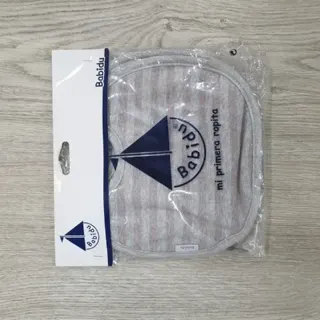 −74 %BabiduSet of 3 bibs, grey and pink – Babidu73 DH
instead of 280 DHView product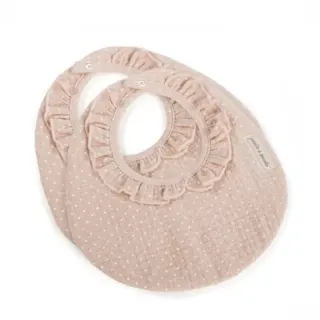 −48 %Pasito a PasitoPink bibs, set of 2 – Pasito a Pasito198 DH
instead of 380 DHView product −48 %Walking MumSet of 2 Bambula Ocena baby bibs, white and grey – Walking Mum208 DH
instead of 400 DHView product Pureté du bébéCotton bib, white and grey – Pureté du bébé250 DHView product
  −74 %BabiduLong-sleeved bamboo baby bodysuit, white – Babidu34 DH
instead of 130 DHView product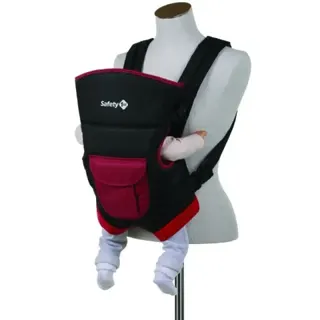 −25 %Safety 1stYoumi baby carrier, Ribbon Red Chic – Safety 1st367 DH
instead of 490 DHView product- The whole aisle · Bibs7 products online, delivered anywhere in Morocco.Open the aisle
Products sold by La Maison du Bébé, publisher of this magazine. Prices as of 12 October 2026; please check the product page.
Raised mattress, pillow, sleeping on the side: why it is discouraged
People still often advise raising the head of the cot of a baby who spits up. Current recommendations say the opposite, and this is probably the most important point to remember. The UK’s NHS asks you not to raise the head of the bed or Moses basket. The American Academy of Pediatrics (AAP) is categorical: any surface tilted more than 10 degrees is not safe for sleep, and even babies with GORD should sleep flat on their back.
Cushions, wedges, inclined planes and nests do not replace a firm, flat mattress. Quebec’s authorities sum it up: nothing but the fitted sheet should be in the cot. And a car seat, bouncer or rocker is not a bed: if baby falls asleep in one, move them to their cot, on their back.
In many families you hear that a baby who spits up risks “choking” on their back, and that it is better to lay them on their side or tummy. It is the opposite. The AAP explains that the anatomy of the airways and the gag reflex protect a baby lying on their back, and that the side position is as dangerous as the tummy position, because baby easily rolls over. The GFHGNP reminds us that both positions raise the risk of sudden infant death. All the sleep rules are in our article on safe sleep.
Thickened milk, medicines: what can the doctor suggest?
In the great majority of cases, nothing, and that is good news. The GFHGNP says it plainly: most of the time, no treatment is needed.
When spit-up is very troublesome, the doctor may:
- check it is not a cow’s milk protein allergy, which gives similar signs (see our article on food allergies);
- suggest a thickened formula for a formula-fed baby. According to a Cochrane review cited by the GFHGNP, these milks reduce spit-up by about two episodes a day. Some thickeners are not suitable for very young babies, which is why medical advice matters;
- consider a medicine in specific situations. The GFHGNP reminds us that PPI-type acid suppressants have shown no benefit in physiological reflux, nor in a baby who cries a lot but is developing well.
Do not give any medicine without advice, especially anti-sickness drugs: Quebec’s authorities remind us they can have serious side effects in young children. For a breastfed baby, do not switch to the bottle “to see”: breastfeeding continues, and the pediatrician decides what comes next.
A baby who spits up a lot: watch the growth curve, not the bib
The volume of milk that comes back often looks huge: a little milk spread across a T-shirt quickly makes a big stain. The best indicator is weight. A baby who follows their growth curve, wets plenty of nappies and stays alert and lively is keeping enough milk. Note the weigh-ins in the health record and look at the trend with the doctor, as explained in our article on the growth chart.
On the other hand, the heat of a Moroccan summer and days of chergui (the hot desert wind) call for more attention when a baby is genuinely vomiting: an infant dehydrates quickly. The signs to watch for are detailed in our article on gastroenteritis and dehydration.
Frequently asked questions
How long should I keep my baby upright after a bottle or breastfeed?
The sources we consulted do not set a precise time: the NHS advises holding your baby upright during the feed and for as long as possible afterwards. In practice, keep them against your shoulder for the burp and a cuddle. If they fall asleep, lay them flat on their back in their cot, never on a raised surface or propped with a cushion.
My baby spits up through the nose. Is that dangerous?
Not usually. The French-speaking pediatric gastroenterologists of the GFHGNP point out that milk coming back up can come out of the mouth or the nose: it is always spit-up. Wipe gently, and rinse the nose with saline if it stays blocked. See a doctor, though, if your baby often chokes during feeds, turns pale or bluish, or has pauses in breathing.
My baby does not spit up but seems to suffer during feeds. Could it be reflux?
It is possible: the NHS speaks of silent reflux when the signs are there without milk coming back up. Baby coughs or has hiccups during feeds, is restless at the breast or bottle, swallows after burping, cries and is hard to settle. A cow’s milk protein allergy can cause similar signs: show your baby to your doctor, especially if they are not gaining weight well.
Can reflux cause repeated bronchitis or ear infections?
It is a widespread idea, but it is not proven. The GFHGNP’s 2025 recommendations state that links between reflux and respiratory or ENT problems (chronic cough, repeated laryngitis, pneumonia) are not established. A baby who is often ill should be examined for their own sake, without blaming everything on reflux or giving anti-reflux treatment blindly.
Until what age do babies spit up?
Reflux generally starts before 8 weeks and improves markedly around age 1: according to the GFHGNP, it disappears in 90% of cases before 12 months, when baby sits and then stands. The NHS advises seeing a doctor if spit-up appears for the first time after 6 months, or if it persists after the first birthday.
Sources
- Reflux in babiesNHS · United Kingdom
- Reflux gastro-oesophagien du nourrisson : diagnostic et traitement (février 2025)Groupe francophone d'hépatologie, gastroentérologie et nutrition pédiatriques (GFHGNP) · France
- How to Keep Your Sleeping Baby Safe: AAP Policy ExplainedHealthyChildren.org, American Academy of Pediatrics · United States
- Diarrhée et vomissements chez l'enfantMieux vivre avec notre enfant, INSPQ · Canada (Quebec)
- Dormir en sécuritéMieux vivre avec notre enfant, INSPQ · Canada (Quebec)