






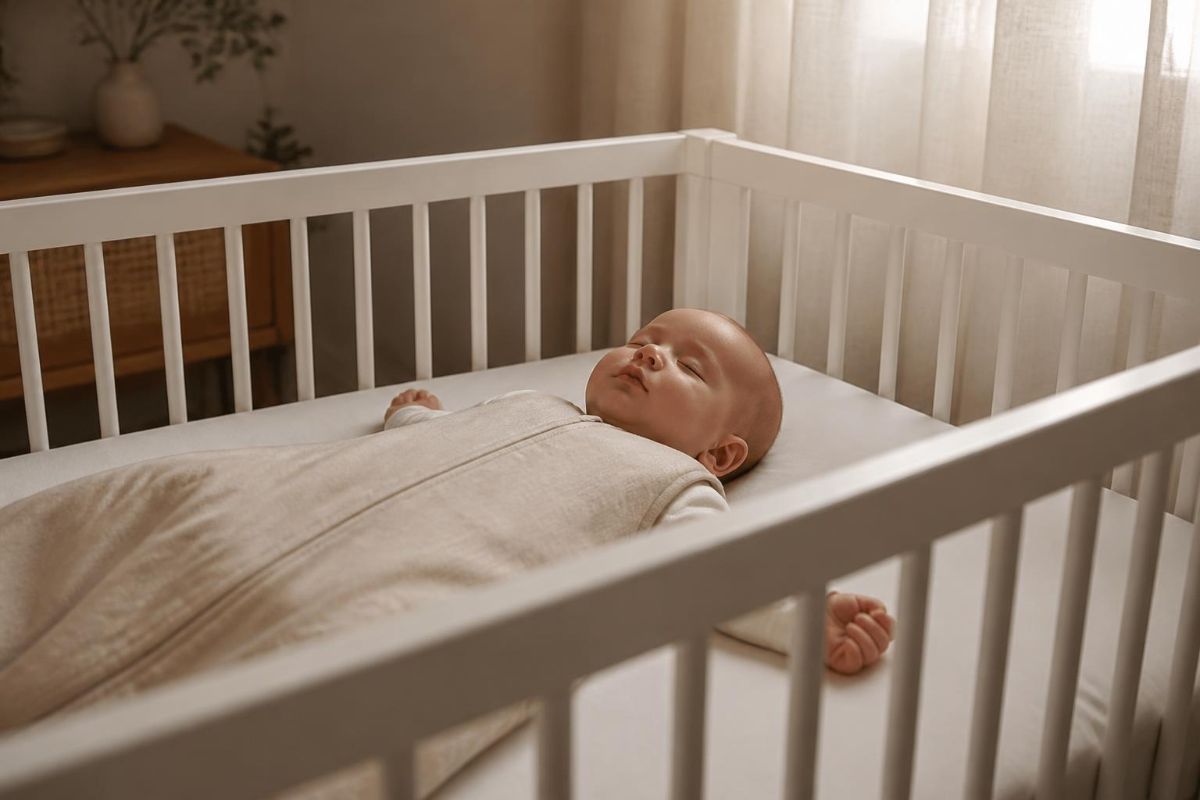
Article contents
Key points
- Basic rule: just one extra layer of clothing compared with what you wear, no more.
- Check at the neck or chest: cool hands and feet are normal.
- Above 25 °C, a nappy and a light, short garment are enough.
- In winter, add a layer of clothing rather than a duvet, a hat or a hot-water bottle.
- For heating, no kanoun or poorly maintained gas appliance: risk of carbon monoxide poisoning.
One August night, the chergui (the hot, dry desert wind) blows and the bedroom will not cool down. A few months later it is the opposite: a house with no heating, cold walls, and the urge to pile on pyjamas and blankets. In Morocco, the question of how to dress a baby at night therefore has no single answer, but it does have a method: one simple rule and one checking gesture.
This article gives you concrete guidelines for each season. For choosing the sleeping bag itself, its size and its TOG rating, which expresses how well it insulates, follow our baby sleeping bag guide: we do not repeat it here.
What temperature should your baby's room be?
Guidelines vary from country to country, but all of them sit around 20 °C:
| Body | Recommended temperature |
|---|---|
| NHS and Lullaby Trust (United Kingdom) | 16 to 20 °C |
| 1000 first days programme (France) | 18 to 20 °C |
| INSPQ (Québec) | 20 to 22 °C |
The Canadian Paediatric Society (CPS) sums up the idea without a figure: if you are comfortable in the room, your baby will be too. The NHS advises tracking the temperature with a room thermometer.
These figures explain why clothing matters so much here. In summer, a bedroom can stay well above 20 °C all night; in winter, an unheated room can drop below 16 °C. In both cases, it is your baby's outfit that adapts, not the bedding: a safe bed stays an empty bed, with no duvet or pillow, as our article on safe sleep explains.
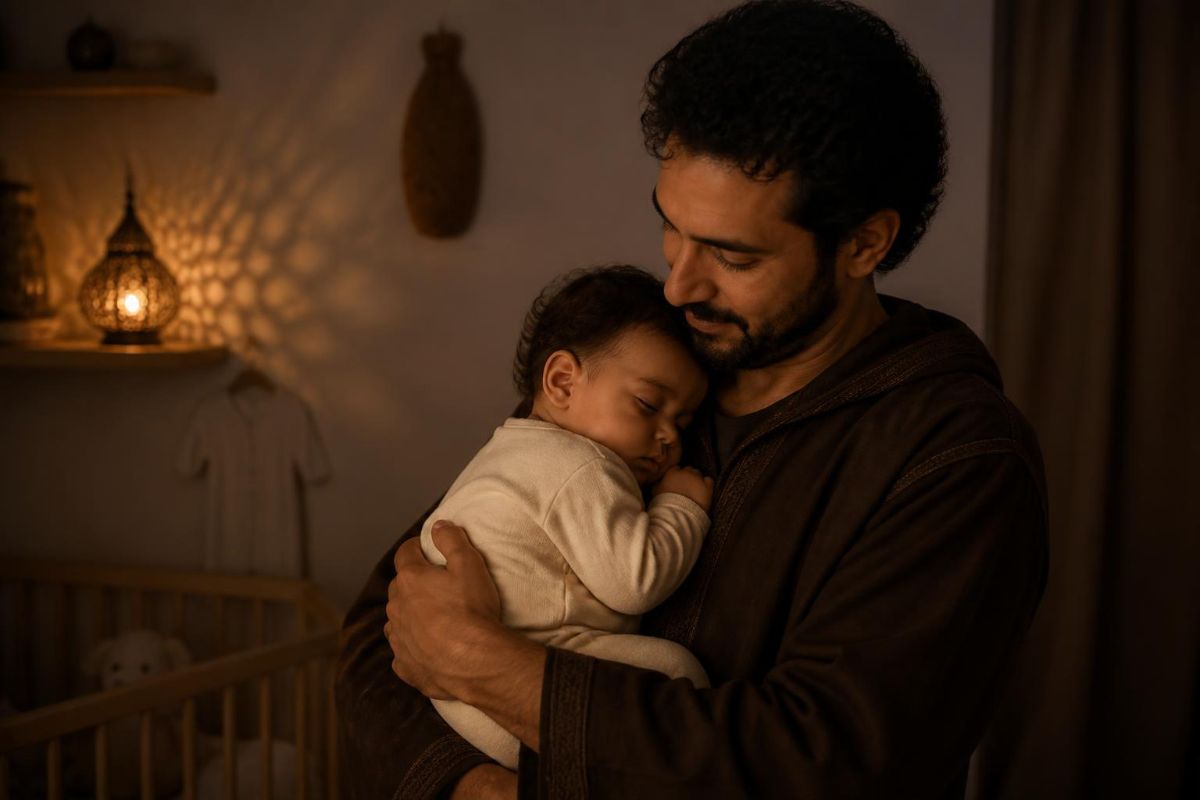
How to dress your baby at night, layer by layer
The simplest rule comes from the American Academy of Pediatrics (AAP): your baby needs only one extra layer of clothing compared with what you would wear to be comfortable in the same room. Not two jumpers "just to be sure".
Here is how to apply it. These examples translate the AAP rule and the British and Québec guidelines; they do not replace the neck test, described below.
| Room | What you wear to sleep | What your baby can wear |
|---|---|---|
| Very hot, above 25 °C (chergui, summer with no air conditioning) | A very light outfit, no sheet | A nappy and a light, short garment (INSPQ), such as a sleeveless bodysuit |
| Mild, a little above 20 °C | A light outfit and a sheet | A bodysuit, and light pyjamas or a thin sleeping bag |
| Between 16 and 20 °C | Pyjamas and a light duvet | A bodysuit, pyjamas or a sleepsuit, and a light sleeping bag (Lullaby Trust) |
| Cold, below 16 °C (winter with no heating) | Warm pyjamas and a thick duvet | One extra layer: long-sleeved bodysuit under the sleepsuit and a warmer sleeping bag |
For the upper body, a short- or long-sleeved bodysuit depending on the season acts as the first layer. The CPS considers close-fitting night clothes, such as a sleepsuit, safer. And if you use a sleeping bag, it must be the right size.
From the shop
The night wardrobe, season by season
Short or long bodysuits depending on the season, a cotton set, a warmer sleepsuit for winter and a well-fitted sheet: everything to build the night's layers without a blanket.
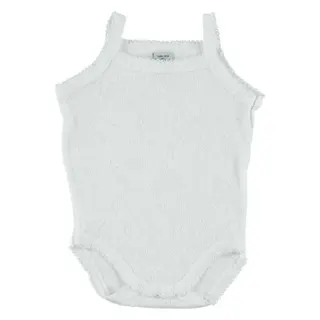 −74 %BabiduSleeveless snap baby bodysuit, 12 months, white – Babidu34 DH
instead of 130 DHView product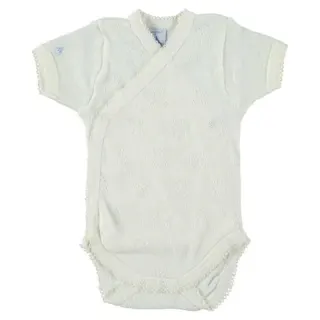 −74 %BabiduShort-sleeved bodysuit, beige, 6 months – Babidu34 DH
instead of 130 DHView product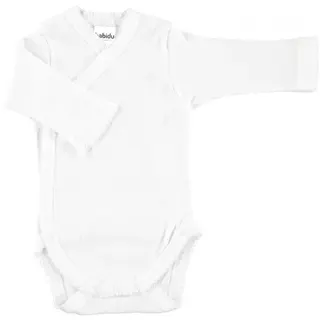 −74 %BabiduLong-sleeved bamboo baby bodysuit, white – Babidu34 DH
instead of 130 DHView product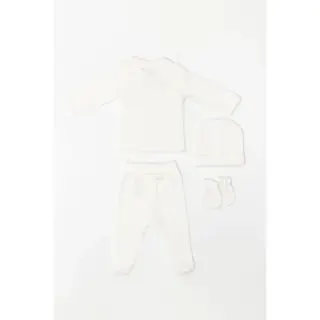 −74 %Pureté du bébé3-piece cotton set, 3M, beige 02 220 – Pureté du bébé153 DH
instead of 590 DHView product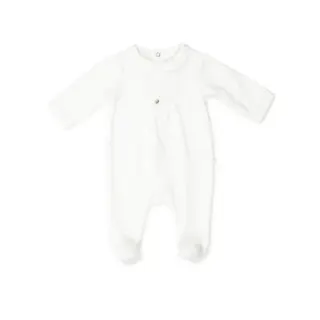 −74 %Pureté du bébéEssentials velvet sleepsuit, 3 months, white – Pureté du bébé203 DH
instead of 780 DHView product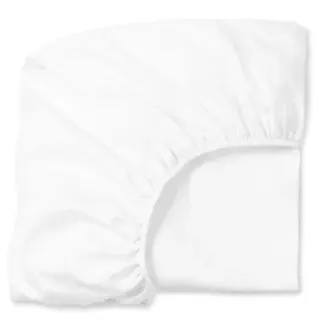 −74 %BabiduFitted sheet, 60 x 120 cm, white – Babidu65 DH
instead of 250 DHView product- The whole aisle · Baby bedding55 products online, delivered anywhere in Morocco.Open the aisle
Products sold by La Maison du Bébé, publisher of this magazine. Prices as of 12 October 2026; please check the product page.
How can you tell if your baby is too hot or too cold?
Touch the back of the neck or the chest, not the hands. The NHS and the Lullaby Trust recommend this gesture, and the NHS notes that cool hands and feet are normal in a baby.
- Clammy neck, hot chest, red cheeks: they are too hot. The AAP lists sweating, a hot chest and flushed skin among the signs of overheating. Take off a layer of clothing or switch to a thinner sleeping bag.
- Warm, dry neck: their outfit is right, even if their hands are cool.
- Cool neck and chest: add a layer, for example a long-sleeved bodysuit under the pyjamas.
The INSPQ adds a sign to watch for in hot weather: if they pass urine less often, with darker, stronger-smelling urine, they may be slightly dehydrated. Lighten their clothing and make sure they drink enough.
Why so much caution? Because overheating increases the risk of sudden infant death, remind the AAP, the NHS and the CPS. In families you often hear that a baby must be "well wrapped up" at night: for sleep, health authorities ask the opposite, not to overdo it.
Moroccan summer: when the room will not cool down
On hot nights, lighten everything. Above 25 °C, the INSPQ considers a nappy and a light, short garment enough. No blanket, no thick sleeping bag, and a fitted sheet pulled tight on the mattress.
- Air the room: the Lullaby Trust advises opening the bedroom door and a window if it is safe.
- Ventilate without aiming: according to the same charity, a fan can cool the room, as long as it is not pointed at your baby.
- Think about hydration: an exclusively breastfed baby needs no extra water before starting solid foods, the Lullaby Trust specifies.
If the heat becomes overwhelming, our guide to protecting your baby from the heatwave details the right reflexes, from air conditioning to the signs of heatstroke.
Winter with no heating: keeping them warm safely
In a cold house, the right answer is an extra layer of clothing, not thicker bedding. The Lullaby Trust rarely considers it necessary to heat all night; if you do heat, set the appliance low, at 20 °C at most, and never place the cot near a heat source.
What to avoid, even when it is very cold:
- Duvet, quilt and thick blanket: the French 1000 first days programme reminds us that a baby does not need them and advises a sleeping bag instead.
- The hat: no hat indoors, insist the AAP and the Lullaby Trust, which notes it can make a baby too hot.
- Hot-water bottle and electric blanket: never in a baby's cot, according to the NHS.
- The kanoun and poorly maintained gas appliances: the Ministry of Health reminds us that burning butane gas or charcoal at home gives off carbon monoxide, a toxic gas. Interviewed by TelQuel, a toxicologist from the Moroccan Anti-Poison and Pharmacovigilance Centre advises against the kanoun for heating and recommends not sleeping near a heater, airing the home at least 15 minutes a day and having your appliances checked every year by a qualified technician.
Hat, cords, stacked layers: common mistakes
- Piling on layers: the Lullaby Trust and the NHS ask for the opposite, taking a layer off as soon as your baby's skin is hot or clammy.
- Keeping the going-out outfit on: the NHS advises taking off the hat and any extra clothing as soon as you come home, even if it wakes your baby.
- Leaving bibs, necklaces, cords or hoods on: the CPS asks that they be removed before bed.
- A weighted sleeping bag or weighted blanket: the AAP advises against any weighted object on or near your baby.
- Applying these guidelines to a baby with a fever: a fever changes things, and how to dress them is explained in our article on baby fever.
A well-chosen outfit is also part of a calm bedtime: find our advice on an evening routine that helps your baby sleep and, if wakings persist despite a well-adjusted room, our article on nights that are still broken.
Frequently asked questions
My baby's hands are cold at night: are they cold?
Not necessarily. The British NHS points out that cool hands and feet are normal in a baby. To know whether they are cold or hot, touch the back of the neck or the chest instead. If these are warm and dry, their outfit is right. If they are cool, add a layer of clothing; if they are clammy or burning hot, take one off.
Should I put pyjamas under the sleeping bag?
It depends on the room. Between 16 and 20 °C, a bodysuit and pyjamas or a sleepsuit under a light sleeping bag suit most babies, according to British guidance. When it is warmer, a bodysuit is often enough under a thin sleeping bag. Above 25 °C, Québec's INSPQ considers a nappy and a light, short garment sufficient.
Do I need a thermometer in my baby's room?
It is useful, especially in Morocco, where the room can be very hot in summer and cold in winter. The NHS advises monitoring room temperature with a room thermometer. It gives an objective figure, but does not replace the basic gesture: touching your baby's neck or chest to adjust their clothing.
How should I dress my baby for a nap in summer?
With the same rules as at night: a light outfit, no blanket, checking the neck. In great heat, the INSPQ considers that a nappy and a light, short garment are enough. Lay them in an airy room, in the shade, on their back, in their cot, never in direct sun or under a fan pointed at them.
Sources
- Sudden infant death syndrome (SIDS)NHS · United Kingdom
- Room temperatureThe Lullaby Trust · United Kingdom
- How to Keep Your Sleeping Baby Safe: AAP Policy ExplainedHealthyChildren.org, American Academy of Pediatrics (AAP) · United States
- Dormir en toute sécuritéCaring for Kids, Canadian Paediatric Society · Canada
- Protéger votre bébé de la grande chaleur et du froidMieux vivre avec notre enfant, INSPQ · Canada (Québec)
- Carnet de bienvenue (programme des 1000 premiers jours)Ministry of Solidarity and Health · France
- Le ministère de la Santé inquiet de la multiplication des décès par intoxication au gazTelQuel (alert from the Ministry of Health and the Anti-Poison Centre) · Morocco
- Trois choses à savoir sur les intoxications au monoxyde de carboneTelQuel (interview with the Moroccan Anti-Poison and Pharmacovigilance Centre) · Morocco