







Article contents
Key points
- A routine of about 15 minutes, always in the same order, ending with the calmest moment.
- Before 3 months, no real routine: you mostly teach your baby the difference between day and night.
- Falling asleep at the breast or in your arms is allowed; opinions only differ after 4 months.
- White noise: lowest volume, and never all night.
- No sofa, car seat or cushion: your baby falls asleep on their back, in their cot.
It is 9 pm. Your baby is rubbing their eyes and fidgeting in grandmother's arms, the television is on in the living room and everyone has their own recipe to offer. If you are wondering how to get a baby to sleep without spending the whole evening on it, there is no miracle technique. A few gestures repeated every evening, however, make bedtime much easier.
Those gestures have a name: the bedtime routine. Here is how to adapt it to your child's age, what the popular tips are worth (white noise, night light, rocking) and what is better avoided.
What is the bedtime routine for?
To announce the night. The routine is a short series of simple gestures that come back every evening in roughly the same order: bath, nappy, pyjamas, story, milk, for example. Naître et grandir, the leading Québec early-childhood website, insists on one point: it should end calmly, in dim light, on the most peaceful moment.
There is no need to make it long. The Réseau Morphée, a French health network dedicated to sleep, advises not going beyond about fifteen minutes, whether it is a book, a cuddle or a song. It also recommends regular times for getting up, going to bed, meals and naps, which strengthen sleep signals.
The right time to begin: the first signs of tiredness, such as yawning, rubbing eyes or staring into space. For children aged 1 to 3, Naître et grandir even advises starting the routine before these signs appear. All these signals are described in our article on sleep needs by age.

Which routine at which age?
The routine changes as your child grows. Here are the main landmarks, from British, Canadian and American sources:
| Age | What helps | Good to know |
|---|---|---|
| 0 to 3 months | No real routine yet. By day, open curtains and everyday noise; at night, dim light, a low voice and no play (NHS). | Falling asleep while feeding is normal: the NHS advises continuing the feed until your baby has finished or is asleep. |
| 4 to 12 months | A short, steady routine. A real routine sets in around 5 or 6 months (Naître et grandir). The Canadian Paediatric Society (CPS) lists three steps: warm bath, book, bed. | Sleep cycles become regular around 4 months (AAP). Around 8 months, separation anxiety can complicate bedtime. |
| 1 to 3 years | About fifteen minutes of routine, preceded by half an hour of calm activities (CPS), with screens off at least an hour before (Naître et grandir). | Going to sleep means separating from you: some toddlers delay the moment, notes Naître et grandir. |
Baby falls asleep at the breast or in your arms: should that change?
Not necessarily, and the specialists do not agree with each other.
On one side, the American Academy of Pediatrics (AAP) advises, from 4 months, putting your baby down when drowsy, without waiting for them to be asleep: a baby rocked to sleep may struggle to fall back asleep alone when they wake in the night. The Réseau Morphée goes the same way: after 4 months it is better to stop getting your baby to sleep at the breast or bottle, and to lay them down still awake after the routine. A baby who falls asleep in your arms every evening, it explains, will ask for your arms at every night waking: this is called a sleep association. The CPS also recommends laying them down drowsy but awake.
On the other side, Naître et grandir states that the way a child is put to sleep has no effect on their night wakings, and that you can perfectly well rock them or nurse them to sleep. For the first weeks, the NHS is clear: continue the feed until they have finished or are asleep.
Both options are therefore acceptable. If putting your baby to bed at the breast suits you, nothing obliges you to stop. If the wakings become wearing, you can try, from time to time, putting them down drowsy: a try, with no obligation to succeed.
Rocking, yes. Shaking, never: the official 1000 first days booklet reminds us that a shaken baby can die or be left with a lifelong disability. If you feel anger rising, hand over to someone else and read our guidelines on crying that will not stop.
10 gentle tips to help them fall asleep
- Start the routine at the right moment, at the first yawns and rubbed eyes, before your baby is exhausted.
- Always keep the same order and a length of about 15 minutes, ending with the calmest moment.
- Give them light by day. For naps, Naître et grandir advises leaving the curtains open so their brain understands it is daytime. The detail is in our article on baby naps.
- Keep it dim at night. In the evening, soften the lights. For night feeds and changes, Naître et grandir suggests a low, even red, light like a head torch: a soft night light does the same job.
- Sing a lullaby. The NHS mentions a lullaby, or a wind-up musical mobile started once your baby is laid down. "Nini ya moumou" or the song from your own childhood, it does not matter: you will find some in our lullabies and nursery rhymes from Morocco and elsewhere, and musical mobiles in the shop.
- Use white noise with care. Naître et grandir points out that most of these devices go above 85 decibels at full volume: set it as low as possible, at 30 decibels or less, and do not leave it running all night. You do not need a silent house either: the NHS advises getting your baby used to ordinary noises.
- Offer a dummy, if they take one. The AAP considers it lowers the risk of sudden infant death, including when it slips out of the mouth once your baby is asleep. If you breastfeed, only offer it once breastfeeding is well established; and no dummy clip during sleep. Our dummy guide helps you choose.
- Give the bottle before, not in the cot. The CPS advises against putting a baby to bed with their bottle, because of the risk of cavities.
- Switch off screens a good hour before bed, including the television left on in the living room: Naître et grandir reminds us that too much screen time harms sleep. Our guidelines are in the article on screens and little ones.
- Invite the comfort toy from age 1. Before that, the cot stays empty. After that, a small comfort toy can be part of the routine and reassure your baby when you leave the room.
From the shop
For a gentle bedtime
Nothing here is essential: a dim night light for night feeds, a mobile or musical night light for the routine and, after age 1, a comfort toy that joins the cot. Choose whatever fits your habits.
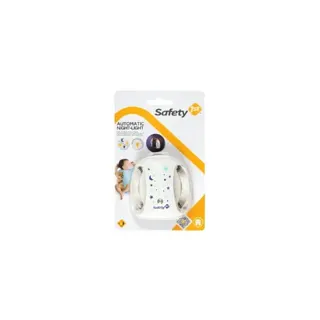 −35 %Safety 1stArctic automatic night light – Safety 1st150 DH
instead of 230 DHView product −48 %ChiccoFirst Dreams Petite Lune musical night light, pink – Chicco156 DH
instead of 300 DHView product −9 %BadabulleBlue drops wall night light – Badabulle200 DH
instead of 220 DHView product −61 %BadabulleLily the Sheep portable night light lamp, pink – Badabulle215 DH
instead of 550 DHView product −48 %SaroWinter Friends musical mobile, yellow – Saro312 DH
instead of 600 DHView product −9 %DoomooYou&Me reversible comforter, Beige – Doomoo255 DH
instead of 280 DHView product −9 %Maxi Cosi - Bébé ConfortSoothe connected musical night light – Maxi-Cosi1 174 DH
instead of 1 290 DHView product- The whole aisle · Night lights and mobiles21 products online, delivered anywhere in Morocco.Open the aisle
Products sold by La Maison du Bébé, publisher of this magazine. Prices as of 12 October 2026; please check the product page.
What to avoid when getting a baby to sleep
Some habits seem practical at the time but raise a safety problem:
- Falling asleep with your baby on a sofa, an armchair or the living-room banquette. According to the AAP, the risk of sleep-related death is up to 67 times higher when an infant sleeps with someone on a sofa or a soft armchair. The rules are detailed in our article on safe sleep.
- Letting them sleep in the car seat, bouncer or swing. If they fall asleep there, the AAP asks that you move them as soon as possible onto their back, on a firm surface.
- Cushions, baby wedges and tilted mattresses. The AAP advises against any product not designed for infant sleep and considers any surface inclined beyond 10 degrees dangerous.
- Prolonged swaddling. Opinions differ. The NHS advises against it and considers a baby sleeping bag safer. The AAP tolerates it, but reminds us that it does not reduce the risk of sudden infant death and asks you to stop as soon as your baby tries to roll over, often around 3 to 4 months.
- The hat and the thick blanket. No hat indoors once you are home from the maternity unit, the AAP reminds us: see how to dress your baby for the night according to the season.
If bedtimes stay difficult despite everything and the wakings keep coming, our article on broken nights reviews what is normal at each age.
Frequently asked questions
At what age should I start a bedtime routine?
Around 5 or 6 months a baby can follow a real evening routine, according to Naître et grandir. Before that, you can already help them tell day from night, as the British NHS advises: light and everyday noise by day, dim light and a low voice at night. A bath, a song or a cuddle repeated every evening sets the first landmarks without any pressure.
Is white noise dangerous for babies?
Its effects are poorly understood, notes Naître et grandir, and most white noise machines go above 85 decibels at full volume. If you use one, set it as low as possible, at 30 decibels or less, and do not leave it running all night. The NHS points out that a baby can also get used to the ordinary noises of the house.
My baby only falls asleep in the car or pushchair: what should I do?
This is common, and not serious in itself: Naître et grandir notes that many babies fall asleep during a walk or a journey. Once you are home, lay them in their cot. The American Academy of Pediatrics asks that a baby asleep in a car seat or pushchair be moved as soon as possible to a firm surface, on their back: these are not places for sleep.
Should I stay in the room until they are asleep?
It is not forbidden. Around 8 months, separation anxiety often makes bedtime harder, and a baby sometimes needs reassurance, explains Naître et grandir. You can stay a few minutes, a hand resting on them, then leave while telling them you are next door. If you would like them to learn to fall asleep alone, put them down drowsy but still awake.
Sources
- Le sommeil de bébéNaître et grandir · Canada (Québec)
- Le sommeil: aider son enfant à s'endormirNaître et grandir · Canada (Québec)
- De saines habitudes de sommeil pour votre bébé et votre enfantCaring for Kids, Canadian Paediatric Society · Canada
- Les bonnes pratiques pour préserver le sommeil du bébéSanté.fr (Réseau Morphée content) · France
- Carnet de bienvenue (programme des 1000 premiers jours)Ministry of Solidarity and Health · France
- Helping your baby to sleepNHS · United Kingdom
- Getting Your Baby to SleepHealthyChildren.org, American Academy of Pediatrics (AAP) · United States
- How to Keep Your Sleeping Baby Safe: AAP Policy ExplainedHealthyChildren.org, American Academy of Pediatrics (AAP) · United States