





Article contents
Key points
- Always on the back to sleep: a flat head never justifies changing the sleeping position.
- Tummy time while awake and supervised, several times a day.
- Alternate: arm for feeding, direction in the cot, position of toys.
- Head-positioning pillows and wedges are useless and dangerous, according to the French health authority (HAS).
- Baby always turns their head the same way: see a doctor, physiotherapy helps.
You lift your baby out of the bath and notice that one side of the back of their head looks flatter than the other. Or a grandmother points it out and suggests a little pillow to "round off" the skull. Plagiocephaly, or flat head syndrome, is common in young babies. It is harmless for the brain, and the earlier you act, the better it can be prevented and corrected.
Above all, it is not fixed with a pillow, or by changing the sleeping position. Here is what happens, the habits that really work, what is dangerous, and the role of the physiotherapist.
What is plagiocephaly?
It is a change in the shape of the skull that develops after birth because of repeated pressure, without any abnormal fusing of the bones. The French health authority (HAS) calls it "positional skull deformity". There are two main forms:
- plagiocephaly: the back of the head is flattened on one side only. Seen from above, the head looks lopsided, the ear on the flat side sits further forward, and the forehead may bulge on the same side;
- brachycephaly: the back of the head is flattened evenly on both sides. The head looks wide and short.
The NHS points out that this is common in young babies and causes no other symptoms. Neither the brain nor development is affected.

Why does a baby's head flatten?
A newborn's skull is very soft, and its bones can change shape under pressure, explains the Canadian Paediatric Society. Their neck muscles are weak: lying on their back, they often turn their head to the same side every time.
The main factor, according to the HAS, is a lack of freedom to move: a baby who spends long hours held still in a bouncer, a car-seat shell, a positioning wedge or a very tight swaddle keeps pressing on the same spot. The HAS also cites:
- prematurity, a twin pregnancy, a breech position, or a forceps or vacuum delivery;
- torticollis (a stiff neck), which makes baby look to the same side all the time;
- a lack of stimulation or interaction, or a mobile always hung in the same place.
Always on the back to sleep
This is the one non-negotiable point. Sleeping on the back protects against sudden unexpected infant death. A flat head never justifies putting baby to sleep on their tummy or side, stress the HAS, the NHS and the Canadian Paediatric Society.
The HAS recalls the rules: on the back, in a suitable cot, on a firm mattress, in a baby sleeping bag, with no pillow, duvet, bumper, comforter or soft toy. It is all explained in our article on safe sleep and sudden infant death.
So preventing a flat head happens while baby is awake.
Habits that prevent a flat head
Tummy time, awake and supervised. This is the key habit. The Canadian Paediatric Society aims for 10 to 15 minutes at least 3 times a day, always with an adult watching. The HAS suggests starting gently, at nappy changes. These moments also strengthen the neck and back. A play mat on the floor is all you need.
Alternate sides. At each breastfeed or bottle, switch arms: baby will turn their head to look for your eyes (HAS). Lay them with their head at the top of the cot one day, at the foot the next (HAS, Canadian Paediatric Society). Vary the position of toys and the mobile so they look both ways.
Carry them often. The HAS recommends carrying, in your arms or in a wrap, always keeping their face clear. A well-adjusted ergonomic baby carrier takes the pressure off the back of the skull. Safety rules are in our guide to baby carriers and wraps.
Limit time in equipment. The HAS asks you to limit time in the bouncer, rocker or car-seat shell as much as possible, and to keep the car seat for the car. The NHS advises taking baby out of the car seat as soon as you arrive.
Let them move. On the floor, on a mat, baby turns their head, wriggles and discovers their hands. This is the principle of free movement, which the HAS promotes. Our baby activity ideas give suggestions month by month.
From the shop
For moving, playing and being carried
A play mat for tummy time and an ergonomic baby carrier for your arms: two ways to take the pressure off the back of the skull. No pillows or head wedges here, and for good reason.
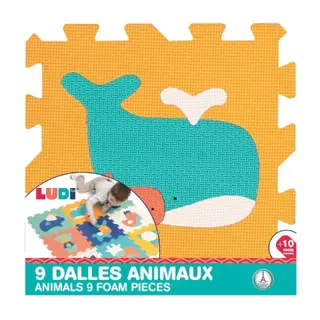 −42 %LudiAnimal tiles play mat, from birth – Ludi143 DH
instead of 245 DHView product −48 %ChiccoMove’n Grow XXL forest activity gym – Chicco234 DH
instead of 450 DHView product −54 %Tiny LoveBlack & White giant activity mat – Tiny Love365 DH
instead of 790 DHView product −48 %ChiccoForest Gym activity mat – Chicco515 DH
instead of 990 DHView product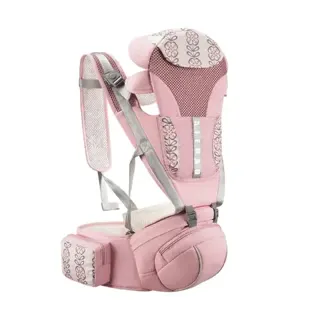 −40 %AiebaoBaby carrier, birth to 15 kg, pink – Aiebao290 DH
instead of 480 DHView product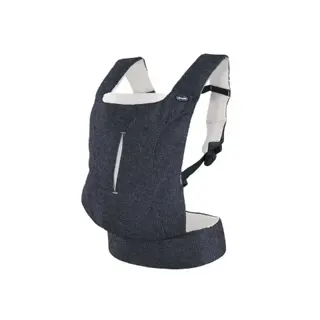 −42 %ChiccoMyamaki ergonomic baby carrier, Denim Beige, birth-15 kg – Chicco813 DH
instead of 1 390 DHView product- The whole aisle · Activity mats21 products online, delivered anywhere in Morocco.Open the aisle
Products sold by La Maison du Bébé, publisher of this magazine. Prices as of 12 October 2026; please check the product page.
Head wedges and anti-flat-head pillows: why the HAS says no
Head wedges, baby positioners, positioning pillows, cot bumpers, "anti-flat-head" pillows, memory-foam mattresses: these items are often offered to worried parents. The HAS is unambiguous: such restraining equipment is "useless, harmful and dangerous".
Useless, because it does not prevent a flat head: by keeping baby still, it works against the freedom of movement that prevents it. Dangerous, because it makes it easier for baby to roll onto their tummy and raises the risk of death by suffocation. So in baby's cot, you put nothing. Outside the cot, no pillow replaces tummy time and your arms.
Torticollis: when baby always turns their head the same way
A baby who always looks to the same side, has trouble turning their head, or holds it tilted may have torticollis. The HAS distinguishes:
- postural torticollis, which comes and goes: you can gently turn baby's head to the other side with no resistance;
- congenital muscular torticollis, which is permanent: rotation is limited.
The doctor checks for it simply: a baby without torticollis turns their head both ways to keep eye contact with a parent. When neck mobility is limited, the HAS asks for physiotherapy to be systematically prescribed, as early as possible: care started in the first month gives the best chance of recovery. The physiotherapist also teaches you gentle exercises to repeat at home, adds the NHS.
Physiotherapy, osteopathy, helmet: what is offered if the head stays flat?
- Repositioning advice described above remains the foundation, at any age.
- Physiotherapy is indicated as soon as there is limited neck mobility (HAS).
- Osteopathy: according to the HAS, current data do not allow it to be recommended. At best it can support physiotherapy, as a second choice.
- The helmet (cranial orthosis): the HAS sees it as exceptional, and it can only be prescribed by a team specialised in skull and facial malformations. The NHS does not offer it, for lack of sufficient evidence that it works.
If the shape does not improve despite appropriate care, the HAS recommends referring baby early, towards the end of the first six months, to a specialised centre. Positional deformities have "a good prognosis", it concludes. Check-ups, such as the one for your baby at 2 months, are good moments to raise it.
Frequently asked questions
Can a flat head affect my baby's development?
No, according to the sources we consulted. The UK's NHS and the Canadian Paediatric Society state that it does not affect the brain or development. The French health authority (HAS) adds that no data links it to developmental delay or vision problems. The concern is mostly cosmetic, and it is a matter of acting early.
When should I start tummy time?
Early, and gradually. The HAS advises getting baby used to the tummy position bit by bit, for example at nappy changes. The Canadian Paediatric Society then aims for 10 to 15 minutes, at least 3 times a day. Always awake, always in your sight: never for sleeping, and never alone in the room.
My baby cries as soon as I put them on their tummy. What can I do?
At first it is real effort for them: their neck muscles are still weak, the Canadian Paediatric Society reminds us. Start with very short sessions, at nappy changes as the HAS suggests, when baby is awake and in a good mood. Lie down facing them, talk to them, put a toy in front of their eyes. Build up gradually without turning it into an ordeal.
Does a flat head go away with age?
Most often it improves. The NHS says it often becomes less noticeable within one to two years, as the head grows and baby spends less time lying down. A mild flattening corrects itself; a marked one may not disappear completely, but it has no effect on the brain, according to the Canadian Paediatric Society. Hence the value of acting early.
Sources
- Prévention des déformations crâniennes positionnelles et mort inattendue du nourrisson (fiche mémo)Haute Autorité de santé (HAS) · France
- Prévention des déformations crâniennes positionnelles (DCP) et mort inattendue du nourrissonHaute Autorité de santé (HAS) · France
- Prévenir la tête plate : conseils aux parentsHaute Autorité de santé (HAS) · France
- Plagiocephaly and brachycephaly (flat head syndrome)NHS · United Kingdom
- La prévention de la tête plate chez les bébés qui dorment sur le dosSoins de nos enfants, Canadian Paediatric Society · Canada