










Article contents
Key points
- Rest, yes; staying in bed for forty days, no: walking a little helps protect against blood clots.
- The festive hammam on day 40 comes at a good time: before it, wait until the bleeding has stopped.
- Rfissa and sellou comfort; after gestational diabetes, go easy on the sweets.
- Fumigations and incense: never in the room where baby sleeps.
- The postnatal check-up stays useful, even when you feel well.
The door opens, your mother-in-law arrives with a pot of rfissa, an aunt brings a jar of sellou, and you are forbidden to touch a single dirty dish. Welcome to the nafsa. In darija, the word means both the woman who has just given birth and the forty days after the birth, a period when the new mother, the nfissa, is surrounded and looked after.
Many of these traditions line up with what health professionals recommend. A few deserve adapting, especially after a caesarean, gestational diabetes or when baby sleeps in the same room. Here is a kind, well-documented look at the 40 days after childbirth in Morocco.
What does the nafsa involve?
Customs vary from region to region and family to family, but the same thread runs through: the new mother rests, she is fed and she is protected. A qualitative study published in 2023, carried out with 37 young mothers in Essaouira, Settat and Salé, describes this foundation well:
- staying home until day 40, with strict rest in the first week;
- "warming" meals that are said to bring in the milk;
- fear of the cold, the bard nfass, blamed for all sorts of ailments;
- massages, a scarf tied tight around the head, sometimes fumigations during the first seven days;
- a central role for the mother and mother-in-law, who pass these practices on.
In Salé, reported Le Matin, mother and child are the focus of all care for seven days, then the nfissa goes to the hammam on day 40, in celebration, with the women of the family. In between comes the sbou3, the seventh-day celebration, and a parade of visitors.

What the tradition gets right
On the essentials, the nafsa has it all figured out. The Moroccan study itself lists its benefits: family support, extended rest, attention to food depending on how the birth went. Naître et grandir in Quebec says much the same when it advises handing meals, housework and older children to those around you, and sleeping when baby sleeps.
Being fed without having to cook, not cleaning, having someone rock baby while you take a shower: this is exactly what the body needs to recover, and what many mothers elsewhere in the world lack. If your family lives far away, the spirit of the nafsa can be organised in advance: that is the point of our checklist to plan your weeks after baby.
Rest: take it easy, without staying in bed
This is the first point to adjust. In some families, the new mother must not leave her bed for seven days. Yet immobility is one of the main risk factors for blood clots in the veins after birth, according to the CNGOF guidelines, which encourage early getting up instead, from the day after a caesarean.
The right compromise:
- get up in the first days and walk a little, several times a day, around the house;
- leave heavy tasks to others: carrying shopping, wet laundry, older children;
- lie down during the day, and make naps a priority.
The UK's NHS suggests walking, gentle stretches and pelvic floor exercises as soon as you feel able after an uncomplicated birth. Going out for fresh air with baby is not reckless, even before day 40.
Nafsa food: rfissa, sellou, harira
The nafsa table is generous. In a La Croix report on a young Moroccan mother, rfissa, chicken spiced with ras el hanout served over shredded pancakes, was presented as "the milk meal", served from the afternoon of the birth and for a week. Sfouf or sellou, a mix of toasted flour, almonds and sugar, often arrives at the maternity unit. In Salé, harira goes with the seventh-day breakfast.
These dishes are nourishing and comforting. For a breastfeeding mother, the UK's NHS does not prescribe any special diet anyway: a balanced diet, enough to drink and rest. A few nuances, though:
- milk comes mostly from feeding: no dish replaces frequent feeds at the breast;
- fenugrec (helba) in rfissa, in cooking, has not been assessed; ANSES, however, advises breastfeeding women against fenugrec supplements, as their safety is not established;
- sellou and sweets are rich in sugar and fat. If you had gestational diabetes, keep them for celebrations and ask your doctor when to check your blood sugar;
- variety matters: vegetables, fruit, dairy, pulses, fish, and a bottle of water within reach during feeds.
The Moroccan study also notes that after a caesarean or an episiotomy, some families avoid very spicy dishes. To sort fact from fiction about food, read our article on what a breastfeeding mother eats.
Hammam after birth: when to go back?
The festive hammam on day 40 comes at a good time: the bleeding after birth, the lochia, lightens over the weeks and can last up to about six weeks, according to the MSD Manual. While it has not ended, stick to showers. The NHS recommends waiting seven days after the bleeding stops before swimming, and the same caution applies to a shared hot bath.
A few benchmarks for a relaxed first hammam:
- after a caesarean or an episiotomy, wait until the scar is well closed and ask your doctor or midwife for the go-ahead;
- stay in the warm room rather than the hottest one, and not too long: tiredness, short nights and possible anaemia make fainting more likely;
- drink before and after, especially if you are breastfeeding;
- no scrub or firm massage on a recent scar, and no strong pressure on the belly.
Baby has no business in the heat and steam of the hammam: they stay home with a relative. The heat rules are detailed in our article on the hammam during pregnancy.
From the shop
Small comforts for the nafsa
To get through the bleeding and care for the perineum during the forty days, a few simple hygiene products are enough; no need to buy more if you already have the equivalent.
 −21 %DoomooFlowly postpartum and period underwear, Black, XS-S-M – Doomoo355 DH
instead of 450 DHView product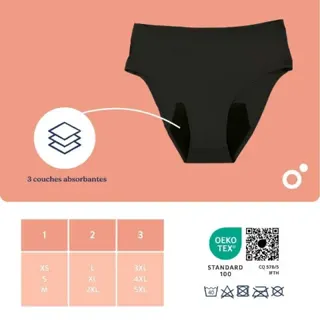 −21 %DoomooFlowly postpartum and period underwear, Black, L/XL/2XL – Doomoo355 DH
instead of 450 DHView product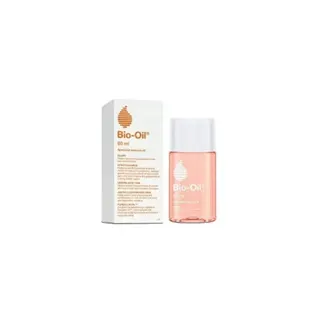 −48 %Bio-OilFace and body skincare oil, 60 ml – Bio-Oil31 DH
instead of 60 DHView product- The whole aisle · Mum’s hygiene8 products online, delivered anywhere in Morocco.Open the aisle
Products sold by La Maison du Bébé, publisher of this magazine. Prices as of 12 October 2026; please check the product page.
Belt, massage, fumigations: gestures to adapt
A belt or belly binding can bring relief after a caesarean, but nothing shows that it makes the belly go down or "puts the bones back in place". The full picture is in our article on girdles and the belly after baby. If you wear one, do not tighten it.
Massages feel good when they are gentle. Avoid strong pressure on the belly and lower belly in the first weeks, and any contact with a scar that has not closed.
Fumigations of alum, harmal or incense, described in the Moroccan study during the first seven days, pose a simple problem: the smoke. A newborn breathes through the nose and their airways are fragile. If the family insists, do it in another room, window open, away from baby, and never with a brazier in a closed room. Keep the plants and products used out of reach of older children. Harmal (Peganum harmala) is a toxic plant: according to the International Programme on Chemical Safety (WHO) monograph, swallowing it is the main cause of poisoning, and its fumigations can cause drunkenness, hallucinations and deep sleep. It must never be swallowed, nor burned near baby.
Fear of the cold sometimes leads to covering mother and baby too much. In summer or during the chergui (the hot desert wind), it is the heat that bothers: a mother sweating under three blankets drinks less than she should, and an over-wrapped baby is no better protected.
And after the 40 days?
In the 2023 study, several women considered a check-up after birth pointless if they felt well. That is a pity: the CNGOF recommends a postnatal visit between 6 and 8 weeks for everyone, to review healing, mood, breastfeeding and contraception. The day-40 hammam is a good moment to book that appointment.
Religious questions, such as resuming prayer or fasting when the bleeding stops before day 40, are for a trusted religious authority. On the medical side, simply remember that the length of lochia varies from one woman to another.
Frequently asked questions
What does the word nafsa mean?
In darija, *nafsa* (or *nfissa*) means a woman who has just given birth, and by extension the forty days that follow the birth. During this time, tradition has the new mother stay at home, eat specific dishes and be relieved of chores by her mother, mother-in-law or sisters. The end of the period is often marked by a family hammam.
Can I eat rfissa while breastfeeding?
Yes. Rfissa, a dish of chicken, lentils and shredded pancakes, is a complete, nourishing meal. Tradition credits it with bringing in the milk, which is not proven: it is mostly the frequency of feeds that sets production. The fenugrec it contains in cooking has not been assessed by ANSES, which, however, advises breastfeeding women against fenugrec supplements.
After a caesarean, can I follow the nafsa traditions?
Yes for rest, family help and varied meals. Two points call for more caution: the hammam, to put off until the scar is well closed and your doctor agrees, and firm belly massages, to avoid on a recent scar. Walking a little each day is still recommended, from the day after the operation if the team allows it.
Do I really have to stay shut in for forty days?
No, nothing in medical terms requires it. Guidelines encourage the opposite: get up early, walk a little each day, then go out for fresh air with baby when you feel able. What matters is being relieved of heavy tasks and being able to sleep. You can keep the spirit of the nafsa by limiting visits rather than outings.
Sources
- Common Traditions, Practices, and Beliefs Related to Safe Motherhood and Newborn Health in MoroccoHealthcare (MDPI), Moujahid, Turman and Amahdar, 2023 · Maroc
- « Laâkika » célébrée dans le respect des traditions séculairesLe Matin · Maroc
- Leïla, maman douceur, si fière de son petit « Sidi Omar » (reprise d'un reportage de La Croix)Bladi.net · France
- Avis relatif à une demande d'exemption de mise en garde des femmes allaitantes à l'égard d'un complément alimentaire à base de fenugrec (saisine 2025-SA-0064)Anses · France
- Recommandations pour la pratique clinique : post-partum (2015)Collège national des gynécologues et obstétriciens français (CNGOF) · France
- Keeping fit and healthy with a babyNHS · Royaume-Uni
- Présentation des soins du post-partumManuel MSD, édition grand public · États-Unis
- Récupérer après l'accouchementNaître et grandir · Canada (Québec)
- Peganum harmala L. (Poisons Information Monograph 402)IPCS INCHEM, International Programme on Chemical Safety (WHO) · International