






Article contents
Key points
- No special diet: a varied diet is enough, and no food is banned on principle.
- About 330 to 400 extra calories a day, not a double portion.
- Caffeine: no more than 200 milligrams a day (NHS), around 300 milligrams (CDC); tea counts too.
- Fenugreek supplements: France's Anses advises against them while breastfeeding, for lack of safety evidence.
- The best way to make milk remains frequent, effective feeding.
During the nfissa, the forty days after birth, the family kitchen runs at full tilt: rfissa with helba, harira, sellou made weeks in advance. Everyone has a tip to “bring the milk in”. And one question keeps coming back: do you need a special diet to breastfeed well?
The answer is reassuring: eating while breastfeeding is not complicated. Here are your real needs, the limits to know for coffee, alcohol and fish, and what we know about Moroccan traditions.
Do you need a special diet when breastfeeding?
No. The UK's NHS says it plainly: no special diet is needed, a varied and balanced diet is enough. The American CDC adds that breastfeeding mothers generally have no particular food to avoid.
Your needs do go up, but reasonably: about 330 to 400 extra calories a day compared with before pregnancy, according to the CDC, depending on your build, your activity and whether you breastfeed exclusively. That is a long way from the “double portion” often served by relatives.
The NHS guidelines for a balanced plate:
- at least 5 portions of varied fruit and vegetables a day;
- wholegrain starchy foods, whose fibre also helps with constipation after birth;
- protein: pulses, fish, eggs, lean meat;
- dairy products or fortified alternatives, for calcium.
Good news for Moroccan cooking: lentils, chickpeas, sardines, seasonal vegetables and wholemeal bread tick every box. If you are coming out of a pregnancy in which you watched every food, our article on eating during pregnancy lets you compare.
How much should you drink?
Regularly, and more when it is hot. The NHS advises drinking enough and keeping a drink within reach during feeds: water, semi-skimmed milk, diluted pure fruit juice. In summer and on chergui days (the hot, dry wind), your needs rise with the heat.
During Ramadan the question becomes more delicate: our article on fasting during pregnancy and breastfeeding explains what to know and when to talk to your doctor.
Coffee, tea, fizzy drinks: how far to go?
Caffeine passes into milk. The guidelines do not set the same limit:
- the NHS advises not going over 200 milligrams a day, and cutting down especially when baby is under 6 months;
- the CDC considers that around 300 milligrams a day, or 2 to 3 cups of coffee, generally does not harm the baby. It notes that around ten cups a day can make him irritable and disturb his sleep, and that premature babies and newborns clear caffeine more slowly.
To do your sums, here are the amounts given by the NHS:
| Drink | Caffeine, in milligrams (approx.) |
|---|---|
| A cup of coffee | 90 |
| A cup of black tea | 55 |
| A cup of green tea | 38 |
| A can of cola | 37 |
| A 250 ml energy drink | 80 |
Moroccan mint tea is made with green tea: the glasses through the day add up on top of the morning coffee. If baby is restless or sleeps badly, cutting back on caffeine is a simple first thing to try.
Fish, peanuts, spices: what you can eat
Fish is recommended: the NHS advises at least 2 portions a week, including one of oily fish such as sardines or mackerel. While breastfeeding, you do not go over 2 portions of oily fish a week. And, like all adults, no more than one portion a week of shark, swordfish or marlin, which are higher in mercury. In Morocco, the sardine, affordable and rich in omega-3, is an excellent choice.
Peanuts are not to be avoided, unless you are allergic yourself (see the FAQ). Spices, garlic and onion are not either. If your baby cries a lot in the evening, our article on colic explains what really helps, before you remove anything from your plate.
Helba (fenugreek): tradition, evidence and precautions
Helba, or fenugreek, has pride of place in Moroccan postpartum traditions: in rfissa, as an infusion, or as ground seeds. It is reputed to bring in milk. What does science say?
- It is not the best way to make milk. La Leche League France reminds us that the best galactagogue remains frequent, on-demand breastfeeding with good technique. It advises against using fenugreek as a galactagogue without medical follow-up.
- Side effects exist. In high doses it can cause low blood sugar, nausea and diarrhoea, as well as a maple syrup smell in sweat, urine and milk, which can be confused with a rare metabolic disease in the baby.
- Supplements are discouraged in France. In 2023, Anses recommended advising pregnant and breastfeeding women against fenugreek food supplements. In November 2025, it maintained this position: the data are not enough to show they are safe during breastfeeding.
Opinions are not unanimous: the Spanish database e-lactancia, cited by La Leche League, considers fenugreek compatible with breastfeeding in moderate amounts. Our takeaway: a little helba in a family dish is nothing like capsules or concentrated infusions taken every day. Avoid supplements, and talk to your doctor if you have diabetes, because fenugreek can lower blood sugar.
Sellou, herbal teas, “milk-boosting drinks”: sorting it out
Sellou, or sfouf, that mix of toasted flour, almonds, sesame, butter and honey or sugar, is a comfort of the nfissa. None of the sources we consulted credits it with any effect on milk production. It is mostly a very energy-dense food, rich in sugars and fats: a pleasure to keep to reasonable amounts, not a medicine.
Fennel or aniseed teas, often sold as “breastfeeding teas”, call for caution. The European Medicines Agency, cited by La Leche League France, advises against fennel infusions for pregnant or breastfeeding women and children under 4 when they supply too much estragole, a substance in the plant suspected of being carcinogenic. An occasional cup is not the issue: it is daily, prolonged consumption that raises questions.
If you feel you are short of milk, the real lead lies elsewhere: more frequent feeds, a checked latch, perhaps some pumping sessions. The guidelines for knowing whether baby drinks enough are in our guide to getting off to a good start with breastfeeding, and pumping for stimulation in our advice on expressing your milk.
From the shop
Well settled for long feeds
No product makes your milk come in. During the long feeds of the early months, being well supported with a glass of water within reach matters more: a nursing pillow eases your back and arms.
 −35 %DoomooSofty nursing pillow, Flower Yellow – Doomoo403 DH
instead of 620 DHView product −19 %DoomooSofty nursing and maternity pillow, Ruby Stripes – Doomoo501 DH
instead of 620 DHView product −9 %DoomooComfy Big nursing and maternity pillow, Tetra Blue – Doomoo619 DH
instead of 680 DHView product −9 %DoomooBuddy nursing and pregnancy pillow, Tetra Jersey Green – Doomoo810 DH
instead of 890 DHView product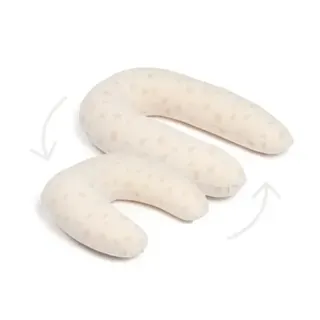 −9 %DoomooTwisty 2-in-1 pregnancy and nursing pillow, Petals Latte – Doomoo901 DH
instead of 990 DHView product- The whole aisle · Nursing pillows40 products online, delivered anywhere in Morocco.Open the aisle
Products sold by La Maison du Bébé, publisher of this magazine. Prices as of 12 October 2026; please check the product page.
Alcohol: what the guidelines say
Alcohol passes into milk. The safest option, according to the Royal College of Midwives cited by the NHS, is not to drink at all while breastfeeding. The NHS specifies that an occasional drink is unlikely to harm baby if you wait at least 2 hours before the next feed. Pumping does not lower the alcohol faster: its level in milk falls at the same time as in your blood.
One rule has no exception: after drinking, even a single glass, never sleep with baby in your bed or on a sofa. The risk of sudden infant death is greatly increased, the NHS reminds us. The rules for safe sleep are in our article on preventing sudden infant death.
Vitamins and supplements: on medical advice
A varied diet generally provides everything you need, says the NHS. A few situations call for advice:
- vitamin D: in the United Kingdom, a supplement is recommended for everyone, including breastfeeding women, in autumn and winter; in Morocco, ask your doctor whether you need one;
- a vegan diet: vitamin B12 is lacking, and the CDC warns that a baby breastfed by a mother who does not get it risks neurological damage. A supplement is essential, with medical follow-up;
- multivitamins: the CDC considers them useful only when diet is not enough, on a professional's advice.
Avoid “special for breastfeeding” supplements bought without advice: the fenugreek example shows that natural does not mean risk-free.
Frequently asked questions
Do I need to drink milk to make milk?
No. Production depends on stimulation of the breast: for La Leche League, the best galactagogue remains frequent, on-demand breastfeeding with good technique. Dairy products have their place for calcium, the NHS reminds us, but it is the feeds, not the milk you drink, that drive production. Calcium-enriched drinks work too if you do not drink milk.
Can I eat spicy food, garlic or pulses while breastfeeding?
Yes. The CDC says that breastfeeding mothers generally do not need to avoid any particular foods. Spices, garlic, onion or the lentils of Moroccan cooking have their place. If a food seems to bother your baby repeatedly, note it down and talk to the paediatrician before cutting it out: removing foods for no reason impoverishes your diet.
Is chocolate off-limits while breastfeeding?
No, but it does contain a little caffeine. According to the NHS, a 50 g bar of dark chocolate provides less than 25 milligrams, and a milk chocolate bar less than 10 milligrams. That is small, but it adds to the coffee, tea and fizzy drinks of the day, which the NHS advises keeping under 200 milligrams in total.
Should I avoid peanuts while breastfeeding?
No, unless you are allergic yourself. The NHS says you can eat peanuts or peanut butter as part of a balanced diet while breastfeeding. If your child already has a diagnosed allergy, follow his doctor's advice.
Sources
- Breastfeeding and dietNHS · United Kingdom
- Breastfeeding and drinking alcoholNHS · United Kingdom
- Maternal Diet and BreastfeedingCenters for Disease Control and Prevention (CDC) · United States
- Avis relatif à une demande d'exemption de mise en garde des femmes allaitantes à l'égard d'un complément alimentaire à base de fenugrec (saisine 2025-SA-0064)Agence nationale de sécurité sanitaire de l'alimentation (Anses) · France
- GalactogoguesLa Leche League France · France