







Article contents
Key points
- In the first days, hand expression collects colostrum better than a pump.
- For a stash: express after a feed, often in the morning, a few weeks before you need it.
- If baby is not feeding at the breast: about 8 sessions per 24 hours, never more than 6 hours at night.
- A badly fitted flange or suction that is too strong hurts and gives less milk.
- Clean hands and washed parts after every session: that is the core of hygiene.
Back to work in a month, a baby born a little early who tires at the breast, or simply the wish to hand one feed over to grandma: sooner or later, many mothers get out the breast pump. And the questions come straight away: when to start, how many sessions a day, why so little milk, why it hurts.
Expressing milk is something you learn, like breastfeeding. The guidance below applies to hand expression as well as to the device, at a rhythm that protects your supply. To choose a model, our guide to choosing a manual or electric breast pump compares the options; here we talk about using one.
Why and when to start expressing?
The most common reasons, according to the NHS and the mpedia paediatricians:
- baby is separated from you, for example in hospital, or you are going back to work;
- baby cannot yet feed effectively at the breast, but you want to give your milk;
- your breasts are too full, when your milk comes in or with engorgement;
- you want to boost your supply.
The right moment depends on the situation. If baby cannot feed after birth, start hand expression as early as possible, Naître et grandir insists. For a simple stash, mpedia advises waiting about a month for lactation to be well established, then starting a few weeks before you need it. To plan a return to the office, see our article on breastfeeding and going back to work.
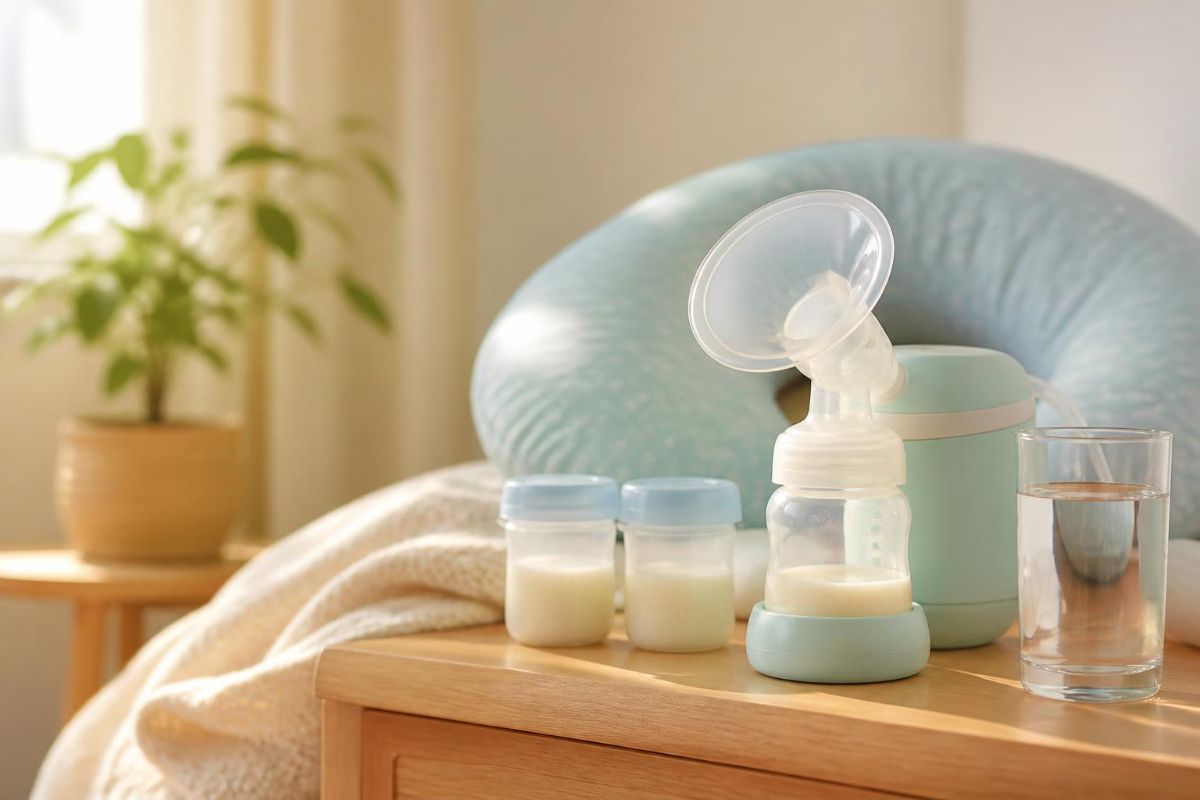
By hand or with a pump: which method for which need?
| Method | Who and when | Limits |
|---|---|---|
| Hand expression | The first days, colostrum, a very tight breast, a quick fix | Tiring if repeated often |
| Manual breast pump | Occasional use, on the move | Slower; not advised on its own to start or maintain lactation |
| Single electric pump | Occasional use with less effort | More expensive |
| Double electric pump | Daily use: premature baby, restarting, baby who is not feeding | The most expensive, but the most effective |
These markers come from Naître et grandir, which recommends double electric pumping for regular expression, and from mpedia, for whom it saves time while stimulating production. You will find our models in the breast pump section.
How often and for how long?
It all depends on what baby takes at the breast otherwise.
- For an occasional stash: express after a feed, at a time that suits you; many mothers produce more in the morning, notes Naître et grandir. The first sessions give little, then volumes increase: hence the value of starting a few weeks ahead.
- If baby is not feeding, or very little: about 8 sessions per 24 hours, like the average number of feeds, without letting more than 6 hours go by at night. For a premature baby, a Belgian maternity unit advises 6 to 8 sessions a day with an electric pump.
- To relieve a very full breast: a few minutes, just enough to feel comfortable, without trying to empty.
With a double electric pump, a session lasts 15 to 20 minutes on average. Stop 1 to 2 minutes after the milk stops flowing.
Hand expression, step by step
It is free, always available, and the best method for collecting the colostrum of the first days.
- Wash your hands with soap and water, and prepare a clean container; for colostrum, a small spoon is enough.
- Massage the breast gently, with long strokes from the armpit towards the nipple.
- Place your thumb and index finger in a C shape, 2 or 3 centimetres from the nipple, right at the edge of the areola.
- Press gently, then release, without sliding your fingers over the skin. Do not pinch the nipple.
- Find a rhythm, then rotate your fingers around the areola when the flow slows.
- Switch to the other breast, and alternate until the milk hardly drips any more.
At the maternity unit, ask a midwife to show you the movement once: it is the surest way to learn it.
Using a breast pump without hurting
A breast pump should never hurt, leave marks or pinch the nipple, the NHS reminds us.
The flange first. This is the funnel-shaped piece placed on the breast. The nipple should sit well centred in it, neither squashed nor jammed. A Belgian maternity unit lists common sizes from 21 to 30 mm. A flange that is too large or too small hurts and makes the pump less effective, Naître et grandir stresses. If in doubt, have the fit checked by a midwife or lactation consultant.
Then the settings. Naître et grandir suggests this sequence:
- start with a fast rhythm and low suction for 1 to 2 minutes, until the milk flows;
- slow the rhythm, to about one cycle per second, and raise the suction to the effective, pain-free level;
- never use maximum suction "to go faster".
The Academy of Breastfeeding Medicine (ABM) warns that a badly fitted flange, suction that is too strong or sessions that are too long can damage breast tissue. If a session hurts, stop, re-centre the flange and lower the setting; if the pain persists, see our tips on damaged nipples and get help.
From the shop
To express and keep your milk
A manual breast pump is enough for occasional sessions. Bags designed for breast milk, an adapter to express straight into them, an insulated bag for transport and a balm for sensitive nipples complete the kit.
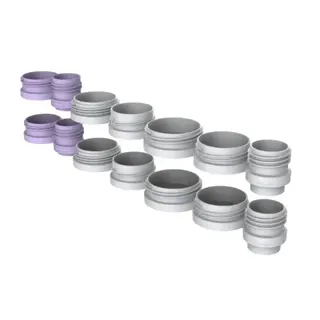 −54 %BabymoovDirect-Pump breast pump adapter – Babymoov69 DH
instead of 150 DHView product −48 %Walking MumPreschool insulated children’s lunch bag, Forest – Walking Mum146 DH
instead of 280 DHView product- The whole aisle · Breast pumps2 products online, delivered anywhere in Morocco.Open the aisle
Products sold by La Maison du Bébé, publisher of this magazine. Prices as of 12 October 2026; please check the product page.
How to get the milk flowing more easily
Milk does not flow on command: it depends on a hormonal reflex, harder to trigger when you are stressed or rushed. What helps:
- settling somewhere calm, shoulders relaxed, with something to drink within reach;
- thinking of baby, looking at a photo or keeping baby's comfort blanket near you, as mpedia suggests;
- massaging the breast gently before and during the session;
- moistening the nipple with a little milk before placing the flange;
- starting with a few minutes of hand expression, then moving to the pump.
The ABM accepts this massage during pumping, as long as it stays gentle. A firm massage, on the other hand, irritates the tissue.
Cleaning the equipment: what is really enough
Expressed milk is fragile, and so are the pump parts. The routine recommended by mpedia and a Belgian maternity unit:
- wash your hands before every session;
- after each use, take apart all the parts that touch the milk;
- rinse them in cold water, then wash them in hot soapy water and rinse well;
- leave them to air-dry on a clean cloth, away from dust.
Before the very first use, mpedia advises sterilising the parts; a Belgian maternity unit says 10 minutes in boiling water. After that, recommendations differ: our FAQ sums it up. Once the milk is collected, storage has its own rules, even more important in Moroccan heat: they are set out in our article on storing breast milk.
Mistakes that wear out your supply
- Pumping on top of every feed "to build a stock". The breast then produces more than baby drinks, which exposes you to engorgement and mastitis, according to the ABM.
- Expressing milk to throw it away. The ABM advises against it: it is better to express only when necessary.
- Judging your supply by the volume you get. The first sessions often give little, and the amount grows with practice.
- Gritting your teeth. Pain is never normal; it means the setting or the flange needs revisiting.
If you give baby your milk other than at the breast part of the time, our article on mixed breastfeeding explains how to protect your supply.
Frequently asked questions
Can I express from one breast while baby feeds from the other?
Yes. Naître et grandir suggests it when baby only takes one breast: you express the other during or after the feed. It is a simple way to build a small stash without an extra session. Settle in well supported, with a stable container, and keep one hand free to support baby.
How much milk should I get in each session?
There is no normal amount per session. In the first days, a few drops of colostrum are expected. For a mother who expresses all of her baby's milk, Naître et grandir cites an average of about 500 ml a day after one week and 750 ml after two weeks, spread over all sessions. When you start a stash, volumes are often small and then increase.
Do I need to sterilise the pump after every use?
Opinions differ. The NHS asks for cleaned and sterilised equipment. The Academy of Breastfeeding Medicine considers routine sterilisation unnecessary at home, for a healthy full-term baby, if the parts are well washed after every session. The mpedia paediatricians advise sterilising before first use. For a premature or hospitalised baby, follow the unit's instructions.
Can a breast pump increase milk production?
Yes: the more milk is removed, the more the breast makes. That is why a double electric pump is advised to start or restart lactation when baby is not feeding. But pumping too much on top of feeds can create an oversupply that favours engorgement and mastitis, warns the Academy of Breastfeeding Medicine. To restart production, get support.
Sources
- Expressing and storing breast milkNHS · United Kingdom
- Tirer son lait : guide pratiqueNaître et grandir · Canada (Quebec)
- Techniques pour tirer et conserver son laitmpedia.fr, Association française de pédiatrie ambulatoire (AFPA) · France
- L'allaitement maternel (livret pour les futurs parents, mars 2026)Centre hospitalier régional Sambre et Meuse (CHRSM), maternity unit · Belgium
- ABM Clinical Protocol #36: The Mastitis Spectrum, Revised 2022 (Breastfeeding Medicine, vol. 17, no. 5)Academy of Breastfeeding Medicine (ABM) · International