







Article contents
Key points
- It usually arrives between day 2 and day 5, sometimes later after a caesarean.
- Full, warm, heavy breasts are normal; hard, shiny and painful ones are engorged.
- Frequent feeds, cold between feeds, a few expressed drops: the discomfort passes in a day or two.
- If not breastfeeding: comfortable bra, cold, painkiller, and as little stimulation as possible.
- Fever that lasts, a red breast, or no change by day 5: get it checked.
On the third morning, you wake up with a chest you hardly recognise: heavy, warm, tight right up under your arms. Baby, meanwhile, is suddenly swallowing noisily. This is your milk coming in: your breasts move from the colostrum of the first days to a more abundant milk.
This stage is expected, sometimes dreaded, and often uncomfortable for a day or two. Here is when it happens, how to tell simply full breasts from engorgement, what soothes, and how to get through it if you are not breastfeeding.
What happens when your milk comes in?
During the first days, your breasts produce colostrum, a thick, golden-yellow milk. Baby drinks about a teaspoon per feed, according to the NHS: not much, but enough for a tiny stomach. Our guide to getting breastfeeding off to a good start explains why baby needs nothing else.
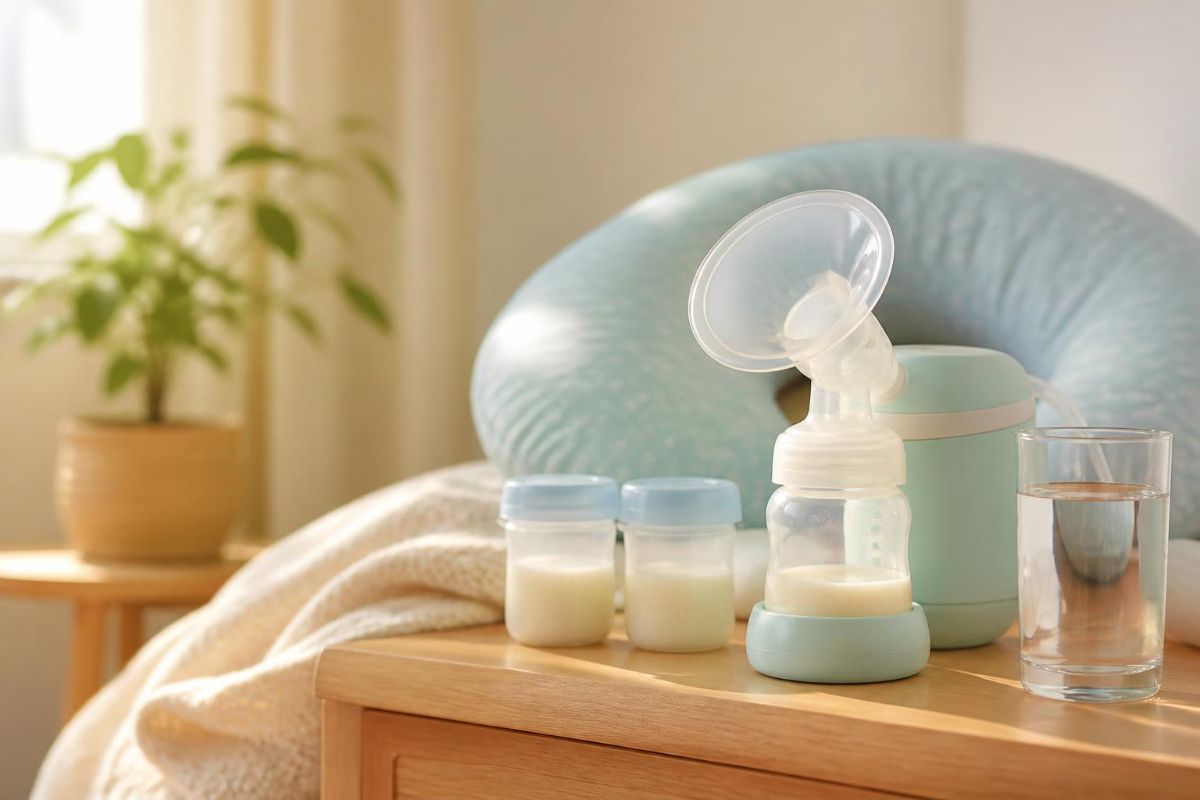
Then, under the effect of the hormones that follow birth, production rises sharply: this is the milk coming in. It happens even if you are not breastfeeding, the Royal Women's Hospital in Australia reminds us. The milk becomes whiter and thinner, and the breasts fill with milk, but also with fluid: it is this swelling of the tissue, the oedema, that makes the chest so tight.
When does it happen?
Most often between day 2 and day 5. The NHS says 2 to 4 days after birth, a Belgian maternity unit places breast fullness around day 3, and Quebec's INSPQ gives a window from day 2 to day 5.
Several signs tell you it has arrived, even if your breasts do not swell much:
- baby swallows more often and more loudly during feeds;
- the nappies get heavier;
- baby's stools go from black to green, then to a more liquid yellow;
- your breasts sometimes leak between feeds.
After a caesarean, the milk can be delayed, notes the Academy of Breastfeeding Medicine (ABM). It is not a failure: keep putting baby to the breast often, skin to skin if possible, and get help settling baby without pressing on the scar. Our article on breastfeeding positions suggests the most comfortable ones.
Full breasts or engorged breasts: how to tell the difference
Full breasts are normal. Engorgement gets in baby's way and should be eased quickly. UNICEF offers these markers:
| Full breasts (normal) | Engorged breasts |
|---|---|
| Warm, heavy, firm | Painful, very tight, swollen |
| Milk flows when baby feeds | Milk flows poorly |
| Normal skin | Skin sometimes red and shiny |
| No fever | Sometimes a slight fever, 24 hours at most |
What is sometimes called "milk fever" is this slight, passing fever. If it lasts more than 24 hours, or if one area of a breast becomes red, hot and painful, it is no longer your milk coming in: see our article on engorgement and mastitis.
How to ease it when you are breastfeeding
The discomfort generally lasts 24 to 48 hours, according to INSPQ and an NHS hospital alike. What helps:
- Put baby to the breast often, 8 to 12 times in 24 hours, day and night, from baby's first hunger cues. The NHS adds that you can also offer the breast when yours are too full.
- Soften the areola if it is too hard for baby to latch: with your fingertips, press gently all around the nipple for about a minute.
- Hand-express a few drops before the feed, just enough to feel comfortable. Emptying the breasts would restart production.
- Cool them between feeds: a cold pack wrapped in a cloth, 10 to 15 minutes every 1 to 2 hours.
- Avoid heat and firm massage, which keep the swelling going. A very light stroke on the skin is enough.
- Wear a bra that supports without squeezing, and change the pads often if they are wet.
- Take a painkiller if needed, asking your pharmacist which one is compatible with breastfeeding and in what dose.
If baby really cannot feed, a breast pump set to low suction can soften the breast. Our tips on expressing without overstimulating production explain how.
From the shop
To get through your milk coming in more comfortably
Nothing is essential for this stage. A bra that supports without squeezing, a balm for very busy nipples, a breast pump to soften a very tight breast and a cushion to multiply feeds without back pain can help.
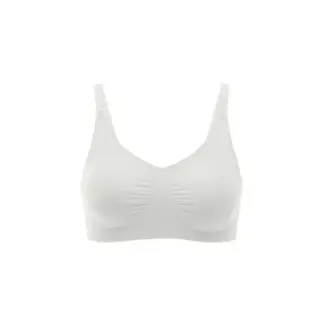 −48 %MedelaMaternity and nursing bra, size S – Medela208 DH
instead of 400 DHView product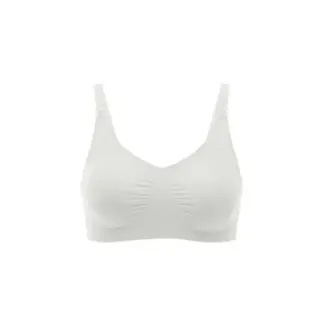 −48 %MedelaMaternity and nursing bra, size S, white – Medela208 DH
instead of 400 DHView product −35 %DoomooSofty nursing pillow, Flower Yellow – Doomoo403 DH
instead of 620 DHView product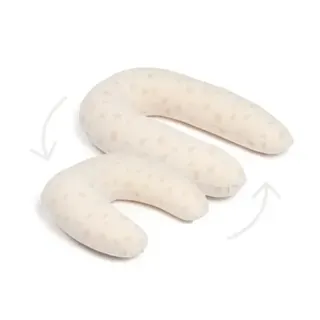 −9 %DoomooTwisty 2-in-1 pregnancy and nursing pillow, Petals Latte – Doomoo901 DH
instead of 990 DHView product- The whole aisle · Nursing pads1 products online, delivered anywhere in Morocco.Open the aisle
Products sold by La Maison du Bébé, publisher of this magazine. Prices as of 12 October 2026; please check the product page.
After your milk comes in: milk that adjusts to baby
Once this stage has passed, the tension eases. Production keeps adjusting to what baby takes: the more milk is removed, the more the breast makes, the ABM reminds us. That is why you should not try to "empty" engorged breasts, and why frequent feeds remain the best way to keep up your supply.
During the nfissa, the forty days after childbirth, the people around you often have opinions on what you should drink or eat to "bring the milk up". Our article on eating while breastfeeding sorts useful traditions from received ideas.
Milk coming in without breastfeeding: how to get through it without medication
You have chosen not to breastfeed, or you cannot? Your breasts still fill. The aim is then not to restart production, while waiting for it to stop by itself. Right after birth, this takes a few days, according to the Royal Women's Hospital.
- Do not stimulate the breasts. Avoid massaging them, letting baby suckle "for relief" or expressing: removing milk makes more, an NHS hospital reminds us.
- If the tension becomes truly painful, hand-express a very small amount, just enough to feel relieved.
- Wear a well-fitted bra, or a comfortable sports bra.
- Apply cold: cold packs or chilled pads slipped into the bra.
- Ease the pain with a painkiller recommended by your pharmacist.
- Drink normally: drinking less speeds nothing up.
Advice differs on cabbage leaves: a British hospital suggests chilled leaves, while the ABM finds they do no better than ice and flags a risk of listeria. Plain cold is enough.
There is also a medicine that slows lactation, prescribed by the doctor. The Royal Women's Hospital specifies that it is not compulsory, that gradual reduction works well, and that it works better when taken before the milk comes in: talk to the maternity unit if you already know you will not breastfeed. After the loss of a baby, this stage can be particularly painful: the maternity team can support you, physically and emotionally.
If you stop breastfeeding later, after several weeks or months, the approach is different: you cut feeds one by one. Our article on weaning explains how.
Frequently asked questions
Should I drink less to dry up my milk if I am not breastfeeding?
No. The Royal Women's Hospital in Melbourne is clear: drinking less does not make the milk go away faster. Drink to thirst, especially in hot weather. What really helps is not stimulating the breasts, wearing a comfortable bra, applying cold and taking a suitable painkiller if needed, chosen with your pharmacist.
My breasts are not very swollen: has my milk come in?
Probably, if baby swallows more during feeds and the nappies change. Not every woman feels the same thing: the NHS only says that breasts "may" feel fuller. Baby's stools turning yellow and more liquid, and nappies getting heavier, are good signs. If nothing changes by around day 5, talk to the midwife or paediatrician.
Do I need nursing pads?
They are useful if your breasts leak, which often happens when your milk comes in. The NHS recommends changing them often to avoid infection. Choose washable cotton pads or disposable ones without a plastic film, which hold less moisture, and change them as soon as they are wet, especially in summer.
Can your milk coming in cause a fever?
Engorgement can come with a slight fever for 24 hours, says UNICEF. Beyond that, or if a breast becomes red, hot and painful with chills or aches, think of mastitis and get help the same day. A fever in the days after birth can also have other causes, which only a doctor can check.
Sources
- Breastfeeding: the first few daysNHS · United Kingdom
- Suppressing your breast milk supply after giving birthUniversity Hospital Southampton NHS Foundation Trust · United Kingdom
- Stopping your breastmilkThe Royal Women's Hospital (Victoria) · Australia
- Difficultés courantes de l'allaitementMieux vivre avec notre enfant, INSPQ · Canada (Quebec)
- Cinq problèmes fréquemment rencontrés lors de l'allaitementUNICEF Parentalité · International
- ABM Clinical Protocol #36: The Mastitis Spectrum, Revised 2022 (Breastfeeding Medicine, vol. 17, no. 5)Academy of Breastfeeding Medicine (ABM) · International
- L'allaitement maternel (livret pour les futurs parents, mars 2026)Centre hospitalier régional Sambre et Meuse (CHRSM), maternity unit · Belgium