







Article contents
Key points
- Engorgement: both breasts, heavy and tight. Blocked duct: a localised lump, no fever.
- Mastitis: redness, heat, pain, with fever, chills or aches, like flu.
- Since 2022: cold rather than heat, feather-light massage, no pumping to "empty" the breast.
- Keep breastfeeding, including on the sore side: the milk is still good for baby.
- No better after 12 to 24 hours, fever that lasts or feeling very unwell: get medical help.
On day three, your breasts have doubled in size, they are as hard as stone and baby can no longer latch. Or, six weeks later, a red, burning patch appears on one breast, and by evening you are shivering. Engorgement, a blocked duct, mastitis: these three breastfeeding problems look alike, sometimes follow one another, and are now treated better than they used to be.
They almost always resolve without stopping breastfeeding. But the guidelines changed in 2022, and some reflexes handed down from mother to daughter, like heat or firm massage, can make things worse. Telling them apart lets you choose the right care, and know when to see a doctor.
Engorgement, blocked duct or mastitis: how to tell them apart
Engorgement affects both breasts. A blocked duct and mastitis most often involve one area of one breast, and a fever points to mastitis.
| Engorgement | Blocked duct | Mastitis | |
|---|---|---|---|
| Where? | Both breasts, all over | One area of one breast | One area of one breast, sometimes wedge-shaped |
| When? | Often days 3 to 5, or after skipped feeds | Any time | Any time, often within a few hours |
| What you feel | Heavy, hard, tight breasts, sometimes shiny; milk flows poorly | A tender lump, sometimes a little red | Swollen, hot, red and painful area, burning feeling |
| General state | Good; sometimes a slight fever, under 24 hours | Good, no fever | Fever, chills, aches, great tiredness |
On brown or black skin, redness is harder to see, warns the NHS: rely on heat and pain too. A nipple discharge, white or streaked with blood, is possible with mastitis.
These situations are linked: too much milk or an engorgement that lasts can lead to mastitis, Naître et grandir reminds us. The Academy of Breastfeeding Medicine (ABM), a medical society devoted to breastfeeding, has spoken since 2022 of a "mastitis spectrum", from simple narrowing of inflamed ducts to infection and, rarely, an abscess.
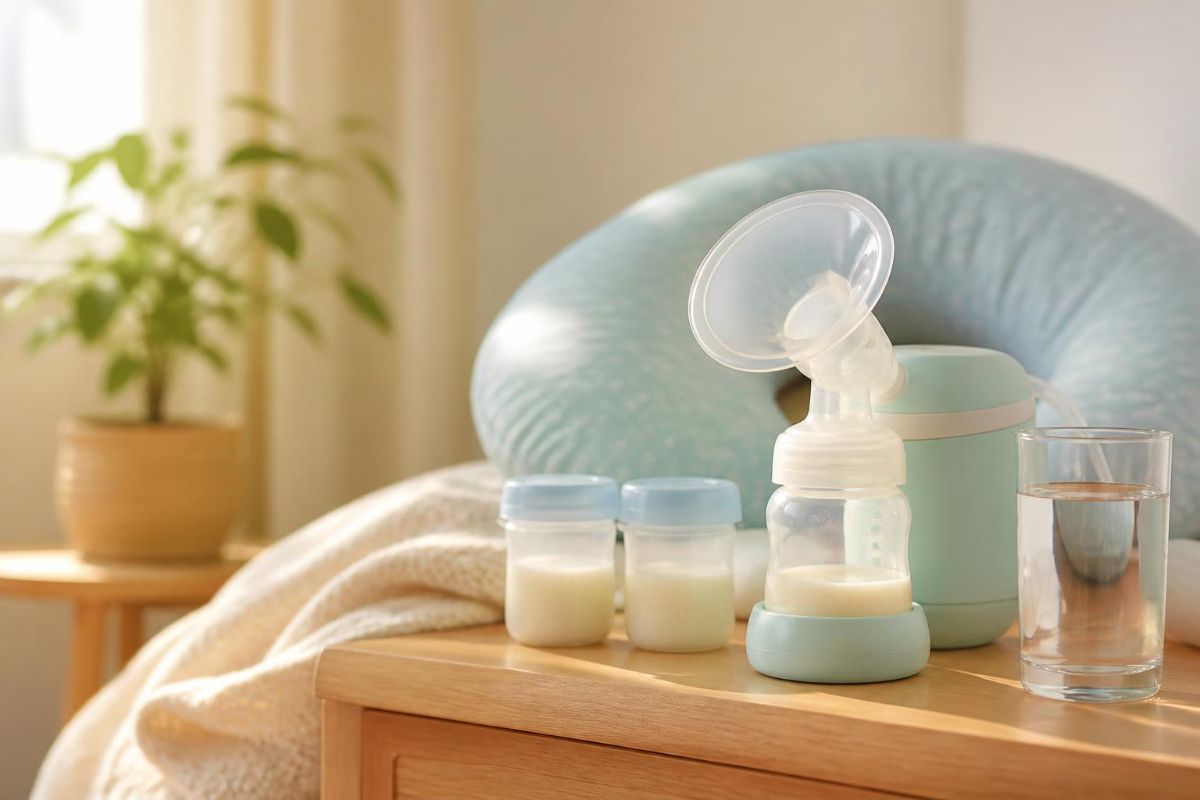
Why do these problems happen?
Almost always because milk builds up, or because the breast makes more than baby drinks. Situations that put you at risk:
- feeds that are spaced out, cut short or skipped: a long night, a day of visitors, going back to work without expressing;
- an ineffective latch;
- an oversupply of milk, sometimes kept going by too many pumping sessions;
- a bra or clothing that compresses the breast;
- a cracked nipple, which can let bacteria in;
- stopping breastfeeding abruptly.
When problems keep coming back, the NHS advises reviewing the latch first: see our breastfeeding positions and our tips for treating cracked nipples before they get infected.
What changed in 2022: cold, gentleness, no "emptying"
For a long time the advice was to warm the breast, massage the lump hard and empty the breast completely. Some general-public leaflets, UNICEF's included, still say so. The ABM protocol, revised in 2022, explains that the pain comes mostly from inflammation and oedema, the swelling of the tissue around the ducts. There is no milk "plug" to dislodge.
Three changes follow, echoed by the NHS, Naître et grandir and Quebec's INSPQ:
- Cold rather than heat. Ice reduces oedema and inflammation. Heat widens the vessels and can worsen symptoms.
- A feather-light massage, never firm. Deep massage increases inflammation and can damage tissue. The right movement is a very light stroke on the skin, with no vibrating device.
- Breastfeed on demand, without trying to empty. "Emptying" the breast with feeds or a pump stimulates production even more, and the inflammation with it. You only express a little milk if you are uncomfortable.
Engorgement: what relieves it
Engorgement in the first days often goes with the milk coming in: the breasts fill and the tissue swells. This discomfort generally lasts 24 to 48 hours, according to INSPQ.
- Offer the breast often, at least 8 times in 24 hours, day and night.
- Soften the areola if it is too hard for baby to latch: press gently with your fingertips all around the nipple for about a minute. This counter-pressure should not hurt.
- Hand-express a few drops before the feed, just enough to soften the breast.
- Apply cold between feeds, 10 to 15 minutes every 1 to 2 hours: an ice pack or a bag of frozen peas, wrapped in a thin cloth.
- Take a painkiller if needed, asking the pharmacist which one suits you while breastfeeding.
If baby feeds too little, a breast pump can bring relief, explains Naître et grandir, as long as you stop as soon as the breast is softer. Our article on your milk coming in covers this stage in detail.
Blocked duct: a tender lump, no fever
A small painful mass, sometimes a little red, while you feel well otherwise. The care is similar:
- keep breastfeeding according to baby's needs, varying the positions;
- apply cold between feeds and stroke the area lightly during the feed, without pressing;
- loosen your bra and clothing, day and night;
- ibuprofen can reduce redness, swelling and pain, according to INSPQ, if your pharmacist thinks it suitable.
Feeding on all fours, leaning over baby, is not a technique endorsed by the ABM. A small white dot on the nipple should not be pierced. And a lump that lasts more than a few days must be examined by a doctor, Naître et grandir insists, even if it no longer hurts.
Mastitis: keep breastfeeding and watch the fever
Mastitis is an inflammation of the breast, sometimes complicated by a bacterial infection. What should you do?
- Keep breastfeeding, at least 8 times a day, including on the affected side if possible: the milk is still good for baby. If feeding is too painful or baby refuses that breast, hand-express enough to feed baby. If the breast is too swollen to let milk flow, the ABM suggests offering the other breast until the oedema goes down.
- Apply cold for about ten minutes every hour.
- Ease pain and fever with a medicine compatible with breastfeeding, chosen with your pharmacist. No aspirin, the NHS specifies.
- Rest. During the nfissa, the forty days after childbirth, family is often around: hand over the house, the meals and the visitors.
- Wear a comfortable bra that supports without squeezing, and apply no oil, cream or bath to the breast.
Many cases of mastitis heal without antibiotics: the ABM cites a Swedish study in which most inflammatory mastitis resolved this way. But if nothing improves after 12 to 24 hours of this care, or if the fever lasts more than 24 hours, get medical help. The doctor will judge whether an antibiotic is needed and choose one compatible with breastfeeding. If there is no improvement 48 hours after starting treatment, the NHS advises going back.
From the shop
To soothe your breasts without stopping breastfeeding
The first remedy is free: feeding on demand and cold. A bra that supports without squeezing, a breast pump for feeds that cannot happen, a way to keep that milk and a cushion to settle baby more comfortably can help too.
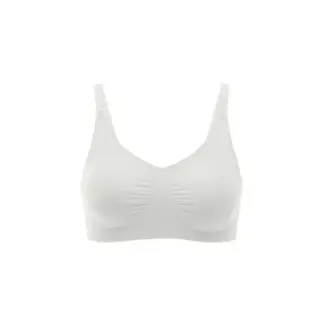 −48 %MedelaMaternity and nursing bra, size S – Medela208 DH
instead of 400 DHView product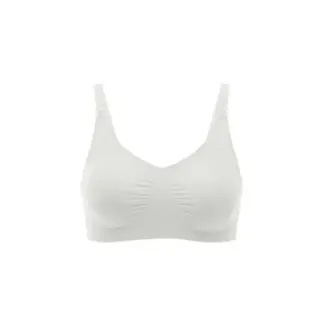 −48 %MedelaMaternity and nursing bra, size S, white – Medela208 DH
instead of 400 DHView product −35 %DoomooSofty nursing pillow, Flower Yellow – Doomoo403 DH
instead of 620 DHView product- The whole aisle · Breast pumps2 products online, delivered anywhere in Morocco.Open the aisle
Products sold by La Maison du Bébé, publisher of this magazine. Prices as of 12 October 2026; please check the product page.
Breast abscess: the complication not to leave
Rarely, mastitis develops into an abscess, a pocket of pus in the breast. It is suspected when an area hardens and reddens over several days, with a well-defined mass that feels full of fluid. The fever may drop or persist. An ultrasound confirms the diagnosis, and the abscess is drained with a needle or a small drain. According to the ABM, you can keep breastfeeding, including on that side after drainage.
Heat, cabbage, massage: sorting through what relatives suggest
When a breast hurts, everyone has a remedy. Sorting them out:
- Scalding towels, hot-water bottle, very hot hammam: heat risks keeping the inflammation going. A warm shower that relaxes you is fine, but it does not treat anything.
- "Melting the lump" with hard massage: avoid. Firm massage worsens oedema and, according to the ABM, can lead to an abscess.
- Cabbage leaves: no more effective than ice (see the FAQ).
- Oils, poultices, salt baths: not recommended; castor oil can even cause lesions when used for massage.
- Stopping breastfeeding "to rest the breast": the opposite is what you need, because stopping abruptly exposes you to new engorgement. If you wish to stop, see how to manage gentle weaning.
The breast pump keeps its place when baby cannot feed: see our tips for expressing your milk at the right pace, without feeding an oversupply.
Frequently asked questions
Is milk from a breast with mastitis dangerous for baby?
No. According to the Academy of Breastfeeding Medicine, bacterial mastitis is not contagious and baby can safely drink milk from the affected breast. Naître et grandir and INSPQ say the same: the milk is still good. If an antibiotic is prescribed, the NHS explains that only a tiny amount passes into the milk, without danger for baby, who may just be a little fussier.
Which painkiller can I take for mastitis while breastfeeding?
Paracetamol and ibuprofen are mentioned by the NHS, Naître et grandir and INSPQ; ibuprofen also works on inflammation. The NHS advises against aspirin. Ask your pharmacist or doctor for the dose that suits you and is compatible with breastfeeding, especially if you already take another medicine. In the evening or at weekends, the duty pharmacy can advise you.
Do cabbage leaves relieve engorgement?
They cool the breast, but no better than ice, according to the Academy of Breastfeeding Medicine's 2022 protocol, which also flags a risk of listeria contamination. An ice pack or a bag of frozen peas wrapped in a thin cloth does the same job more simply, 10 to 15 minutes at a time between feeds.
Can you get mastitis without breastfeeding?
Yes. The NHS points out that mastitis can affect women who are not breastfeeding, and even men. Smoking, a nipple wound, a piercing, eczema, a breast implant or lowered immunity, for example linked to diabetes, are among the causes. In that case, the NHS advises seeing a doctor rather than treating yourself.
Sources
- ABM Clinical Protocol #36: The Mastitis Spectrum, Revised 2022 (Breastfeeding Medicine, vol. 17, no. 5)Academy of Breastfeeding Medicine (ABM) · International
- MastitisNHS · United Kingdom
- Allaitement : 6 problèmes courantsNaître et grandir · Canada (Quebec)
- Difficultés courantes de l'allaitementMieux vivre avec notre enfant, INSPQ · Canada (Quebec)
- Cinq problèmes fréquemment rencontrés lors de l'allaitementUNICEF Parentalité · International